

CGI for Architectural Competition Projects: Design Museum in Helsinki
An international design competition was held to envision Finland’s new Museum of Architecture and Design — a future cultural landmark on Helsinki’s South Harbour. The competition, organized by leading Finnish institutions, drew bold ideas from around the world. To bring their vision to life, London-based architects Susanna Hänninen and Blanca Alegría teamed up with our 3D rendering studio for concept visualisation.
Our role? To communicate the project’s essence, including its atmosphere, spatial character, and connection to the surrounding cityscape. We worked hand in hand with the architects, turning sketches and references into a set of striking competition visuals that told the story behind the design.
This case study walks you through how the collaboration took shape — and how 3D visualization for design competitions helped turn a bold idea into a compelling visual narrative.
#1. Project Goals
The main objective was to help the architects present their concept with maximum clarity and impact using competition CGI. Specifically, the visuals aimed to:
- Place the proposed museum within its real urban and waterfront surroundings
- Highlight key architectural elements, such as massing, facades, and materials
- Convey the quality of public spaces and how they interact with the environment
- Strengthen the competition entry with high-end, polished visual content
#2. CGI Tasks
To support the competition submission, the architects requested four specific views. Each was designed to highlight a different aspect of the project:
#2.1 Oblique Aerial View
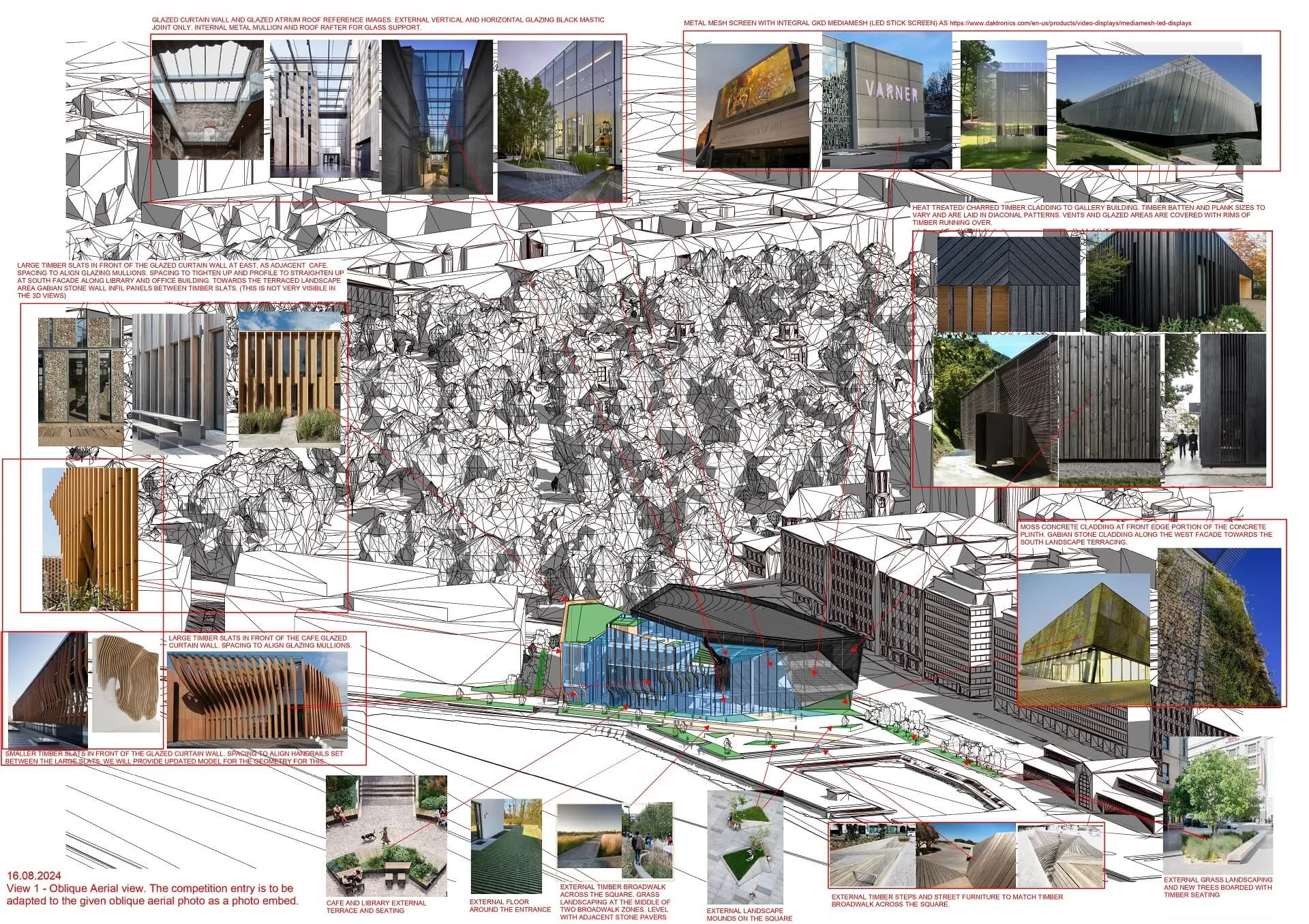
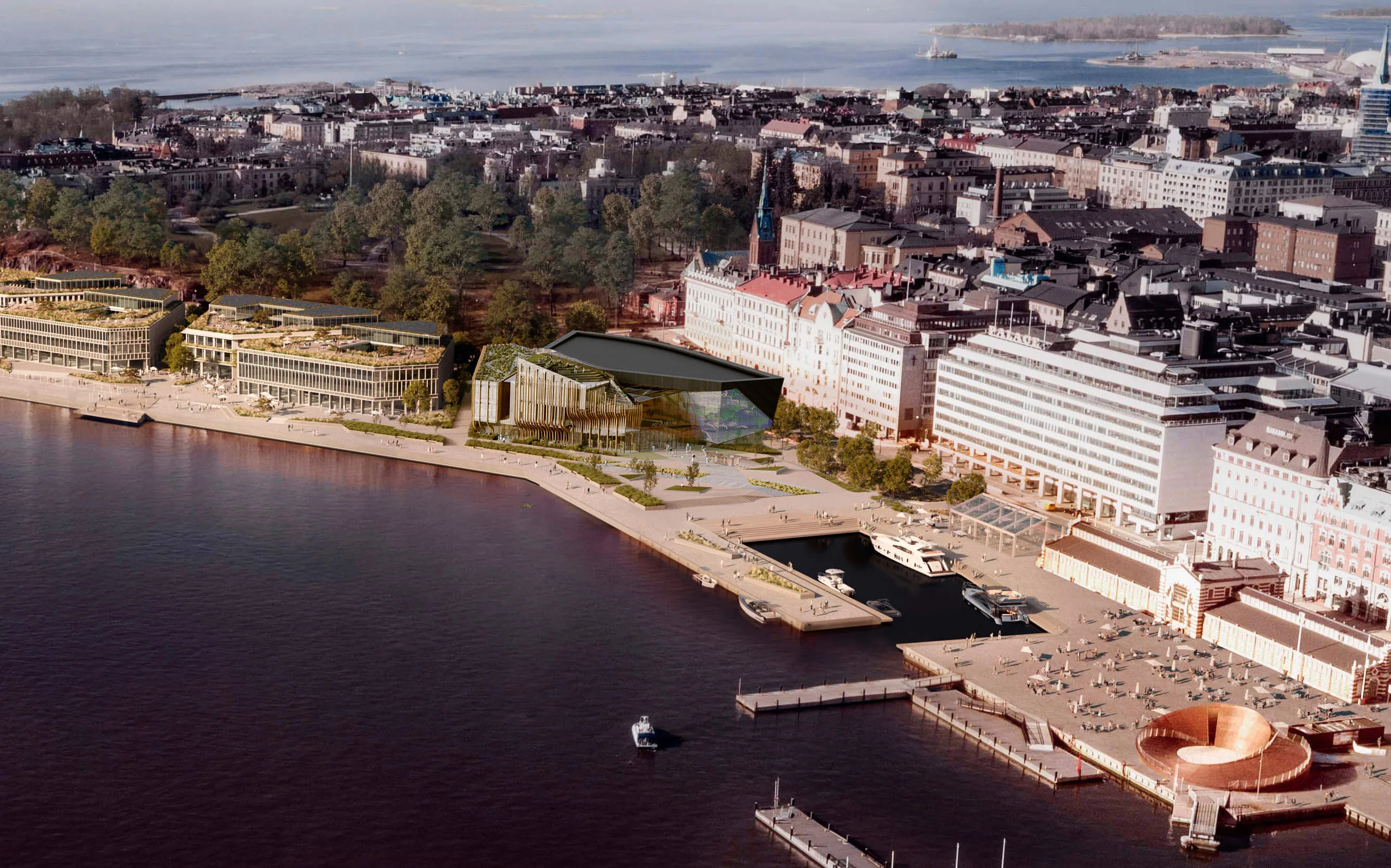
- Embedded the 3D model into the aerial photograph provided by the organizers
- Showed how the museum integrates into the city grid and follows the shoreline
- The aerial architectural rendering emphasized the building’s overall massing and its role in the larger urban context
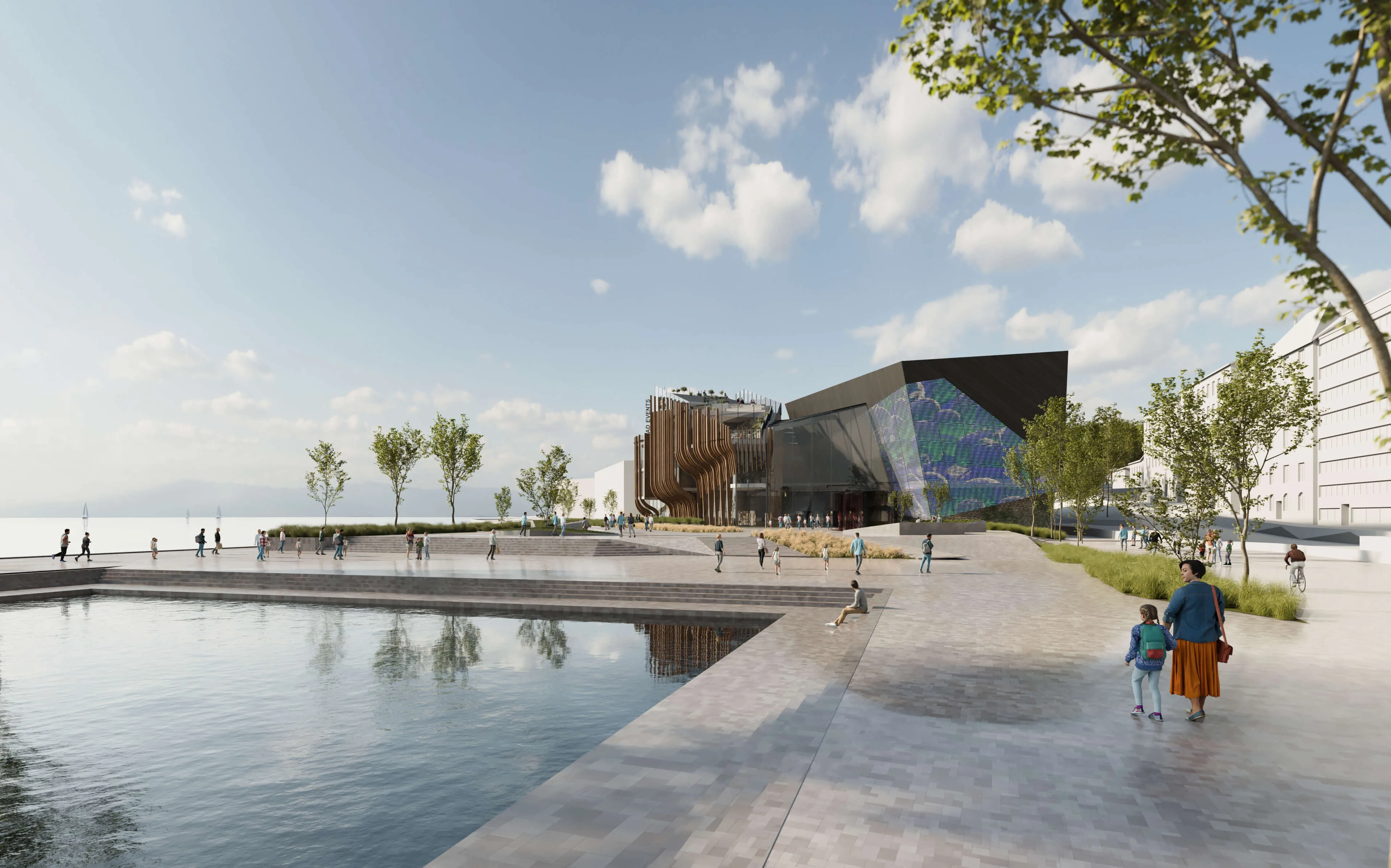
#2.2 Ground-Level Perspective from Market Square
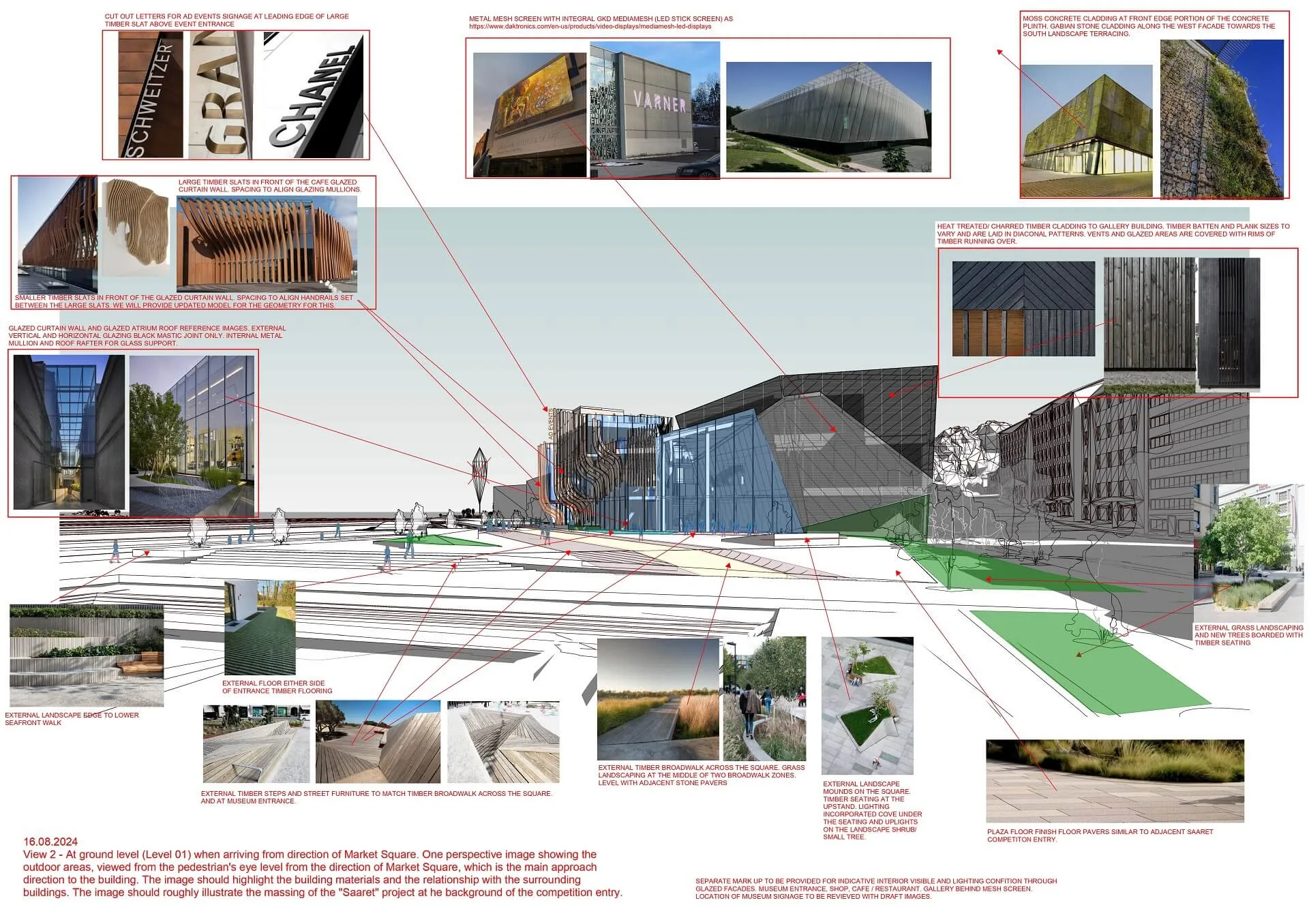
- Created a street-level view from the main pedestrian approach
- Focused on materials, transparency, and human scale
- Included the massing of the “Saaret” project in the background for spatial reference
- The exterior CGI illustrated how the building relates to its surrounding structures and outdoor areas
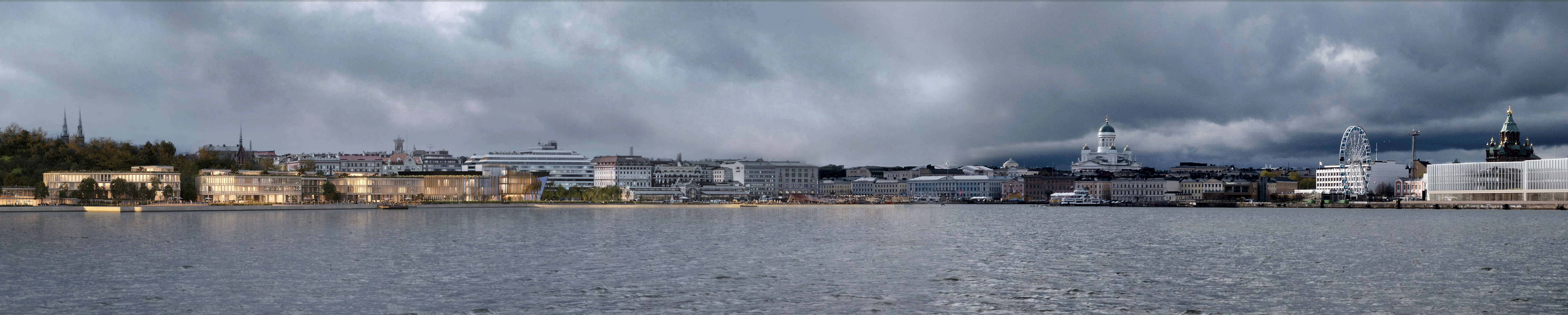
#2.3 Sea Perspective
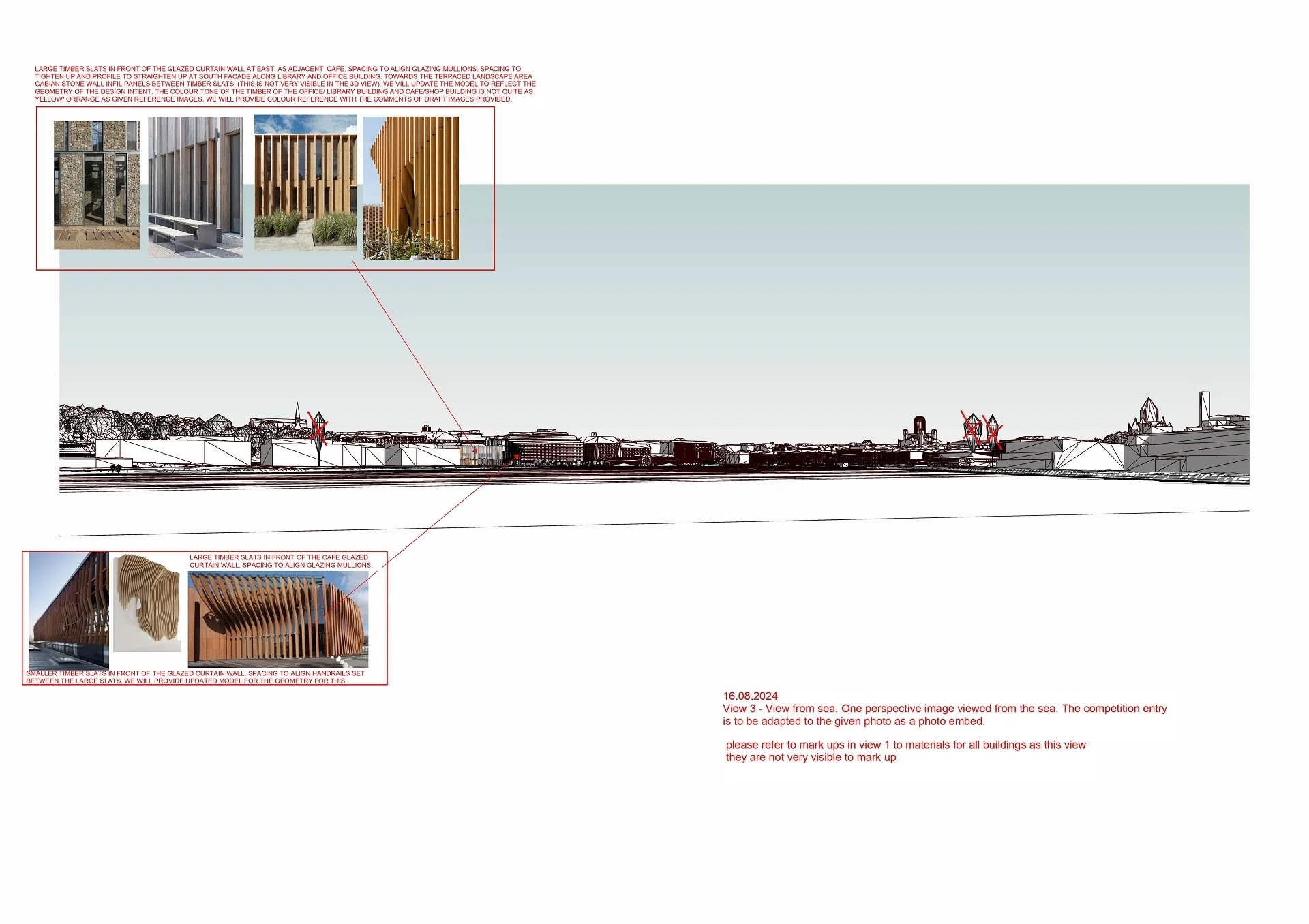
- Integrated the building into a provided waterfront image
- Highlighted the silhouette and how the design interacts with the sea
- Conveyed the landmark quality of the architecture when viewed from the water
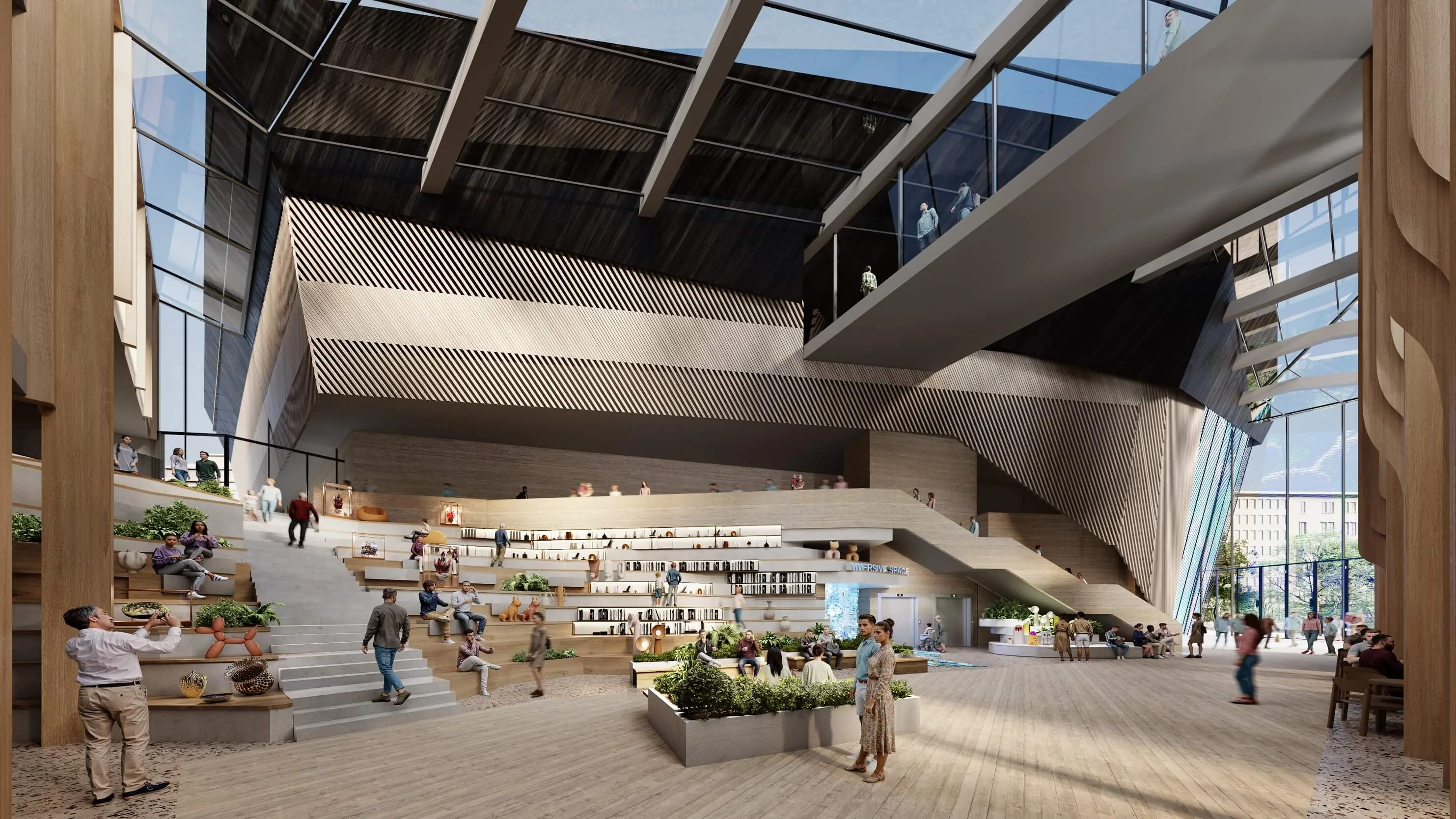
#2.4 Interior Public Space View
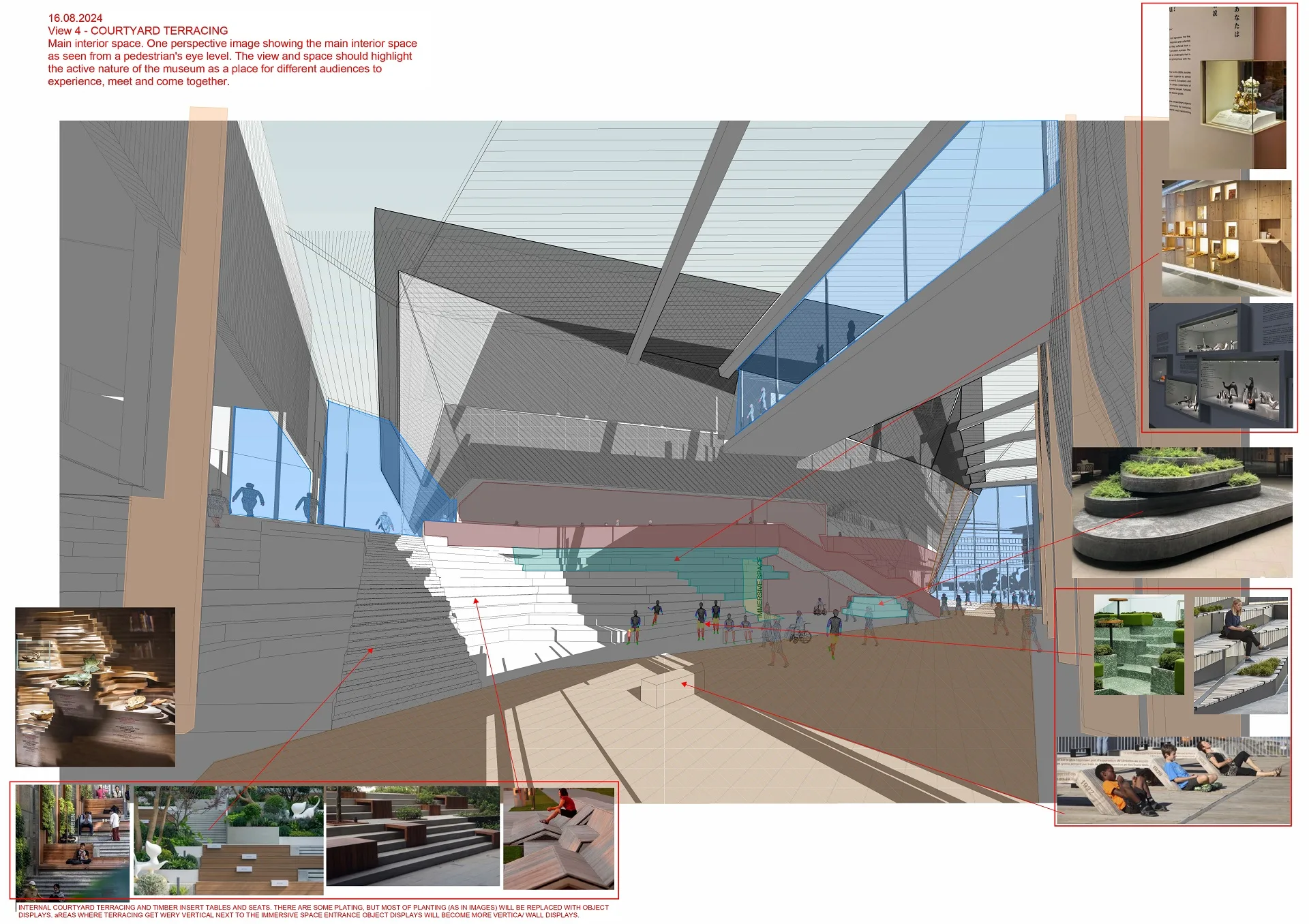
- Showed the main indoor gathering space from a pedestrian viewpoint
- Captured the openness, flexibility, and social nature of the interior
- The interior architectural visualization illustrated how the space supports interaction, movement, and multiple uses
#3. Work Process
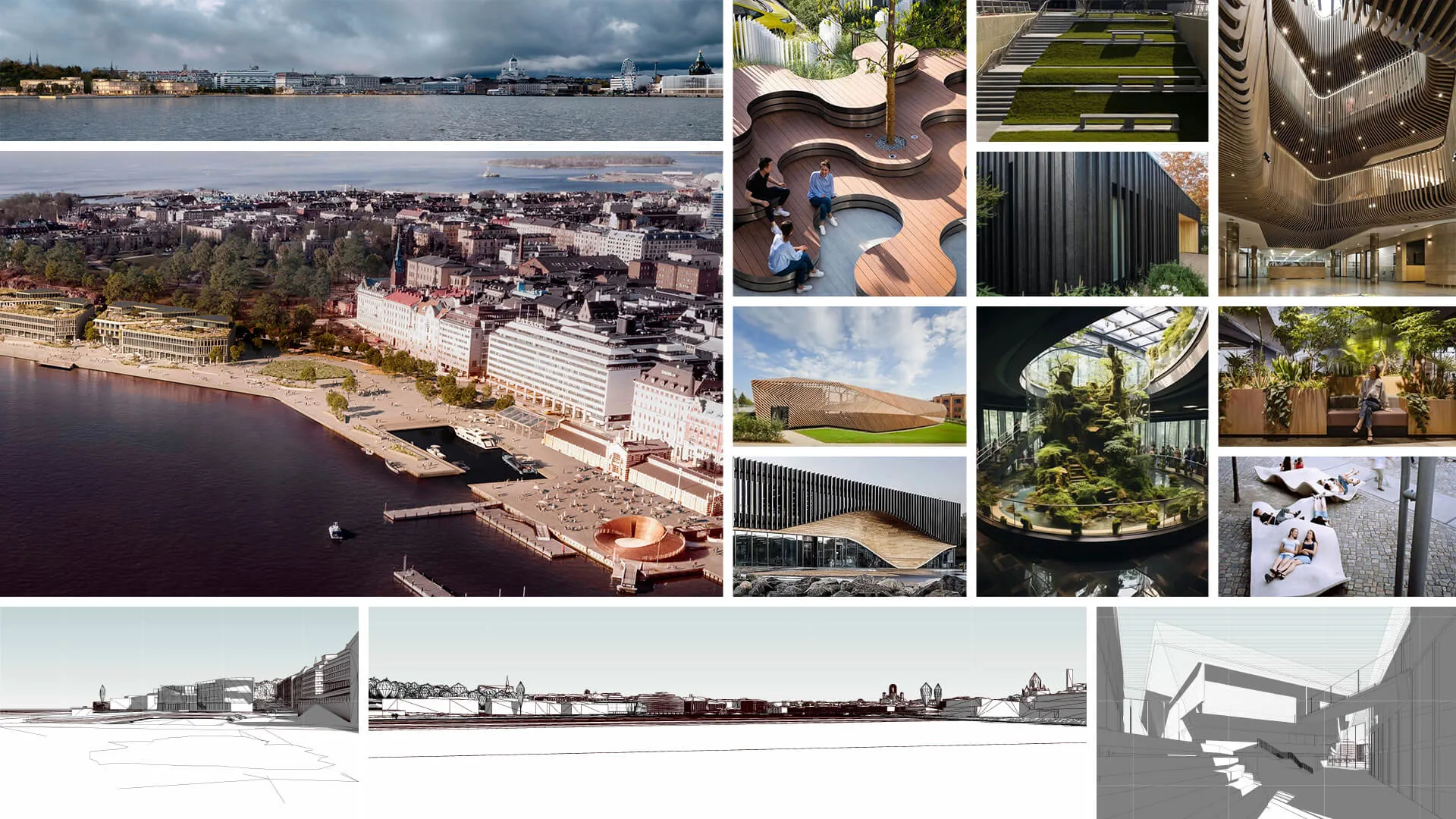
The visualization process began with a comprehensive set of reference materials provided by the architects. These included:
- Project drawings
- Revit models
- Aerial photographs and site images
- Interior design references
- Material samples and secondary object references
Using these inputs, our team:
- Built the 3D model of the structure and developed the facade systems
- Set up lighting in a cool, northern tone to reflect Helsinki’s natural conditions
- Shared interim results with the architects at each stage — from greyscale previews to full-color drafts
- Implemented feedback continuously, adjusting materials, lighting, and composition in close collaboration with the design team
#4. Results
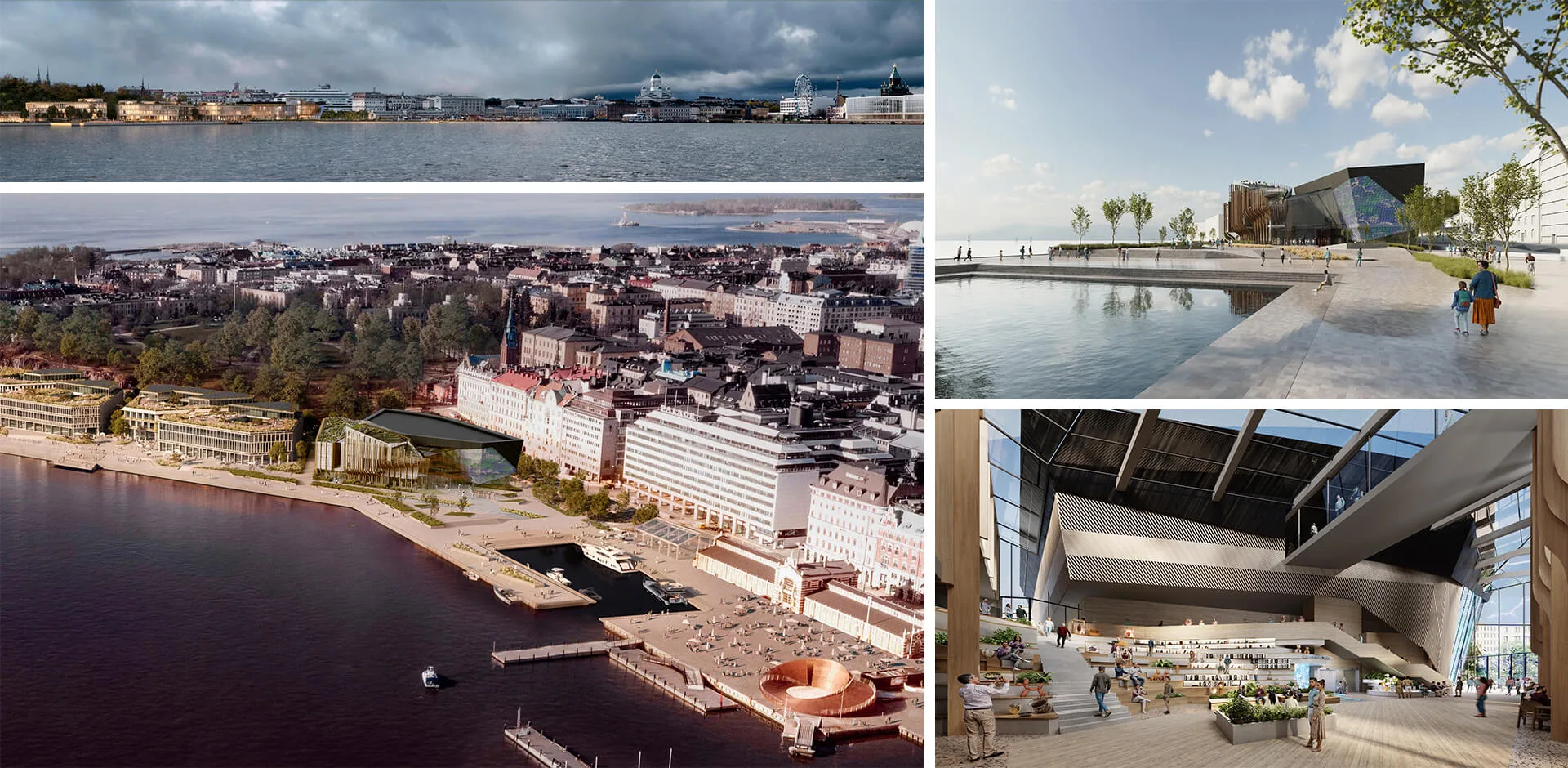
The final result featured four high-quality, photorealistic renderings created specifically for the competition. Each rendering followed the strict technical requirements from the organizers, making them ready to drop straight into the official presentation.
The museum design renderings clearly showed the project’s scale, materials, urban context, and public spaces. By highlighting both the concept and how it fits into its surroundings, the visuals helped strengthen the architects’ proposal in front of the jury.
Here’s what the final visual package included:
- An aerial view showing the museum’s integration into the city grid and coastal landscape
- A ground-level view from Market Square, emphasizing materials, transparency, and human scale
- An interior view of the main public hall, showcasing openness, flexibility, and social function
- A sea perspective concept rendering illustrating the building’s silhouette and its dialogue with the waterfront
Schedule a free demo of 3D solutions for your business
This case is a great example of how museum design rendering can elevate a competition entry — turning drawings and ideas into vivid, memorable images that resonate. In this project, 3D visualization for design competitions brought clarity to the concept, made it immersive, and helped the vision come alive for the jury.
We thank Susanna Hänninen and Blanca Alegría for their trust and collaboration, and we hope to work together again on their future projects.
Need concept visuals that capture your design with the same precision and mood? Our architectural CGI services are here to help bring your competition entries to life!

Catherine Paul
Content Writer, Editor at ArchiCGI
Catherine is a content writer and editor. In her articles, she explains how CGI is transforming the world of architecture and design. Outside of office, she enjoys yoga, travelling, and watching horrors.