
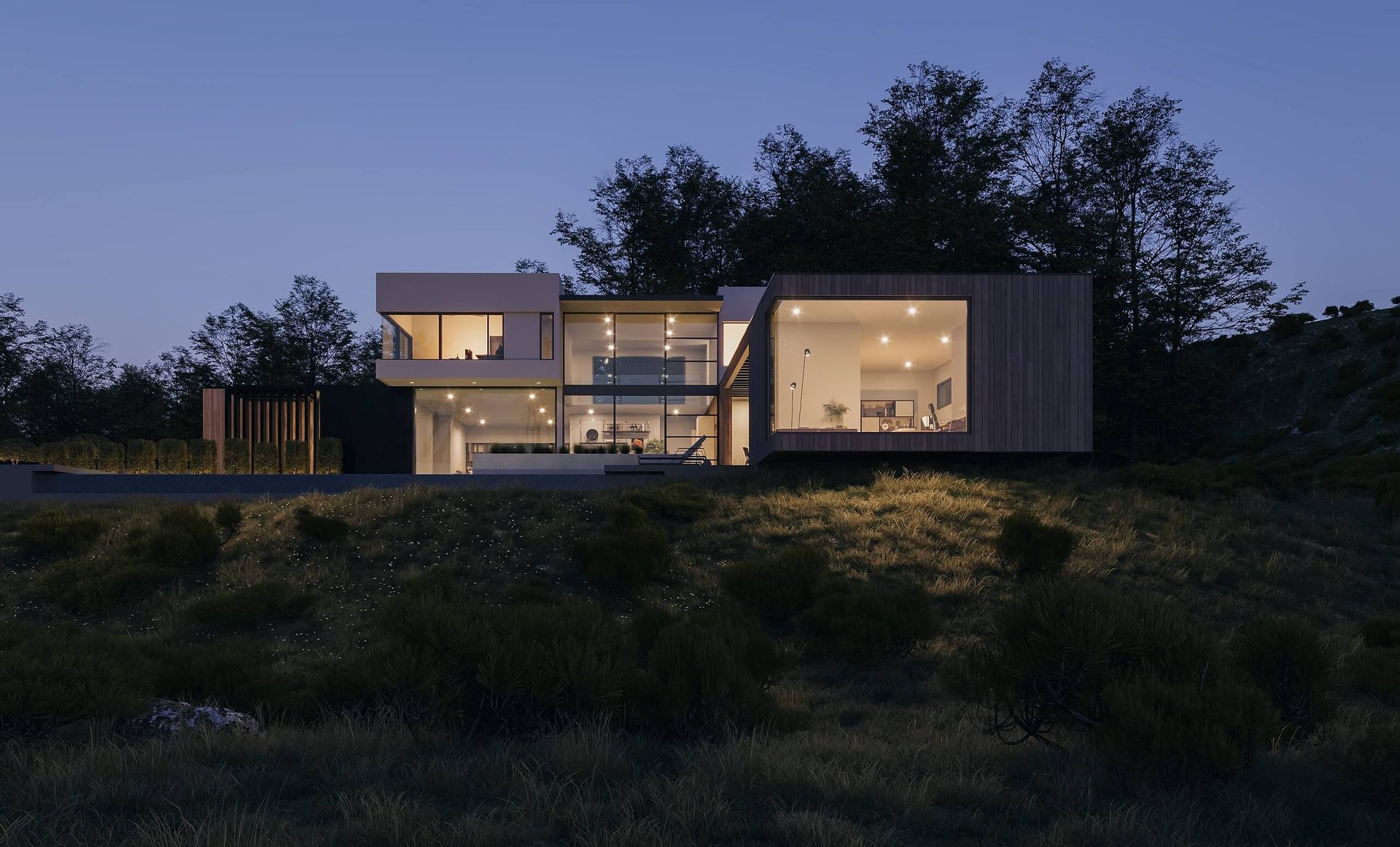
Architects and real estate professionals have more visual tools at their disposal than ever, but architectural 3D animation stands out from the rest. In architecture and real estate, it has become one of the most effective presentation tools, far more engaging than static renders or 2D floor plans.
And the data backs this up. Video is no longer optional in real estate marketing. According to the National Association of REALTORS, 37% of buyers used online video platforms during their home search. At the same time, Redfin reports that about one in ten home tour requests are now conducted remotely through video. This means buyers aren’t just passively consuming video content. They actively rely on it to evaluate properties and make decisions.
The challenge is that most of what real estate professionals need to market simply doesn’t exist yet in any filmable form. Properties under construction, land plots, and early-stage developments have no walkthrough to record and no façade to photograph. This is where 3D animation closes the gap, delivering the video experience buyers already expect, built entirely from the project’s plans and design data. The quality of execution matters here, which is why partnering with an experienced architectural visualization company at this stage can directly affect how seriously prospects take the project. For teams working out how to sell land or pre-construction units, that distinction is often the difference between a stalled campaign and a successful one.
What Is 3D Architectural Animation?
3D architectural animation is a CG video that shows a building project in motion and from multiple angles, giving viewers a dynamic, continuous experience of a space rather than a single frozen moment. When weighing architectural 3D renders vs animation, the key distinction is this: a render captures one viewpoint at a time, while animation guides the viewer through the entire project in a continuous sequence.
The usage of 3D animation in architecture spans a wide range of professional contexts: client presentations, investor materials, marketing campaigns, and design approval processes. For those who want to go deeper on what each type involves, our 3D architectural animation guide covers the key elements and production process in detail.
Architects have used CGI since the 1990s, starting with 3D Studio DOS and later 3ds Max. For marketing, though, animation stayed out of reach for years: early visuals were not photoreal enough, production took weeks, and only the largest firms could afford in-house 3D artists. The 2010s changed that. Hundreds of archviz studios entered the market, and photoreal CG video became affordable for almost any practice. Today an animated presentation is a standard deliverable rather than a luxury.
The intersection of architecture and animation opens up possibilities that static visuals simply cannot match — and the five types below show exactly how professionals are putting them to work.
#1. Exterior Animation
Exterior 3D animation is a great tool to present the expected result of a project under construction. In contrast to regular video, CG animation prevents you from waiting until the building is finished to make footage for marketing and presentation purposes. Moreover, you’re not restricted by the season, weather, and lighting. With 3D visualization, you can opt for the light and atmosphere that emphasize the selling points of your project best — especially when you partner with a professional 3D exterior rendering company.
In comparison to static images, 3D animation lets you cover more ground both figuratively and literally. The facade, the front and backyard, the neighborhood – all of this can be shown in a single 3D video spectacularly. The right types of shots in animation can make all the difference — from sweeping flyovers to close-ups that highlight your design’s strongest details.
#2. Interior Animation
The next on our list of 3D animation types is interior animation. As the name suggests, it demonstrates the inner spaces of properties. There are various types of such a presentation. This can range from a simple walkthrough of a future apartment to more complex presentations. But it’s not limited to this option. One can also use this type of animation to present before-after comparisons, various design options, or functional features. When handled by a skilled 3D interior renderings company, an interior animation can showcase every detail of the space, helping a prospective client establish an emotional connection with it. You can see how it is created in our article about 3D animation for a Theater in Boca Raton.
#3. Mixed Animation
Among the different types of usage of 3D animation in architecture, this approach allows you to present a project from both the exterior and the interior. A combination of exterior and interior animation, this CG solution offers several viewing scenarios. In terms of 3D animation terminology, one of the most effective and widely used is the “fly-through” sequence, where the camera moves around the building and then transitions inside through the entrance, guiding the viewer through the rooms step by step.
#4. Walkthrough
Next on our list of different types of 3D animation, a walkthrough usually focuses on the interior, though it can incorporate exterior shots as well. The camera in such a digital video is positioned at an eye level, making one feel as though they were actually walking through the rooms.
This type of animation is particularly effective for presenting renovation projects. When a space is being redesigned from the inside, clients need to understand how the new layout, materials, and lighting will come together as a whole. Moving through the rooms in sequence gives a far clearer sense of the result than any set of static renders could.
Commercial developments benefit from this format for similar reasons. When pitching a retail space, a hotel lobby, or an entertainment center to investors or future tenants, layout alone rarely closes the deal. Decision-makers need to understand how the space functions — how it flows, how the zones connect, and what the experience of moving through it will actually be. A walkthrough animation provides exactly that level of clarity before construction begins, which is often what it takes to get a project greenlit or a lease signed. The workflow of an architectural 3D animation project follows a consistent set of stages regardless of project type or scale. To see how those stages play out with a real client brief, assets, and deliverables, refer to our entertainment center 3D animation case study.
#5. Flythrough
Flythrough animation works perfectly if you need to showcase not only the architectural design but also the neighborhood. In this type of 3D animation, the camera first shows the building from afar, focusing on what’s around it. After that, it can go down to give a closer view of the outdoor design: landscaping elements, driveways, pools, terraces, and so on. This way, flythrough animation demonstrates how the exterior works together with its surroundings. Furthermore, it can show the property on the inside too.
See how a 3D flythrough will make your vision impossible to forget
How to Choose the Right Type of 3D Architectural Animation
The type of animation you order should match the goal of your presentation. It is one of several types of 3D visualization architects use today, each suited to a different stage or purpose. For a project still under construction, exterior animation is the natural choice — it communicates the scale, facades, and surroundings before a single floor is laid. If you’re selling a completed unit or presenting a renovation concept, a walkthrough lets potential buyers move through the space and connect with it emotionally. Mixed-use developments — combining commercial and residential functions — often benefit from a combined approach that covers both the building’s public face and its interior experience.
When a striking location or landscape is your strongest selling point, flythrough animation puts that context front and center. For high-end residential or hospitality projects where interior detailing drives the sale, an interior animation is the right call.
There’s also an option that sits outside the purely CG categories: aerial rendering, which combines real drone footage with 3D elements. It brings authenticity to the location context that full CG sometimes lacks, and works especially well when the surroundings — an urban skyline, a waterfront, a mature neighborhood — are part of the value proposition. If you’re considering this route, it helps to understand how to make drone video for architectural animation before briefing your team.
Whichever format you choose, the goal is the same: commissioning the right 3D architectural animation keeps your budget focused and your presentation sharp.
Schedule a free demo of 3D solutions for your business
All types of 3D animation can be powerful assets for architects and real estate experts. Whether you need to showcase the exterior design, highlight interior sequences, or present the surrounding environment, animation helps communicate the project clearly and convincingly.
Architectural 3D animation services are increasingly used to present projects before construction begins. They help demonstrate movement, scale, and how a space will be experienced in real life. This makes them a strong tool for marketing and client presentations. Developers run animated materials in ads on TV, websites, and social media, while interior designers rely on walkthroughs to show every detail of a space before it exists.
Looking for architectural animation services to get breathtaking presentations and marketing materials? Contact ArchiCGI to get professional 3D architectural animation for your project!

Stacey Mur
Content Writer, Copywriter
Stacey is a content writer and a CG artist. Outside of work, Stacey enjoys musicals, Star Wars, and art talk. A proud Corgi parent.


Comments
Meredith