

Design Lab USA: Renderings for a Market-Ready Residential Project
Some rendering projects are about presentation.
This one was about timing.
A property is prepared to go to market.
A defined set of interior spaces.
A need for multiple perspectives that clearly communicate layout and scale.
And a requirement for fast, production-ready visuals.
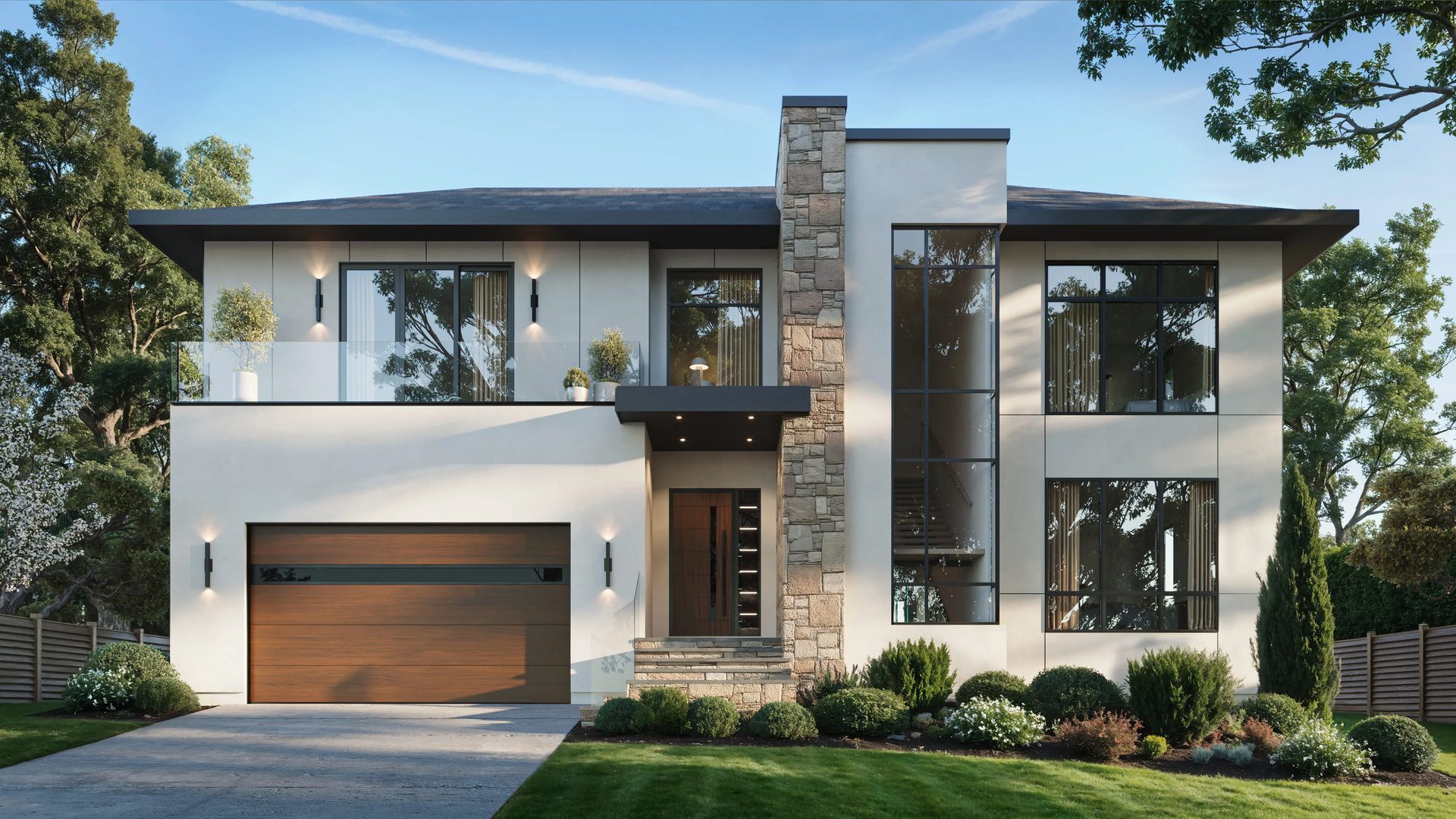
This is what exterior and interior rendering looks like when it directly supports real estate goals. Not just aesthetic imagery, but a structured visual package designed to help buyers understand space, flow, and potential — before stepping inside.
Below is a closer look at how 3D visualization made by our 3D rendering company helped Design Lab USA to prepare a residential project for launch.
Client Overview
Design Lab USA is a design and development studio working on residential projects that integrate architecture and interiors into a cohesive whole.
Their projects are often developed with market positioning in mind. Design decisions are made not only for function and aesthetics, but also for how the property will be perceived by potential buyers.
This requires clear visual communication, especially before construction is complete.
Year of foundation: 2013
Specialization: Residential design, architectural development, interior design
Geography/market: United States residential market
Key brand values: Clarity, cohesion, market readiness, and functional design
Project Challenges
This project was not about creating visuals from scratch.
It was about improving what already existed.
Working with Existing Renderings
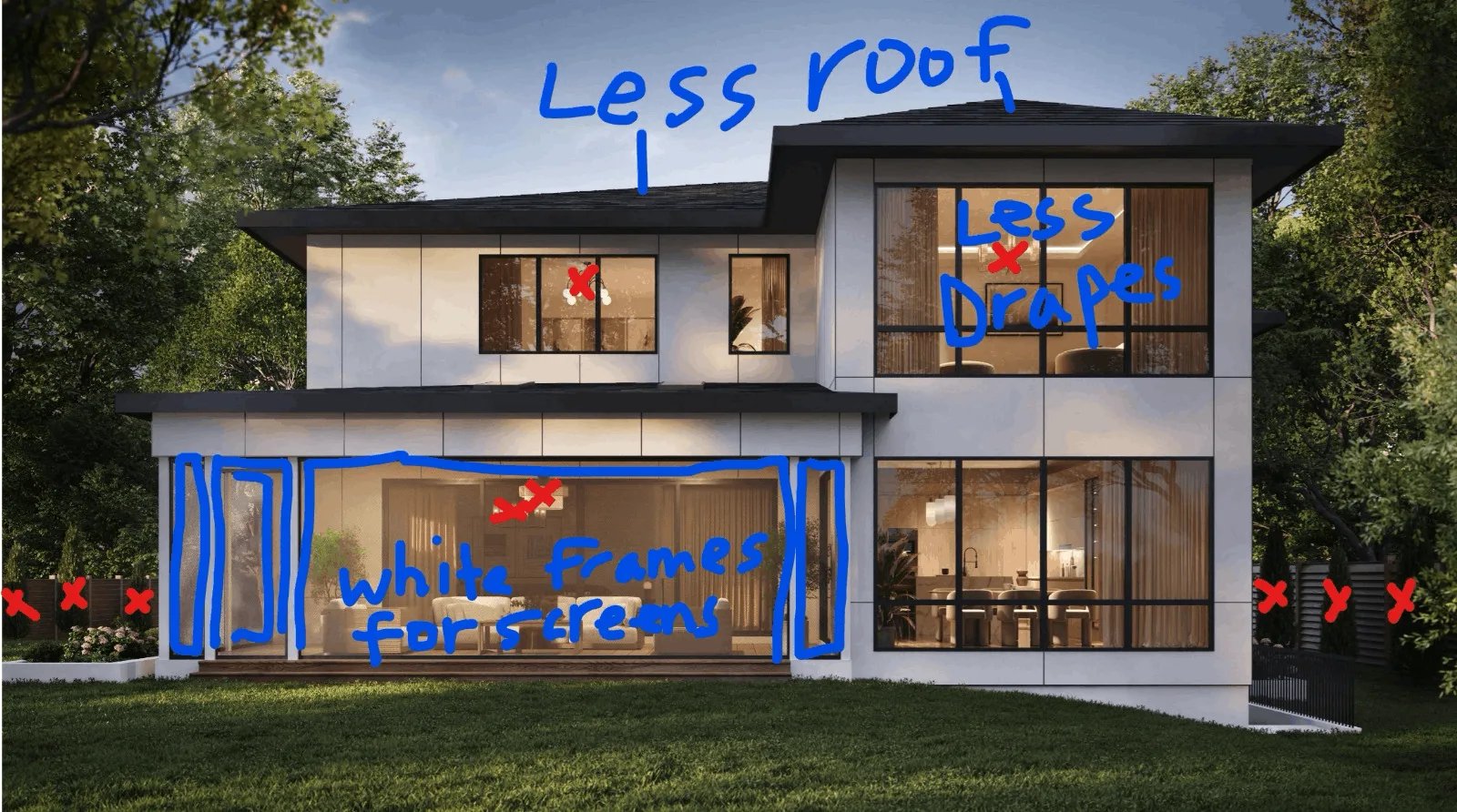
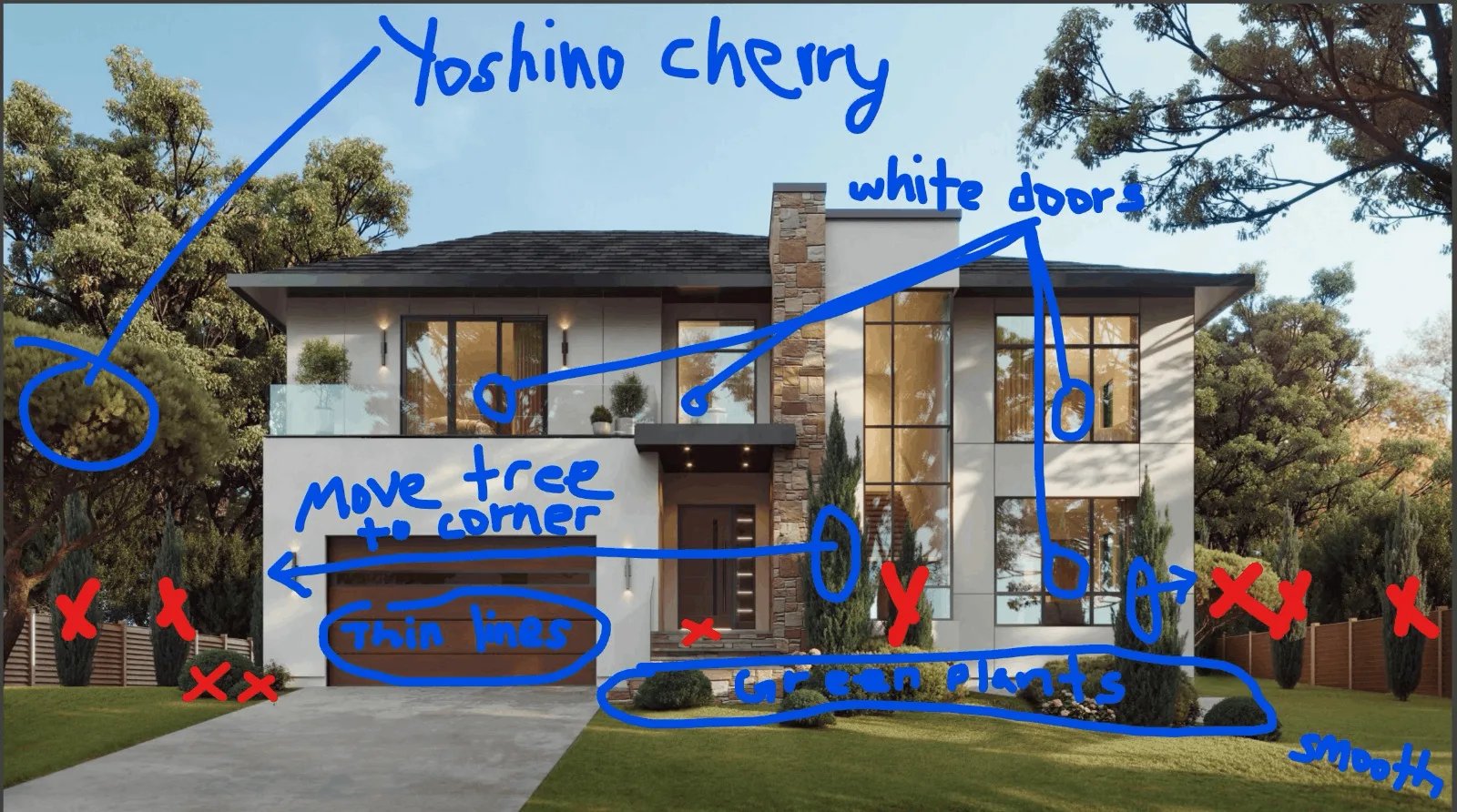
The client already had a set of reference renderings that met their expectations overall. However, specific elements required correction and updates.
The most critical issue was the staircase, which had been visualized incorrectly and needed to be redesigned as an open riser staircase with a glass railing.
Integrating Design Changes
Several updates were introduced after the initial renderings were produced:
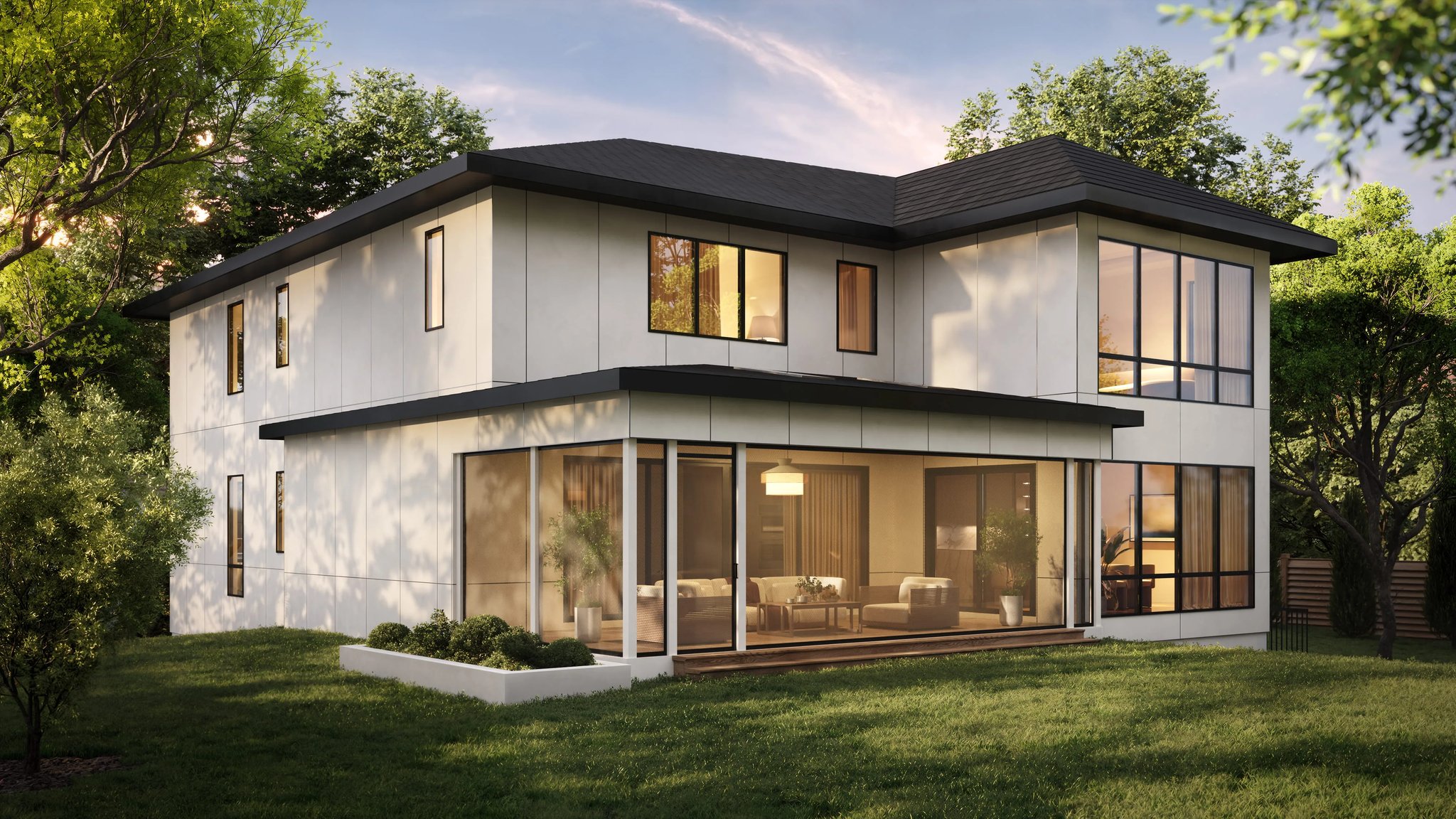
- The exterior façade material changed from tile to plaster
- Landscape design was not finalized and required new references
- Interior style direction needed refinement based on additional examples
These changes required careful updates without breaking the overall visual consistency.
Defining Exterior and Interior Scope
The exterior scope was clearly defined:
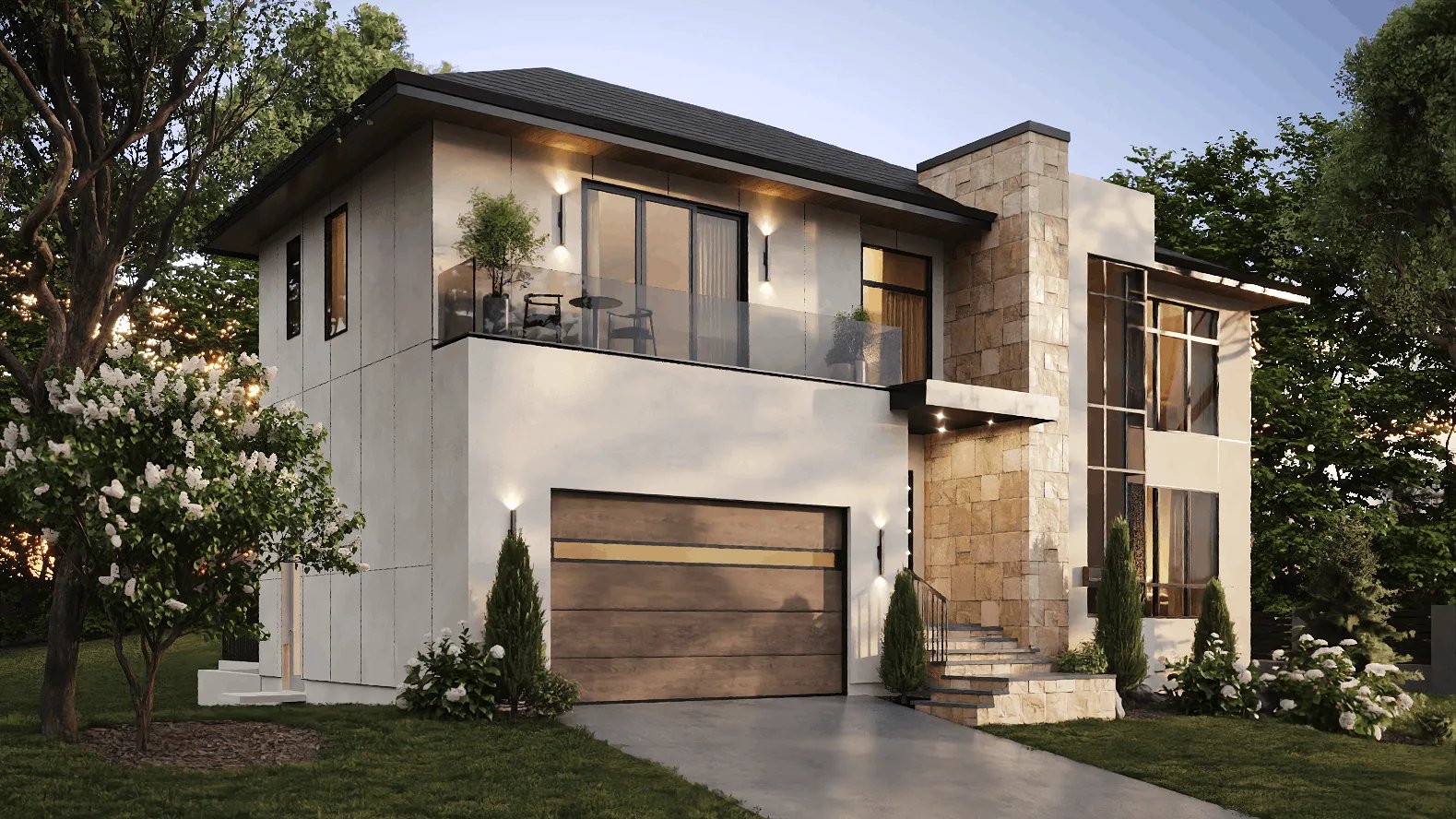
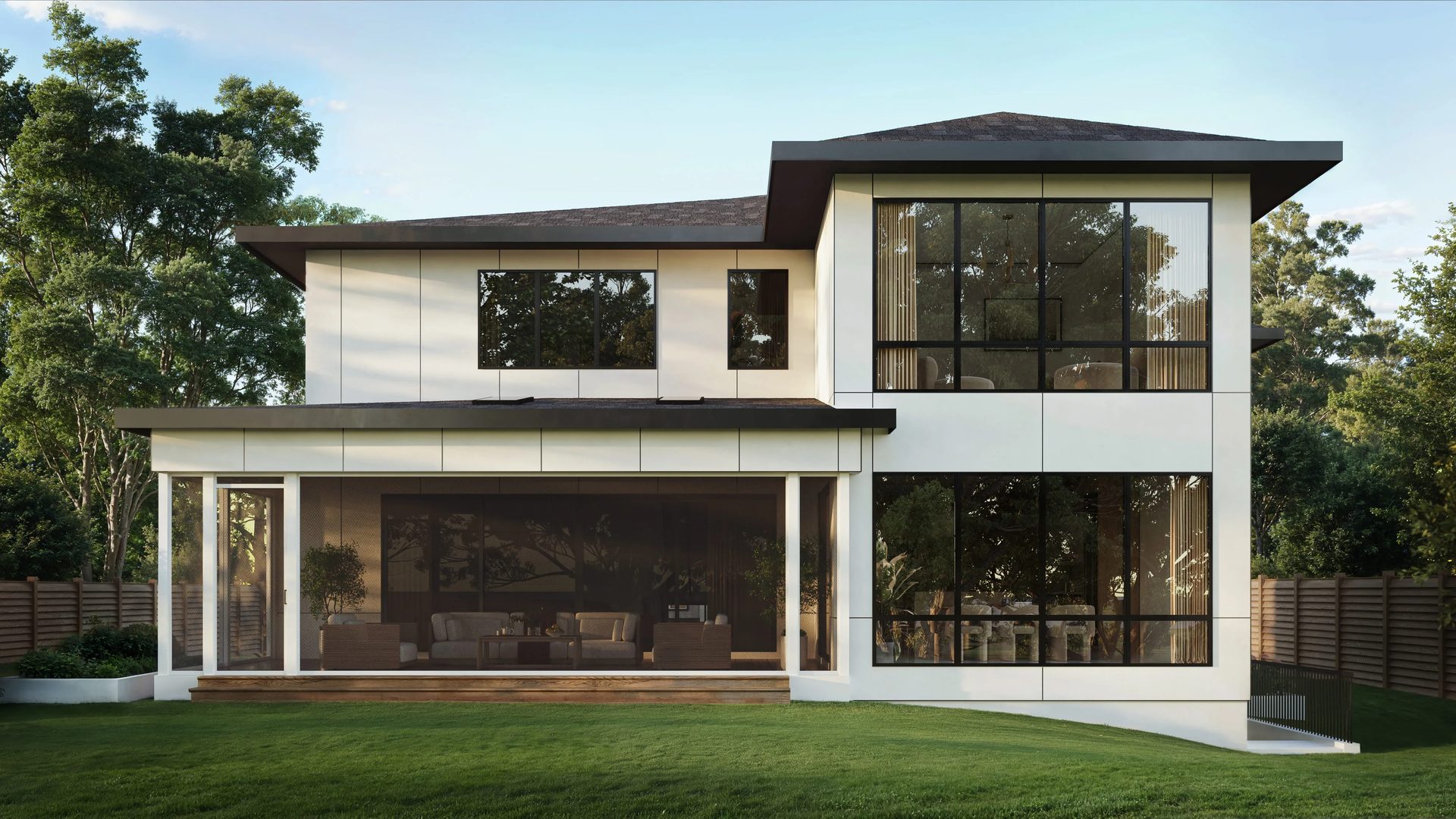
- Two views — front and back of the property
The interior scope required flexibility:
- Five primary views selected from a proposed set of eight
- The option to add additional views if needed
Targeted Interior View Planning
The client outlined specific priorities for interior visualization:
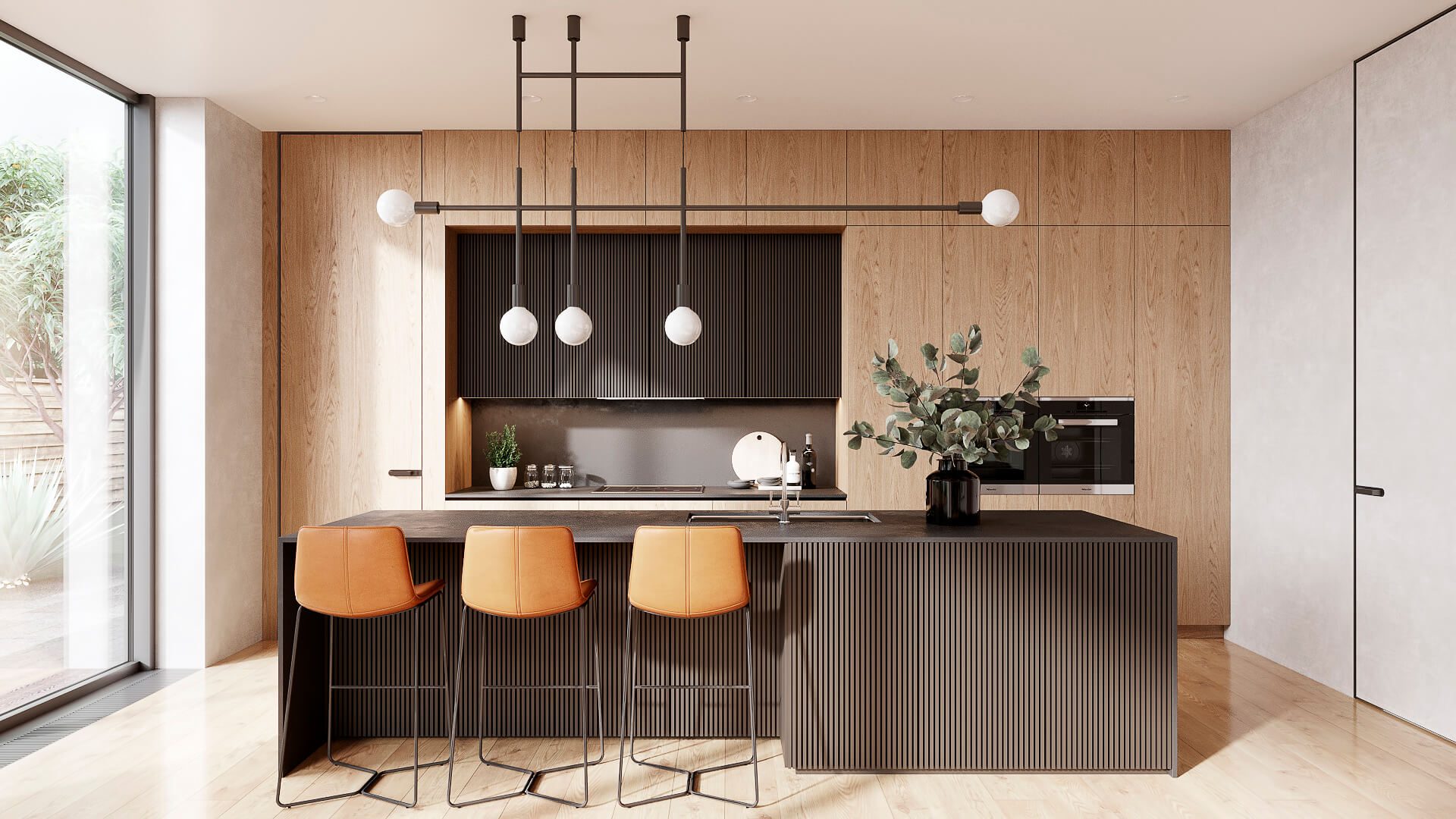
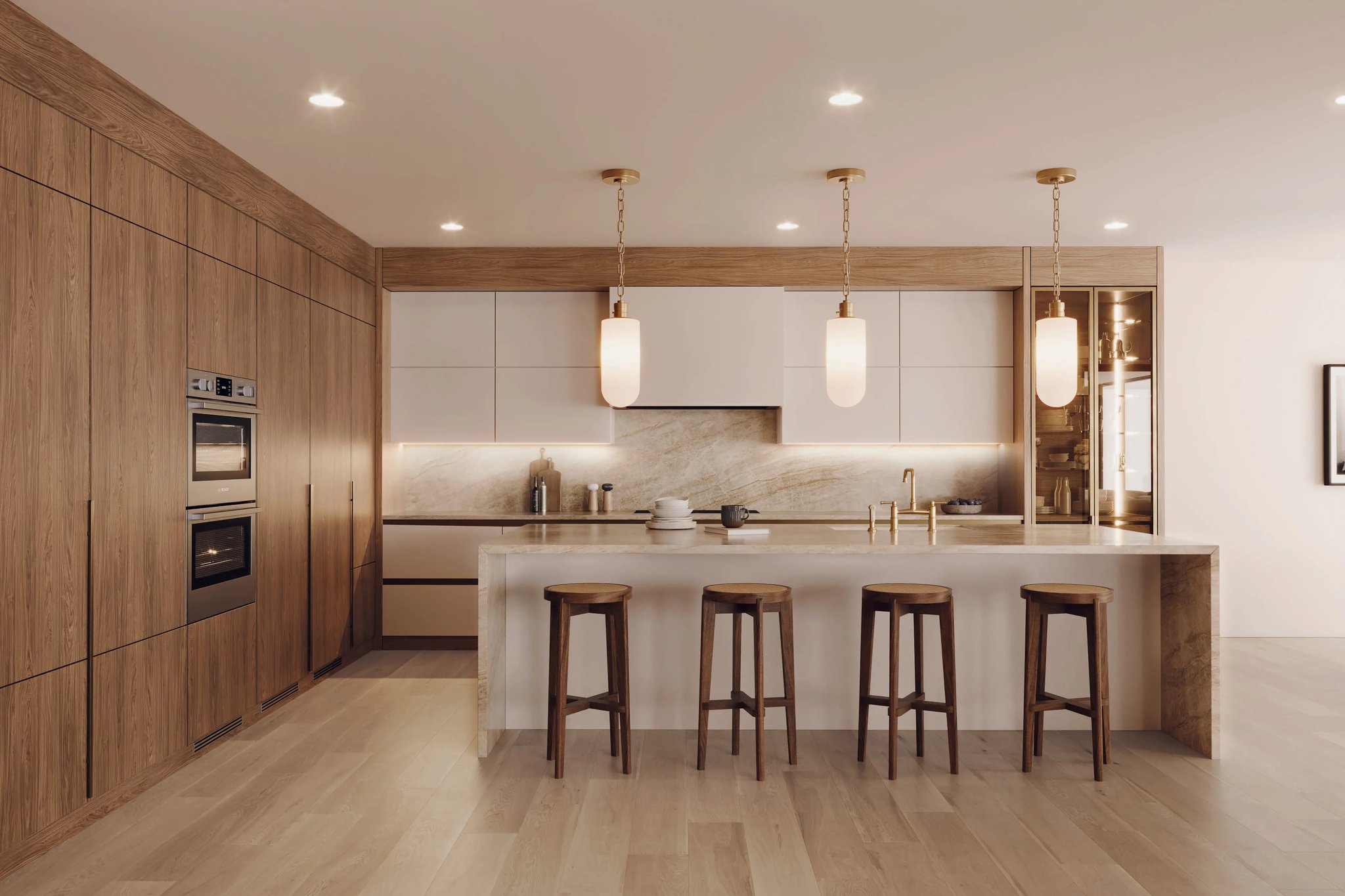
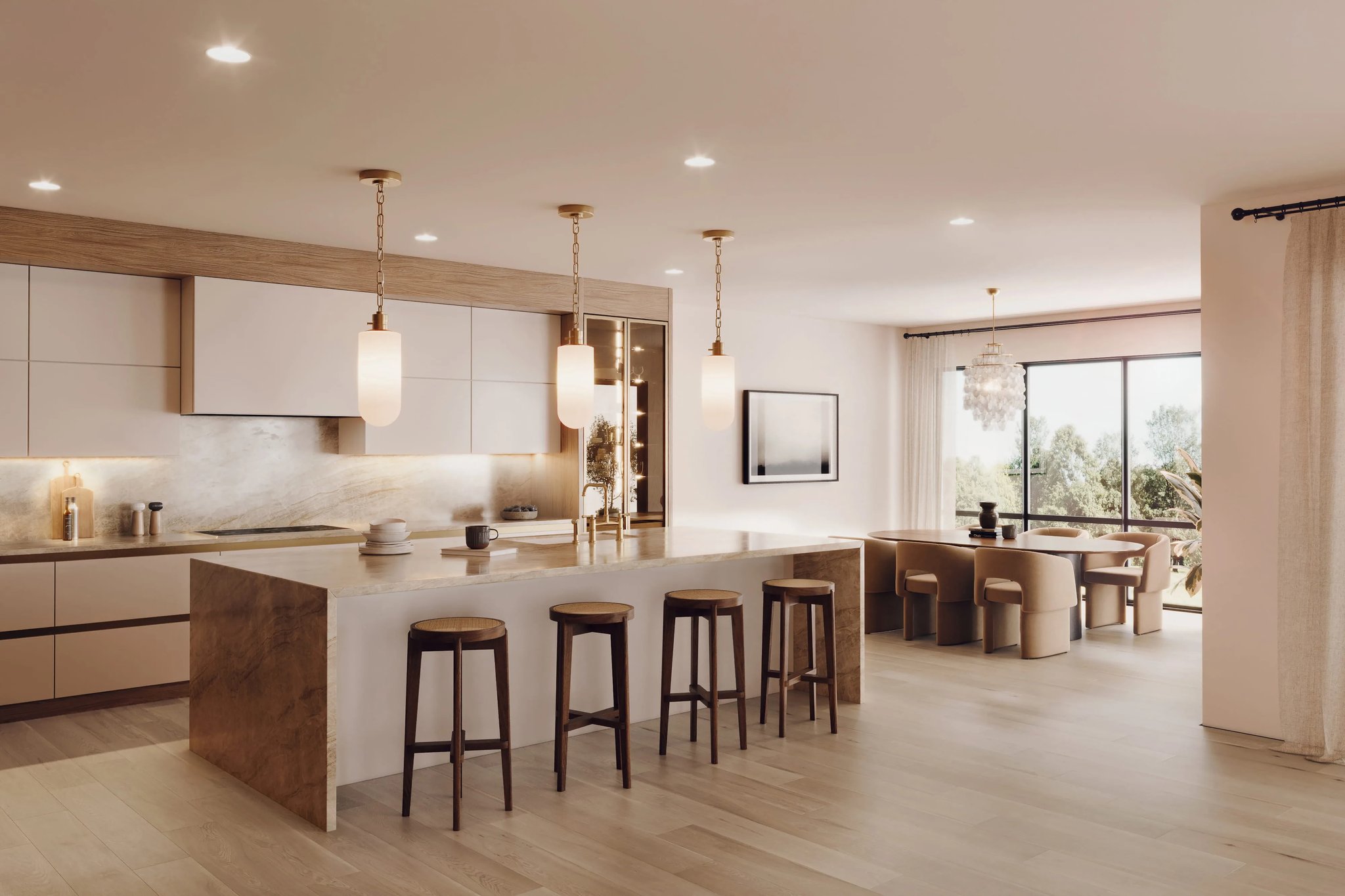
- Two kitchen perspectives
- One family room
- One foyer and entryway
- One hallway
- One staircase (open riser with glass railing)
Additionally, one extra view was considered to capture the large 20-foot opening between the kitchen and family room.
This required a structured approach where each rendering served a clear purpose.
Working Within a Tight Timeline
The project was tied to a real estate launch.
All updates, corrections, and new visuals needed to be delivered efficiently to support marketing timelines.
Project Solutions
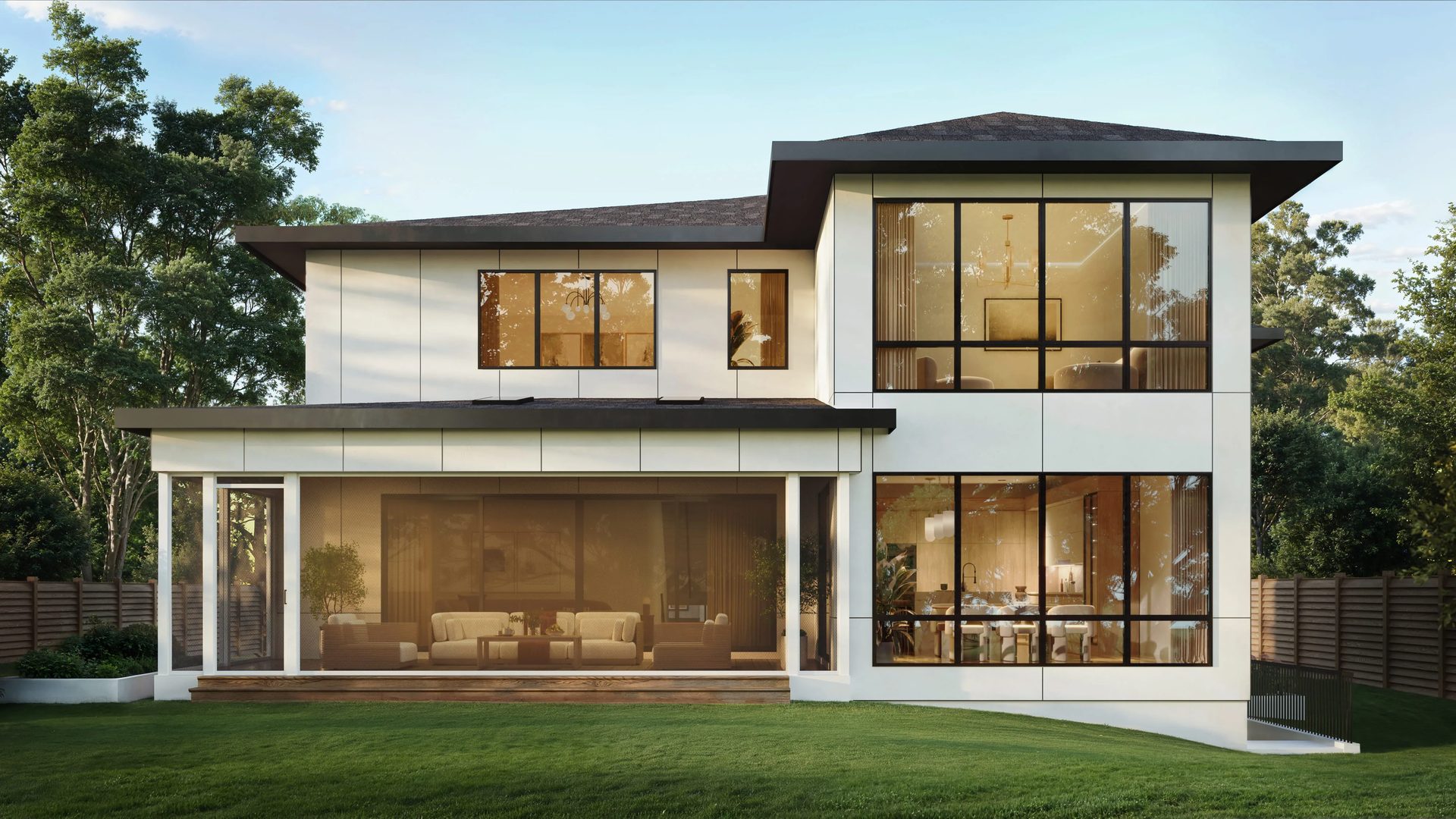
The solution focused on controlled updates and precise alignment.
Refinement Instead of Reinvention
Rather than rebuilding everything, the process focused on improving existing visuals.
Incorrect elements, such as the staircase, were corrected. Updated design decisions were integrated without disrupting the overall composition.
Material Update Integration
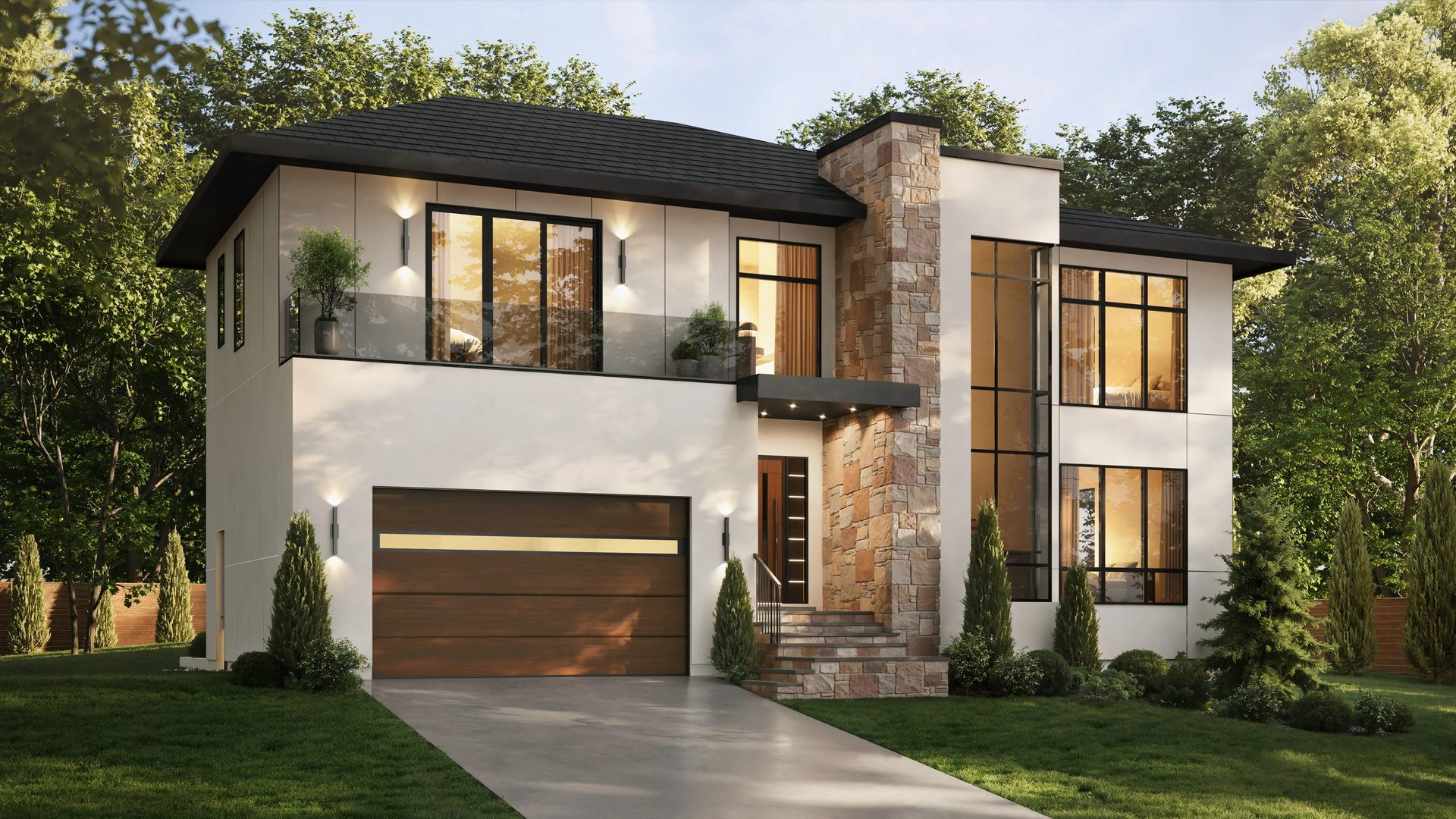
The transition from tile to plaster on the exterior façade required recalibration of materials, lighting response, and overall appearance.
This ensured that the building reflected the current design direction accurately.
Flexible View Selection System
A structured system was introduced:
- A set of eight potential interior camera angles was prepared
- The client selected five key views
- Additional views could be added if needed
This approach balanced efficiency with flexibility.
Guided Input Process
To ensure alignment, the client provided:
- Landscape references for exterior development
- Style references for interior spaces
This allowed the renderings to match both technical requirements and aesthetic expectations.
Cohesive Lighting and Composition
Lighting and composition were adjusted across all scenes to maintain consistency between updated and newly created visuals.
Scope of Work
The scope of this exterior and interior rendering project included:
- 2 exterior renderings (front and back views) with updated material (plaster façade)
- 5 interior renderings selected from a proposed set of 8 views
- Optional additional interior view for the 20-foot open connection
- Correction and redesign of the staircase (open riser with glass railing)
- Integration of updated materials, references, and design inputs
- High-resolution, marketing-ready visuals for listing and promotional use
Production Process
1. Review of Existing Materials
The process began with analyzing the existing renderings and identifying areas that required correction or updates.
2. Design Alignment
All changes were clarified:
- Updated exterior material (plaster)
- Staircase redesign
- Pending landscape references
- Interior style direction
3. 3D Adjustments and Modeling
Existing scenes were updated rather than rebuilt.
Geometry and elements were modified where necessary, especially for the staircase and façade.
4. Material Updates
Exterior materials were recalibrated to reflect plaster instead of tile.
Interior materials were aligned with the newly provided style references.
5. Camera Selection
Eight potential interior views were prepared.
The client selected five, ensuring that each one aligned with marketing priorities.
6. Lighting and Rendering
Lighting was adjusted to maintain consistency across updated scenes.
High-resolution renders were produced with a focus on realism and clarity.
7. Final Refinement
Post-production ensured visual consistency across all images:
- Color balance
- Material accuracy
- Detail clarity
Project Results
The result of the architectural rendering project was a refined and aligned visual package.
Corrected and Updated Visuals
Key design elements, including the staircase and exterior materials, were accurately represented.
Flexible and Targeted Interior Views
The selected perspectives clearly communicated the most important spaces in the home.
Improved Market Readiness
The updated visuals reflected the current state of the project, making them suitable for immediate use in marketing.
Efficient Use of Existing Assets
By refining rather than rebuilding, the process remained efficient without sacrificing quality.
Conclusion
This project shows what 3D exterior and interior rendering delivers when the goal is not just visualization, but market readiness.
With clearly defined views, accurate material representation, and a cohesive visual language across exterior and interior spaces, the renderings turned a set of drawings and selections into a complete, easy-to-understand property narrative. Buyers don’t have to interpret plans or imagine scale — they can see how the home looks, feels, and functions.
Equally important, the process stayed aligned with real constraints. Existing visuals were refined rather than replaced, design updates were integrated without breaking consistency, and every image was produced with a clear purpose tied to marketing use.
The result is a focused visual package that supports faster decision-making, stronger listings, and earlier engagement — even before construction is complete.
In this context, rendering becomes more than presentation. It becomes a practical tool for positioning a property on the market with clarity and confidence. For more information, check out our 3D rendering services or our architectural rendering guide.
Schedule a free demo of 3D solutions for your business
For the full picture of formats, process, and costs behind such projects, check our guide to 3D rendering for interior designers. Related reading: marketing video ideas for designers and an entertainment center visualization. For interiors like these, ArchiCGI offers interior visualization services.

Valerie Adams
Blog Writer
Valerie is an editor and content writer. She used to work on news and entertainment TV channels and in a fashion & design magazine. In her spare time, she enjoys visiting foreign countries, art events, film and street dancing festivals.
For photoreal images of unbuilt spaces, explore our interior visualization services.