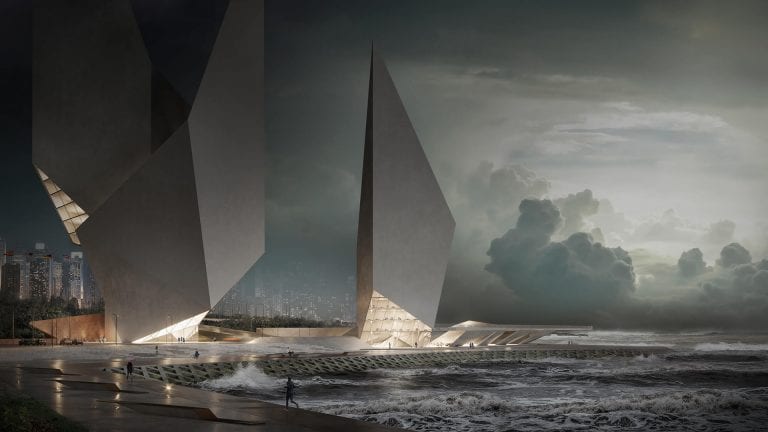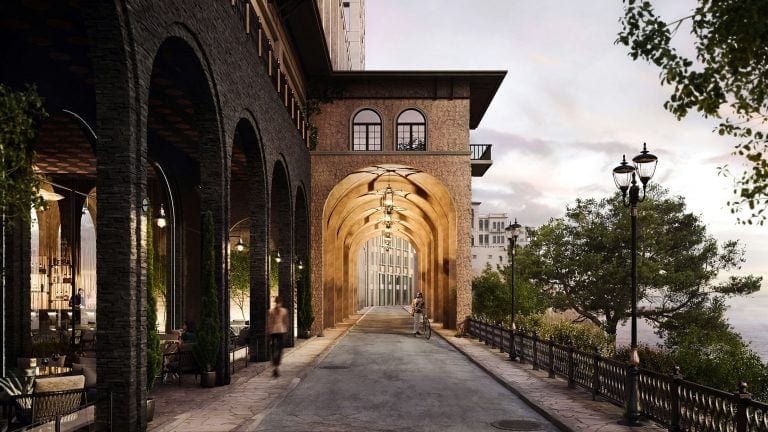


Architectural visualization is how a building gets seen before it exists. Architects use it to win approvals and competitions, developers to pre-sell units, and interior designers to get concepts signed off without a single wall being built.
What Is Architectural Visualization?
Architectural visualization is the practice of creating images, video, and interactive presentations of a building or an interior before it is constructed. A 3D artist builds a digital model of the project, applies materials and lighting, then renders views that look like photographs of a finished space.
The input is usually a set of drawings: floor plans, elevations, sections, and sometimes a CAD or BIM model. The output is whatever the project calls for, from a single still image for a listing to an animated flythrough for an investor presentation. According to Chaos and Architizer research, photorealistic CGI remains the most valued deliverable in the field, which is why most firms outsource it instead of keeping artists in house.
Architectural Visualization vs 3D Rendering
In everyday work the two words are used interchangeably, and that is usually fine. To be precise, rendering is the final technical step, when the software calculates light, shadows, and reflections to produce the image. Visualization covers the whole process around it, from modeling and material selection to the finished set of views.
So every render is part of a visualization project, but a visualization project involves much more than rendering. When a client asks for architectural visualization services, they normally mean the full workflow rather than the last button in the software.
Types of Architectural Visualization
The same project can be presented in several formats, and studios price them separately. These are the options you will be choosing from.
- Exterior renders. Photoreal stills of the building in its surroundings, used for approvals, listings, and competition boards. See 3D exterior rendering.
- Interior renders. Room by room views that show layout, materials, and lighting before anything is ordered. See interior visualization.
- Architectural animation. A walkthrough or flythrough video that conveys scale and flow far better than any still image. See architectural animation.
- 360 tours. Interactive presentations where the viewer moves through the space at their own pace, at any time. See 3D virtual tours.
- 3D floor plans. Furnished plan views that make a layout readable for buyers who do not read technical drawings. See 3D floor plan visualization.
Who Uses Architectural Visualization
Architects use it to win approvals from boards and clients, and to enter competitions with images that stand out. Developers use it to pre-sell apartments long before the site is cleared. Interior designers use it to get concepts approved without ordering samples for every option. Real estate teams market properties that exist only on paper, and industrial companies explain complex facilities to investors and regulators.
Working With a Visualization Studio: 7 Questions Answered
Once the format is settled, the practical questions start: what to send, how your data is protected, how revisions work. Below are short answers to the seven we hear most often. For the full outsourcing workflow, including pricing factors and how to compare small and large studios, see our guide on 3D architectural rendering outsourcing.
#1. What Do I Need to Start a CGI Project?
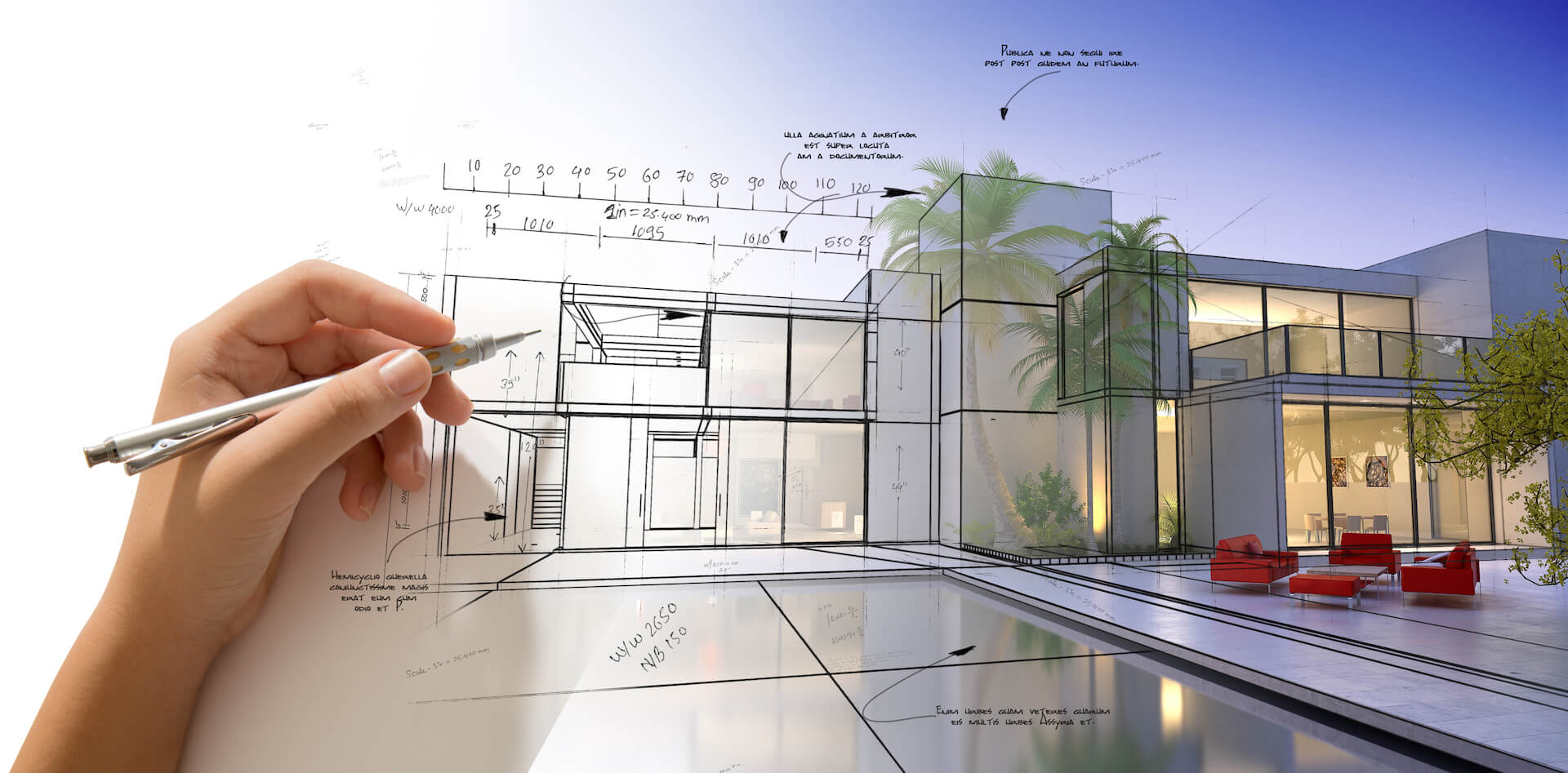
To start an architectural visualization project, you need to contact a CGI studio and submit a brief. It must contain a clear explanation of the technical assignment and some reference materials. Those typically include floorplans, elevations, lighting references, selections of materials, furniture, and decor, background images, etc. If you have a CAD model of your building created in SketchUp, Revit, AutoCAD, ArchiCAD, or any other similar software, you should attach it too. That will lower the project cost since there will be no need for 3D artists to model the object from scratch. For a detailed step-by-step walkthrough of the briefing and submission process, see our 10-step guide on 3D architectural rendering outsourcing.
#2. Can I Get 3D Renders Urgently?

The answer is yes, but it will cost you extra. The thing is, every 3D architectural visualization company has a standard turnaround time for all kinds of projects. And if the client wants to get interior or exterior 3D rendering services faster, more CG specialists than usual need to be involved. That means some of them will have to put aside their non-urgent tasks to complete an urgent order. Plus, they might have to work overtime to deliver top-quality 3D renders sooner. That’s why the cost of the work in this case will be somewhat higher than if there was no rush.
#3. How Do I Protect My Project Data If I Outsource 3D Visualization?

By signing a non-disclosure agreement with the 3D rendering studio. Normally, professional companies understand the architects’ concern about the safety of their sensitive data. Therefore, it’s a standard practice for reputable studios to sign NDAs with their clients at the beginning of all 3D architectural visualization projects. This way, architecture professionals can rest assured that all their data related to the project is safe. For more on NDAs, guarantees, and what to look for in a CGI partner, check out our full 3D architectural rendering outsourcing guide.
#4. How Do I Control the Project When Outsourcing?
The best architectural visualization companies use CRM systems to manage their projects and keep in touch with clients. Those are online platforms where an architect can communicate with project teams, review intermediate results, upload and download files, make payments and track their payment history, and so on. For instance, here at ArchiCGI, we have a custom-built platform called Archivizer. It has all the features we just listed, and even more. Overall, the whole process is very well-structured and convenient, as CRMs have all the tools necessary for managing outsourced 3D visualization projects in one place. Our 10-step architectural CGI outsourcing guide covers the full workflow in detail.
Elevate your exterior design project with photorealistic 3D visuals that help clients confidently approve your proposals.
The workflow itself is a chain of revision rounds, where 3D artists submit intermediate results for the client to review. The architect can check the progress at every stage of work, give feedback and ask for necessary changes. This way, they can always have control over their projects.
#5. What Kinds of Visual Content Can I Get?
There are many types of 3D visualization, with which architecture specialists can get various kinds of visuals. Namely, the possible outputs of 3D architectural visualization projects include static 3D renders, 3D animation, interactive virtual tours, 360-degree panoramas, 3D floor plans, AR- and VR-ready imagery. All of those can depict both exteriors and interiors. And using static visuals in combination with architectural 3D animation or interactive visuals can significantly strengthen a concept presentation or marketing campaign.
#6. Can I Get 3D Visualization of Several Design Iterations?
Yes, this is a standard capability. In the course of their 3D architectural visualization projects, architects can have whole teams of skilled professional 3D artists working on multiple design iterations simultaneously. As a result, one can get CG imagery of several concept variations within the same time it would take to visualize one building. And project managers overseeing the teams’ work will ensure that the quality and style of the renders are consistent.
#7. Can I Show My Building Concept In Different Times of Day?
Of course, you can. Once the team of 3D architectural visualization professionals creates a 3D model of your future building, it can be shown in multiple different scenarios. For instance, there can be daytime and nighttime setting. What is more, showing buildings at different times of day is not the only valuable thing architects can get out of 3D rendering projects. They can also have their concepts depicted in different seasons and weather. This way, architecture professionals can choose the most effective settings to highlight the benefits of their designs. Or they can show several versions to their client to provide them with more visual context.
Those were the top-7 questions asked by those who consider outsourcing 3D architectural visualization projects. We hope that our answers to them will help many professionals understand the benefits of delegating the production of CGI to specialized studios. Overall, an architect can save their time and effort by outsourcing the creation of high-quality 3D renders.
Want to learn how much your project costs? See how we evaluate 3D rendering projects

Looking for professional architectural 3D rendering services? Contact us and get photorealistic visuals of your designs with transparent pricing and predictable turnaround.

Ana Wayne
Content Writer, Copywriter
Ana is a content writer for ArchiCGI. She has a passion for design and architecture - and for talking about it. Outside of work, she is a fan of sci-fi movies and a street food connoisseur.