

For home builders, client presentations often determine whether a project moves forward or stalls in endless revisions. With 96% of homebuyers using online tools in their search, quality visual content has become essential for marketing new construction. Photorealistic residential 3D rendering solves this by letting clients see the design before construction begins — removing the guesswork that comes with drawings and floor plans. With 3D rendering, builders can present different design options in photoreal quality, ensuring clients clearly understand what they are approving. This prevents misunderstandings and costly rework later.
So how exactly do you use 3D home rendering to communicate with clients efficiently? Our 3D rendering company works with home builders, architects, and real estate professionals to bridge that gap. Below are six practical ways 3D rendering supports home builders throughout the design process.
What Are The Main Benefits of 3D Rendering in the Home Design Process?
CGI allows you to present different versions of home design at any stage of the project. For instance, during the initial talks, 3D house rendering will help your customers to choose the basic concept they like. And in the later stages, CGI will allow them to easily choose specific architectural elements, materials, decor items, and so on. Eventually, they will get exactly that home they have been dreaming about! This approach builds client trust and encourages referrals. The same benefits apply to 3D rendering for real estate agents who need to sell properties before they’re built.
Elevate your exterior design project with photorealistic 3D visuals that help clients confidently approve your proposals.
Let’s take a closer look at the variety of handy solutions 3D rendering for home builders offers.
#1. Showing the Basic Home Design
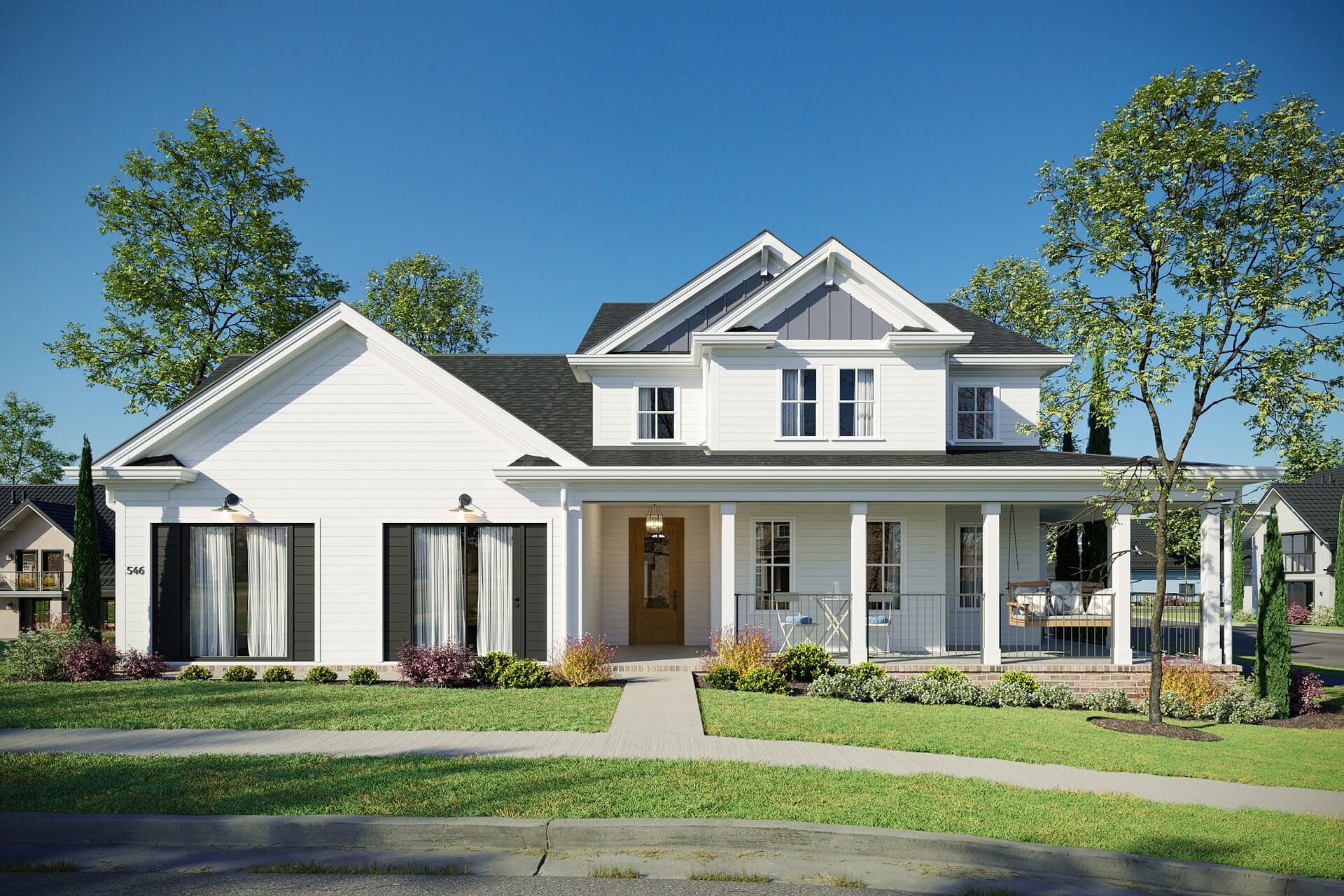
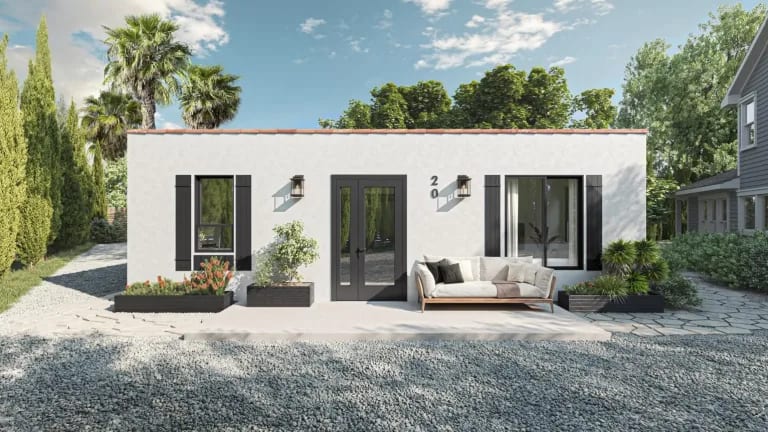
This type of 3D rendering is aimed to demonstrate how the future house will look in general. You will obviously want to showcase the front of it but might also consider other angles for architectural exterior rendering. These might be, for example, aerial views to highlight how the building works with its neighborhood, or close-ups to emphasize the quality of materials. A CG image like the one above will give your customer a comprehensive understanding of the project, allowing you to move on and proceed to discuss more specific aspects and details.
#2. Presenting Different Color Schemes
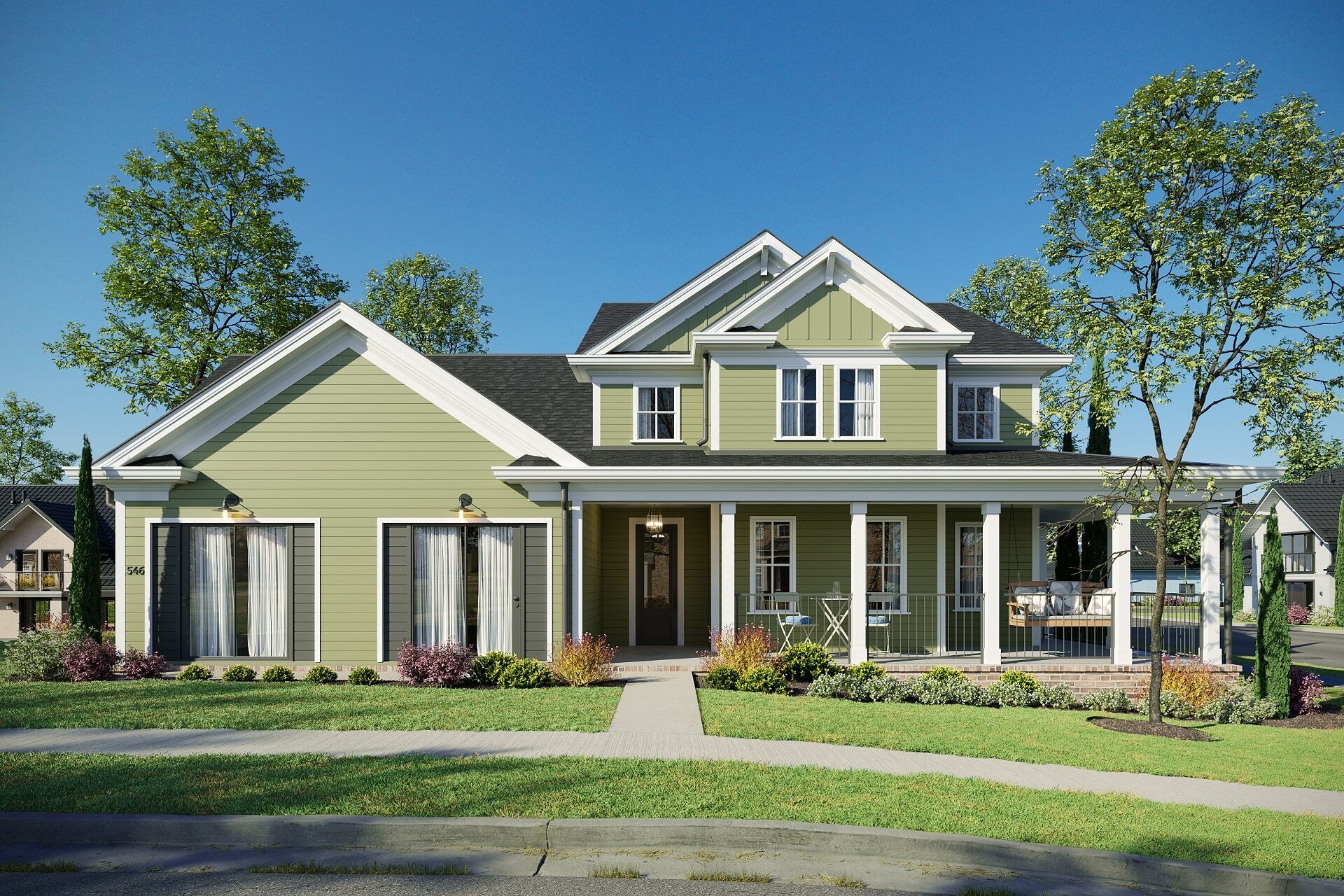
The usage of 3D exterior rendering services allows your clients to discover how their future home will look in various colors. Instead of showing paint swatches that might look completely different on real surfaces, home builders can showcase diverse options in photorealistic 3D visualizations. It can be done quickly and for a good price, as changing a color in a 3D scene does not require a lot of effort from a 3D artist.
#3. Showcasing Various Materials
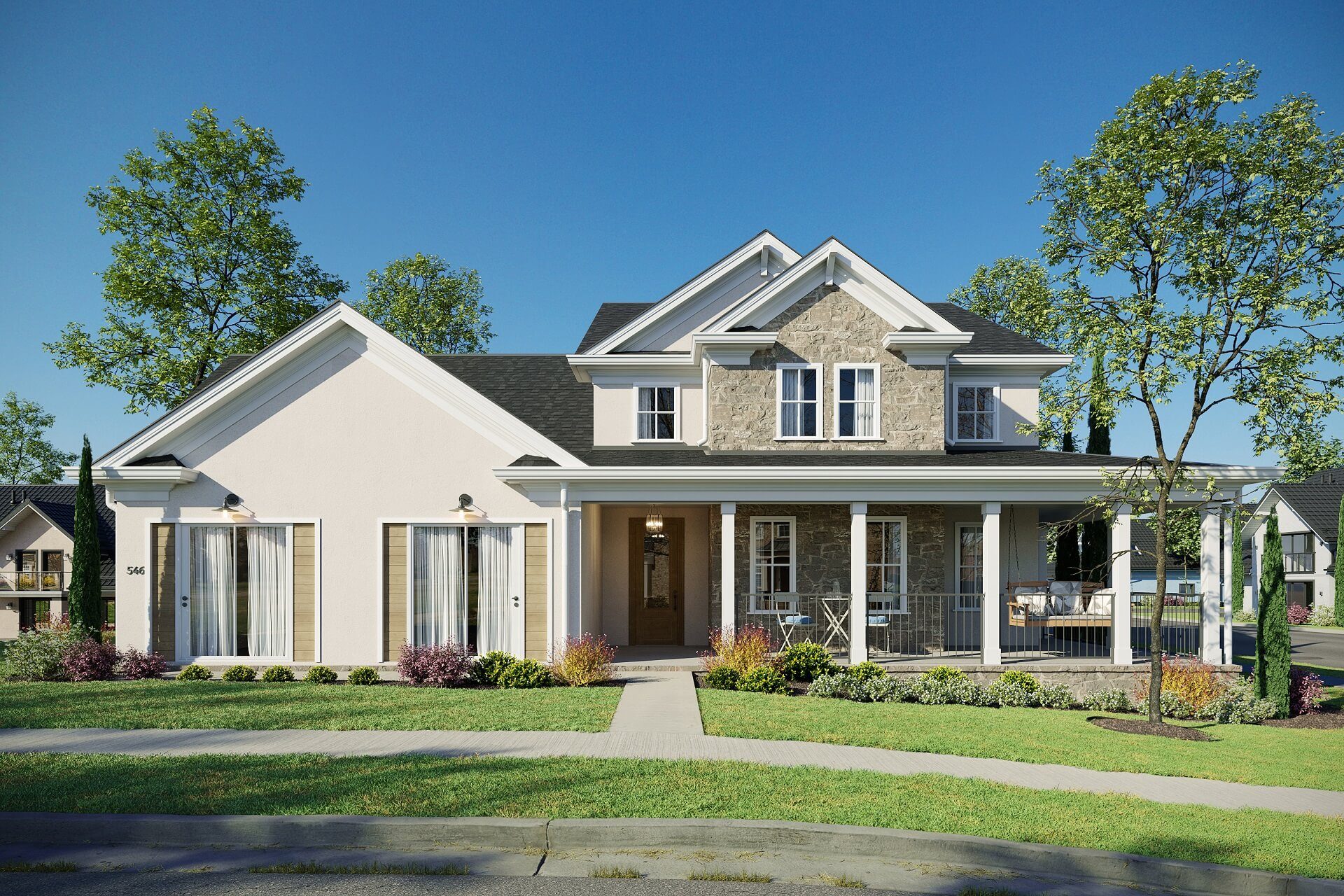
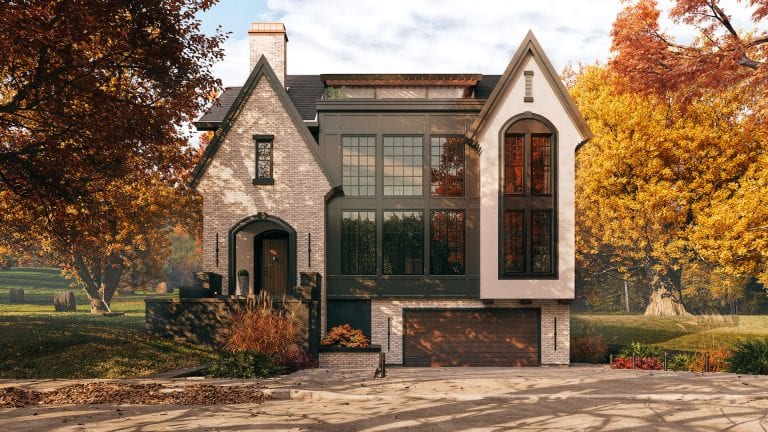
Another thing that would be tricky without 3D rendering is demonstrating how the specific home will look in different materials. As an example, changing the facade cladding from brick to wood might absolutely change the overall impression, even if the general design, shapes, and proportions stay the same. So, if the customer considers various material options for their home, don’t hesitate to provide them with clean and compelling 3D visualization of all the variants in question.
#4. Demonstrating Entrance Options
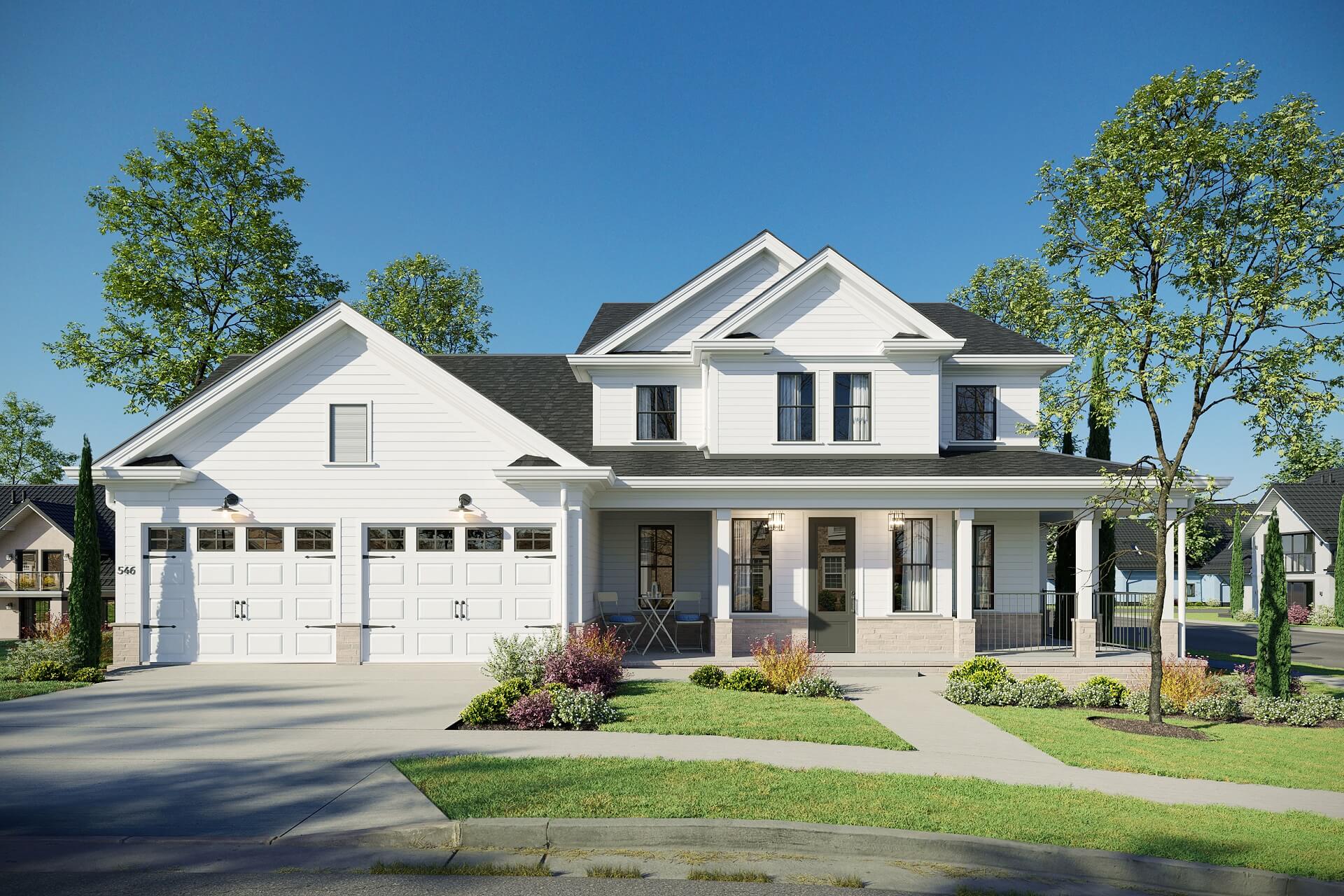
There is one more issue home builders will be glad to resolve before the construction starts. Here, we talk about customers being undecided about the entrance design. That’s because even with the general proportions and size of the building remaining the same, changes to the main entranceway can alter a home’s look past recognition. Because of that, it is important that a client is absolutely sure what to expect. This is the best way to avoid a customer’s dissatisfaction as well as costly and lengthy reworks. For this, you can use 3D exterior visualization services for home builders to present different combinations of doors, walkways, porches, columns, canopies, and so on. That will help your customer make the best choice.
#5. Showing a Variety of Secondary Design Details
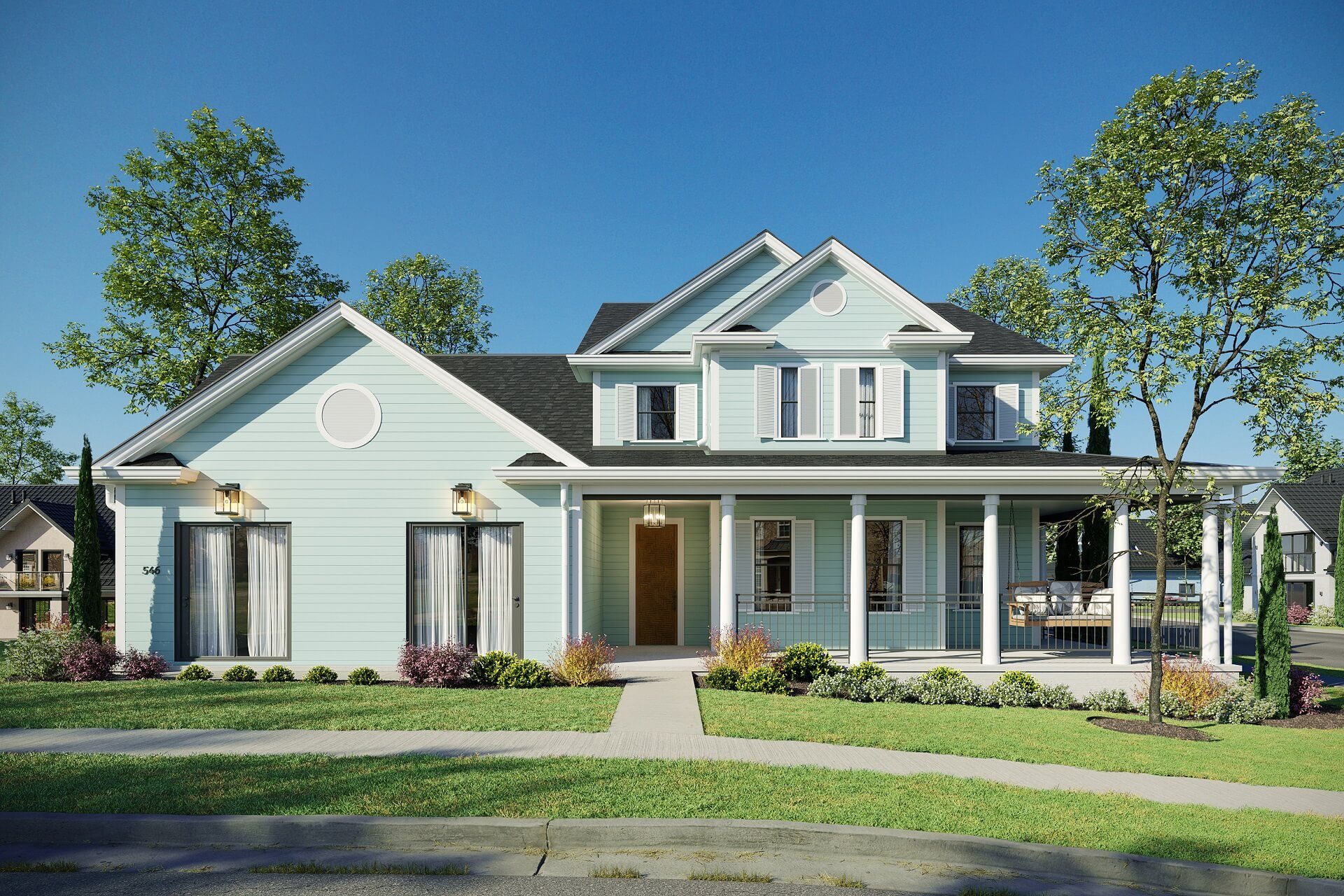
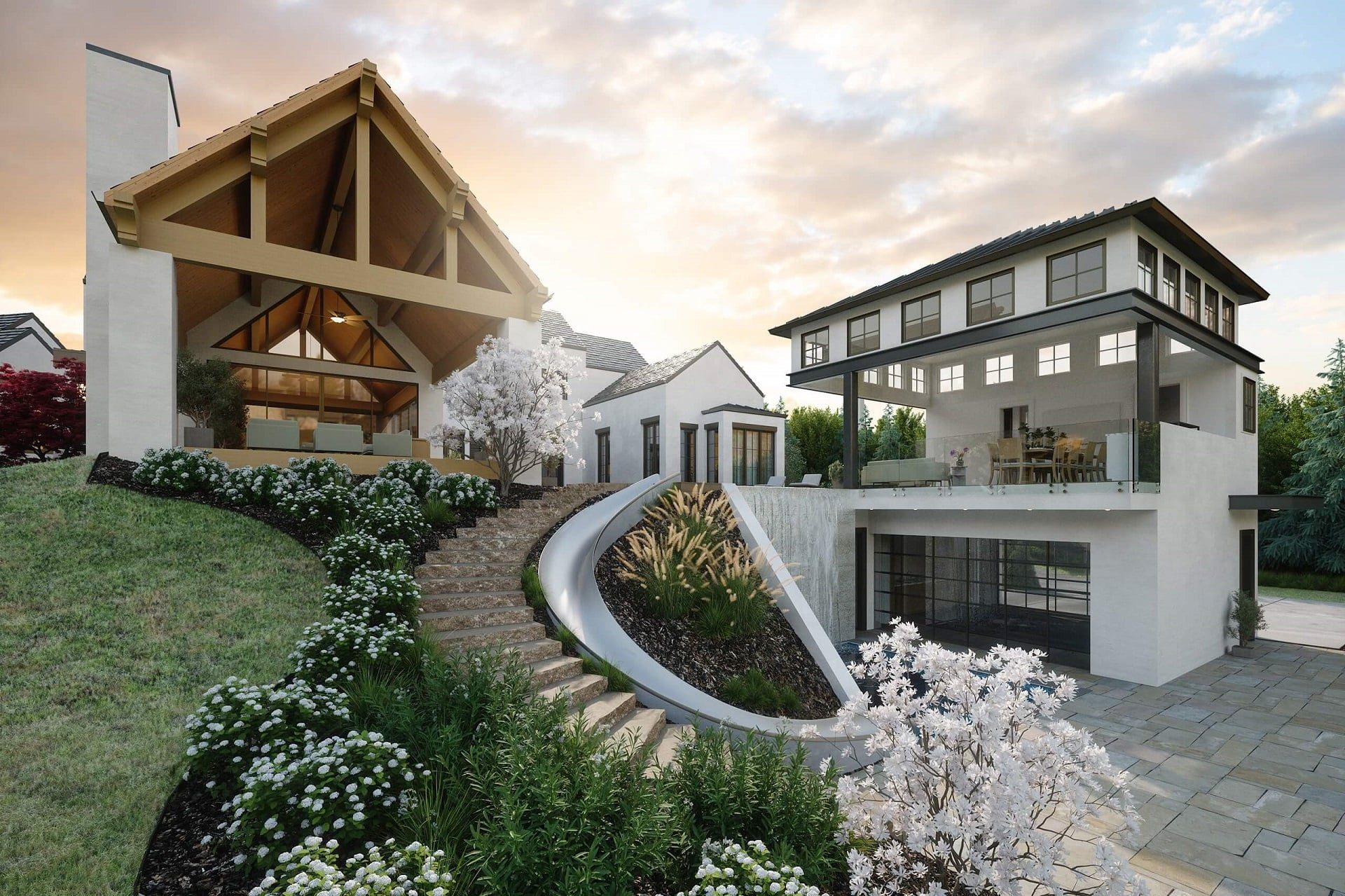
There’re a lot of minor aspects that can be tweaked without transforming the overall exterior of the house, but they still greatly influence the end look. And home builders have to make sure the owners of a future home like everything down to the smallest detail. Landscaping elements, windows, and exterior lighting fixtures – just to name a few – can all be easily changed and shown in a 3D rendering, allowing your customer to explore the entire range of solutions. This way, you can ensure that your clients get a vivid and comprehensive vision of how their place will look before the construction starts.
#6. Presenting Exterior Lighting Scenarios
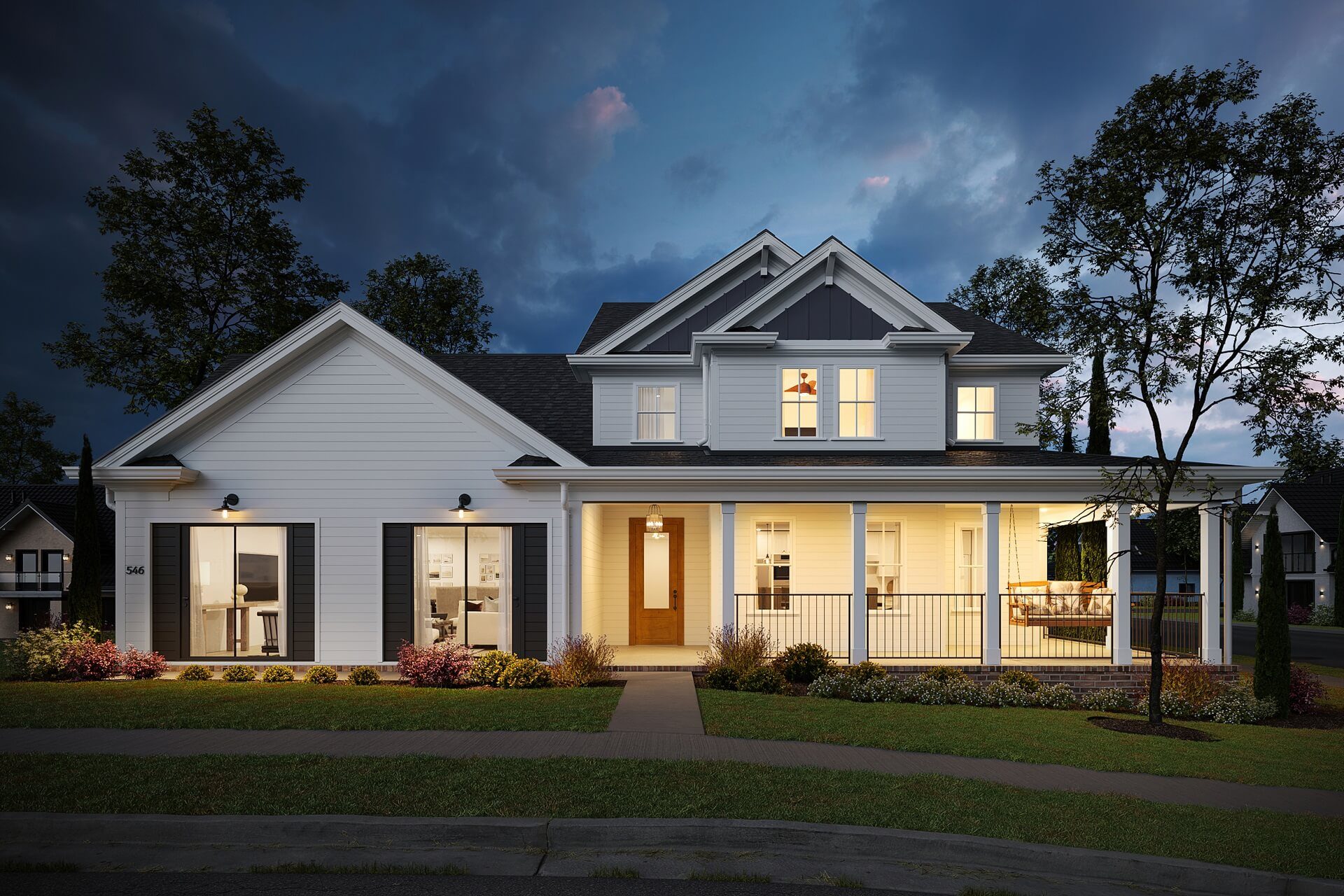
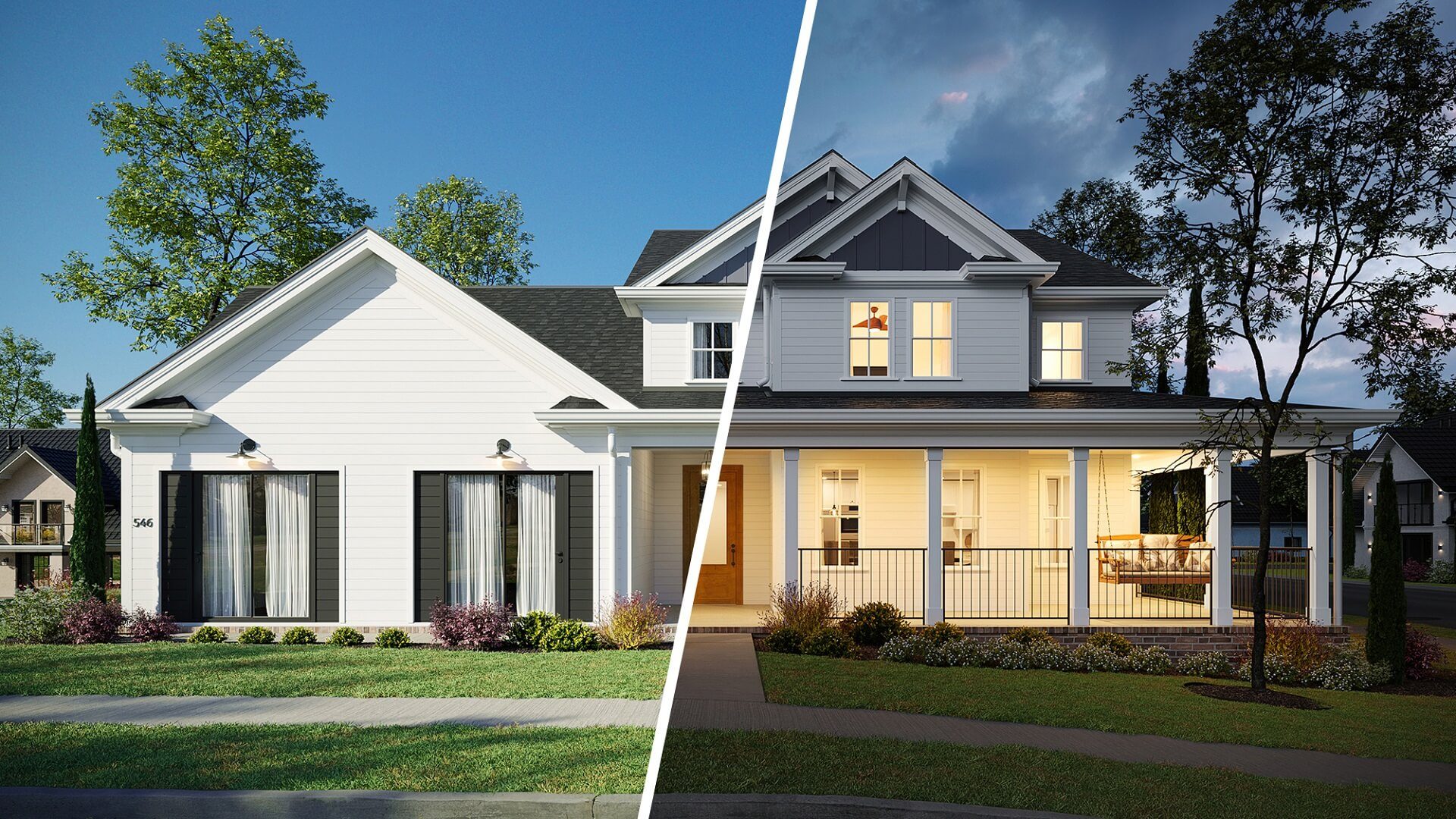
In most cases, you will want to go for a well-lit daylight scene in your 3D rendering so that there’s no confusion about the colors and materials. More subdued lighting on a cloudy day is another great option to make sure future homeowners get all the necessary information without being distracted.
However, oftentimes, a client also wants to see their home in a night view. Such a rendering will allow one to know how the materials of the house will look at dusk or nighttime and how the exterior lighting will work. Plus, a beautiful scene showing a building under the starry sky, with warm lights inside, looks incredibly cozy and inviting. This helps future owners form an emotional connection with their upcoming home.
Want to learn how much your project costs? See how we evaluate 3D rendering projects

From wall colors and material variations to lighting scenarios — these are just a few ways 3D home rendering supports home builders. The format can also present seasonal scenes, cars on the driveway, people on the terrace, or any other context that helps clients emotionally connect with the design. This makes 3D rendering effective for both conveying technical information and showcasing the atmosphere of a future home.
What Makes a House Render Photorealistic: 4 Quick Tips
Beyond choosing what to show, a few production decisions decide how convincing the final image looks:
- Pick weather and season for the story. Bright sun shows colors and materials clearly, golden hour adds atmosphere, overcast twilight emphasizes exterior lighting, and a snowy scene makes a family home feel cozy. A quick guideline: luxury villa gets bright sun, family home soft daylight, resort golden hour, cabin seasonal context.
- Choose camera angles around selling points. The hero angle should lead with the strongest side of the design, supported by one or two secondary views.
- Light the windows from inside. Visible interiors behind the glass make a house look inhabited rather than staged.
- Avoid sterile perfection. Slight imperfections, worn paths, and lived-in details read as realism; flawless surfaces read as CGI.
If you are marketing single-family projects specifically, our single-family house rendering services page covers formats and examples. And on the developer side, 3D rendering for real estate developers supports every project stage, from concept to pre-sales.
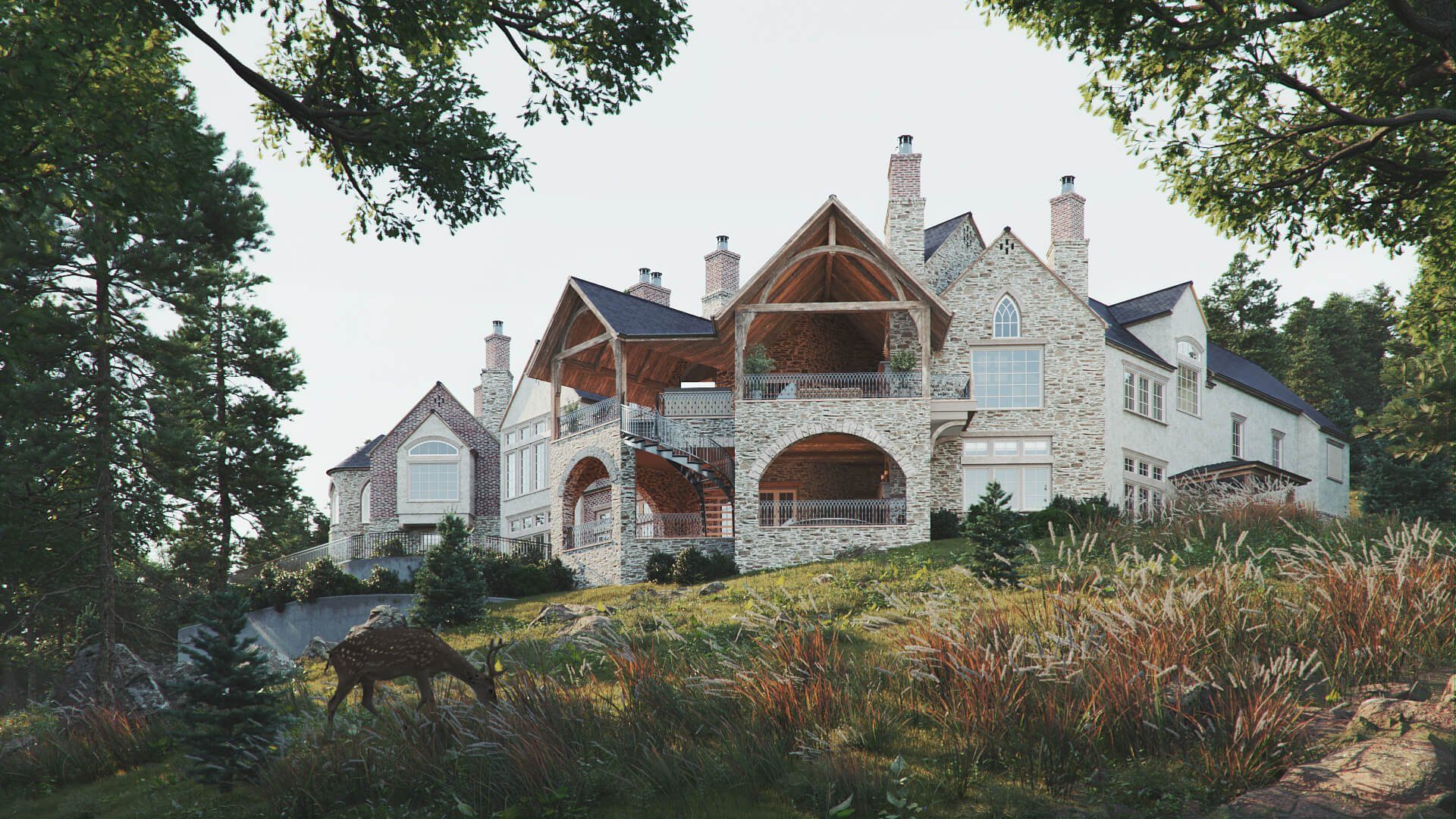
Looking for professional 3D rendering services for home builders? Contact ArchiCGI to get photorealistic visuals that support client approvals and streamline the construction process. For the broader strategy this fits into, see our guide to real estate developer marketing. Related reading: seven ways to pre-sell with 3D visualization and social media for property developers.
Home Rendering for Builders: FAQ

Stacey Mur
Content Writer, Copywriter
Stacey is a content writer and a CG artist. Outside of work, Stacey enjoys musicals, Star Wars, and art talk. A proud Corgi parent.