


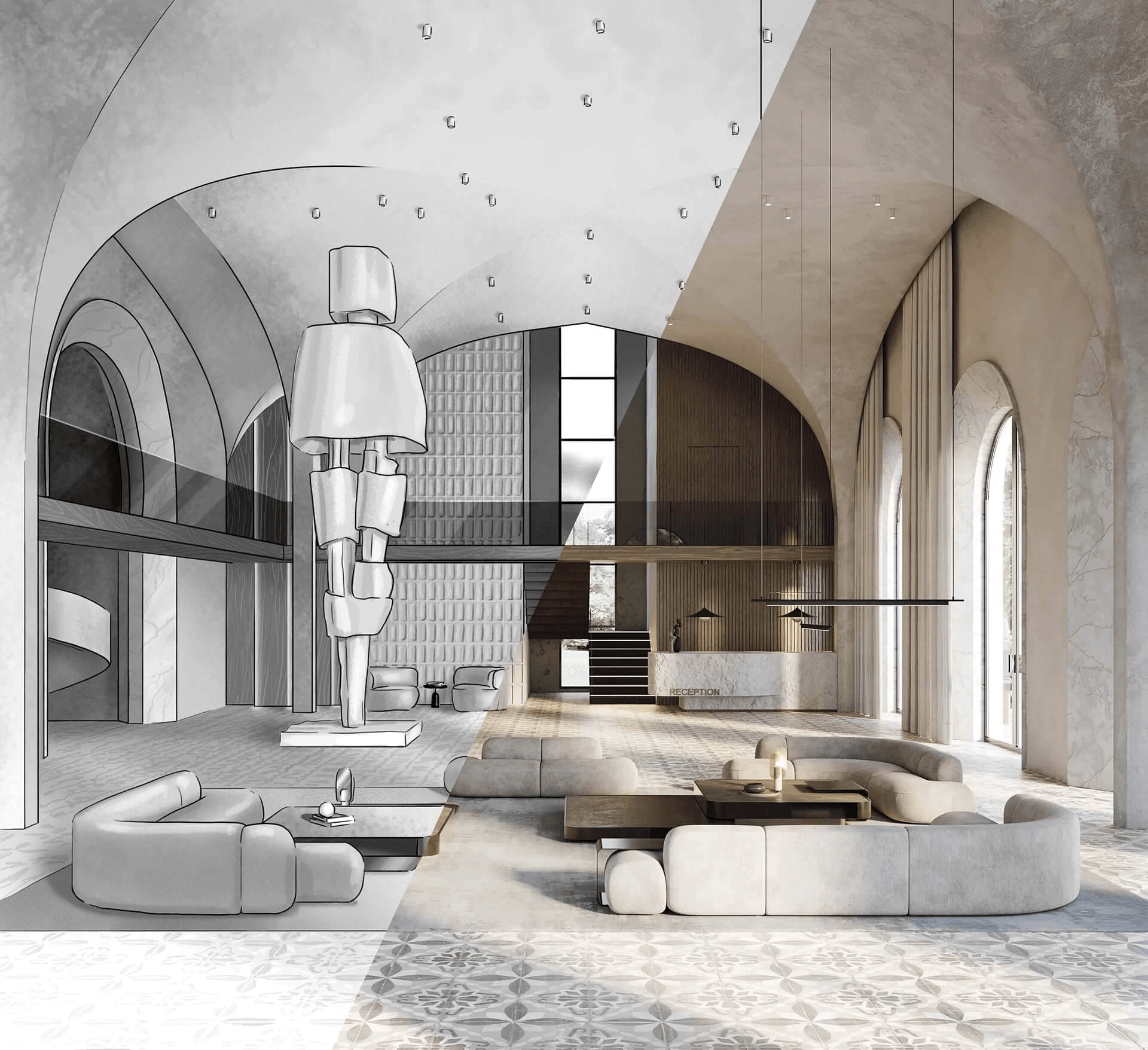
When presenting a design concept to clients or investors, the visual medium you choose shapes how the idea lands. Sketches have been part of architectural practice forever — they’re fast, personal, and good for thinking out loud. Professional 3D rendering services for architects occupy the other end of the spectrum: precise, photorealistic, and built for communication rather than exploration.
Both have a legitimate place in the workflow. The question isn’t which one is better in the abstract — it’s which one is right for a given moment in the project. A rough sketch at the concept stage serves a completely different purpose than a finished render going to an investment committee.
This guide walks through how the two approaches compare across the criteria that actually matter in practice: speed, accuracy, flexibility, and the impression they leave on clients. It also covers when working with an architectural visualization company makes sense versus handling visuals in-house — and what that decision means for turnaround time, output quality, and your team’s bandwidth.
Comparison Table: Hand Sketches vs 3D Rendering
The table below gives a quick side-by-side overview before we break each point down in detail.
| Criterion | Hand-drawn Sketches | 3D Rendering |
|---|---|---|
| Speed | Very fast (minutes/hours) | Several days (with outsourcing) |
| Accuracy | Schematic, depends on the artist | Photorealistic, highly detailed |
| Flexibility of changes | Difficult — requires redoing from scratch | Easy — edits in a 3D editor |
| Tool cost | Minimal (paper, pencil) | High (software) or outsourcing |
| Digital sharing | Requires scanning | Instant via email/web |
| Client impact | Conveys the concept | Full emotional picture |
Hand-drawn sketches
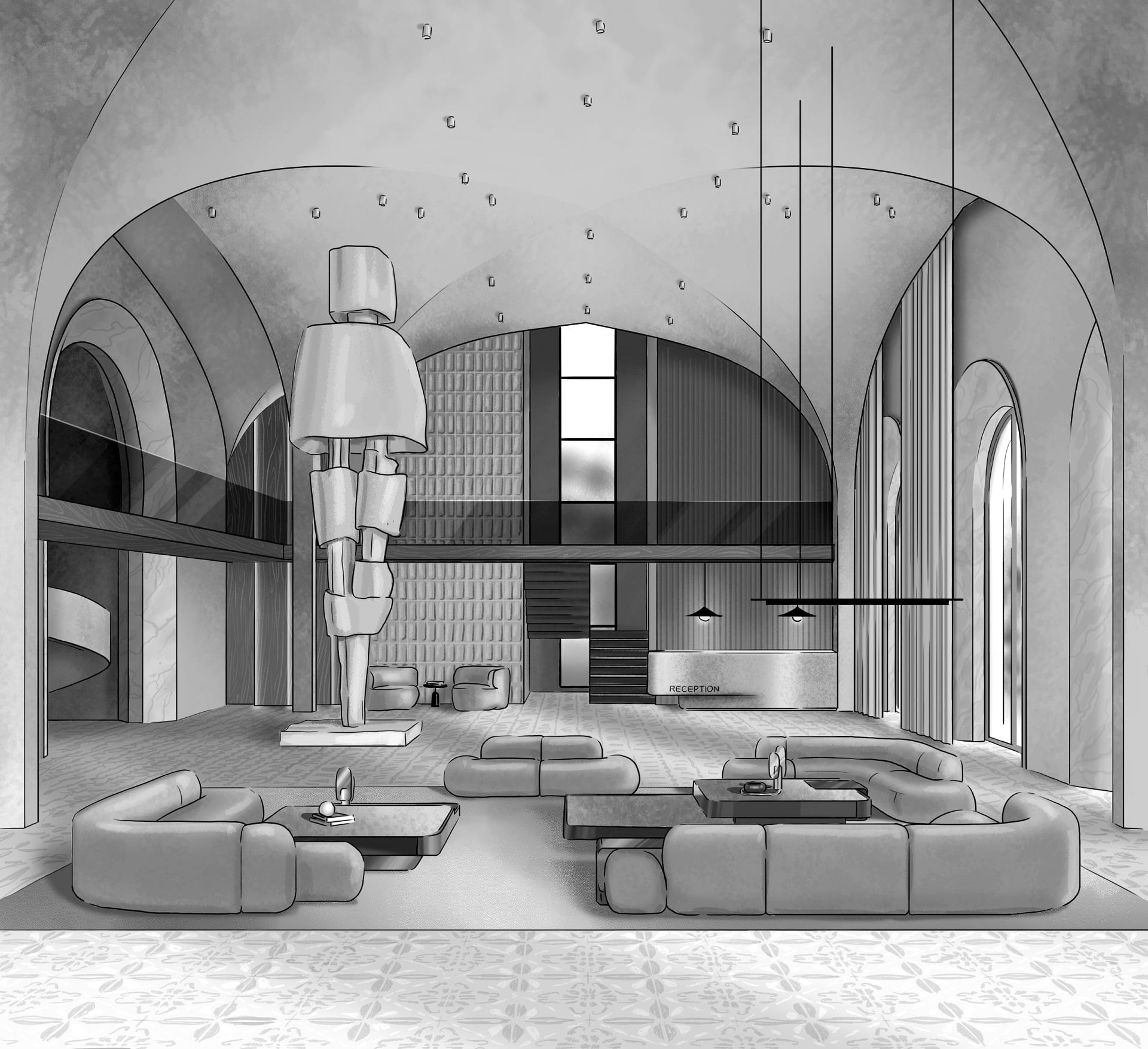
Sketching is thinking made visible — fast, intuitive, and entirely personal. Before any software is opened, a few lines on paper can capture a spatial idea, test a proportion, or explore three different directions in the time it would take to boot up a modeling tool. Speed at the early stages is real.
Creative freedom is another major asset. Hand-drawing imposes no constraints on form, style, or interpretation. A sketch can be loose and gestural or tight and technical depending on what the moment calls for. For architects with a strong personal drawing style, this becomes part of their professional identity — something that distinguishes their work before a single dimension is specified. That freedom from constraint is also what makes hand-drawn content stand out in content marketing for architects — a sketch posted mid-project shows how a designer thinks, not just what they deliver.
Where sketches become harder to work with is further along in the process. Revisions are the clearest example. If a client wants to see the same space from a different angle, or swap out a material, or shift a wall — that means starting over. There’s no layer to adjust, no parameter to change. Each modification is essentially a new drawing, which adds up quickly on projects with active client feedback.
A reliable partner for precise interior, millwork, and shop drawings
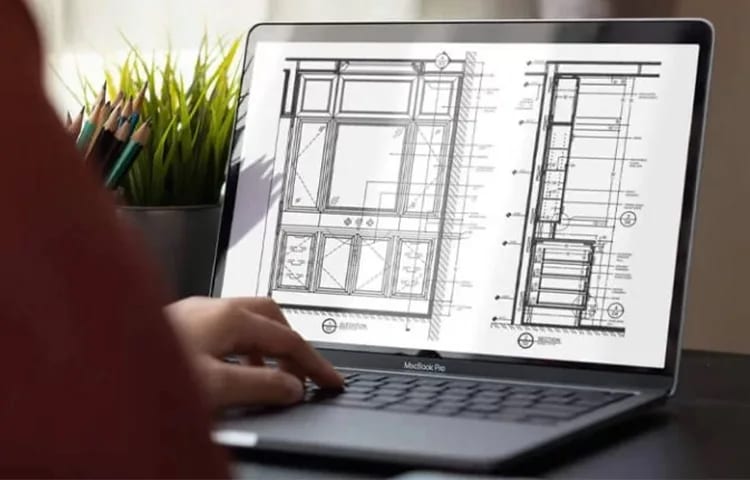
Studios that maintain an active online presence need a constant supply of visual content. Social media for architects favors high-resolution images that can be cropped, repurposed, and posted across platforms — and scanned or photographed sketches aren’t built for that.
LinkedIn for architects operates on a different register than Instagram, but the same issue applies. A scanned sketch can work as process content, but it doesn’t carry the same weight as a photorealistic visual when the audience includes developers, investors, or corporate clients evaluating a studio’s capabilities for the first time.
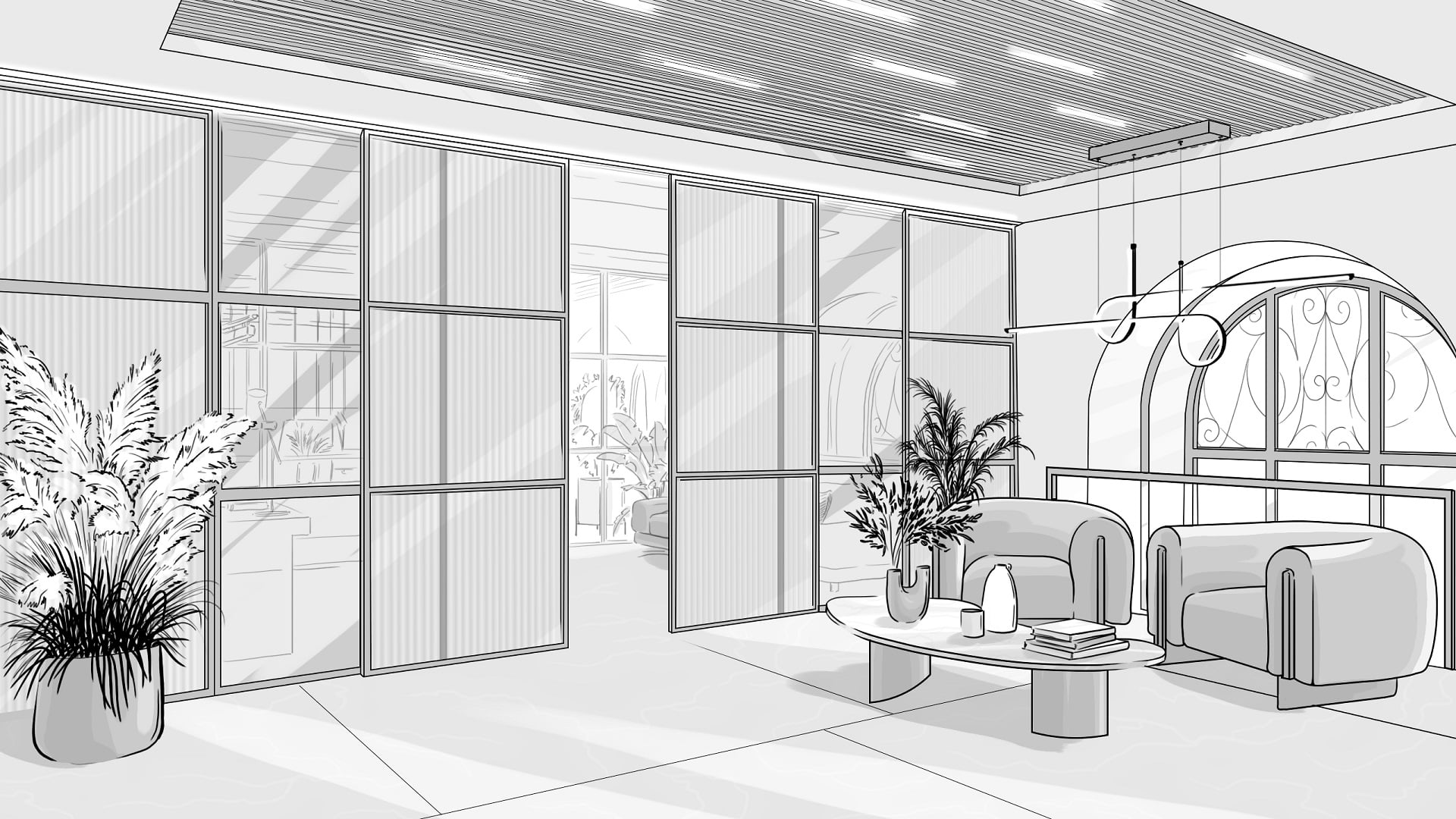
Graphic tablets close some of that gap. Digital sketching preserves the hand-drawn quality while making files easier to share, duplicate, and revise. The aesthetic still reads as sketched rather than rendered, which suits certain contexts — but it’s a different tool for a different purpose, not a direct replacement for either traditional drawing or 3D rendering.
Where hand-drawn sketches genuinely belong is at the front end of the process: brainstorming sessions, initial concept development, early-stage pitches where the goal is to open a conversation rather than close a decision. In those moments, a confident sketch communicates intent, personality, and design thinking. The informality is the point — it signals that ideas are still in motion and that the client is being invited into the process, not presented with a final answer.
Photorealistic 3D Renders

Photorealistic 3D rendering has become a standard deliverable in architectural practice. When a project needs to communicate finishes, light, spatial proportion, and material quality, CGI does it in a single image — and 3D rendering benefits for architects extend well beyond visual appeal, from client approvals to portfolio growth.
Material accuracy is one of the clearest advantages. Modern 3D rendering providers work with digital libraries built from real manufacturer catalogs — actual furniture collections, certified tile finishes, branded lighting fixtures. A client is not looking at a representation of their future space; they are looking at a near-exact preview of it. Specific fabrics, grout widths, wood grain directions — all rendered with precision that hand-drawing cannot match at this level of detail.
Lighting is where CGI earns its place. A single architectural model can be rendered at dawn, midday, dusk, or under artificial evening light. North-facing rooms can be shown with honest daylight; south-facing glazing can demonstrate solar gain across seasons. For clients who struggle to read technical drawings, a well-lit render closes that gap immediately.
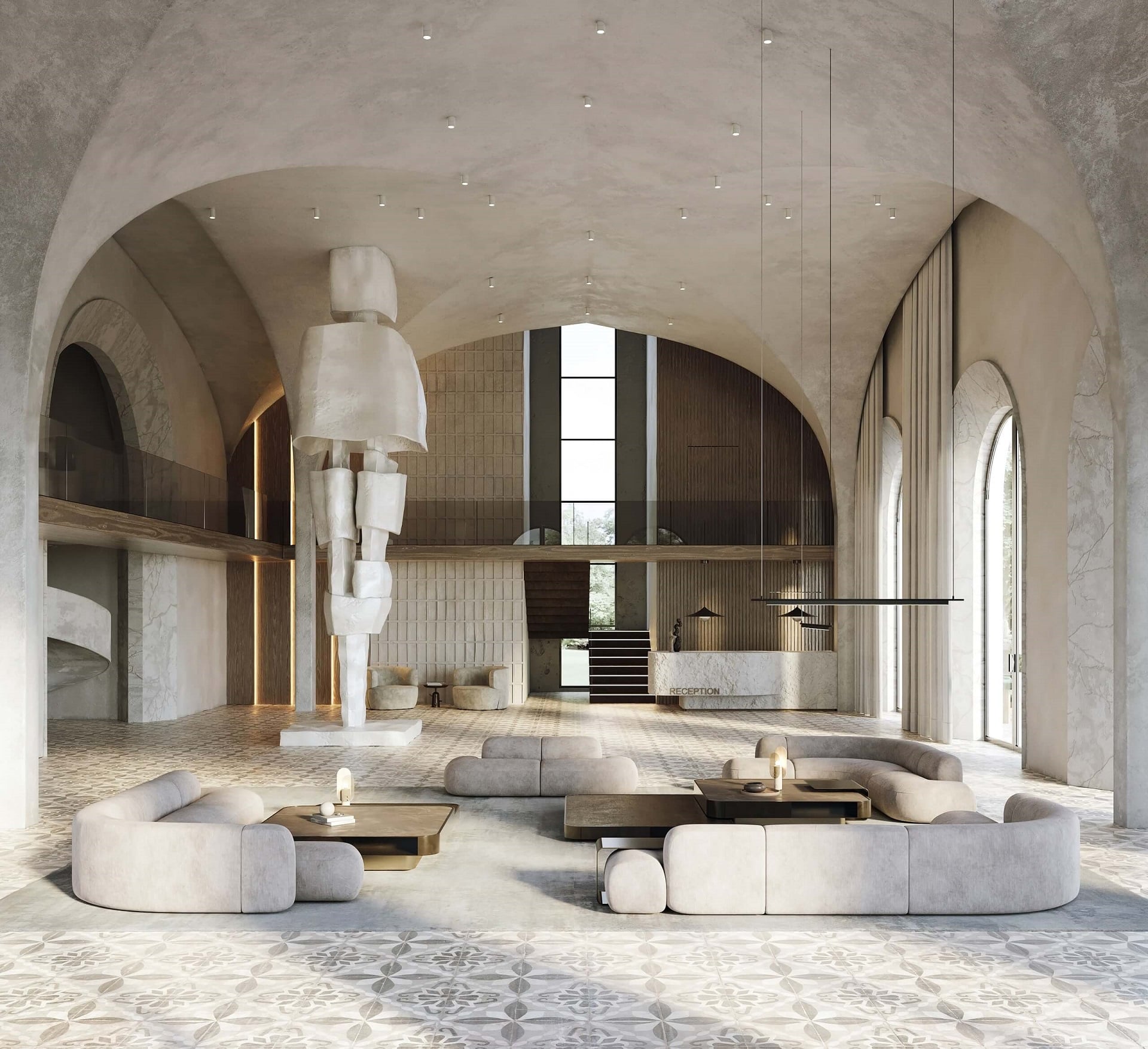
Multiple viewpoints come from the same model at no additional structural cost. Once the geometry is built, the camera can move — aerial perspectives, street-level approaches, interior cross-sections, detail close-ups. During client presentations, different stakeholders need different vantage points: a board member wants the massing from the street, a developer wants the rooftop from above. CGI accommodates all of them from the same file.
CGI allows quick modifications throughout the design process — adjusting materials, shifting walls, swapping furniture layouts. For final approvals, this responsiveness keeps projects moving rather than stalling at sign-off. The same matters for marketing timelines, where visuals may need to reflect revised plans after campaigns are already in production.
Portfolio building compounds over time. Completed project photography depends on construction schedules, weather, and access — all of which introduce delay. 3D rendering examples can populate a portfolio the moment a design is resolved, not months after a building is occupied. For firms pitching in competitive markets, that matters.
See how interior CGI turns your vision into client approval
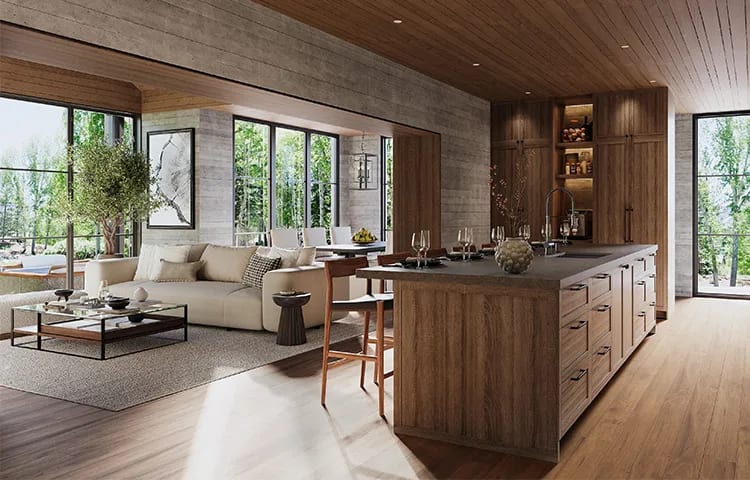
The range of deliverable formats extends the value further. Static imagery covers most presentation and marketing needs, but the same model can feed photorealistic 3D animation for walkthroughs that communicate spatial sequence — how rooms connect, how light moves through a corridor. For hospitality, residential development, and large commercial projects, 3D rendering for virtual tour has become an expected format, letting remote stakeholders explore a space before it is built.
Professional CGI software carries significant licensing costs, and producing client-facing renders requires skilled operators. For this reason, many practices outsource to specialist studios — paying for the final deliverable rather than maintaining in-house capacity.
Hand-drawn sketches remain a valuable tool for early-stage ideation and quick concept development. But when it comes to client presentations, marketing materials, and final approvals, interior design rendering services deliver a level of realism and clarity that sketches simply cannot match. For most architects and interior designers, the most effective workflow combines both: sketches for exploration, and 3D renders for communication and approval.
Schedule a free demo of 3D solutions for your business

Catherine Paul
Content Writer, Editor at ArchiCGI
Catherine is a content writer and editor. In her articles, she explains how CGI is transforming the world of architecture and design. Outside of office, she enjoys yoga, travelling, and watching horrors.



Comments
Jeff Carr
Irma Prus