


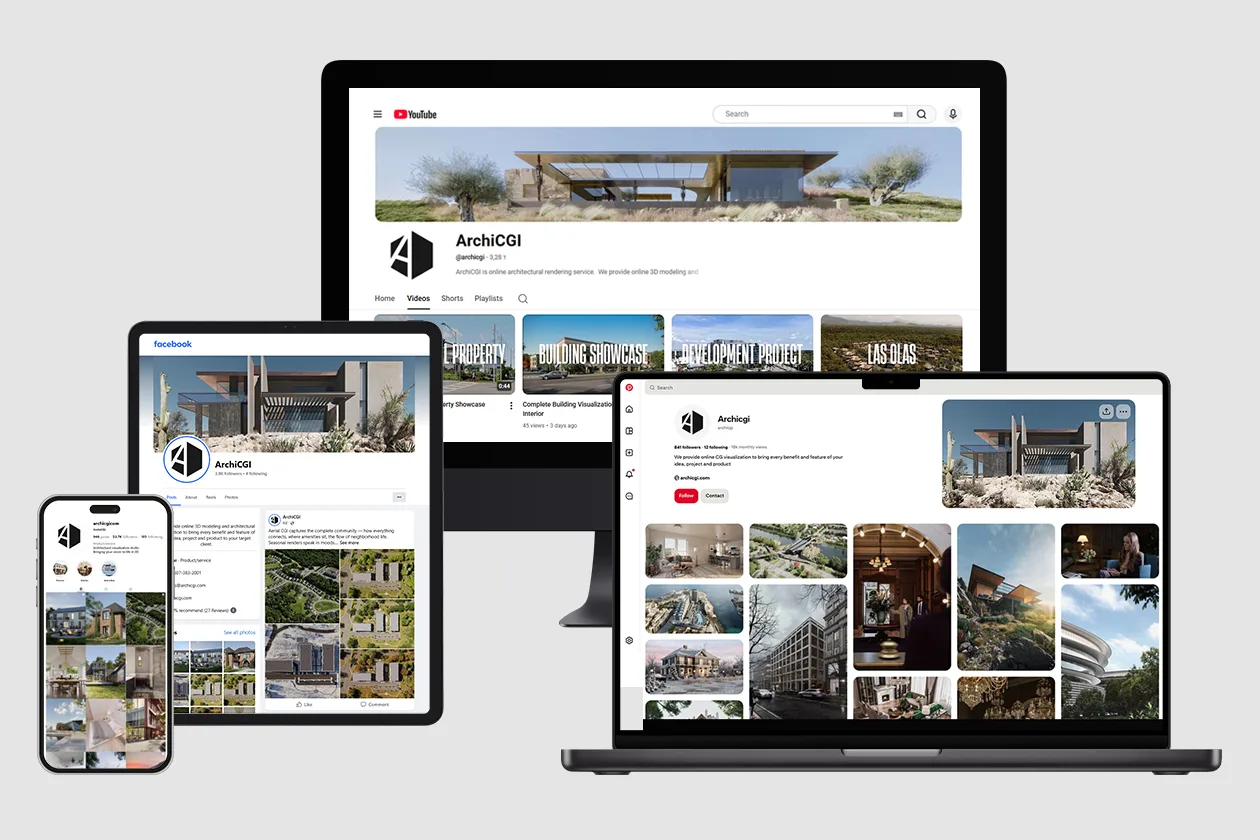
Architectural marketing now operates in an environment where attention is distributed across multiple digital channels. Social media for architects is no longer peripheral. It influences how studios are discovered, referenced, and compared. Architectural content circulating across these platforms ranges from built photography to competition materials and 3D architectural visualization, reflecting the broader shift of architectural communication into digital space.
The scale of this exposure explains why platform selection cannot be arbitrary. According to social media statistics, as of February 2025, the average user spends 141 minutes a day on social media platforms around the world. This is down from 143 minutes the year before.
The marginal decline does not reduce competitive pressure. It reinforces the need for deliberate platform choice rather than scattered activity.
This article provides an overview of eight platforms. It outlines selection criteria based on studio objectives and presents practical considerations for navigating them efficiently.

How to Choose the Right Platform for Your Architecture Firm
Choosing among the best social media platforms for architects starts with defining what this effort should produce. Leads require visibility in front of decision-makers. Partnerships demand professional credibility. Recruitment calls for cultural clarity. Brand awareness needs consistency over time. In the broader relationship between social media and architecture, platforms are not interchangeable. Each supports a different stage of visibility, evaluation, and trust.
Audience definition sharpens the decision. Homeowners respond to atmosphere and livability. Developers and brokers look for scale, feasibility, and proof of delivery. Fellow architects pay attention to design thinking and execution detail. Before exploring architecture advertising ideas, firms need to assess internal capacity. How many hours per week can realistically be dedicated to content production? For most studios, the workable structure is one to two primary platforms. One secondary channel can sustain these platforms without increasing the workload.
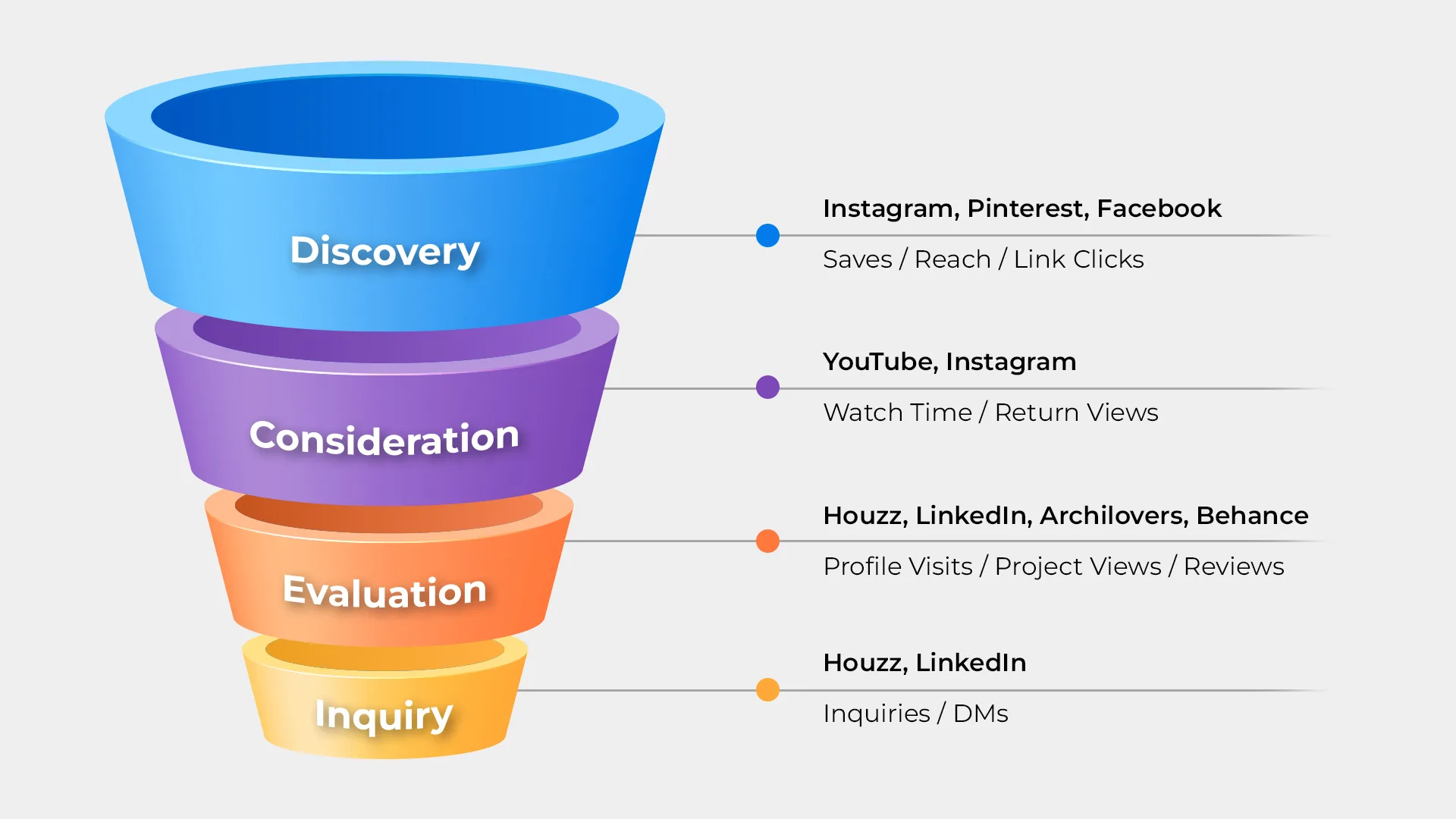
Platform roles diverge once visibility begins to scale. Discovery environments such as Instagram and Pinterest function as entry points, where projects surface through browsing behaviour, visual search, and algorithmic distribution. This is often where first contact with a studio’s work happens. Trust-building platforms such as Houzz and LinkedIn come into play later, when audiences move from inspiration to evaluation. Reviews, project case depth, professional networks, and credentials start carrying weight. Using both layers in parallel allows architecture firms to generate exposure while reinforcing legitimacy, rather than accumulating a reach that lacks decision-making confidence.
Quick Comparison: Top 7 Platforms at a Glance
Before moving into a detailed breakdown of marketing for architects across the most ROI-efficient channels, it is useful to establish a structural overview. The table below shows how each platform functions in practice. It says what it is best suited for, which formats dominate, and which KPIs indicate performance.
The comparison focuses specifically on posting activity.It delineates the distinct marketing functions supported by different platforms, the typical formats used to maintain presence, and the indicators that signal performance. In the context of content marketing for architects, this snapshot clarifies how communication effort translates into measurable platform outcomes before moving into detailed analysis.
| Platform | Best for | Top formats | Key KPI |
| Houzz | Intent-rich leads | Projects, reviews | Profile visits, inquiries |
| Archilovers | Peer visibility | Project stories, albums | Views, saves |
| Visual discovery | Reels, carousels | Saves, reach | |
| Local community | Albums, short video | Engagement, group reach | |
| Evergreen traffic | Vertical pins, boards | Saves, link clicks | |
| B2B credibility | Posts, case studies | Profile views, DMs | |
| YouTube | Depth & search | Shorts, walkthroughs | Watch time, subscribers |
| Behance | Portfolio visibility | Project uploads, case studies, work-in-progress | Views, appreciations, followers |
#1. Houzz
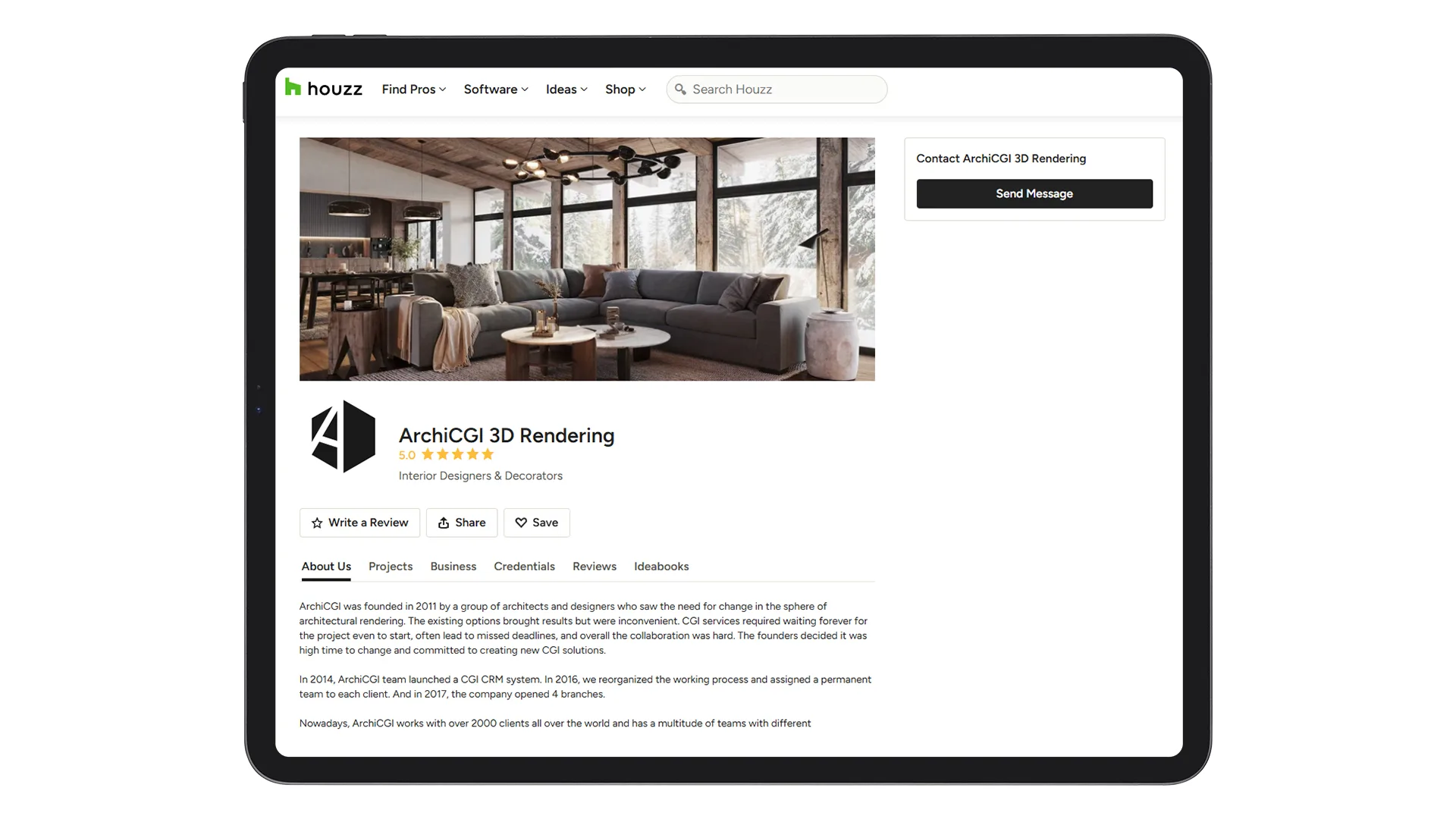
Houzz draws in people who are already deep into a renovation, build, or interior upgrade. They are not browsing out of curiosity. They come in with plans, budgets, and timelines in mind. Unlike broader social platforms, architecture blogs, or channels usually used in social media marketing for architects, the audience behaves differently. Visitors spend time comparing providers, moving through project galleries, and narrowing down who they might actually hire. For architects and design studios, this changes the nature of visibility. It stops being passive exposure and starts working as discovery that is much closer to conversion.
Profile setup directly affects discoverability. Category selection, keyword placement, defined service areas, and complete contact details all feed Houzz’s internal search and Google indexing. A fully populated profile also reduces friction once a prospect decides to reach out.
On Houzz, trust signals are practical, not symbolic. Reviews influence a studio’s search visibility and the level of consideration it receives once a user opens the profile. The best time to ask for one is right after delivery, when the outcome is in front of the client and the collaboration is fresh. The request itself can stay brief.
If a critical review appears, the public reply carries more weight than the complaint. A grounded response, paired with a clear path to resolve the issue, shows how the studio handles friction in real work.
Quick replies to incoming inquiries also support visibility, while badges and awards add another layer of business credibility.
Content should remain portfolio-led. Here are some effective examples.
- Completed projects. This type of content performs best, especially when visuals show scope and detail.
- Before and after comparisons. These help prospects understand transformation value.
- Behind-the-scenes process. Such content adds transparency and positions the firm as structured and methodical rather than purely creative.
Houzz also reinforces local SEO. Profiles often rank prominently in regional design and architecture searches, which extends visibility beyond the platform itself.
Key performance indicators to track include profile visits, review volume, and direct inquiries, as these reflect both visibility and commercial traction.
More insights are outlined in our article on promoting an architecture brand on Houzz.
#2. Archilovers
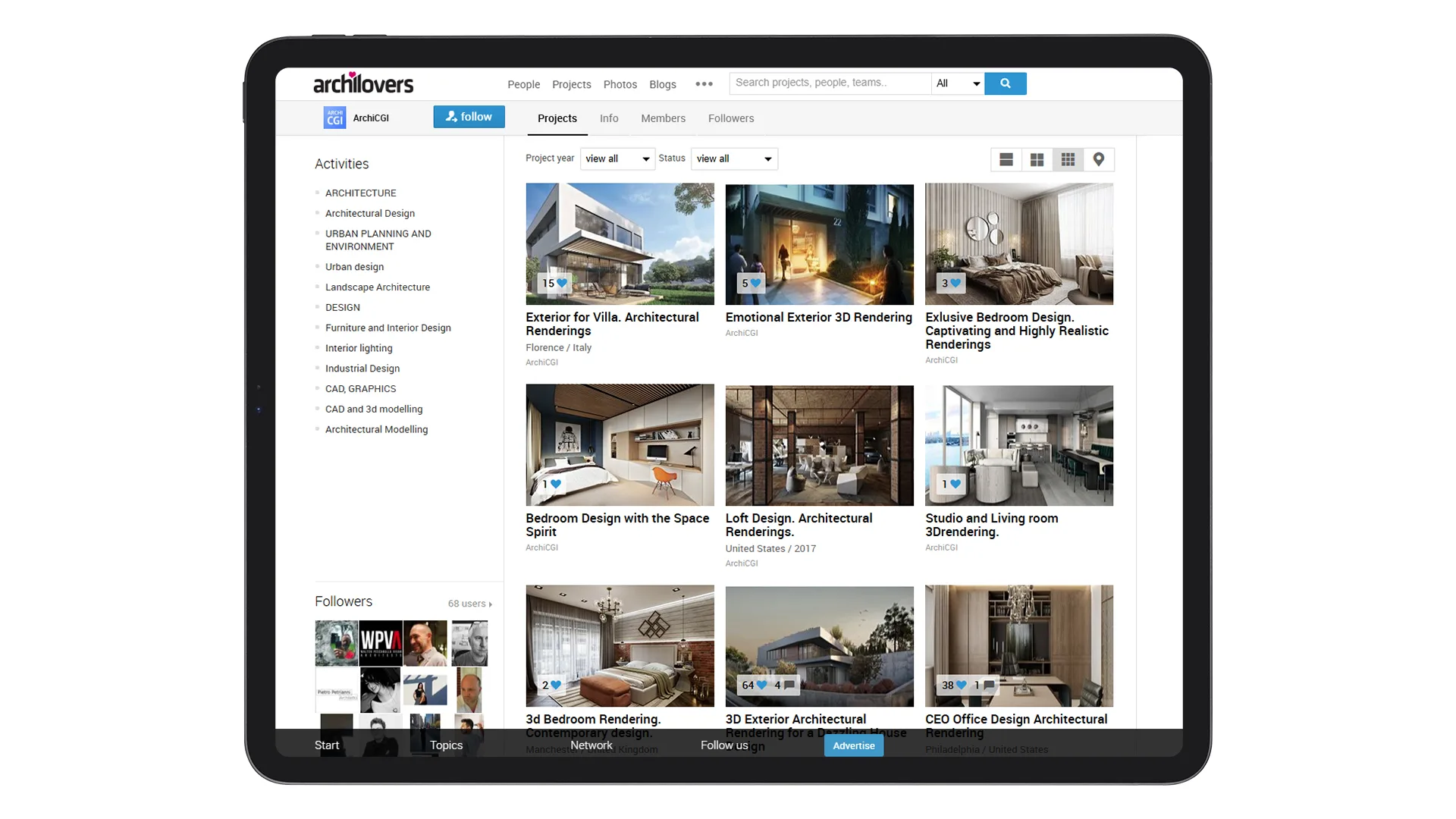
Archilovers is not a typical lead channel. It works more as a layer of professional visibility. Peer attention shapes the platform, attracting primarily architects, interior designers, curators, and potential brand collaborators over private clients. Studios utilize it to maintain their presence in the industry and shape the perception of their work among other professionals. It supports positioning and recognition more than direct acquisition. Within a broader social media for architecture firms strategy, it plays a reputational role rather than a sales-focused one.
Discovery on the platform follows themes, not timelines. Projects are organized into albums by typology, materials, functions, or spatial ideas, which makes curation part of the visibility strategy. A residential loft posted on its own may pass largely unnoticed. The same project placed inside a collection built around adaptive reuse or compact urban living becomes easier to find. It starts appearing in the browsing paths professionals use when they are looking for references, collaborators, or direction.
The Stories and blog sections do more than add extra images. They give studios space to talk through the thinking behind a project. Here, studios can clearly lay out design decisions, regulatory constraints, budget trade-offs, and engineering challenges. When the focus shifts from pure visuals to how problems were handled, the content carries more weight. This level of detail typically elicits a response from peer audiences, as it demonstrates the actual delivery of the work, not just its appearance.
Metrics here need to be read in context. The platform runs on exposure, not lead capture. What matters most is how often projects are viewed, saved, or liked. Saves carry the strongest signal. They usually mean the work is being filed away for reference, added to mood boards, or used in precedent research. That kind of engagement builds slow, professional visibility instead of quick traffic that disappears.
#3. Instagram
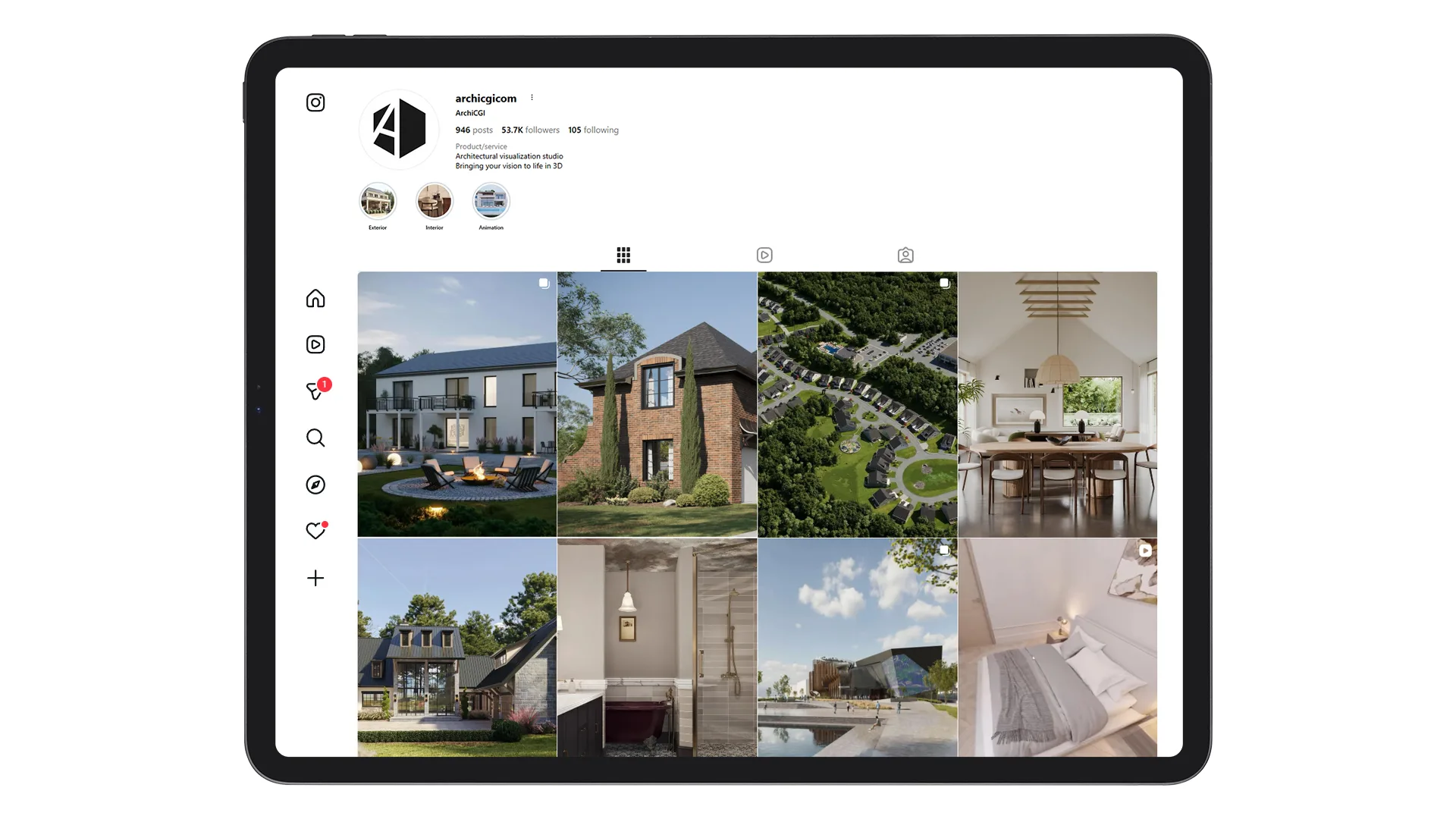
Instagram remains central to visual discovery and brand perception. Architecture studios use Instagram as a front-facing portfolio, quickly forming first impressions. Within social media ecosystems, it is where architectural visualization translates most directly into perceived expertise.
Format choice affects how far content travels. Right now, Reels drive the widest reach, especially in vertical 9:16 and within the 15-60 second window. Carousels still work well for before and after sets, where firms can walk viewers through a spatial shift slide by slide. Stories serve a different role. They keep day-to-day activity visible through site clips, short updates, quick Q&As, and polls that maintain contact between larger posts.
Content should stay structured rather than spontaneous. High-performing themes include the following:
- concept to construction to final result series
- before and after comparisons,
- short walkthrough clips
- curated material palettes
- on-site process shots
- CGI content that demonstrates design intent before execution.
This mix balances finished work with process transparency.
Hashtag strategy should stay concise and taxonomical. Overloading posts reduces clarity and weakens categorization. Consistent use of project type, location, and service tags improves discovery without appearing promotional.
The recommended cadence is four to five Reels per week, supported by one to two Stories per day. This frequency sustains algorithmic visibility without diluting production quality.
The numbers worth watching are saves, reach, profile visits, and overall engagement rate. Together they show whether the content is landing and whether people remember the brand beyond a single scroll.
More tips are available in our article on Instagram marketing for architects.
#4. Facebook
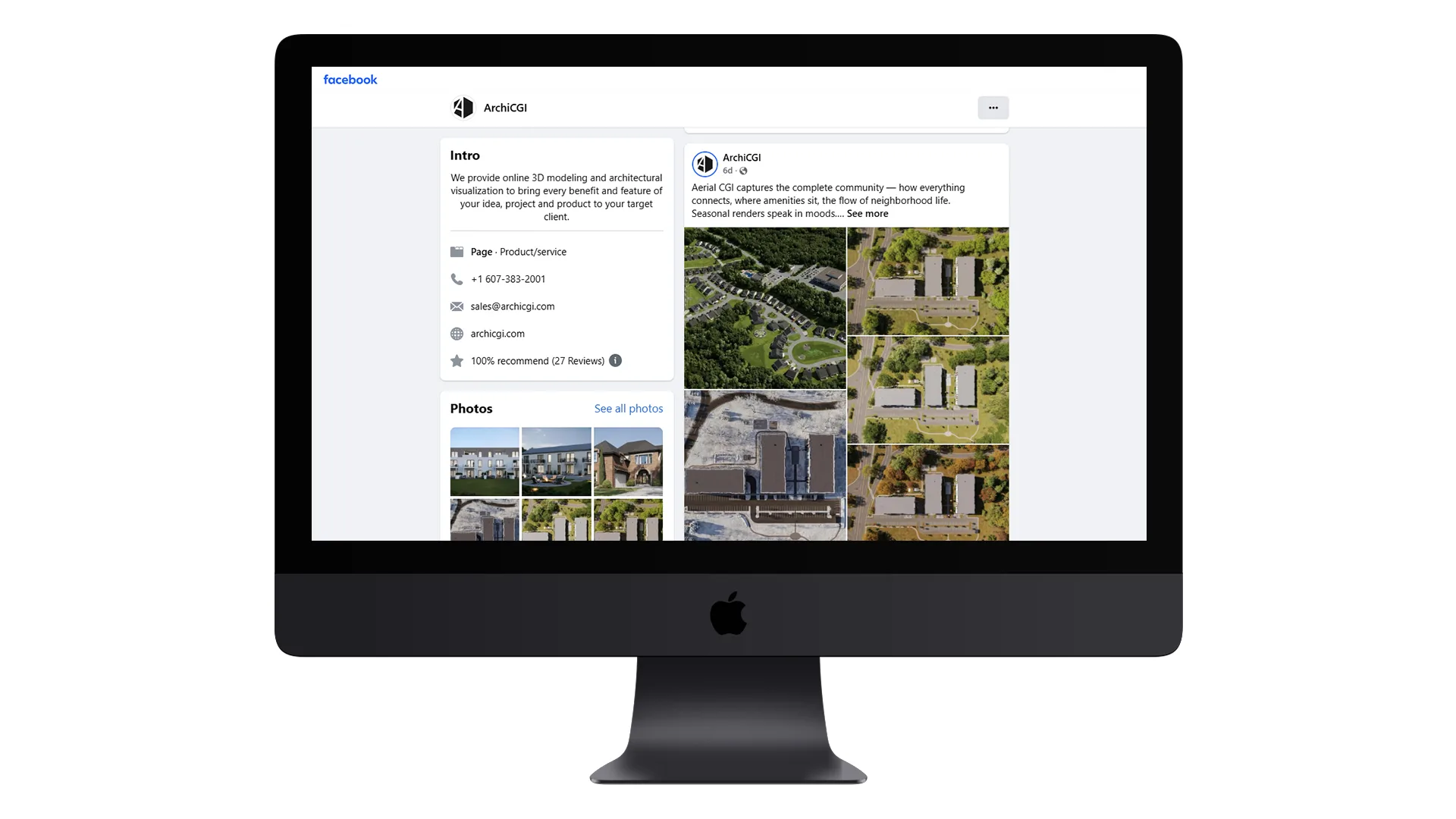
For architects, Facebook is an infrastructure platform rather than a showcase channel. It can be used for local visibility, community interaction, and retargeting audiences who have already engaged with a studio elsewhere. Within broader social media strategies for architects, it functions as a relationship maintenance and awareness layer rather than a primary portfolio hub.
Business Pages should be managed through Page Insights. This way, architects can align updates with when local audiences are most responsive. Performance data, not personal opinion, should refine posting times, content formats, and audience demographics.
Groups add another visibility tier. Participation in architecture, real estate, and neighborhood communities supports networking and keeps the firm present in local conversations. This allows architects to bring value to potential audiences directly and build trust over time. Architects can achieve this by sharing their expertise, providing project updates, and actively participating in events.
Content should stay informational and community-oriented. Albums work well for project summaries, while short videos highlight walkthroughs or milestones. Event announcements, site updates, and collaborations with local partners reinforce market presence. More ideas of attention-grabbing content can be found in this article about Facebook marketing for architects.
Moderation matters. Comment response time signals professionalism, especially when prospects ask practical questions. Clear, prompt replies support trust and improve algorithmic reach.
A schedule of two to three posts per week keeps output regular without overwhelming the feed. Engagement rate alongside group activity levels gives a better read on sustained local exchange than top-line impression counts.
#5. Pinterest
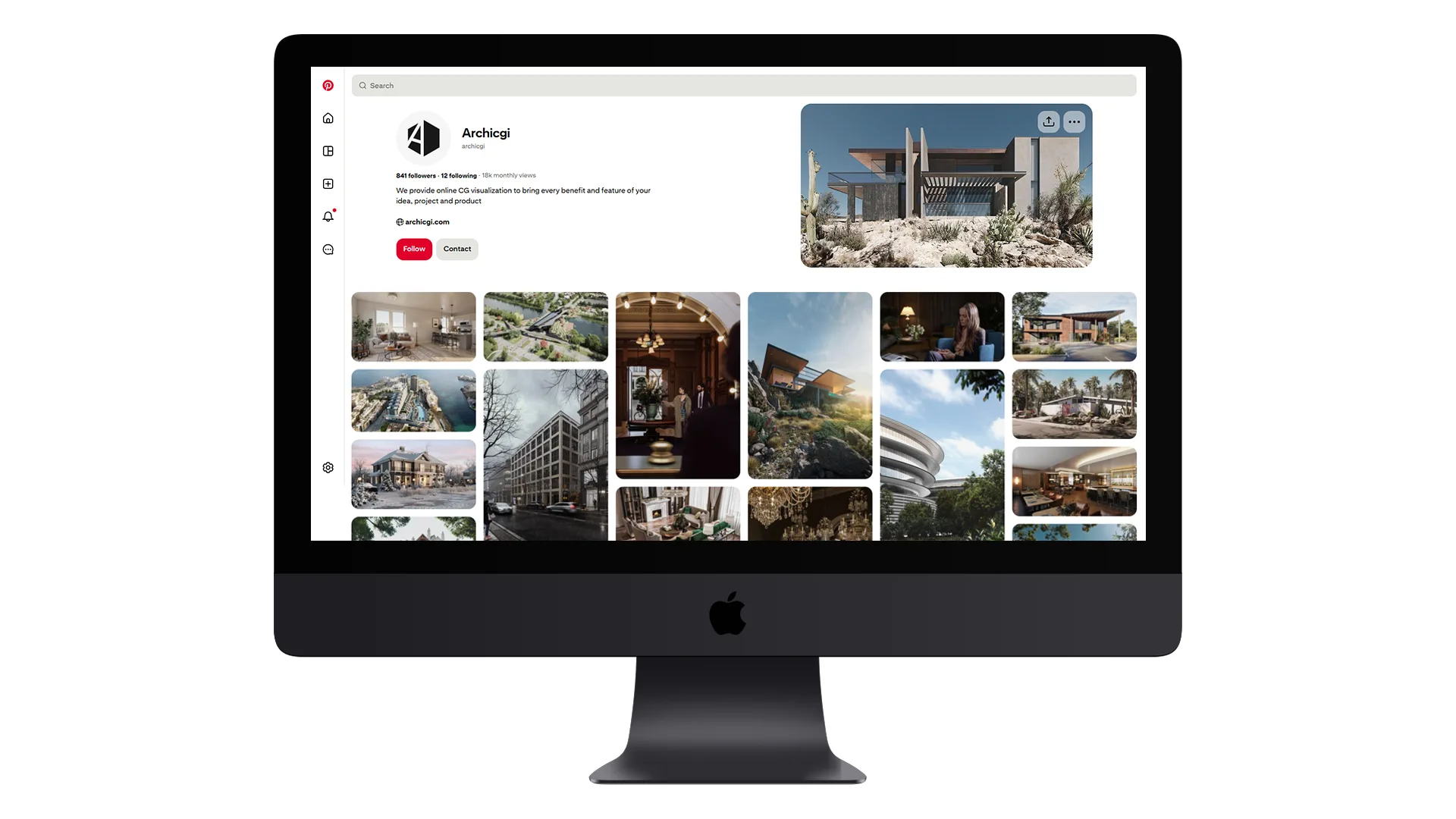
Pinterest makes an excellent long-term discovery layer. Its strength lies in evergreen discovery and top-of-funnel traffic rather than immediate traffic generation. Content does not peak and disappear but continues resurfacing through saves and searches.
It is good practice to group pins by space type, such as facades, lobbies, terraces, or kitchens, and then expand them into style-driven mood boards. This way, projects can enter multiple browsing routes at once. This structure also supports SEO, especially when pin descriptions include targeted keywords and link back to portfolio pages or case studies.
The content mix usually follows an 80-20 balance. Most pins lean into inspiration, while a smaller share highlights the studio’s own photorealistic rendering work. With a posting rhythm of five to ten pins per week, often maintained through tools like Tailwind, circulation stays active. Performance is then read through saves and link clicks, since both point to sustained discovery rather than brief traffic bursts.
#6. LinkedIn
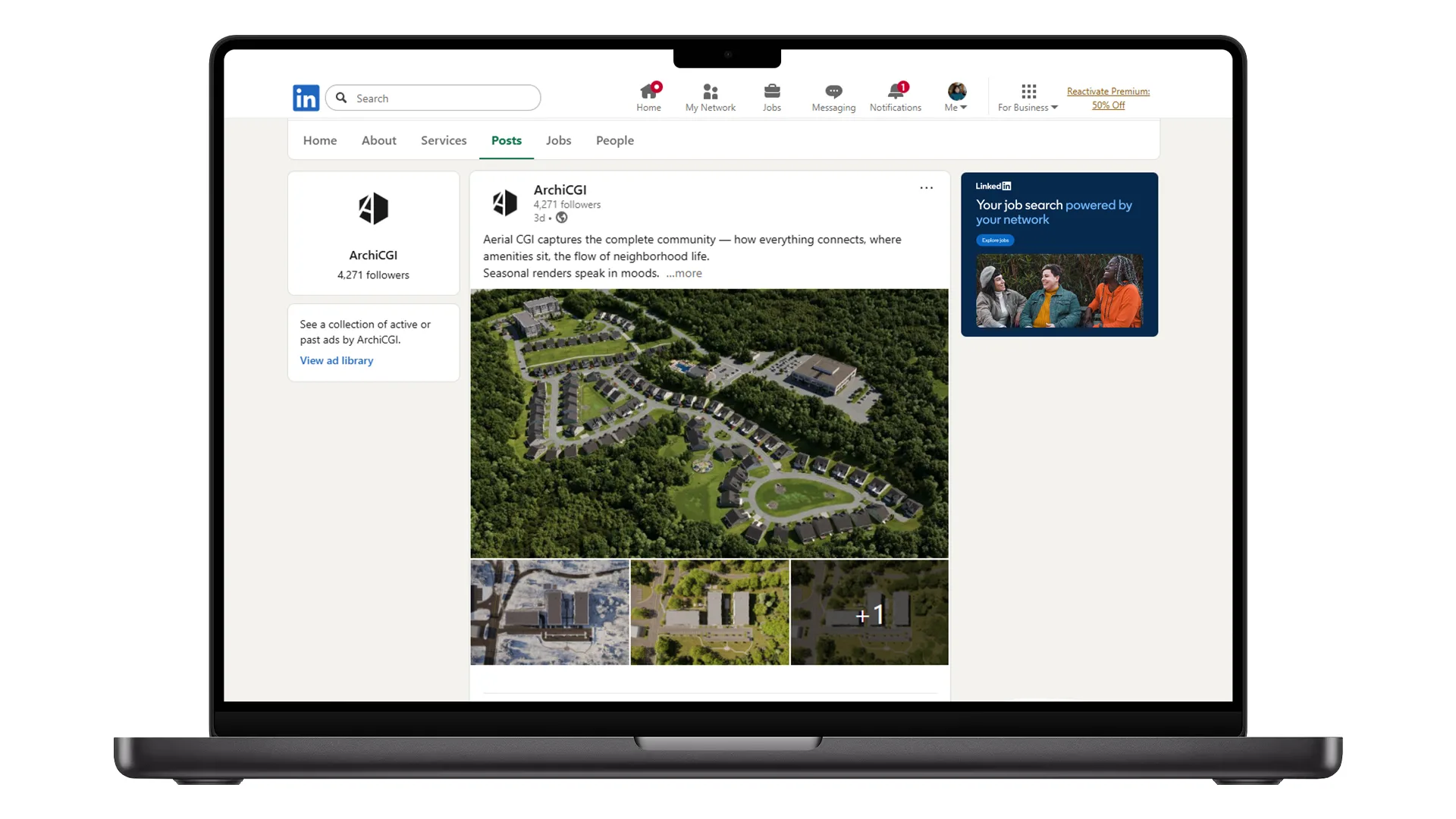
On LinkedIn, firms build trust with other industry professionals. This is useful when targeting developers, brokers, agencies, and consultants rather than private clients. In the context of marketing to architects, the platform supports structured B2B leads rather than casual visibility. Content performs best when it demonstrates competence through complete project narratives, outlining the initial problem, operational constraints, technical decisions, and outcome. This format signals delivery capability instead of surface presentation.
Beyond project case posts, thought leadership plays a central role. Commentary on procurement shifts, regulatory updates, construction technologies, or collaboration models positions the firm within a professional discourse similar to that of an architectural magazine. This approach is entirely different from a promotional feed. Highlighting team expertise and sector- specific knowledge strengthens authority in conversations where lead generation depends on credibility.
One should deliberately manage the distinction between a company page and personal profiles. The company page establishes institutional positioning, while partners and senior architects use personal accounts to extend reach, engage in discussions, and convert visibility into direct dialogue. Used together, both layers amplify exposure within decision-making networks.
LinkedIn groups, industry events, and newsletters provide additional touchpoints with specialized audiences. These channels support relationship building in narrower segments of the market.
Publishing three to four posts per week allows one to maintain visibility and keep the content quality high. For tracking performance, architects should focus on profile views, contact relevance, and inbound DM inquiries. These metrics reflect the quality of B2B leads rather than passive engagement.
Further insights are outlined in our LinkedIn guide for architects.
#7. Youtube
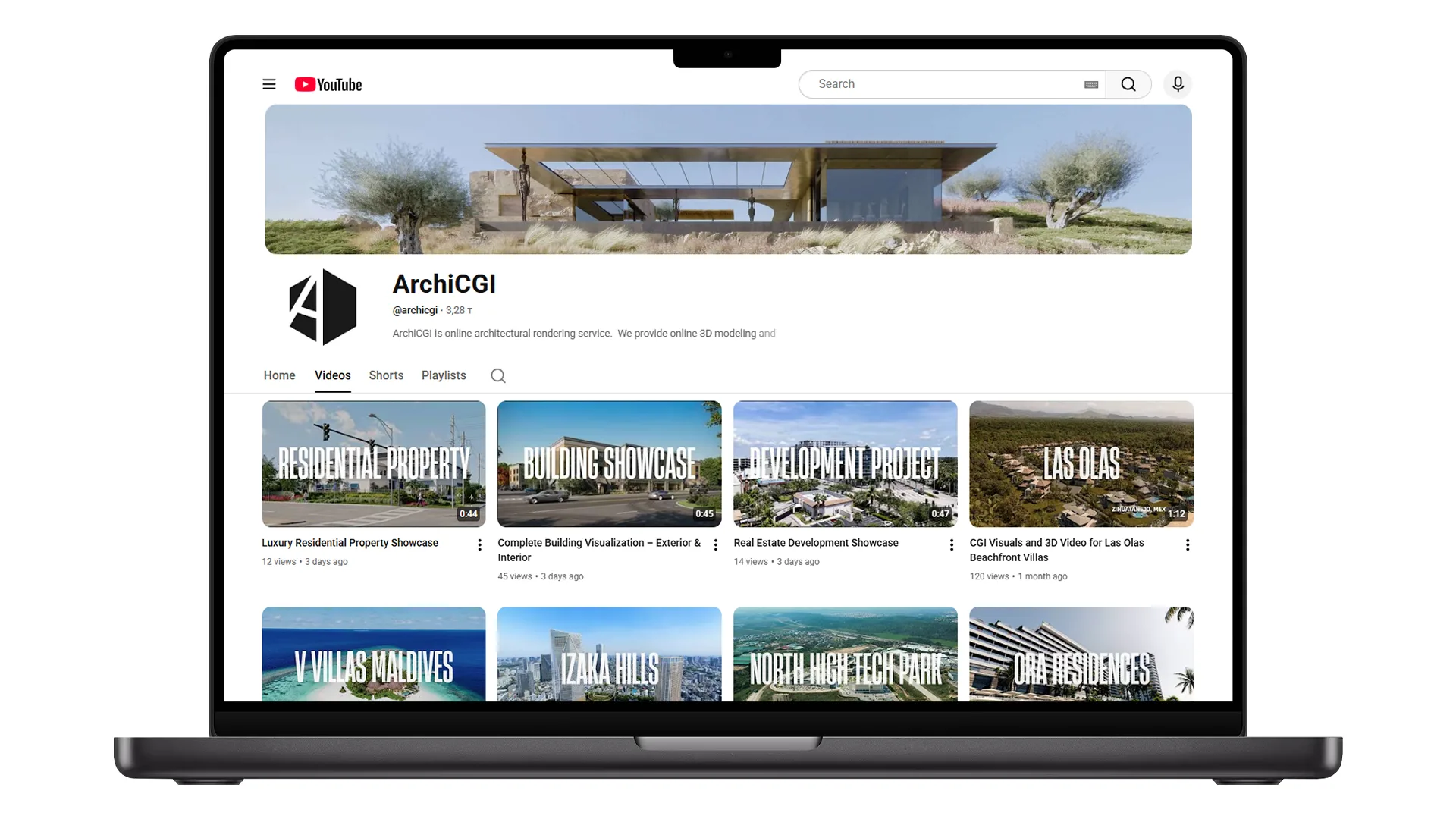
YouTube supports social media marketing for architecture firms by hosting video materials that can be embedded on websites, shared in proposals, and linked across other platforms. This way, prospects have a structured way to review projects before contacting the studio.
YouTube Shorts provide a practical entry point for small teams, especially when built from existing project assets such as architectural 3D animations and project showcase videos.
Short content examples:
- Comparison of approved visualization and completed built interior
- Walkthrough preview of a kitchen or office zone taken from a longer architectural 3D video
- Transition from a floor plan overlay to a finished interior visualization
- Comparison of two facade design options presented to a client
- Detail focus on lighting scenarios within a single interior space
- Focus on a key feature such as staircase geometry or atrium detailing
Long YouTube video formats help architecture firms market their services by turning individual projects into full case presentations. Such videos are effective in demonstrating scope, scale, and delivery capability to prospective clients researching studios on the platform.
To get this type of content, architects can repurpose existing video assets. These include architectural animations, full interior and exterior walkthroughs, aerial flyovers, design option comparisons, and narrated project presentations.
Here are some ideas for long video formats:
- Full architectural walkthrough assembled from interior and exterior 3D animation sequences
- Narrated project presentation explaining the brief, constraints, and final design outcome
- Exterior flyover video showing massing, site context, and access points
- Interior circulation tour following user movement through key spaces
- Design an option comparison video showing approved versus rejected schemes
- Phased project timeline combining concept visuals, development stages, and final result
- Competition entry video repurposed as portfolio content
- Masterplan overview animation explaining zoning and spatial distribution
- Mixed-use or residential amenity tour extracted from marketing animations
- Deep dive focusing on layout and functional zones
The speed of subscriber growth should not be overstated, however. Early traction tends to be gradual, improving after careful format testing and analysis of results.
Publishing one or two long-form videos per month is enough to start. To measure their performance, architects should look at watch time, repeat views, and subscriber growth. These metrics point to genuine engagement from developers, investors, real estate partners, and private clients reviewing the firm’s project work.
#8. Behance
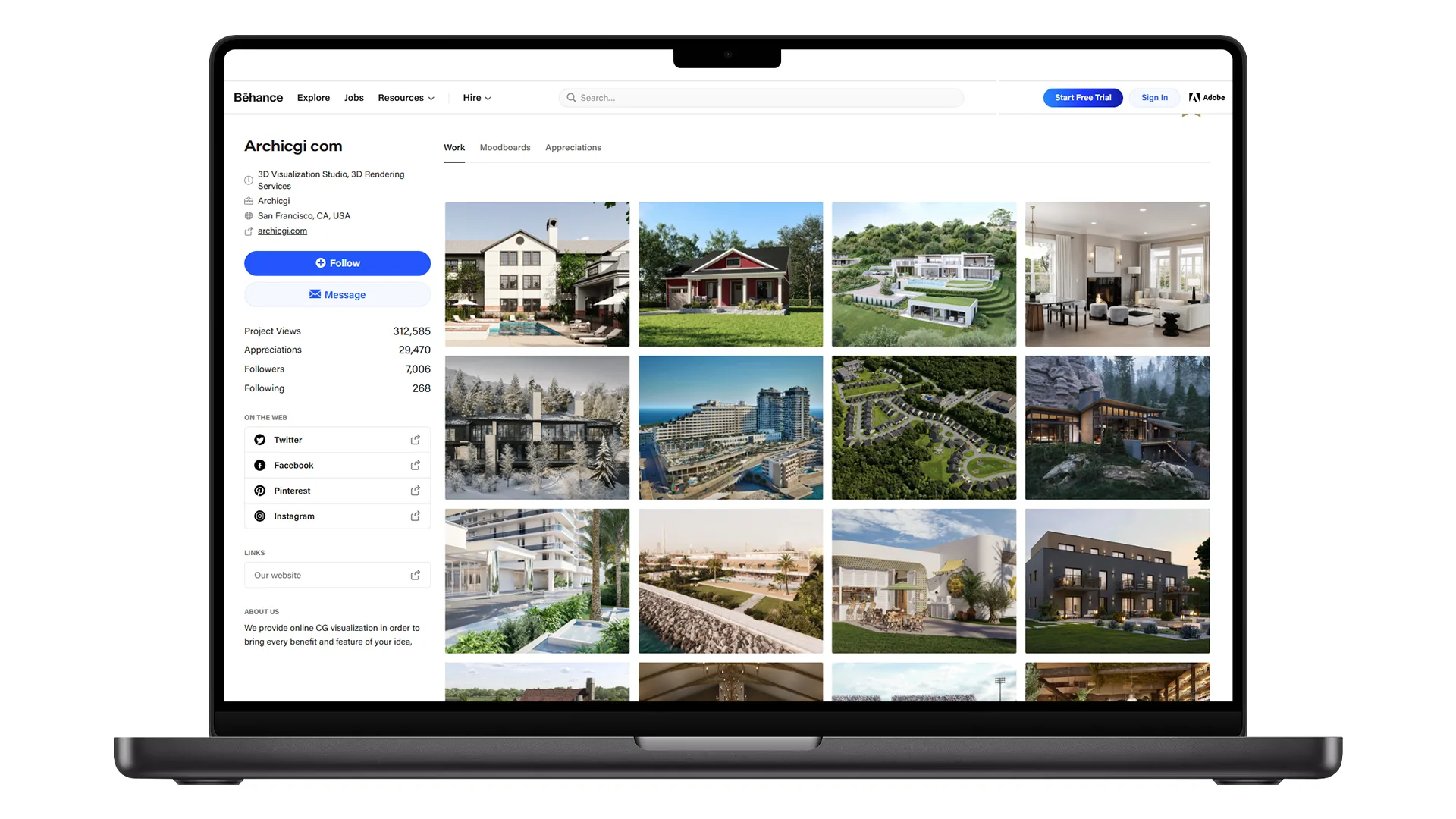
For architecture firms, Behance functions as a public project presentation platform used to package projects into a single shareable case study link. Studios use these links when applying for awards, submitting to design publications, pitching concepts to developers, or sending portfolio samples in partnership discussions.
Because the platform loads projects as full visual boards, recipients can review key 3D renders, plans, and presentation layouts without opening large files or navigating a corporate website. To support that use, projects must be titled clearly, tagged by building type and location, and placed in the correct creative field so they surface in architecture search feeds. Appreciations and curated features then extend reach inside the professional design stream.
Examples of posts for Behance
- Competition Board Breakdown. Full submission sets presented with diagram close-ups, circulation schemes, and zoning logic.
- Built Project Documentation. Exterior and interior render sequences supported by selected plans or sectional overlays.
- Concept Evolution Series. Design progression from initial massing and site placement through plan layouts, facade articulation, and sectional resolution, ending with the final presentation boards and key render set.
- Design Option Comparison. Parallel presentation of facade variants, lighting schemes, or layout alternatives.
- Client Presentation Archive. Delivered presentation boards published in their original structured format.
- Research and Experimental Work. Urban studies, parametric explorations, and material investigations documented visually.
Behance success is measured through project views, which indicate how widely a case study circulates within the platform. Appreciations and saves reflect peer interest and reference value inside the design community. Feature placements and follower growth signal extended reach and sustained portfolio visibility.
What to Post: A Simple Architecture Content System
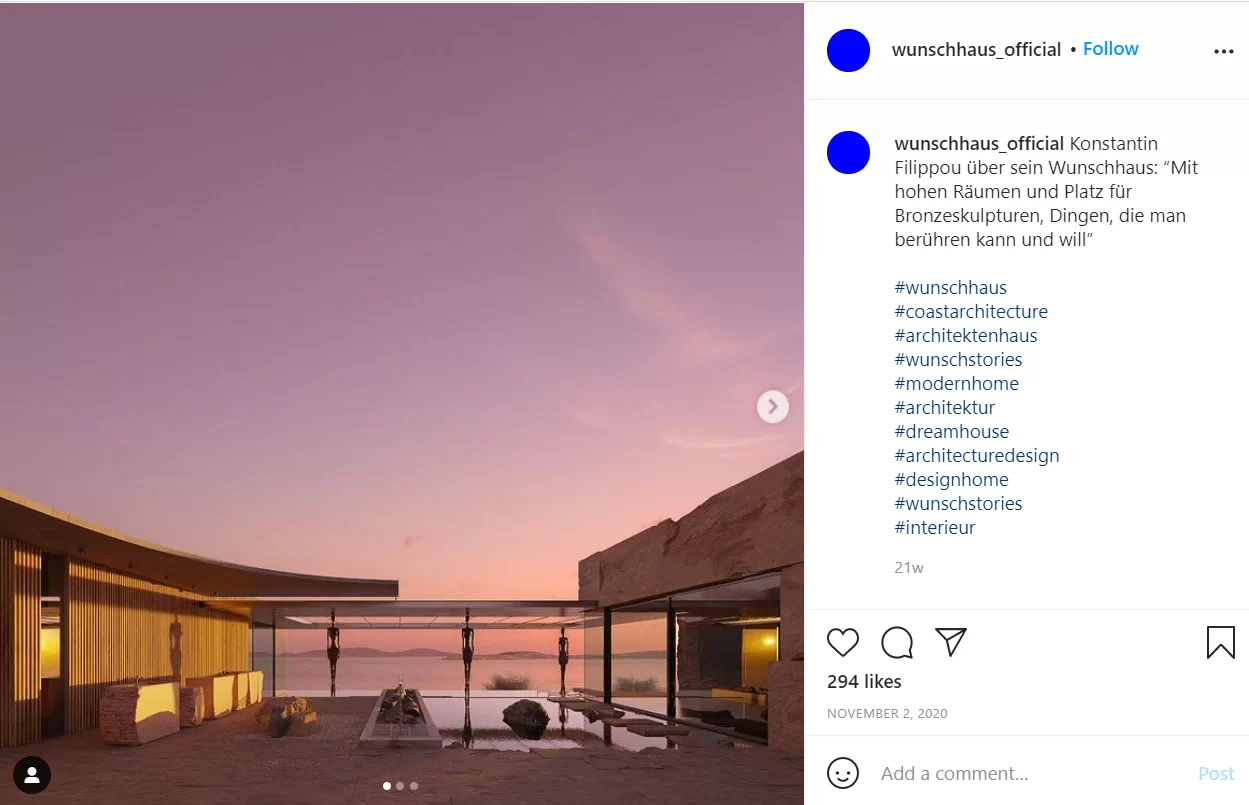
Once platform roles are defined, posting becomes easier to structure around project output rather than ad-hoc ideas. A simple content system starts with hero imagery. Final renders, exterior perspectives, and signature interiors function as primary visual assets and typically perform best on Instagram, Facebook, and LinkedIn, where they anchor project announcements and portfolio visibility.
From there, content can expand into layered detail. Close-ups of materials, façade junctions, lighting solutions, and interior finishes translate well into Pinterest boards, where audiences browse by component rather than by full project.
Motion content follows naturally. Short clips extracted from animations or walkthroughs adapt into Reels and Shorts, extending reach without requiring separate production.
Progression narratives add another layer. Before-and-after comparisons work effectively in Instagram carousels or Houzz project pages, where transformation becomes the focal point rather than the finished image alone.
Text-supported storytelling completes the system. Case studies built around constraints, design responses, and delivery outcomes sit more comfortably in LinkedIn posts or Archilovers stories, where professional audiences expect depth. YouTube is a suitable platform for full spatial walkthroughs, which enable viewers to experience projects at an architectural scale. Firms looking to expand this structure with sector-specific examples can reference real estate social media content.
Across all formats, alignment with project stages keeps communication coherent. Concept visuals introduce intent, schematic material clarifies direction, construction updates document execution, and completion assets consolidate portfolio presence. This sequencing ensures that posting activity evolves alongside the project itself rather than trailing behind it.
Measurement Basics: What Good Looks Like
Performance on social platforms rarely translates into immediate inquiries for architecture firms. The reason is that commissioning a project is a complex decision-making process. It involves multiple stakeholders, budget approvals, and competitive evaluation. In such a system, digital platforms help build visibility and credibility during the early research and shortlisting stages.
The scenario applies equally to social media for interior designers, where visual exposure initiates interest but final selection depends on trust signals built over time. Early visibility may attract attention, but project commissioning decisions rely on portfolio depth, documented results, and consistent professional presence. This environment also shapes how project visuals, including 3D renderings for interior designers, circulate within professional feeds during early discovery phases.
Short spikes alone cannot judge performance because project decisions take time. What matters is whether interest sustains, not whether a post briefly spikes. A monthly look at the content mix shows which formats keep bringing profile visits, saves, visibility, and inquiries over time.
The table below sets practical expectations for how platforms tend to perform. It links typical KPIs to the role each channel plays within longer marketing cycles, helping teams evaluate impact in a more grounded way.
| Platform | Key KPI | Notes |
| Saves, Reach | Saves are more important than likes | |
| Saves, Link clicks | Evergreen — traffic grows over time | |
| Houzz | Profile visits, Review count, Inquiries | Reviews = trust signal #1 |
| Profile views, DMs | Contact quality is more important than quantity | |
| YouTube | Watch time, Return views | Repeat views = depth of interest |
| Engagement rate | Group reach for networking | |
| Archilovers | Project views | Peer-visibility metrics |
| Behance | Project views, Appreciations | Portfolio exposure and peer-recognition metric |
Conclusion
A structured social media presence in architecture starts with deliberate planning rather than platform experimentation. Work starts with basic decisions.The firm must decide what it wants to achieve, who it wants to reach, and which platforms will support this effort. These choices affect where attention builds, where reputation forms, and which channels start bringing inquiries.
Production follows as a system, not as isolated postings. Project visuals, case studies, short clips, and walkthroughs need to appear in the right context to do their job. When firms spread these formats randomly, the message feels disjointed. But when each piece of content is released at the right moment and on the right platform, visibility builds more evenly and the firm presents itself as structured and reliable.
Results appear slowly in architecture marketing. Regular profile visits, saves, and incoming inquiries show whether attention is building, even when contracts are not immediate. Reviewing platform performance regularly allows firms to adjust formats, rebalance effort, and scale what supports pipeline growth over time.
For firms aiming to cover every communication stage with consistent visuals, it is practical to source the full spectrum of 3D rendering deliverables through a single production partner. ArchiCGI provides structured visual packages designed to support planning, marketing rollout, and performance tracking across platforms.
Want to learn how much your project costs? See how we evaluate 3D rendering projects


Jimmy Ward
Marketing Specialist, Media Buyer
Jimmy is the senior magician of media and stunning ads. He loves a good joke, his beloved dog Mario and craft beer. But don’t be fooled by his smile: Jimmy is ruthless when it comes to lead generation.