


In 2026, LinkedIn hosts over 65 million decision-makers, including the real estate developers and facility managers who sign contracts in the AEC sector (LinkedIn Internal Data, 2026). For principals, marketing managers, and senior architects, this is not just another social channel. It is where visibility, credibility, and business development conversations begin.
While social media for architecture firms often spreads thin across platforms, LinkedIn for architects delivers measurable outcomes. According to the Demand Generation Benchmark Report (Jan 2026), 40% of B2B marketers rank LinkedIn as the top source of lead quality, and its leads convert 3.2x faster than those from Facebook or Instagram.
As of 2026, LinkedIn’s algorithm continues to favor professional knowledge exchange and industry discussion. For architecture firms, this means the platform rewards expertise, project insight, and informed commentary rather than quick promotional posts. The result is a space where professional relationships develop over time. If you are evaluating social media for architects more broadly, LinkedIn remains the channel where those relationships gradually turn into real business rather than instant leads.
What LinkedIn for Architects Is Actually For
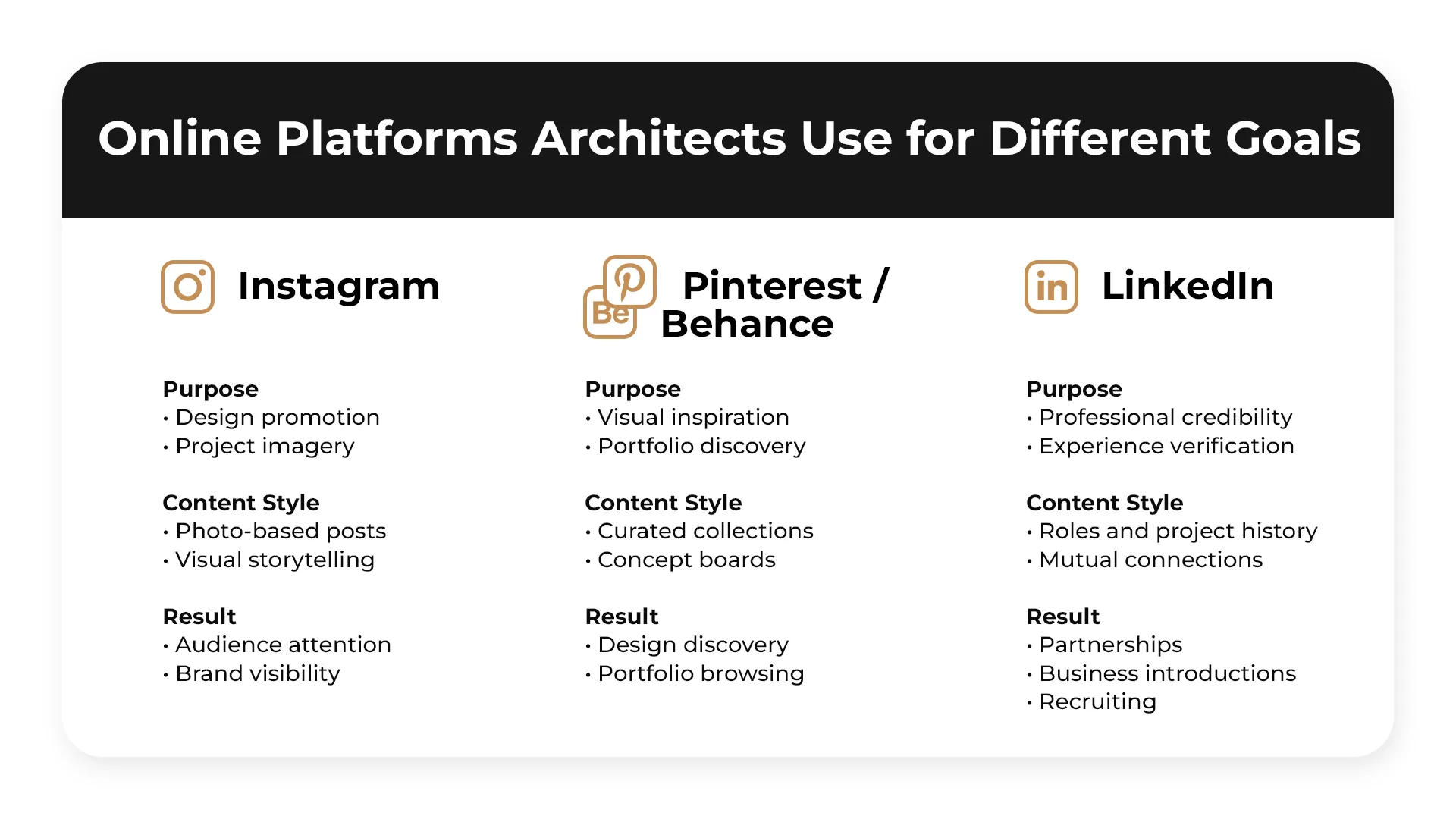
LinkedIn plays a specific role in how architecture firms present themselves online. In practice, LinkedIn is not a portfolio channel. It functions as a professional verification layer where developers, consultants, and partners quickly check a firm’s credibility. This is what distinguishes it from other social media platforms for architects, which are typically built around visual presentation.
Three practical outcomes explain why firms include LinkedIn in their social media strategies for architects.
First, it enables a fast credibility check for inbound referrals. When a developer receives a recommendation for an architect, the next step is often to open the firm’s LinkedIn profile. They review project descriptions, roles on past projects, and mutual connections to confirm that the firm has relevant experience.
Second, LinkedIn allows warm business development introductions. Architects can approach potential partners through shared contacts, industry groups, or previous collaborators. In the AEC sector, where projects are strongly relationship-driven, this often works better than cold outreach.
Third, the platform supports recruiting. Architecture firms regularly search LinkedIn for architects, BIM specialists, and visualization professionals with experience in specific project types.
This role is very different from Instagram for architects and similar visual platforms. Instagram focuses on design imagery and visual storytelling. LinkedIn, by contrast, functions as a professional network where B2B decision-makers evaluate expertise and initiate collaboration.
| Who sees the profile | What they’re actually looking for |
| Developers & owners | Project type experience, firm size, past collaborators |
| General contractors | Responsiveness signals, past joint projects, team depth |
| Design & BD agencies | Thought leadership, referral fit, principal visibility |
| Recruiters | Years of experience, software stack, project scale |
#1. Set Up and Optimize Your Profile
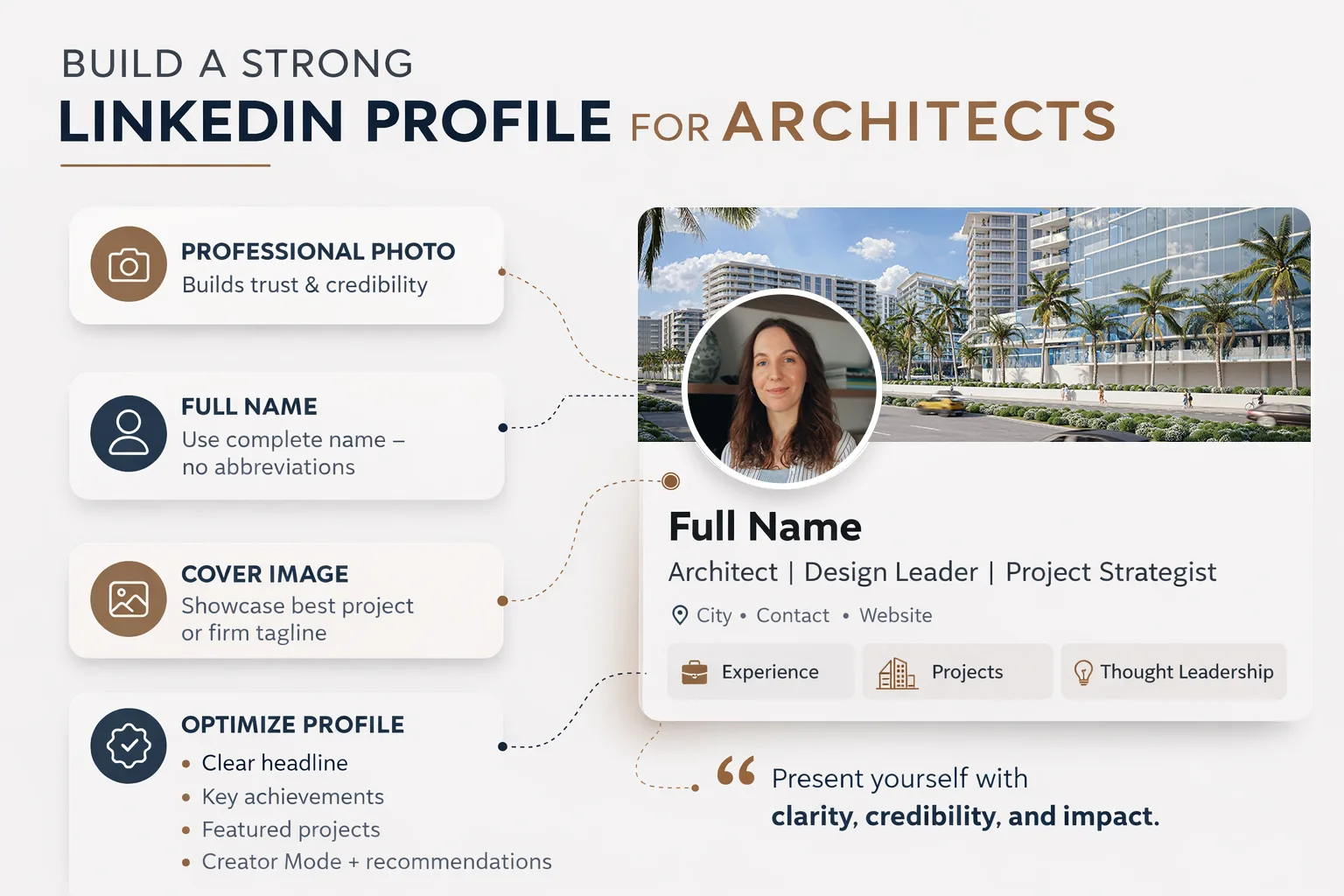
A strong architect’s LinkedIn profile is the foundation of any B2B presence. In 2026, clients, developers, and recruiters expect architects to present themselves with the same clarity they bring to project briefs. Optimizing your profile means treating it as a business asset, not just a résumé.
Name, Photo, Cover
- Use your full name without abbreviations.
- Upload a professional photo that reflects credibility.
- Select a cover image that highlights your best project or firm tagline.
- Always check LinkedIn’s current recommended dimensions before uploading.
- Consider enabling Creator Mode to showcase thought leadership.
Templates for LinkedIn Headlines for Architects
Fill in the blanks with care: the first 60 characters matter most on desktop and the first 20 on mobile.
| Niche | Formula | Example |
| Residential luxury | [Role] | [Typology] | Helping [ICP] [outcome] | Principal Architect | Luxury Residential | Helping developers create homes buyers remember |
| Commercial / developer | [Role] | [Typology] + [Geography] | Commercial Architect | Mixed-Use & Hospitality | NYC Metro |
| Sustainable focus | [Role] | [Specialty] | [Credential or proof] | Architect | Passive House Design | LEED AP, 30+ certified projects |
| Firm owner / BD mode | [Role] | [Firm name] | [Value prop for client] | Founding Principal, Studio XYZ | Turning constrained briefs into award-winning outcomes |
About “Section” Template
The LinkedIn summary for architects should read like a short professional narrative rather than a list of services. Visitors expect to quickly understand what you design, where you work, and what kinds of clients typically approach you.
A well-written About section also functions as an architect’s bio for LinkedIn. It gives enough background to establish credibility while keeping the focus on the type of projects you deliver.
Many strong LinkedIn summary examples for architects follow a simple structure with short paragraphs and clear proof of experience.
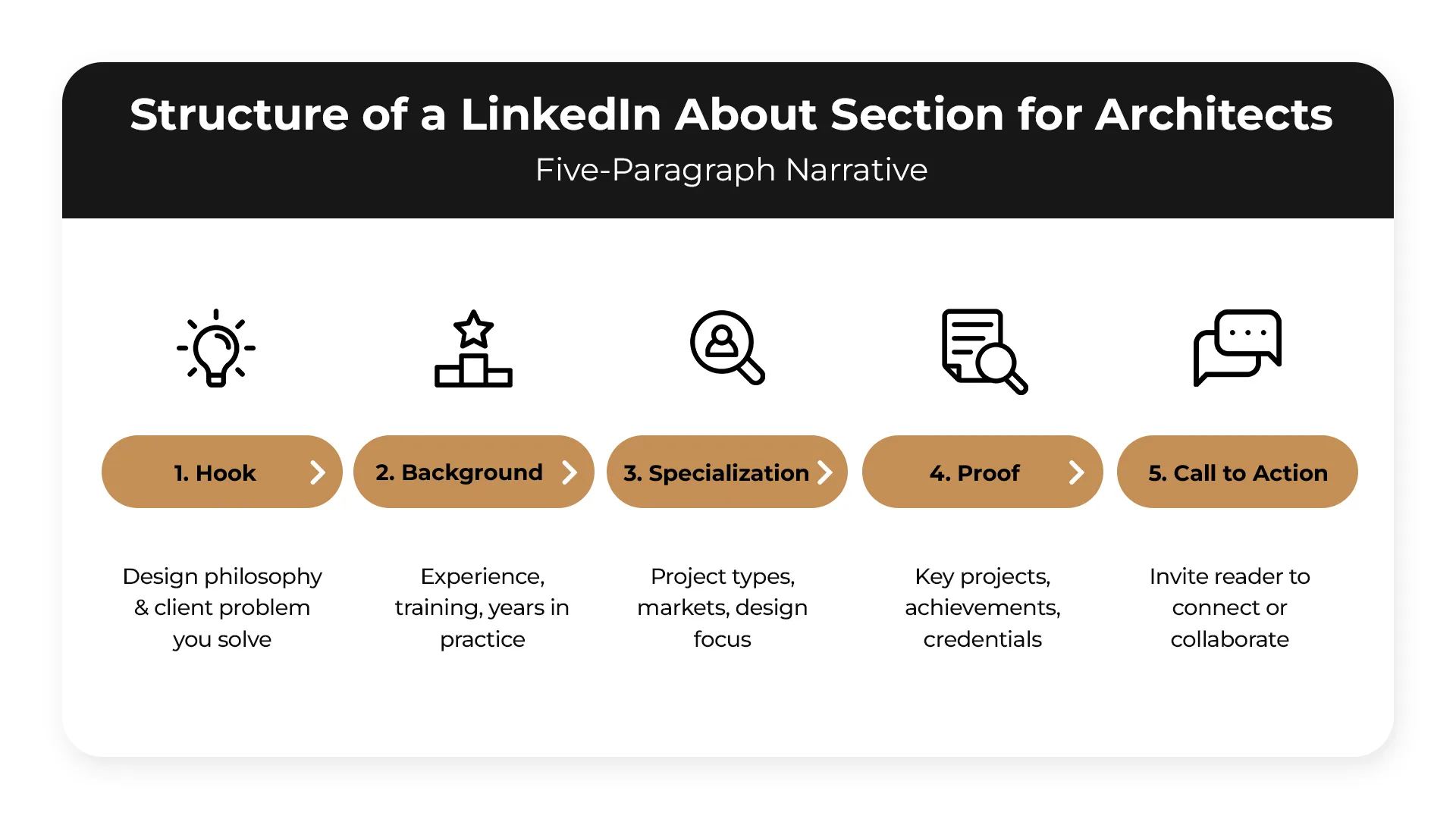
The summary should include no more than five paragraphs. Use the following structure.
| Section | What to Write |
|---|---|
| Hook | One sentence that captures your design philosophy or the client problem you usually solve. |
| Background | Where you trained, how many years you have practiced, and the main typologies you work on. |
| Specialization | Describe the project types, geographic markets, or design approaches that define your practice. |
| Proof | Mention one or two concrete achievements. This could be a project scale, a certification, or a recognized development. |
| Call to action | Invite the reader to continue the conversation. For example: Connect to discuss mixed-use developments or residential towers in growing urban districts. |
Experience as Mini-Case Studies
Each entry in your LinkedIn profile for architects should read like a project case study, not a job description.
- Formula: Role + Typology + Constraint + Outcome
- Example: “Led design of 18‑story mixed‑use tower | $20M budget | delivered 3 months ahead of schedule.”
This approach ensures your profile communicates credibility, specialization, and measurable impact—exactly what B2B audiences expect.
Build a Credibility Stack (Beyond Endorsements)
Endorsements look impressive at first glance, but they rarely influence hiring decisions. They are easy to give and often reflect casual professional contact.
Recommendations carry far more weight because they describe real collaboration and outcomes. A short paragraph from a client or project partner signals trust in a way that a list of skill clicks cannot.
If you are building visibility through content marketing for architects, recommendations act as proof that your ideas translate into real projects and working relationships.
The best approach is to ask for them right after a successful milestone: project completion, design approval, or a public opening. The request should be brief and specific.
Example request:
“Hello [Name], I enjoyed collaborating on the [project name]. If you have a moment, could you write a short LinkedIn recommendation about our work together and the project outcome? Two or three sentences about the design process or results would mean a lot.”
Not all proof carries the same weight. Clients and partners tend to read credibility signals in a clear hierarchy.
- Project outcomes
- Awards and competition results
- Press coverage or publications
- Conference talks and professional lectures
- Endorsements
Use the Accomplishments section to structure this evidence. Add published articles, interviews, speaking engagements, and awards there instead of hiding them inside the main bio. This keeps the profile readable while still presenting a clear professional record.
Add Professional Certifications and Accreditation
Credentials matter on LinkedIn. RIBA Chartered Practice, LEED, WELL, membership in a national institute — these are the kinds of signals that tell the right people your firm operates to a recognised standard. Drop them into your headline, your About section, and your company page description. Those are the fields LinkedIn actually pulls into search results and profile previews.
#2. Featured Section & Portfolio Flow
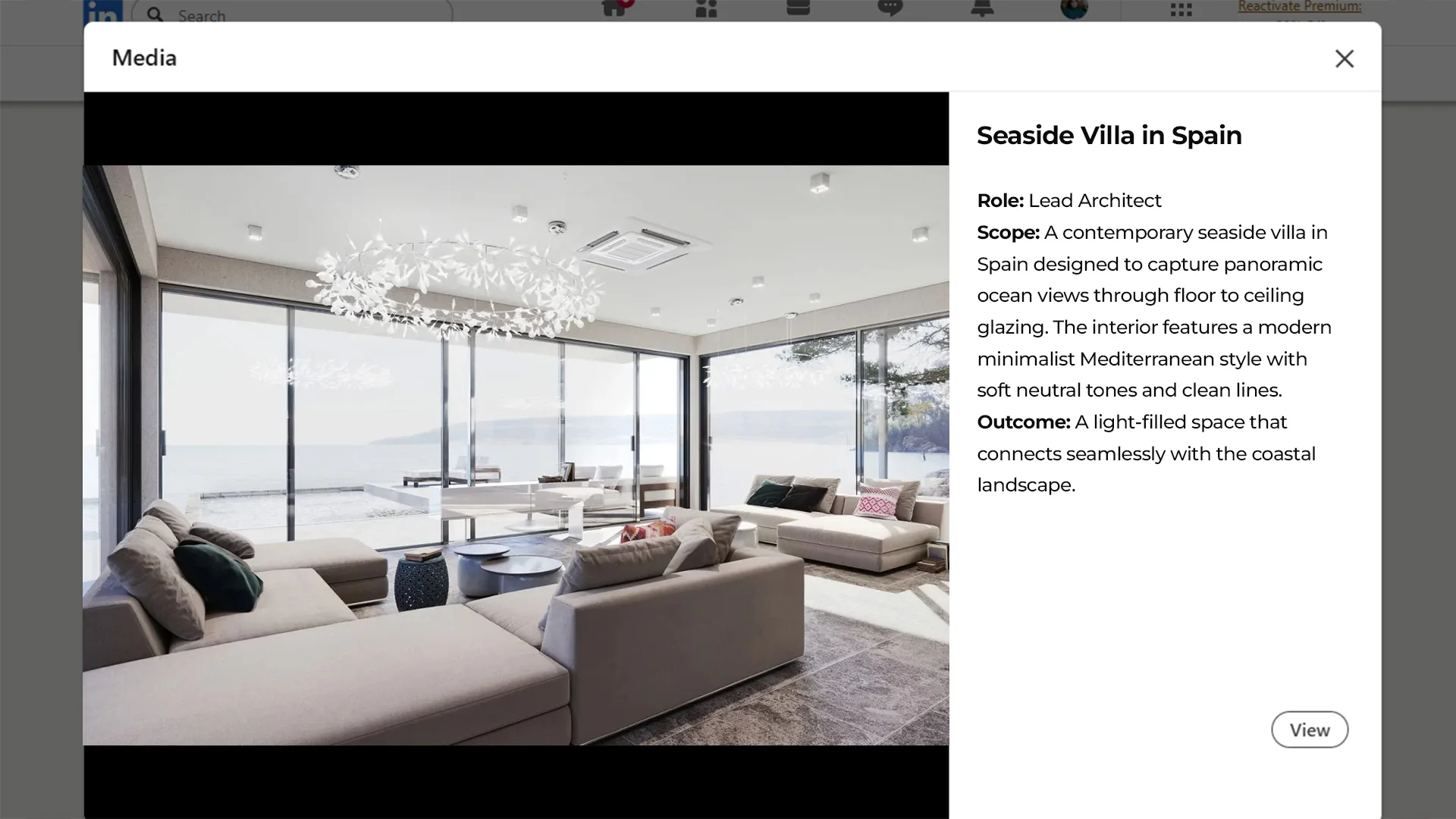
The Featured section is the moment an architect’s LinkedIn profile steps out of the résumé lane entirely. What you put there should help decision-makers evaluate your work fast — which means curating ruthlessly, not uploading everything you’ve touched.
Something that holds up well: two to four completed projects, one post unpacking how you think through a design problem, and one piece that speaks to your track record — a publication, an award, or a tight professional bio.
This approach mirrors how architecture firm marketing materials are usually reviewed. Developers, consultants, and investors scan for relevance first. They want to see whether the project type and scale match their needs before they read details.
Arrange the featured items in a simple sequence: project type and scale first, followed by the main visual, then a short caption explaining the brief, your role, and the outcome. This makes the portfolio easy to assess in seconds.
Each item should contain four elements: the project name, your specific role, the scope of work, and a concise outcome. Avoid generic descriptions. State the facts clearly, such as the building type, size, or delivery stage.
Use this checklist before publishing:
- Caption begins with context, not promotion
- Your role is clearly stated
- Client permission is obtained before sharing visuals
- Collaborators and studios receive proper credit
For a deeper breakdown of structure and presentation, see these architecture portfolio tips. Clear presentation strengthens overall architectural marketing and helps your work stand out in professional search results.
#3. Connect Strategically
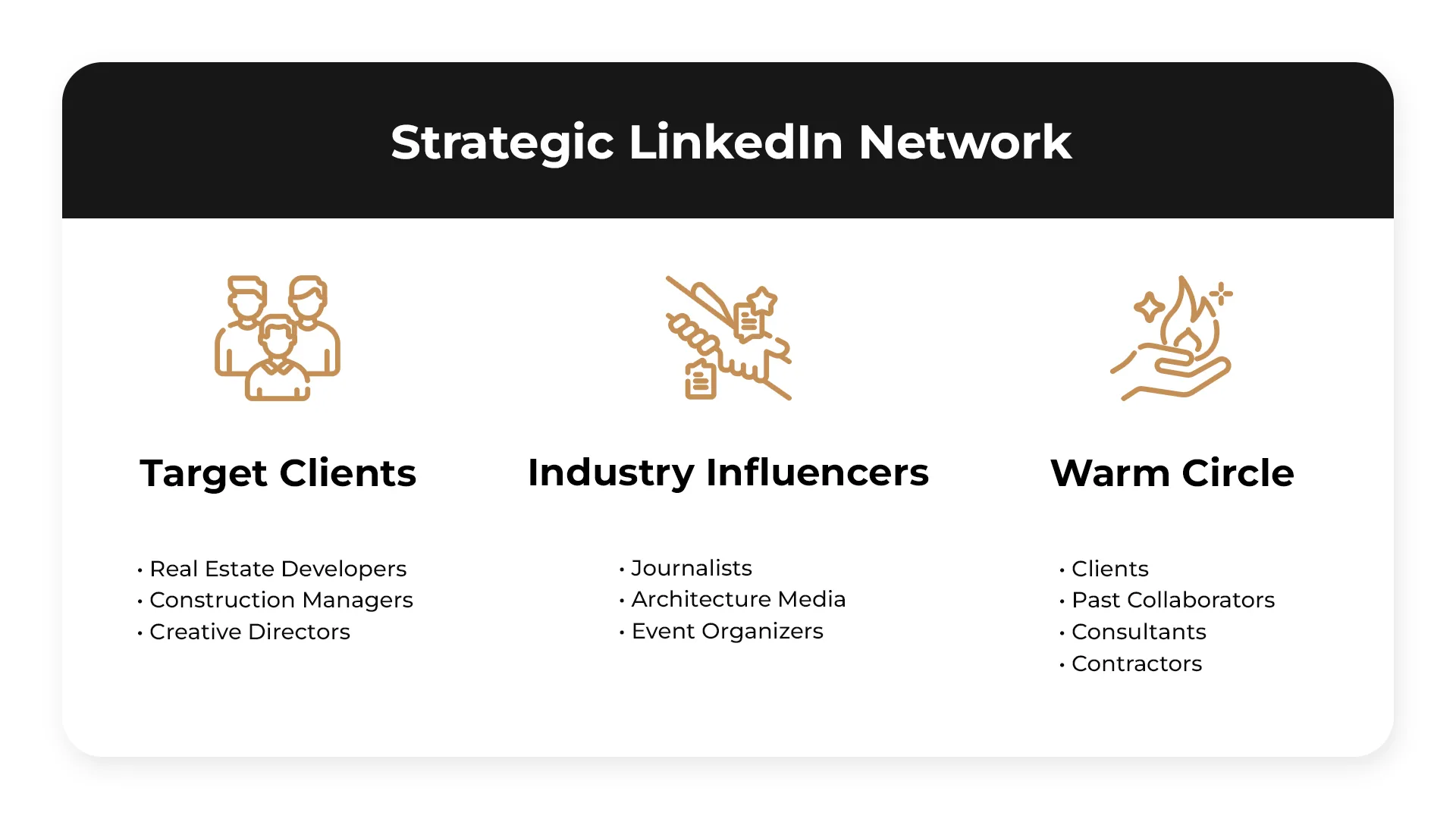
On LinkedIn, connections shape the reach of every post and profile view. The goal, however, is not to collect thousands of random contacts. For LinkedIn for architects, it is to build a network that reflects the professional ecosystem around your projects.
Start with the warm circle. This includes current and former clients, collaborators from past projects, consultants, contractors, and colleagues who moved to other firms. These contacts already know your work and are the most likely to engage with updates or refer opportunities.
The second layer is adjacent influencers. These are people who shape visibility in the architecture field: journalists from outlets such as ArchDaily, organizers of AIA events, architecture curators, and local real estate developers who follow industry conversations. Their interaction increases the visibility of your work beyond your immediate circle.
The third step is to connect with target accounts that match your ideal client profile. Look for specific roles such as Real Estate Developer, Construction Manager, or Agency Creative Director. These professionals often evaluate architects for upcoming projects or collaborations.
In marketing for architecture firms, the size of the network matters far less than its relevance. Five hundred carefully chosen industry contacts often create more opportunities than five thousand unrelated profiles.
For additional guidance on professional networking, see NCARB networking tips for architects.
Outreach That Doesn’t Feel Salesy
When architects reach out on LinkedIn, the tone matters as much as the message. A connection request should signal professional relevance, not a sales attempt. Keep it under 300 characters and mention one clear point of overlap.
Template #1 (general):
“Hi [Name], I’ve been following your work on [specific project or topic]. I especially liked [specific detail]. I would be glad to connect. — [Your name]”
Template #2 (event-based):
“Hi [Name], we both attended [AIA or event name]. I appreciated your point about [topic]. Connecting to stay in touch. — [Your name]”
After the request is accepted, wait about five to seven days before writing again. The second message should add value or open a small conversation. Share a relevant article, industry report, or case example. Another option is a short question linked to their work.
Here is an example of a follow-up message:
“Thanks for connecting. I came across this article on adaptive reuse in office conversions and thought of your recent post. Are you seeing more developers ask about feasibility studies earlier in the process?”
One rule is simple: do not pitch in the first two messages. Early exchanges should focus on relevance and professional dialogue.
The progression should stay gradual. Comment on their posts first. Then move to a direct message. If the conversation develops naturally, suggest a short call. This slower sequence is often more effective in marketing architectural services because it mirrors how professional relationships normally form in the AEC industry.
#4. Engage With Other Users’ Content
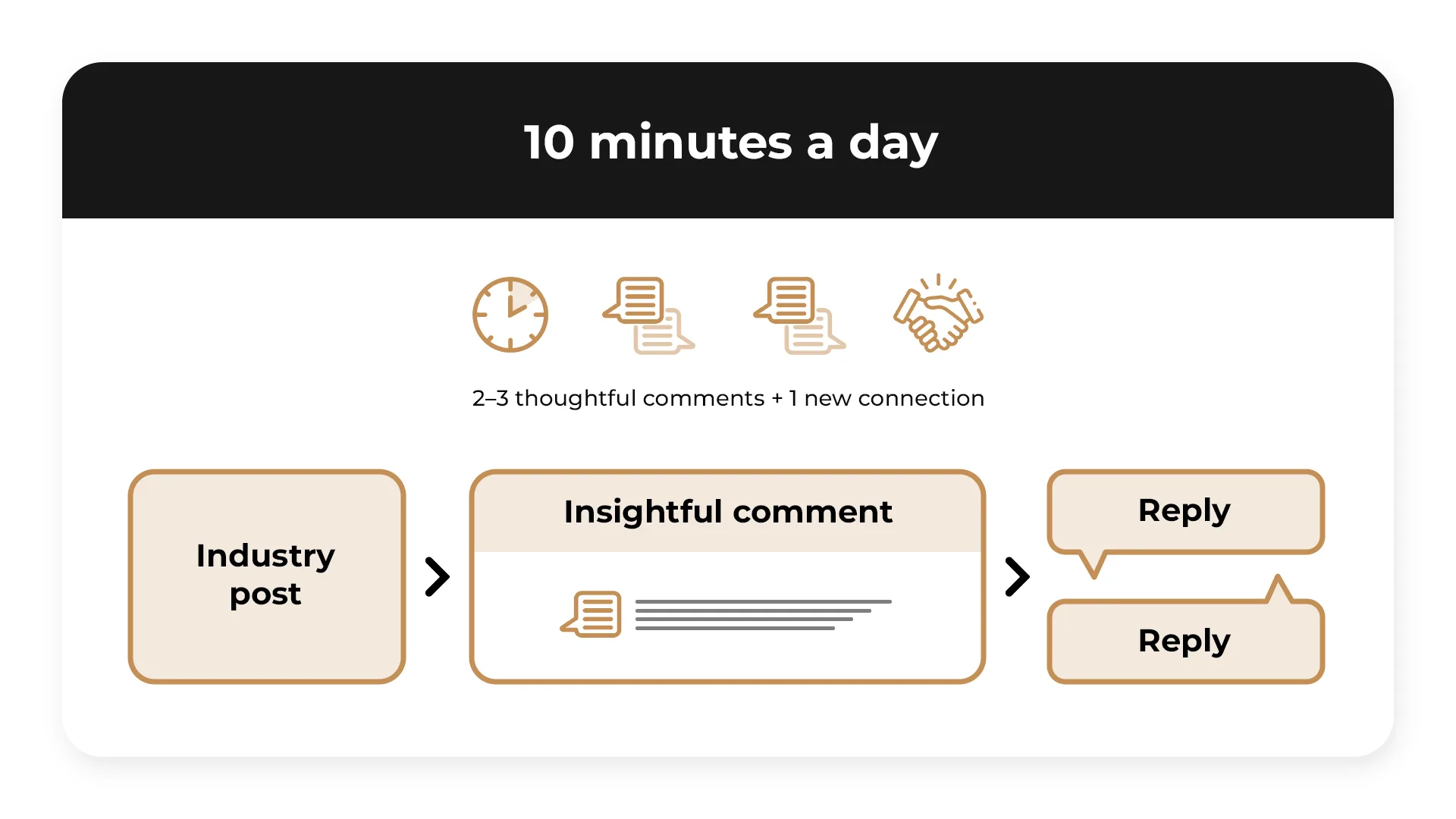
Scrolling past without comment is easy. But in professional circles, silence is invisible. A well‑placed remark, on the other hand, signals presence and perspective. The trick is to keep it simple: notice something worth highlighting, share your take, and, when it fits, ask a question that keeps the thread alive. That’s not a formula — it’s a way of showing you’re paying attention.
Where you choose to speak up matters. Posts from potential clients, local development updates, and industry debates are the places where your voice carries weight. Consistency in those spaces builds recognition. It’s not about flooding the feed; it’s about being seen where it counts.
And it doesn’t take hours. Ten minutes a day is enough: two or three thoughtful comments, one new connection. Skip the empty “Great post!” — it says nothing. A specific insight, even brief, shows expertise and makes your presence felt. Over time, those small signals add up to credibility.
#5. Share Engaging Content — with a System
Architectural practices rely heavily on existing professional relationships when securing projects. According to RIBA Business Benchmarking research, 38% of new commissions come from repeat clients and another 24% come from referrals or word-of-mouth recommendations. This means that most work originates within an architect’s professional network rather than through direct marketing alone.
Maintaining visibility with past collaborators therefore becomes important between projects. Platforms such as LinkedIn allow architects to stay present in their clients’ professional networks by sharing project updates, design insights, or completed work. Regular professional activity helps remind past clients of a firm’s expertise and increases the likelihood of future recommendations or repeat commissions. These ongoing interactions also increase visibility among wider professional networks, creating additional exposure to potential new clients.
Exposure for Finding New Clients
Posting occasionally without a clear structure rarely produces results. Potential clients usually discover architects through several interactions over time. A consistent publishing rhythm helps them understand how an architect approaches projects, solves design problems, and communicates decisions.
For social media for architects, this means sharing material that reflects real project work rather than generic updates. A structured approach makes it easier to publish regularly and ensures each post highlights a specific aspect of professional practice.
A practical way to approach social media marketing for architects is to build content around a handful of recurring themes drawn directly from project experience. Many studios rely on this method because it transforms everyday design work into professional insights that resonate with peers and clients alike. By anchoring posts in clear, repeatable themes, architects not only showcase expertise but also maintain the consistency that defines strong social media strategies for architects.
Content Pillars
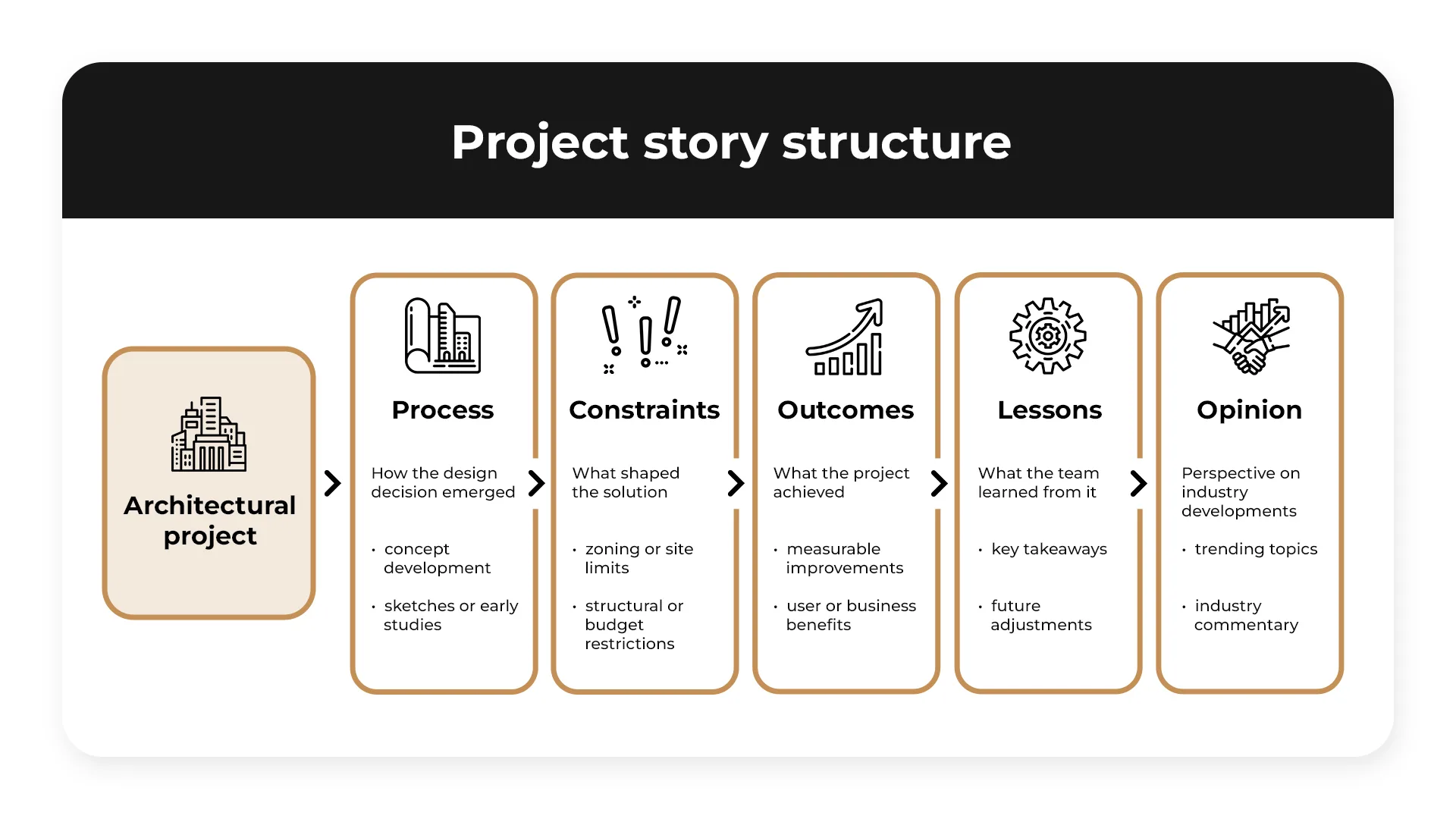
To keep posts varied while still structured, architects can rely on five recurring themes. Each pillar highlights a different aspect of project work and helps explain how design decisions translate into real outcomes.
1). Process
Explain how a design decision was made. Show sketches, diagrams, or early studies and describe how they shaped the final concept.
2). Constraints
Describe the challenges that influenced the project. These may include zoning limits, site conditions, structural restrictions, or strict timelines.
3). Outcomes
Present results in clear, client-friendly terms. For example, improved daylight access, increased usable floor area, faster planning approval, or stronger leasing interest.
4). Lessons
Reflect on what the project taught the team and what you would approach differently in a similar situation.
5). Opinion
Offer a professional perspective on an industry development or recent news that affects architectural practice.
12 Post Prompts for Architects
| Type | Prompt | Format |
| Process | “3 things I’d change about this project if we started today” | Text + image |
| Constraints | “The client’s budget was cut 20%. Here’s what we did.” | Text |
| Before/after | “Concept sketch vs completed build — 4 years later” | Carousel (2 slides) |
| Lessons | “What no one tells you about planning approvals in [city]” | Text |
| Opinion | “AI won’t replace architects. But here’s what it changes.” | Text |
| Case study mini | “Project: 600 sq m community center. Budget: tight. Timeline: impossible.” | Carousel (4–6 slides) |
| Collaboration | “Proud to share this project with [GC/engineer]. Here’s what their input unlocked.” | Image + tag |
| Question | “Developers: what do you wish architects asked upfront?” | Text poll |
| Award | “Honoured to receive [award]. Here’s the story behind the project.” | Image + text |
| WIP | “Still in design development, but this concept is one I’d love to build.” | Sketch/render |
| Industry news | “New zoning rules in [city] change everything for mid-rise residential. My take:” | Text |
| Blog repost | “We wrote a full guide on [topic] sharing the key takeaways here.” | Text + link |
Cadence Tiers
| Level | Actions per week | For whom |
| Light (15 min/wk) | 1 post + 3 comments | Principals with no time for SM |
| Standard (30–40 min/wk) | 2–3 posts + daily comments | Active professionals, firm marketers |
| Ambitious (1 hr/wk) | 4–5 posts, 1 article/carousel, active outreach | Firms with dedicated marketing |
#6. Use High-Quality Visuals — with Context and Permissions

Visual material is central to social media marketing for architects. Strong images help readers understand a project quickly, but quality and context matter as much as the design itself. Basic technical standards should always be met: use high-resolution files, balanced composition, and a consistent editing style across posts. When images vary widely in color tone or cropping, the profile starts to look unprofessional.
Narrative also matters. Instead of posting a single finished image, combine visuals that explain the project journey. For example, show a concept sketch next to the completed building or a before-and-after comparison of the site. This format helps viewers understand how design ideas are translated into built results, which is more informative than a final image alone.
Captions should follow a clear structure. Start with the project context, then explain your role, describe key constraints, summarize the outcome, and end with a short invitation for discussion. This approach keeps posts focused and useful for readers evaluating professional work.
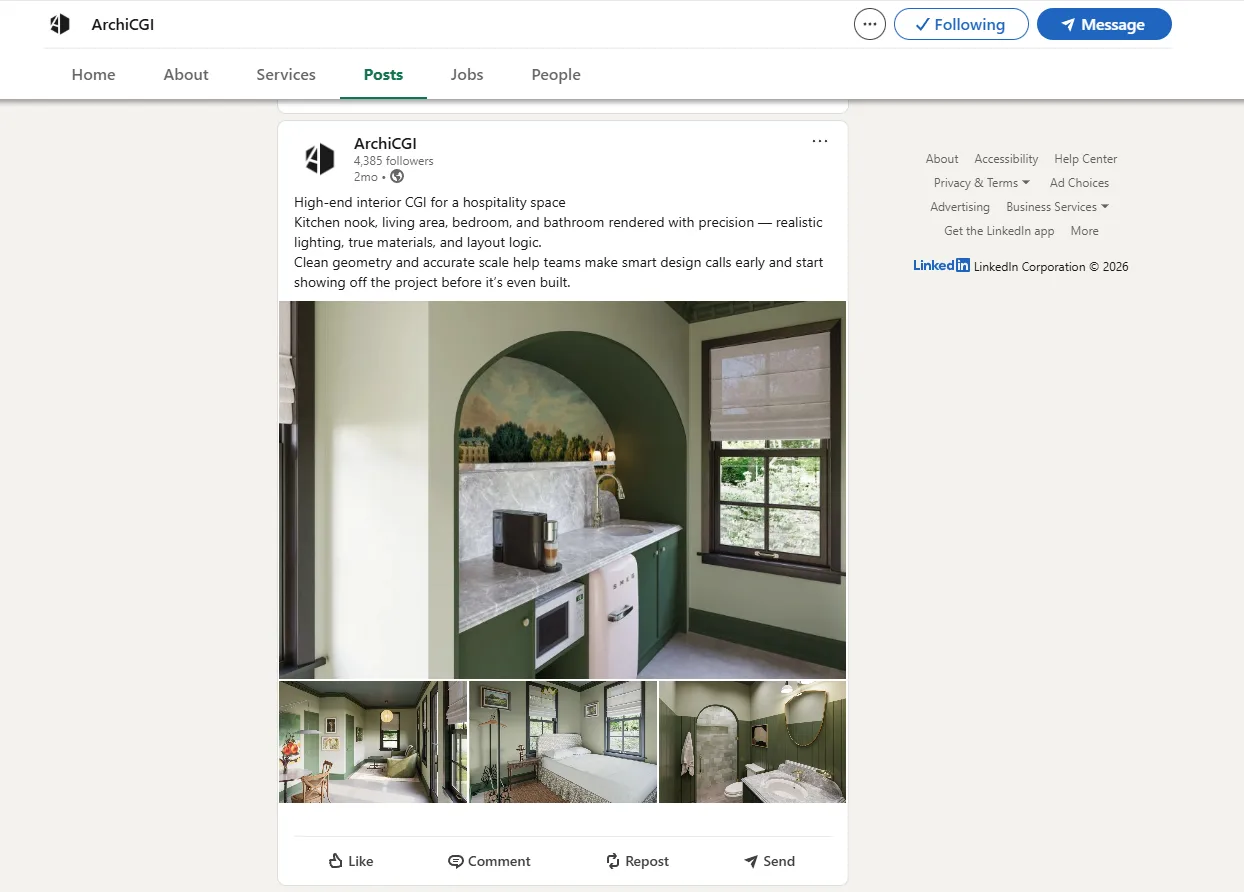
To deepen the visual narrative, consider integrating architectural 3D visualizations alongside traditional photography and sketches. Photorealistic 3D renderings, 3D animations, or even 3D floor plans renderings can illustrate design intent before construction begins, helping audiences grasp the evolution of a project. When paired with site photos or completed building shots, these visualizations highlight the transition from concept to reality, making the story of the project more engaging and accessible. Used thoughtfully, they enrich posts by showing not just what was built but how the vision took shape.
External sources can also support architecture firm marketing. For instance, reposting a project feature from ArchDaily with a short professional comment can expand visibility while adding context for your audience.
Confidentiality & Rights
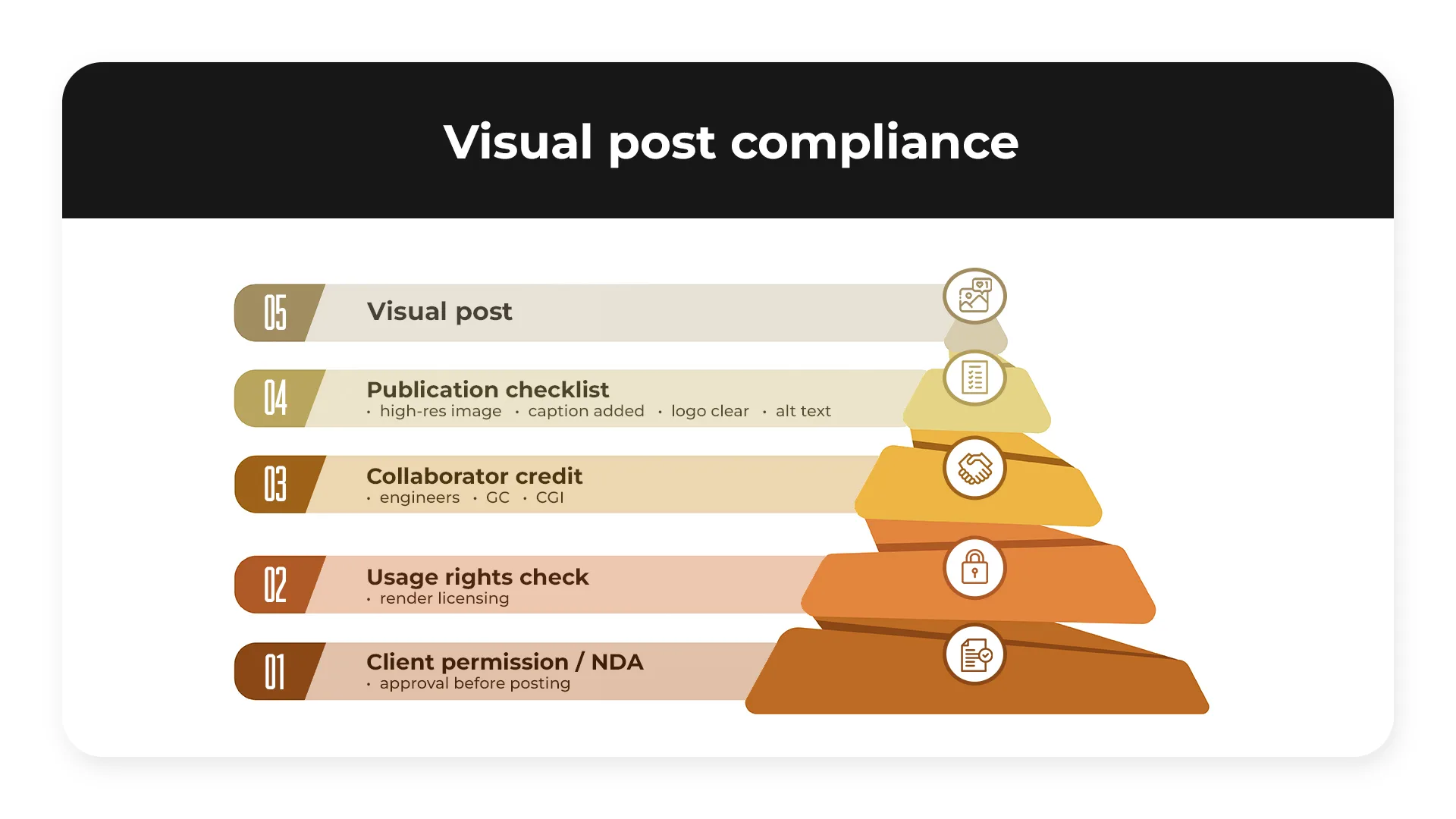
Professional visibility should never come at the expense of client trust. Before publishing any project material, obtain written approval from the client. This step protects both sides and prevents misunderstandings once images circulate publicly.
Some commissions remain confidential until the client makes a public announcement. In such cases, postpone visual posts until the project appears in the client’s official communication. If you still want to contribute to professional discussion, share lessons from the project without identifying the client, location, or distinctive design elements.
Architectural visualization content requires an additional check. Many architectural images are produced by external studios, and usage rights may vary by contract. Confirm that your agreement allows publication on social media and professional platforms before posting rendered imagery.
Crediting collaborators is equally important. Mention the general contractor, engineers, and visualization partners involved in the project. Besides acknowledging professional contributions, tagged collaborators often reshare the post, which increases visibility within the AEC network.
Before publishing, run a quick verification to ensure the post meets professional standards.
Visual Post Checklist
- High-resolution image
- Caption explaining the project context
- Your role is clearly stated
- Written client permission
- Credits to collaborators
- Alt-text for accessibility
#7. Build a Consistent Personal Brand
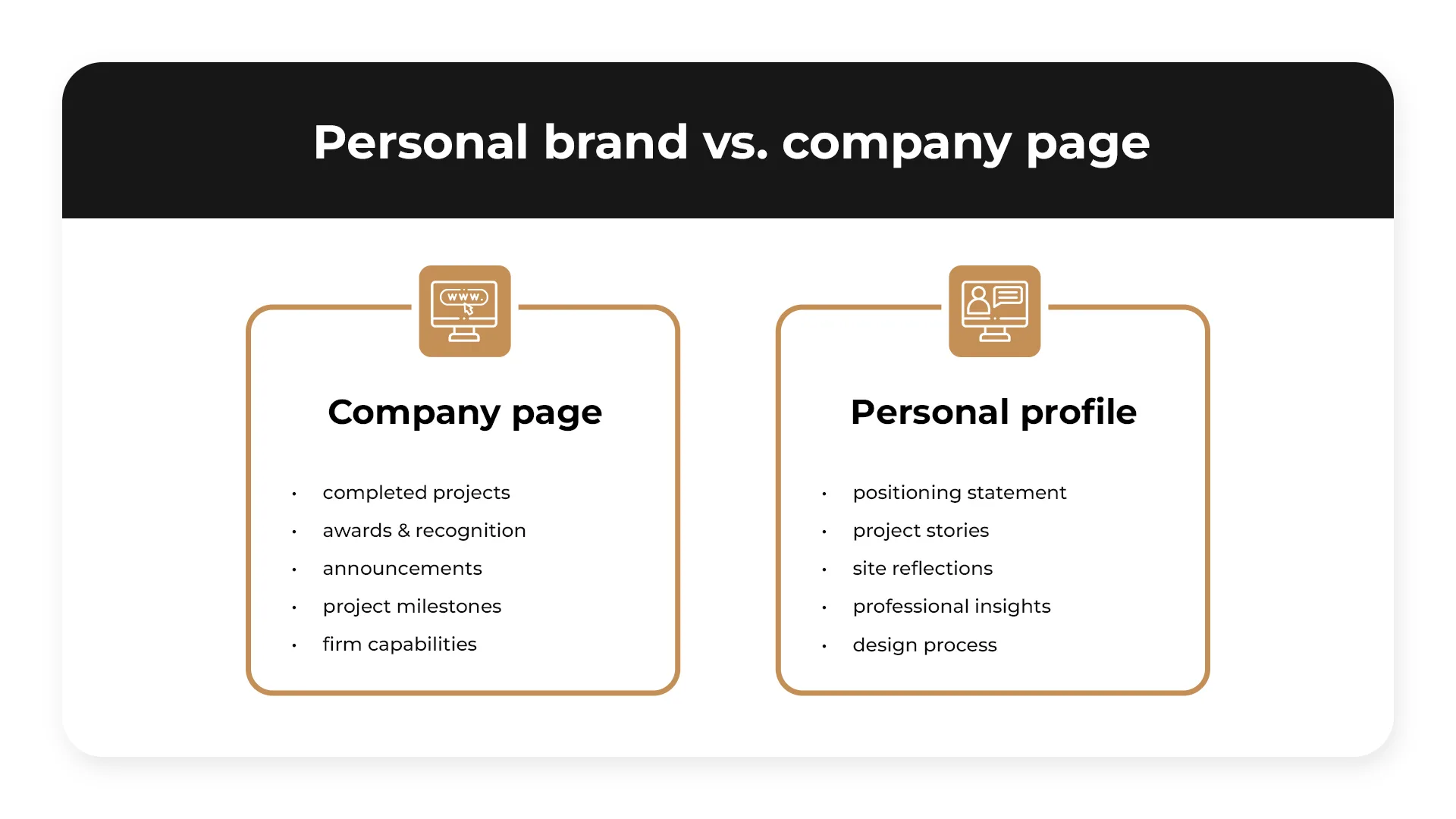
A strong architect’s LinkedIn profile starts with a clear positioning statement. In one or two sentences, explain who you help, what you deliver, and why your expertise matters. For example, developers, municipalities, or hospitality brands may need architects who translate complex requirements into buildable, profitable projects. This clarity helps visitors understand your value immediately.
Tone matters. Write in a professional but human voice. Avoid academic language and avoid sales slogans. Short project insights, lessons from site work, or reflections on design decisions perform better than promotional posts.
Effective marketing for architecture firms also relies on the balance between personal and company presence. A personal profile shares perspective, project stories, and professional insights. The company page publishes official announcements, awards, and completed projects that reinforce credibility.
Keep the roles distinct. Do not copy posts word for word between profiles. The firm page presents official announcements, project milestones, and company achievements. Your personal page explains the thinking behind the work and the lessons learned. This difference creates a recognizable, consistent brand.
Measure What Works — Simple Weekly Loop
Most professionals post, then move on. The ones who grow treat LinkedIn as a feedback system, not a broadcast channel.
Set aside five minutes every Friday. Open LinkedIn Analytics and check four numbers: profile views, post impressions, connection acceptance rate, and meaningful DMs received. No spreadsheet needed — you’re just looking for direction. Did something land this week? Do more of that. Did something die quietly? Note it and move on.
| Metric are growing | The metric is flat / dropping |
| Double this type of content / action | Change format, posting time, or topic |
| Check: is the right ICP reacting? | Check: are headlines and About clear enough? |
Once a month, go a level deeper. Revisit your Featured section — outdated projects send the wrong signal to anyone serious about hiring you. Review your listed skills against the kind of work you actually want to win. And request one new recommendation, ideally from a recent client or collaborator, while the project is still fresh in their minds.
That’s the entire system. Fifteen minutes a month builds a profile that compounds over time.
Common Mistakes Architects Make on LinkedIn
Many architects use LinkedIn as if it were a static portfolio. In practice, the platform serves as a professional verification space where developers, consultants, and other decision makers review a firm’s projects, roles on past work, and mutual connections before deciding whether to start a conversation. Developers, consultants, and other decision makers often check a firm’s LinkedIn profile before considering collaboration. When the profile is incomplete or inactive, that first credibility check becomes difficult. This is significant because LinkedIn reports that more than 80 percent of B2B leads originate on the platform, yet many architecture professionals overlook simple profile and content adjustments that could strengthen how their work is perceived.
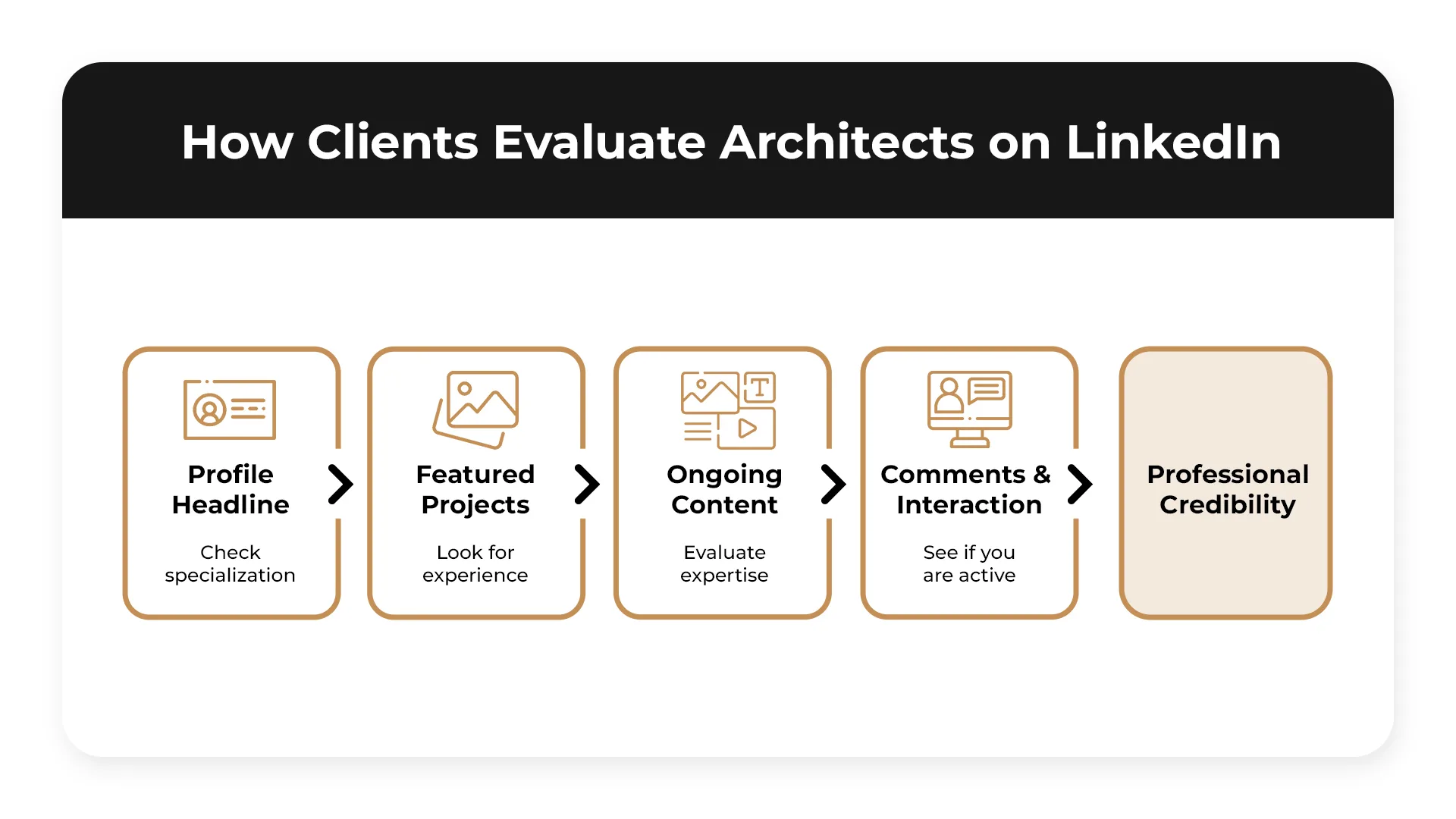
One of the most common mistakes appears in the headline. Many profiles list only “Architect.” While correct, it leaves most of the available space unused and tells visitors almost nothing about the kind of work the architect actually does. The headline should signal specialization, the type of clients served, and the value the architect brings to a project. For instance, instead of simply writing “Architect,” a profile might read “Architect | Mixed-Use and Hospitality Projects | Helping developers turn constrained sites into viable buildings.” A short line like this immediately gives context and helps visitors decide whether the expertise matches their project needs.
Another frequent issue is leaving the Featured section empty. Adding two or three key projects with a short caption, your role, and the project outcome quickly demonstrates expertise.
Content habits also matter. Some architects post only when a project is finished and then disappear. Sharing design process insights, material decisions, or lessons learned keeps the audience engaged between project launches.
Finally, many professionals duplicate the same content across personal and company pages or leave generic “Great post” comments. Personal posts should focus on stories and experience, while company pages build reputations. Thoughtful comments that add observations or insights create stronger professional visibility.
| Mistake | Fix |
| Headline = just “Architect” | Add niche + ICP + value (see headline templates above) |
| No Featured section | Add 2–3of the best projects with caption + role + outcome |
| Only post finished projects, then go silent | Use content pillars — post about process and lessons |
| Same content on personal + company page | Split voice: personal = stories, firm = reputation |
| Post without client permission | Get written OK first; for closed projects , no branding |
| “Great post!” comments | Comment framework: observation + insight (≥2 sentences) |
LinkedIn as a Long-Term Visibility Channel for Architects
Long before a project conversation starts, the people who matter — developers, consultants, and potential partners — are already looking. LinkedIn is where that evaluation happens quietly, and a professional presence there works very differently from a promotional one. What tends to hold up: a headline that tells people exactly what you do; experience sections framed around actual projects; a Featured section that works as a portfolio; recommendations; publications; and certifications — each one adding a layer of credibility that the next person to land on your profile will pick up on.
Profile structure alone is far from enough, though. Regular posts, thoughtful comments, and connections made with some intention keep you present in the professional networks where referrals and collaborations actually originate. Visual content pulls its weight here too, particularly when it explains a design decision rather than just documenting an outcome. 3D renderings for portfolio use work especially well in this context — a 3D visualization studio can prepare them specifically for LinkedIn carousel posts, which makes complex design ideas far easier to follow inside the platform’s feed.
Taken together, these habits turn LinkedIn from a static profile into a business development channel that builds quietly and compounds over time.

Adele Hauter
Digital Marketing Expert
Adele's expertise in the digital marketing field is unmatched. She stays up-to-date with the latest trends and strategies, incorporating them into ArchiCGI's campaigns with skillful precision. When Adele is not working on marketing projects, she enjoys creating concept art and tattooing.
What should an architect put in a LinkedIn headline?
A strong LinkedIn headline for architects should clearly show three things: role, niche, and the value delivered to clients. For example: “Architect | Multifamily Housing | Helping Developers Deliver Faster Approvals.” Avoid writing only “Architect.” Add specialization and who benefits from the work so potential clients immediately understand relevance.
How do architects attract developers and real estate clients on LinkedIn?
An effective architect’s LinkedIn profile speaks the language of business outcomes, not only design. Use the headline and About section to mention timelines, project scale, approvals, or cost efficiency. Regularly explain design decisions from a developer’s perspective, and engage in comments on posts from developers and real estate professionals.
How often should architects post on LinkedIn?
Consistency matters more than volume when building social media for architecture firms. One post per week combined with thoughtful comments is a solid baseline. If possible, increase to two or three posts weekly, but avoid long gaps between posts.
Can architects post renders and 3D visualizations? What about NDAs?
Renders and visualization work can support a strong architect’s LinkedIn profile, but only with clear client permission. If a project is under NDA, wait for the public announcement or present lessons learned without naming the client or project. Always confirm image usage rights with the visualization studio.
How do architects message new connections without sounding salesy?
A good LinkedIn summary for architects often leads people to connect first, but the message that follows should stay simple. Mention a genuine point of overlap such as a project type or event. Instead of pitching immediately, share a useful resource or ask a short question and build the conversation gradually.
What are common LinkedIn mistakes architects make?
Weak positioning often comes from an unfocused LinkedIn headline for architects or an incomplete profile. Common issues include missing the Featured section, posting only finished projects, and leaving long gaps with no activity. Another frequent problem is commenting with generic phrases or posting project images without confirmed client permission.