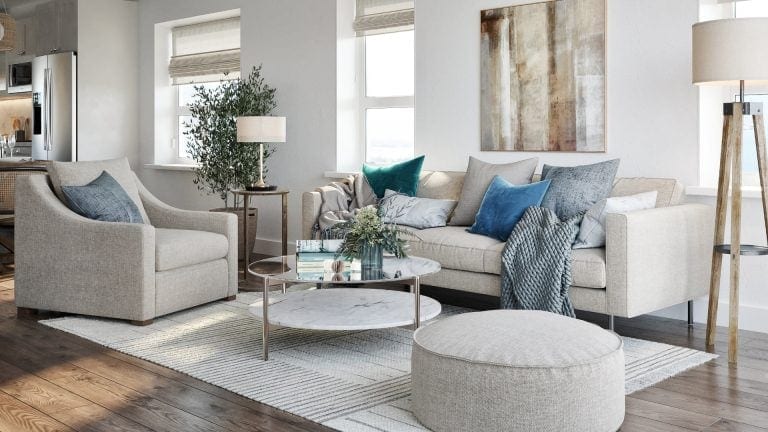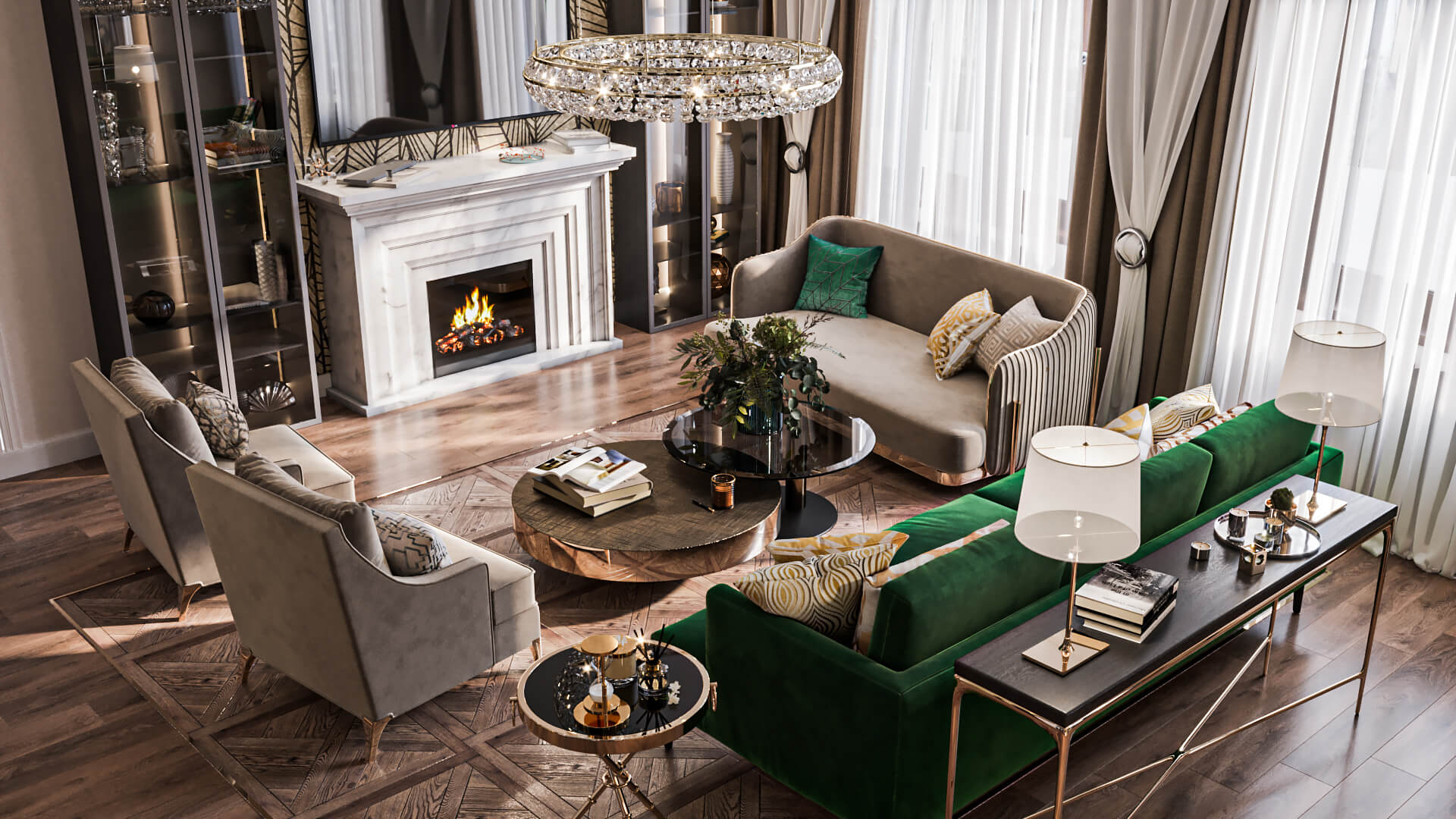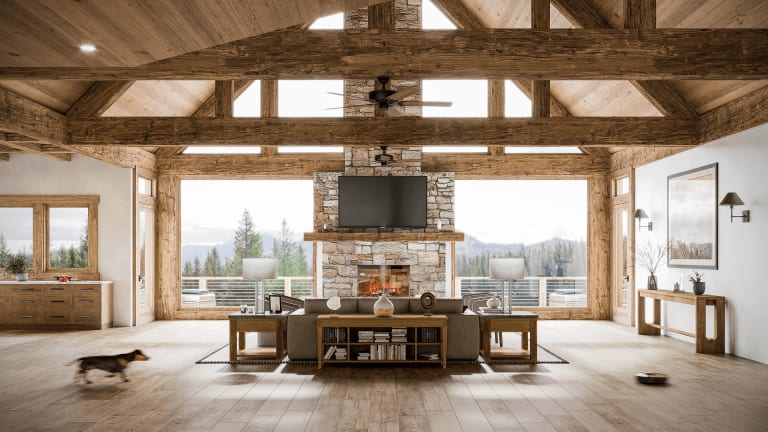


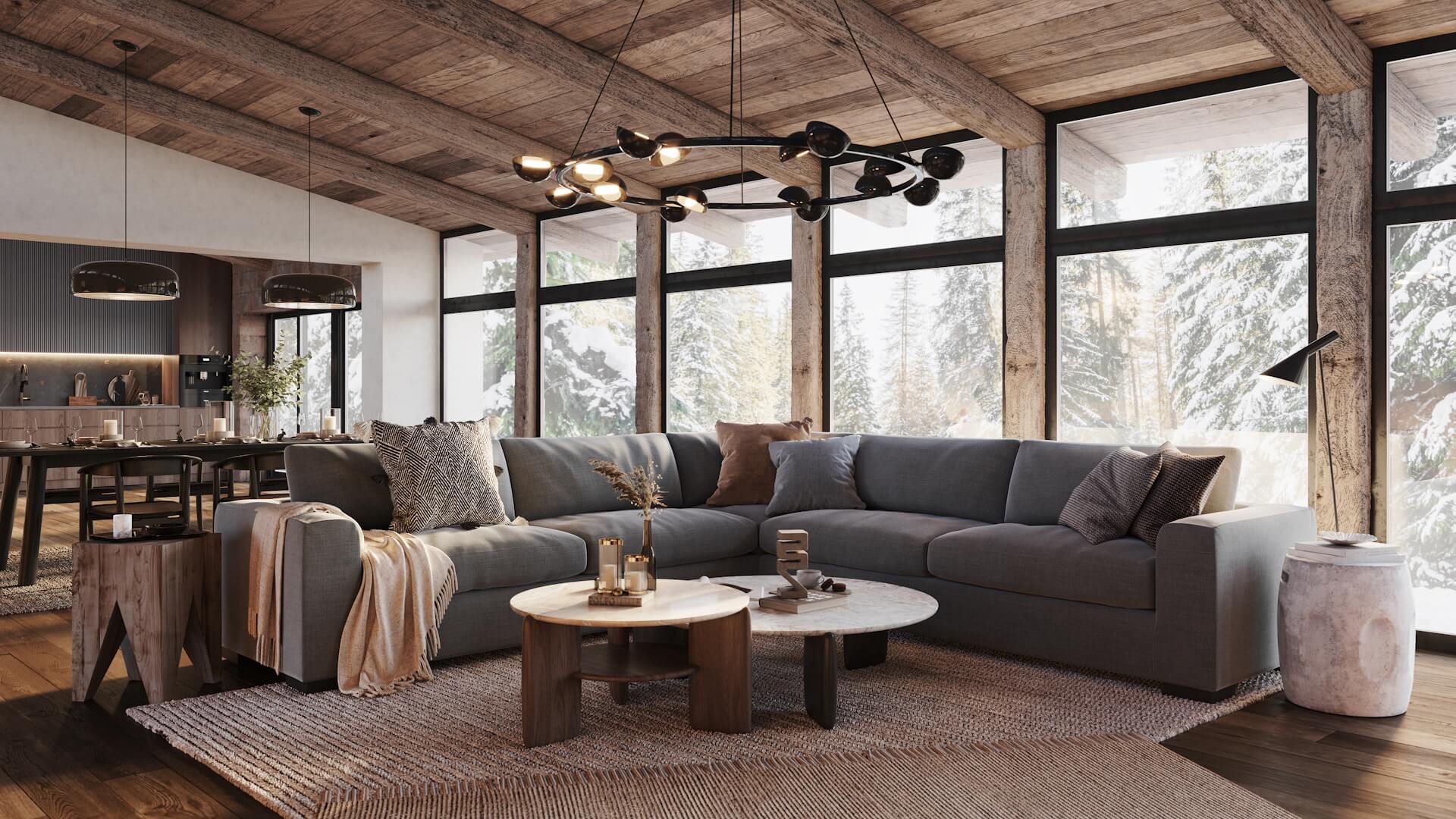
Interior design rendering gives designers, realtors, and developers a way to show a space long before it is built or furnished. And it comes in more shapes than many people expect. There are four main formats to choose from: still renders, walkthrough animation, interactive 3D tours, and VR. On top of that, static rendering alone offers a dozen camera views that serve different goals. Properties with virtual tours get 87% more views and sell 20% faster, so picking the right combination is not a matter of taste alone. Below, we will go through the four formats of interior design rendering services and then show 12 CGI views that let you get extra visuals from one 3D scene at a fraction of the cost.
4 Formats of Interior Design Rendering
Each format solves its own task. Stills are the everyday workhorse, animation adds emotion, tours let people explore on their own, and VR puts them inside the space. Here is what you should know about each one.
#1. Still 3D Rendering
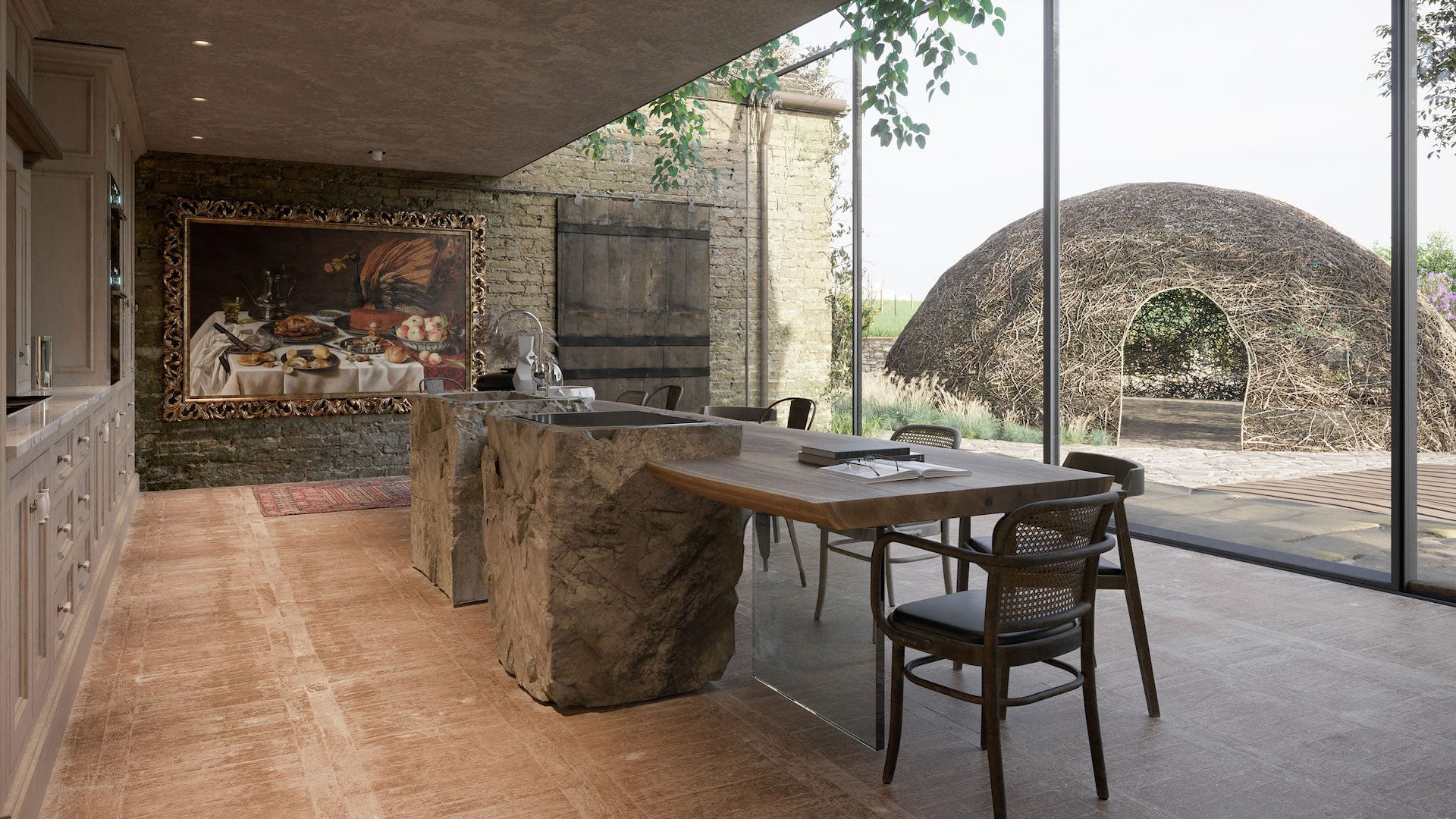
A still render is a photorealistic image of a design that has not been implemented yet. It is the go-to asset for websites, listings, social media, email, ads, presentations, and portfolios. For real estate, stills pair well with virtual staging, helping prospects see the full potential of a property. If you need one format that works everywhere, this is it.
#2. CG Walkthrough
A walkthrough is a CG video that leads the viewer through the space. Compared to stills, it gives a much better sense of scale, movement, and flow, and you can add music, special effects, and voice-over. Production takes longer because of animation and sequencing, so walkthroughs are most often ordered for expensive and luxury projects, where you need to impress the pickiest clients and investors.
#3. Virtual 3D Tour
A 3D tour is an interactive experience: prospects explore every corner of a place at their own pace, in any order, at any time. In essence, it is a private viewing available around the clock, and nobody has to go anywhere. That makes tours the strongest format for pre-selling real estate and remote presentations, and they keep visitors on your website noticeably longer.
#4. VR Experience

VR serves the same purpose as a 3D tour but with full immersion. It needs special hardware and a bigger budget, so it is the least common format of the four. Realtors who work with high-end properties use VR right at their offices: clients walk around the place and study the details as if they were attending an open house. For luxury real estate, an investment like that usually pays off.
12 Interior CGI Views That Cut Costs
Stills remain the format every project starts with, and this is where you can save. Once the 3D scene is built, every additional view costs far less than the first render: the artist only adjusts the camera, lighting, or furnishings and renders a new image. A typical main visual shows the whole space in daylight from a wide angle. Here are 12 alternative views you can get from the same scene.
#1. Ratio Change
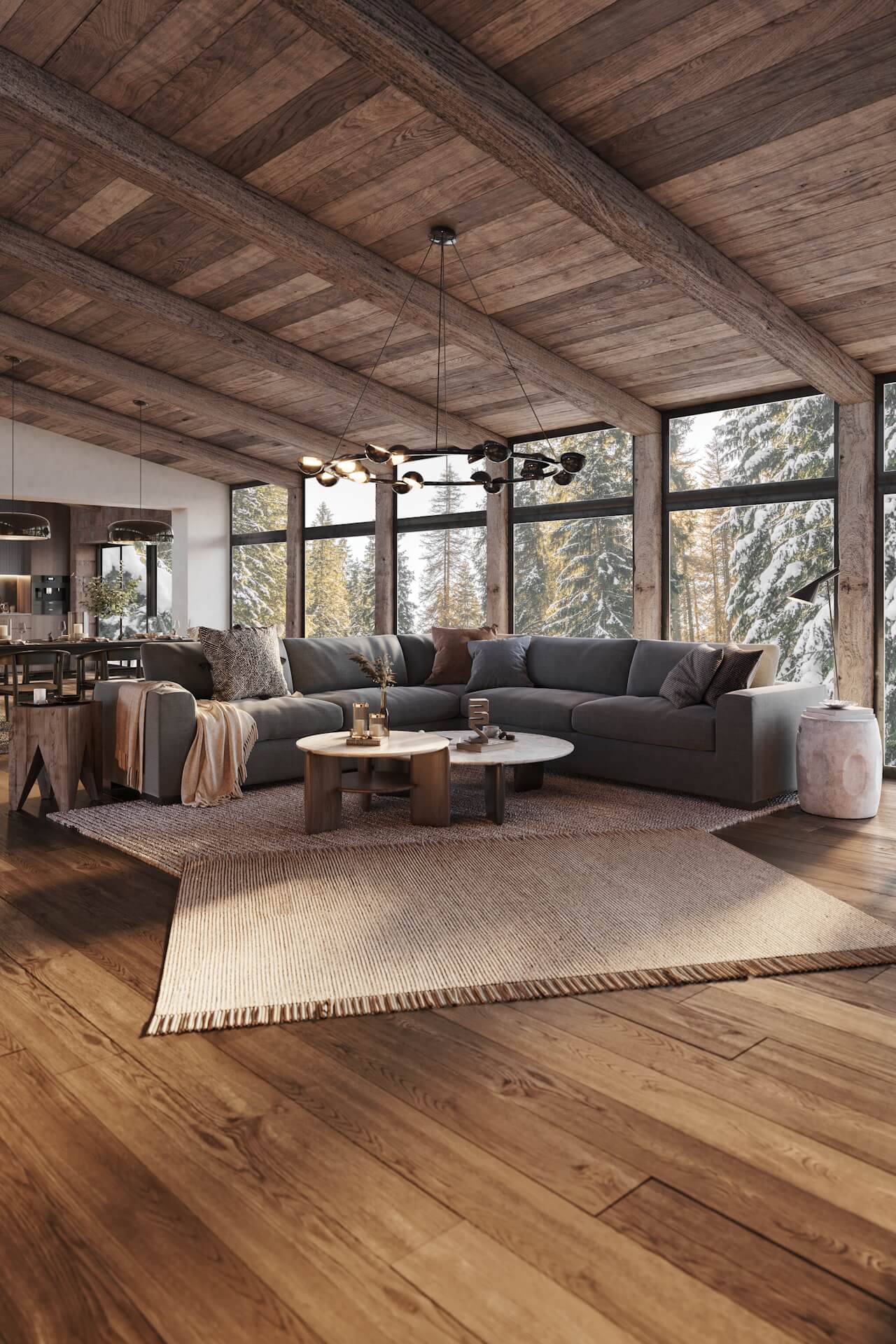
First on the list of alternative options is changing the aspect ratio of the rendering. Here, the camera angle stays the same as in the main interior render, but the proportions of the image are changed from horizontal to vertical. Such imagery is perfect for social media platforms like Instagram or for mobile versions of the designer’s portfolio.
#2. Camera Angle Change
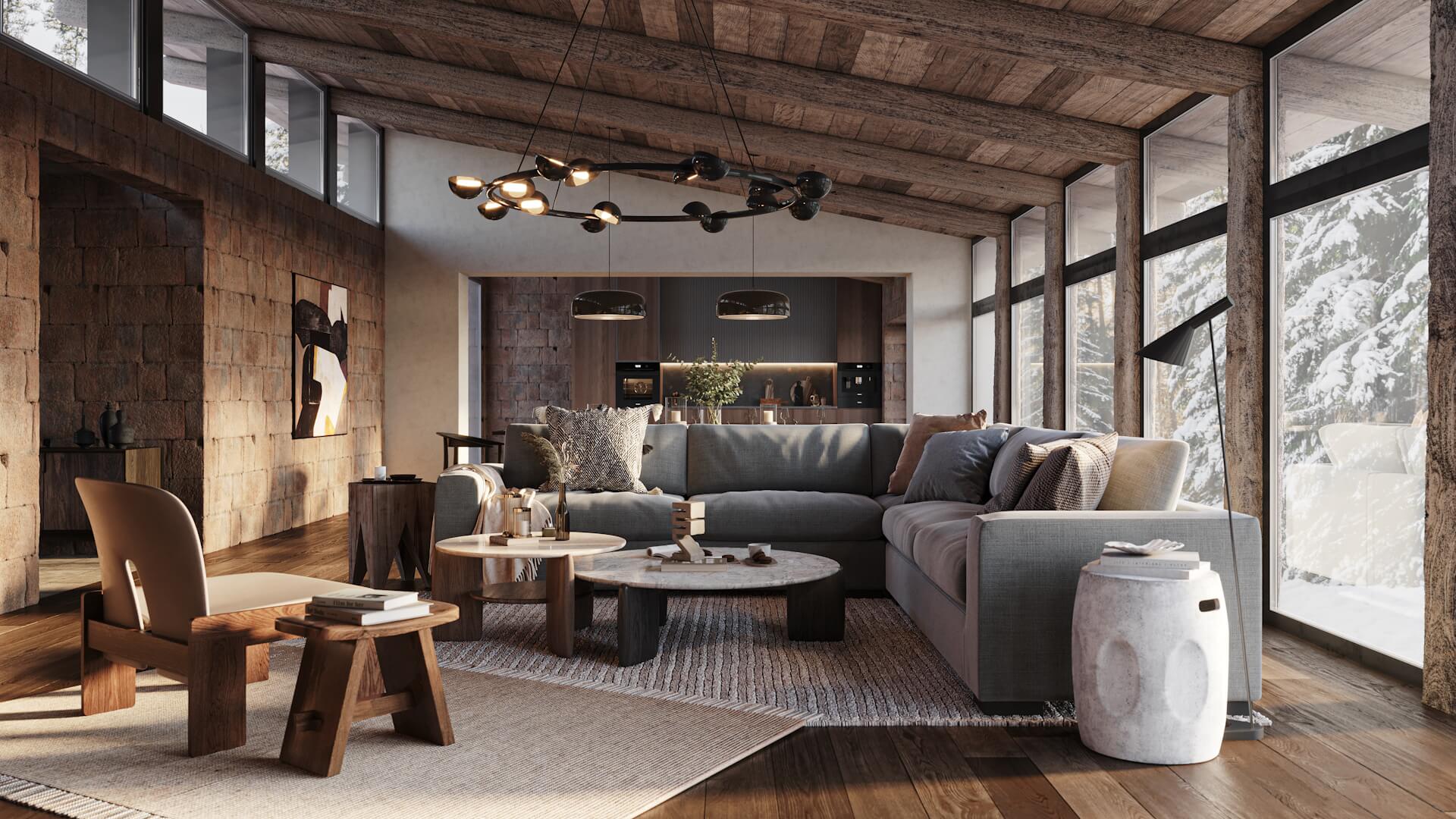
With the whole interior scene already built in 3D, a CG artist can easily move the camera to render a new image. The subtle shift in perspective shown in the picture above ensures that three walls of the room are visible at once. As a result, this rendering provides a viewer with a clearer idea of how different details of the interior design come together to create a cohesive and comfortable living space.
#3. Opposite View
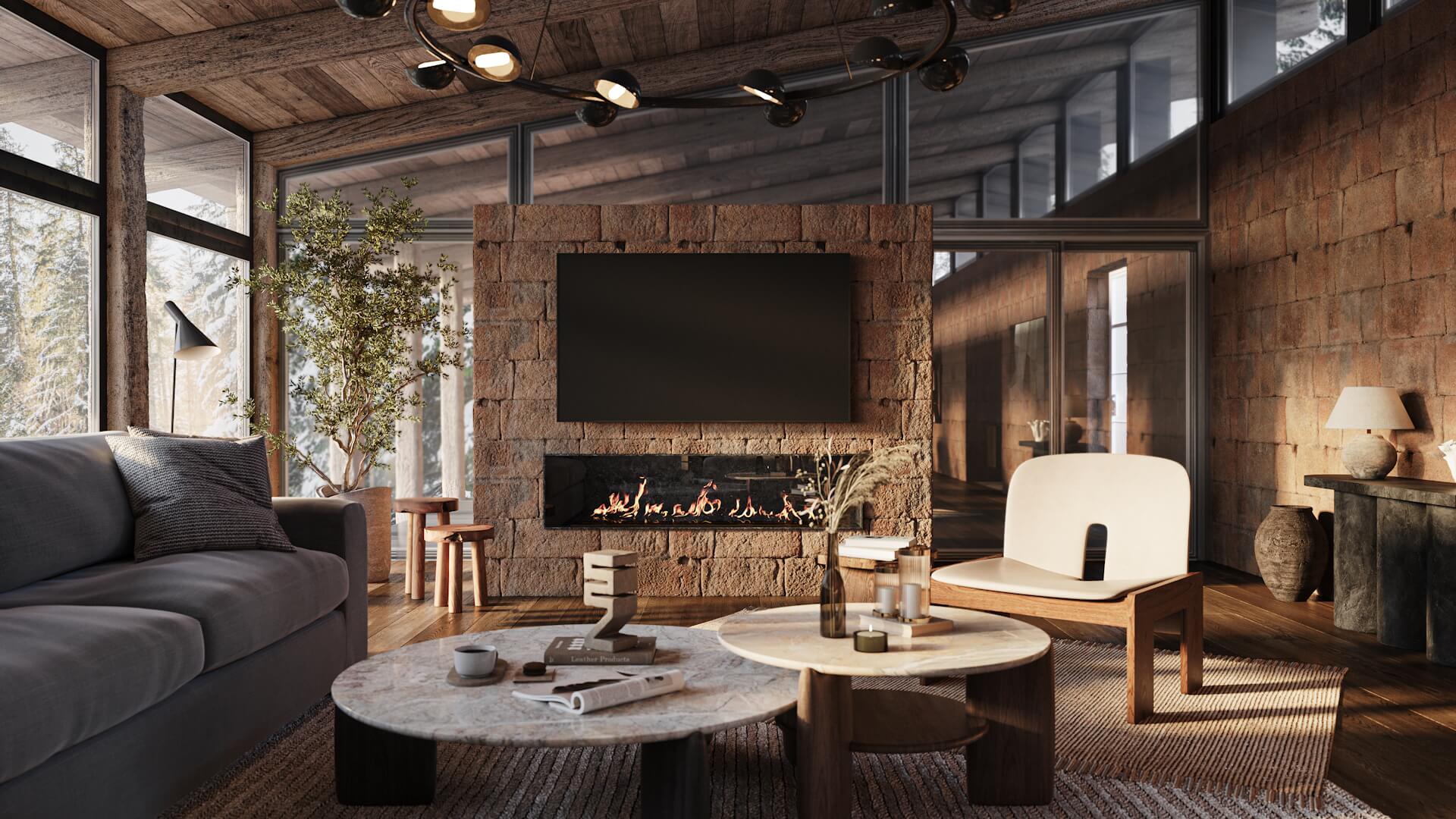
Moving the camera in the opposite direction can give viewers an even deeper understanding of the interior layout. Combined with the initial CG picture, these rendering options will demonstrate the proportions of the whole space and convey the essence of the project.
#4. Alternative Layout
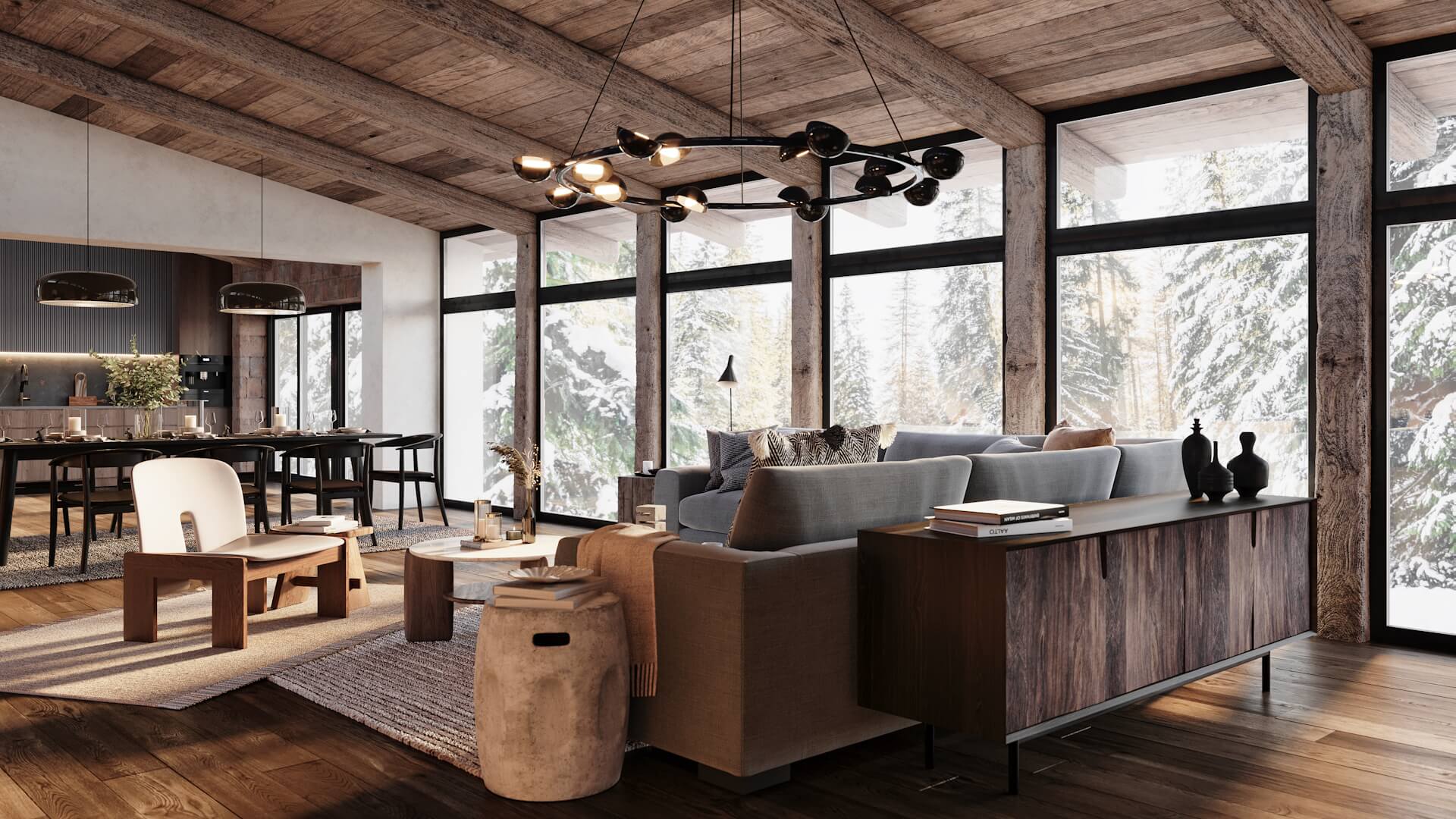
Next on the list of interior rendering options is the room layout variation. Here, the camera position is the same as in the main view but the furniture and decor are rearranged. This rendering can help demonstrate how different interior setups would look.
#5. Zoom Out
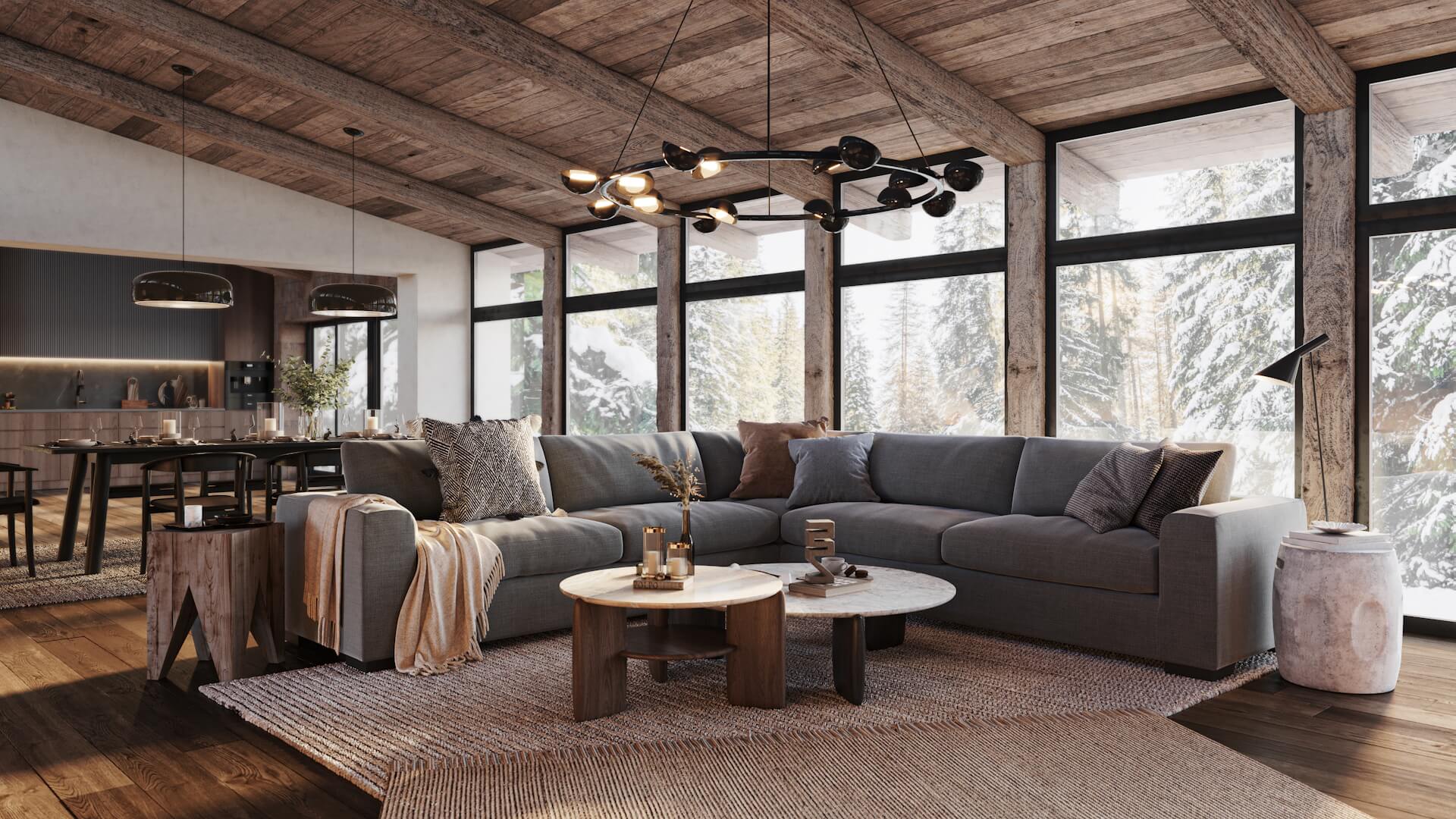
A slight zoom-out gives a wider viewing angle to the rendering. These visualization options can help showcase a larger portion of the interior. As a result, they can provide a better grasp of the spatial relationships of design elements in the room.
#6. Zoom In
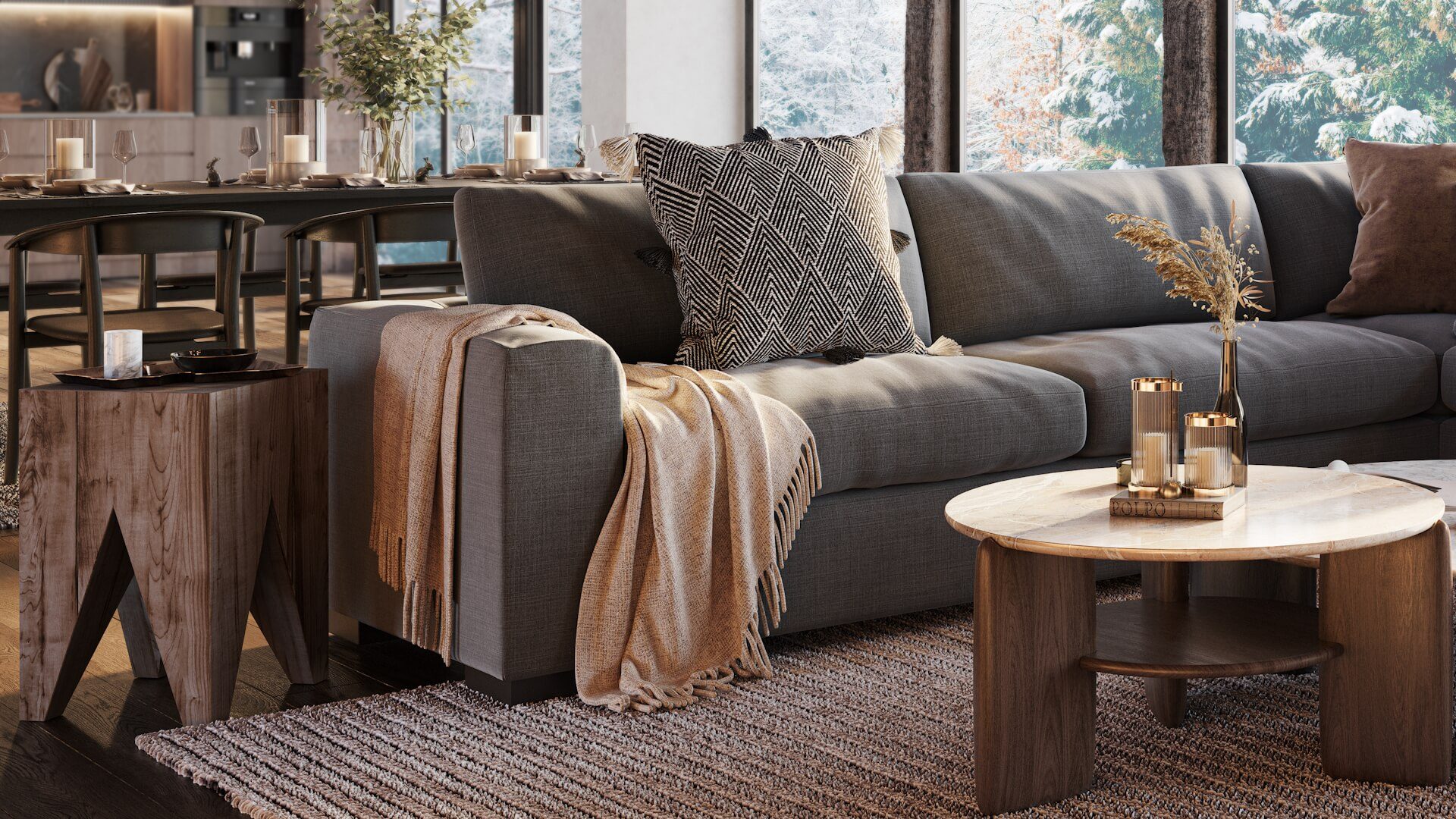
Besides backing away, a camera can be positioned closer to a particular area of the 3D scene. Utilizing this zoom feature results in a rendering that focuses on a certain part of the interior, providing a closer look at design elements, textures, and materials.
#7. Furniture Change
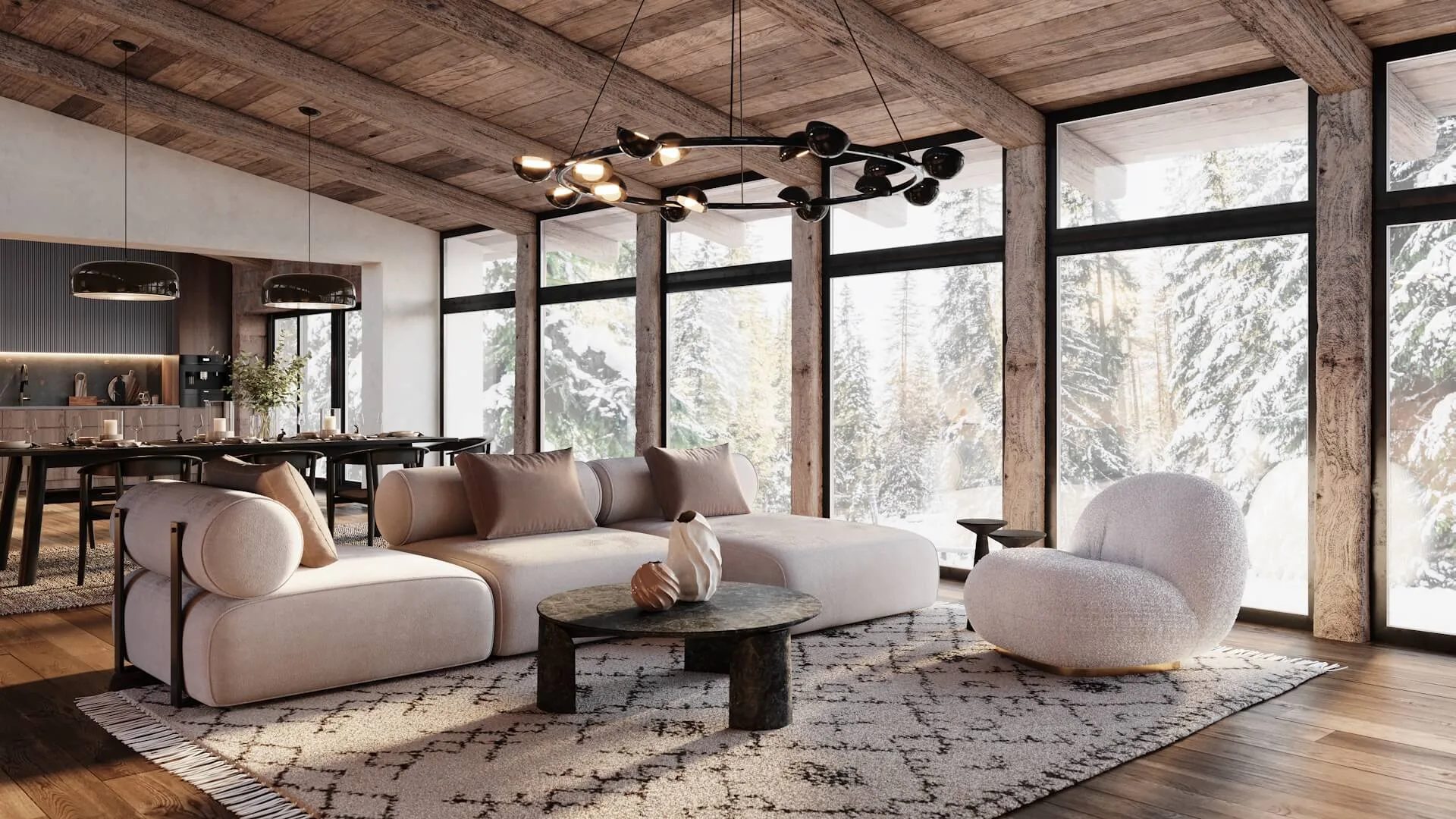
It’s also possible to replace the furniture models with different ones. This option gives the ability to experiment with various design concepts and ideas that can be implemented in the interior. On top of that, it provides viewers with a better understanding of the functionality of the space. And it’s very easy to create since our studio has its own library of 3D furniture models from various brands.
#8. Decor Change
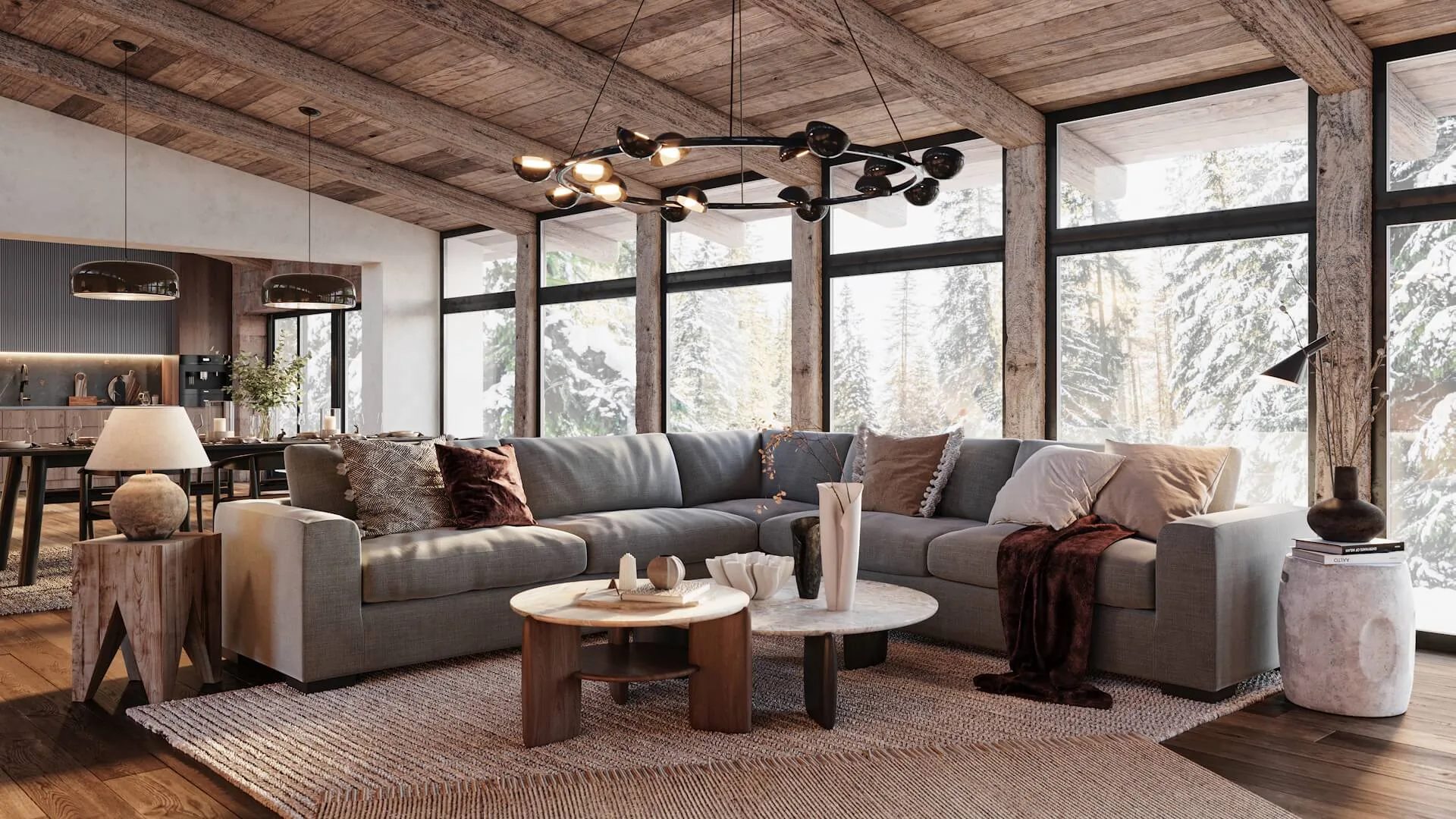
Similarly to the previous solution, the same can be done with the decor elements. As you can see in the CGI for interior design above, pillows, lamps, and vases were swapped with other 3D assets. The additional interior rendering options with decor alternatives can demonstrate various customization variants to the designer’s clients.
#9. Color Change
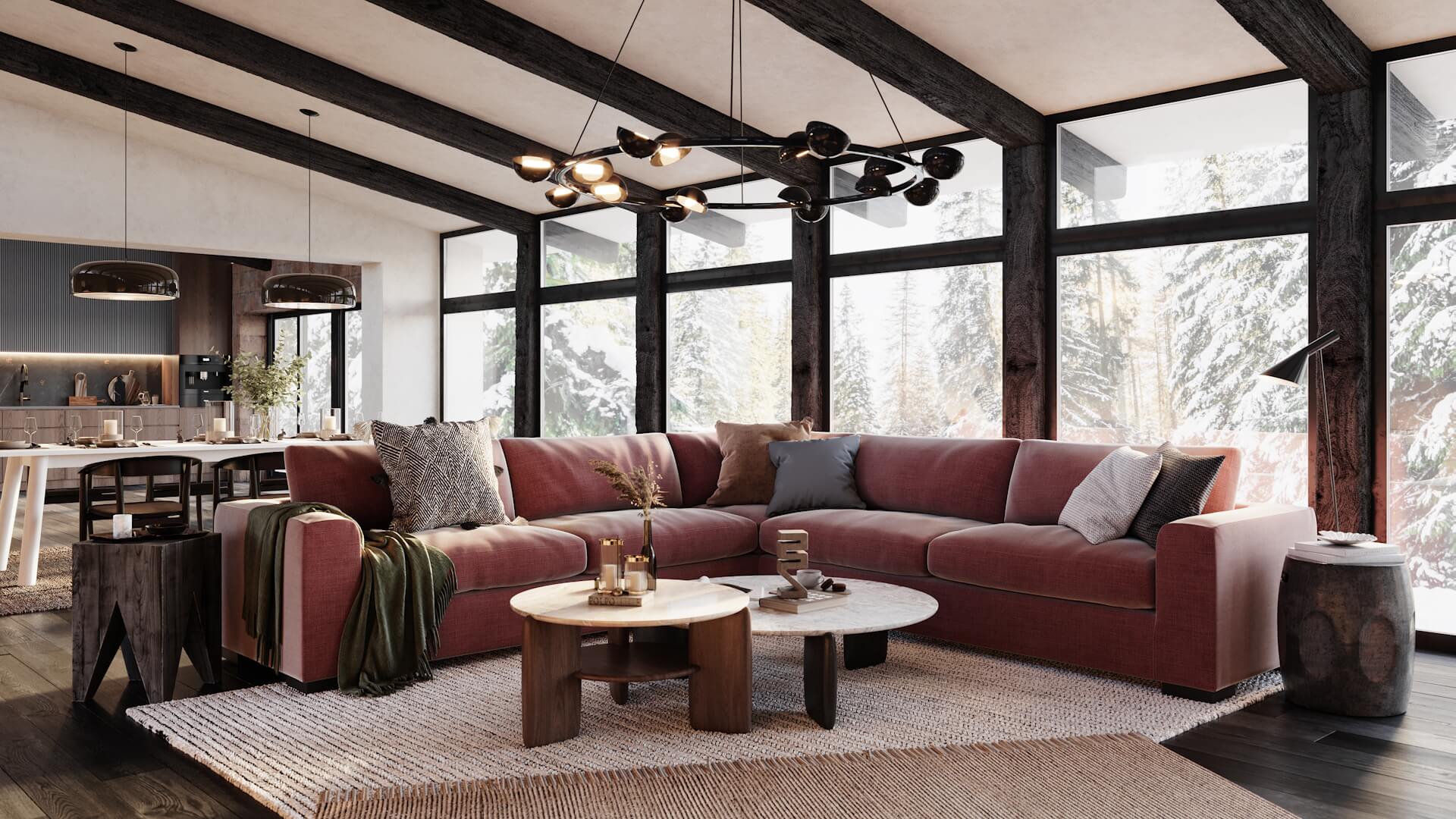
The color palette of the design elements can be changed effortlessly as well. Different color options in the interior renderings perfectly showcase the flexibility of the design. It’s important to keep in mind, though, that this additional view doesn’t include altering the textures.
#10. Finishes Change
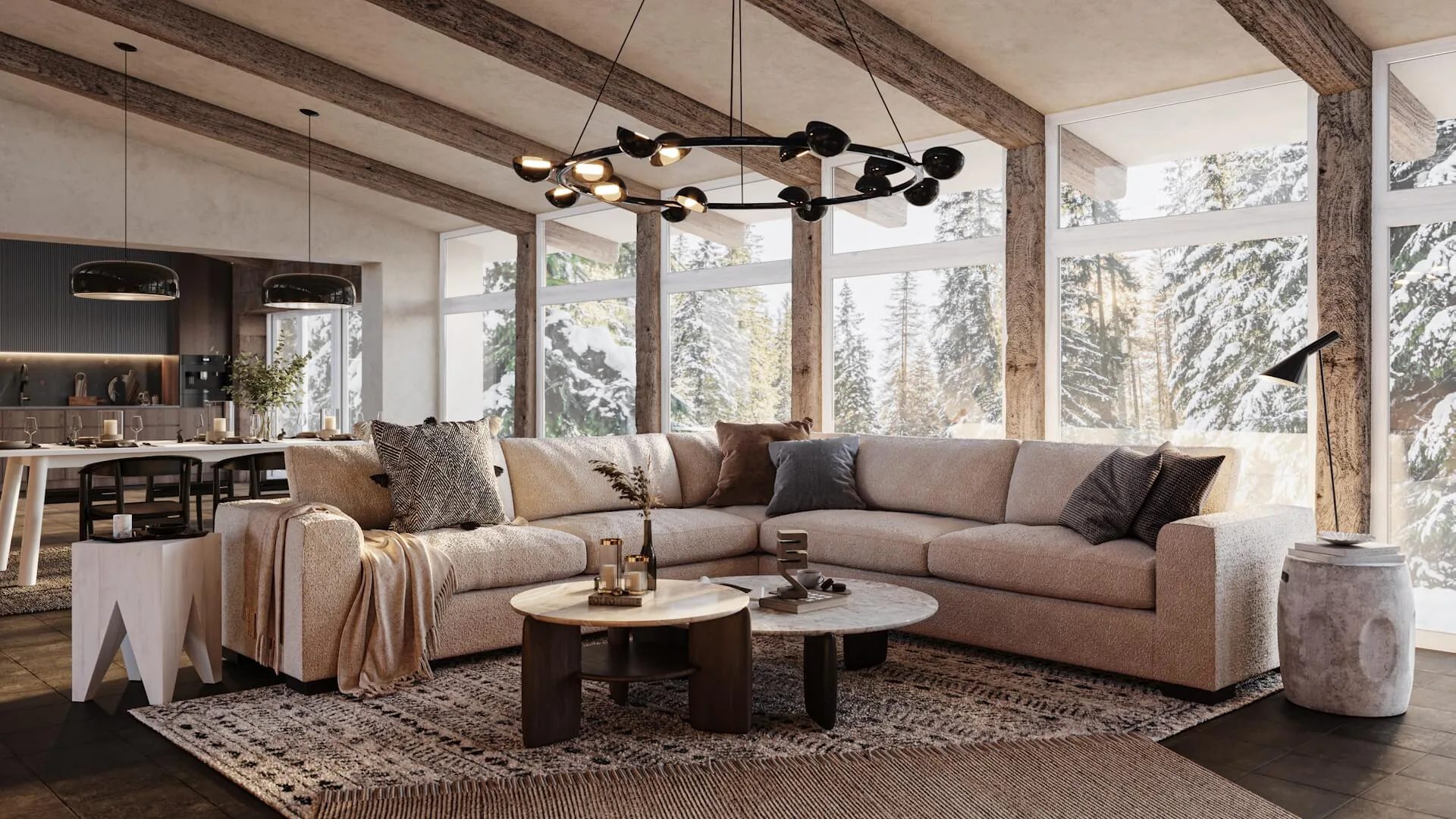
Up to 4 materials used in the interior rendering can be replaced by our client’s request. Here, experimenting with different options allows designers to visualize how various finishes contribute to the overall ambiance of the room. These alternative views can also be useful to illustrate the versatility of the interior.
#11. Lighting Change
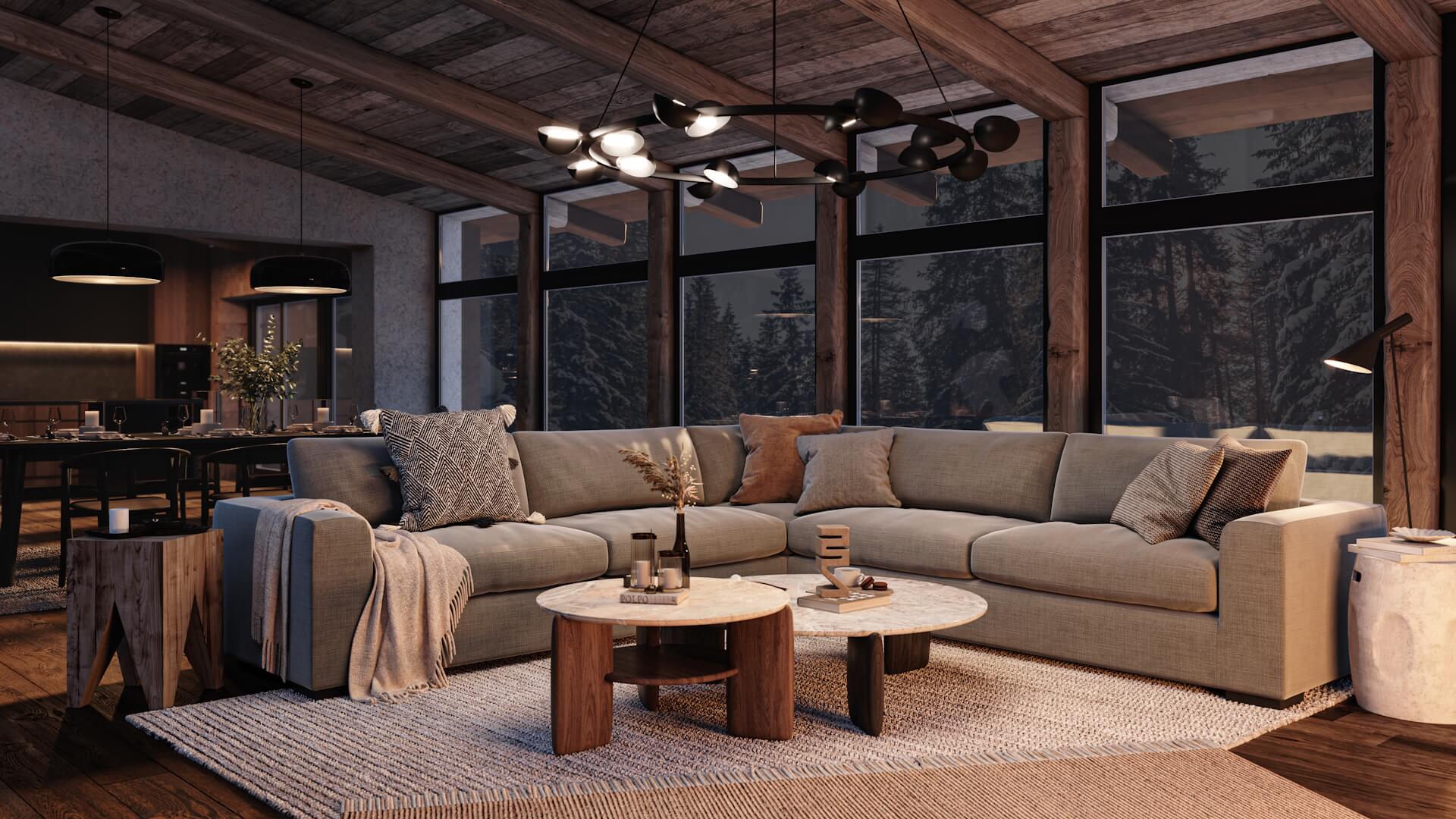
Additionally, an interior designer can order interior design renderings of their project shown under different lighting conditions. Switching to the evening light can be used to evoke a specific mood and ambiance, ensuring an emotional connection between the designs and the viewers. Besides, it can also help demonstrate how effective the chosen interior lighting solutions work during the darker parts of the day.
#12. Detail Shot
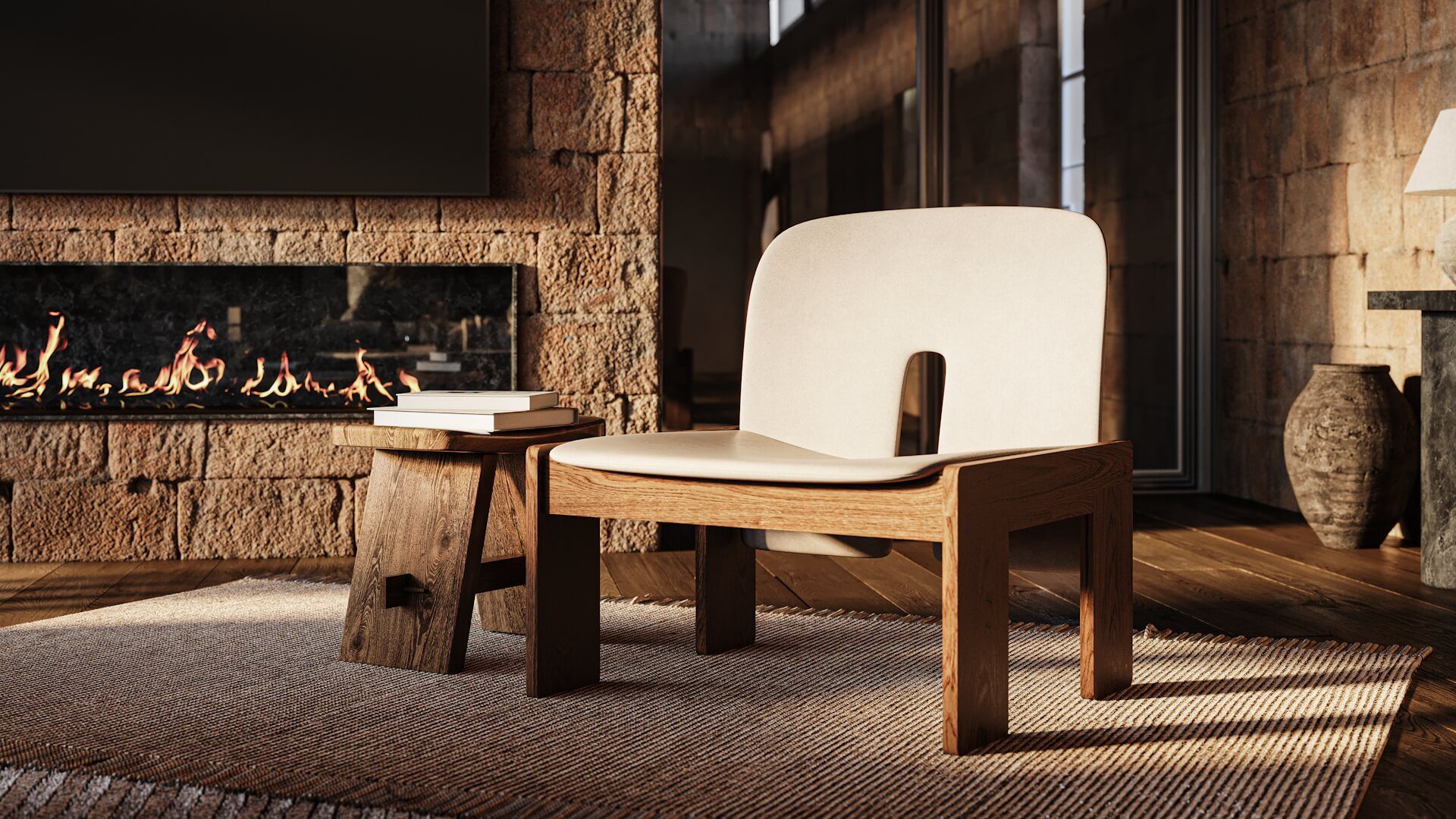
Close-up renders serve as an incredible tool to present a comprehensive view of a certain design element. These types of 3D pictures can be extremely beneficial if, for instance, a designer wants to showcase a custom furniture item made for the interior. Close-ups let a viewer get a more detailed understanding of furniture or decor pieces, as though a person was looking at them in the physical space.
As you can see, our 3D rendering studio can provide designers with a wide variety of interior CGI views beyond the main one. We hope that these formats and views inspired you to explore and experiment with different perspectives within your next project. You can find more information on the types and uses of CGI in our architectural rendering guide.
For a full walkthrough of the process, formats, and costs, check our interior design rendering guide.
Looking for professional interior rendering services? Contact ArchiCGI to bring your designs to life with breathtaking CG images! Related reading: six tips on digital rendering and marketing video ideas for designers.

Ian Diev
Content Writer, Editor at ArchiCGI
Ian loves writing about innovative 3D technologies and their impact on architecture and design. In his spare time, he makes indie music, watches obscure movies, and cooks culinary masterpieces for friends.