



When hiring a contractor, clients usually want to understand who they are working with — their background, skills, and how they approach the job. In 3D visualization, this is especially important, since the outcome depends on the artist’s technical precision and creative judgment. Yet for many clients, the role of a professional 3D artist or 3D designer remains unclear: what training do they have, what exactly do they do, and how do studios organize their work?
As an architectural visualization company, ArchiCGI has worked with 3D artists across every specialization for over a decade. Below is a practical overview of how the profession developed, how artists train, what they do day-to-day, and how studios structure their teams.
#1. History of the Profession of a 3D Artist

The early history of computer graphics can be traced way back to the 1950s. But the first major advancements in this area only happened in the following decade. So, that’s where we’ll begin our journey. Now, let’s see how the technology of 3D visualization has come so far in the last 50 years.
1960s-1970s
The term “computer graphics” was coined in 1960 by William Fetter, a graphic designer at Boeing, and his team’s supervisor Verne Hudson. Fetter was also the first person who created a 3D model of a human figure for a short computer animation in 1964. But the major development of 3D visualization technology started in 1967. That’s when computer scientist Ivan Sutherland joined David C. Evans for his computer science program at the University of Utah. There, they did a lot of founding research on creating realistic CGI alongside teaching an advanced computer graphics class. And in the 1970s, their department produced some of the most prominent pioneers in the field. For instance, there was Edwin Catmull, who later co-founded Pixar, and John Warnock, who then became a co-founder of Adobe Systems.
1980s
Still, in the 70s, computer graphics was solely an academic discipline. At that time, the idea of there being a professional 3D artist didn’t exist yet. That changed in the 1980s, when home computers and arcade machines became widespread. In that decade, we saw the first cinematic CGI in movies like Star Wars and the first fully computer-generated short films by Pixar. Also, that’s when companies like Atari, Sega, and Nintendo popularized computer graphics through video games. And in the late 80s, arcade games already featured the first real-time 3D graphics. Overall, the increased commercial use of CGI in those years created a strong need for professional 3D artists.
1990s-2010s
From the 1990s to our time, we’ve seen a dramatic rise in the quality of 3D graphics. Fully 3D video games became the new standard, and all-CGI films would have crisp visuals and realistic animation. Moreover, the craft of a professional 3D artist found its way into many fields besides entertainment. People started using it in architecture and engineering, product design, test simulations, medicine, and so on. In the 2000s, CGI became commonplace and we all accepted it as an indispensable technology. And in the 2010s, CG specialists were already able to achieve incredible photorealism with pre-rendered graphics, while real-time graphics continued its development in that direction.
That’s how the profession of a 3D artist came to be. Now that you know a little more about it, let’s talk about the journey of becoming a 3D visualization expert.
#2. How One Becomes a Professional 3D Artist

There are two ways one can become a 3D artist. It’s either by self-teaching or by attending specialized courses. The chosen path shapes the knowledge, technical skills, workflow habits, and communication skills in a certain way. So, read on to find out what kind of CGI professional suits you best.
Self-Learning

The first way of becoming a professional 3D artist is by learning the craft yourself. It’s definitely the cheapest method, since there are numerous free lessons and video tutorials available online. However, mastering the art of creating CGI this way requires tremendous amounts of self-discipline, patience, and time. Because there’s no teacher who can answer all the questions immediately, point out the mistakes, or give a useful tip when needed.
Furthermore, valuable information on CGI-making is scattered all over the internet. As a result, an aspiring self-taught professional might miss out on some fundamental knowledge. And that can affect the quality and speed of their work. But that doesn’t mean it’s impossible to become a highly-skilled 3D artist by learning 3D visualization on one’s own. In fact, many people achieve that, and then usually work as freelancers.
The upside here is that many of them tend to focus on one particular area of 3D graphics and even develop their own recognizable visual styles. However, there’s also a downside to that, as such specialists might not be versatile enough. So, if you only need one certain kind of CGI, you can get exceptional results from a self-employed 3D artist. But if you seek a long-term partnership to get diverse CG visual content, that might not be the best option.
Supervised Training

The other way of starting a career as a professional 3D artist is by attending supervised training. Since jobs in computer graphics are extremely sought after, getting qualifications from an authorized CG training center often requires quite a bit of investment. At the same time, most of such programs are fast-paced and impeccably-structured. Therefore, it often takes no longer than a few months for future 3D artists to gain all the necessary skills to start working.
Elevate your exterior design project with photorealistic 3D visuals that help clients confidently approve your proposals.
Furthermore, unlike online tutorials that focus mainly on using specialized software, authorized courses provide a more comprehensive knowledge. Sure, knowing one’s way around programs is crucial for a future professional 3D artist but it’s not everything. To produce a compelling 3D scene, for instance, one needs to know the rules of composition, color theory, and the basics of design. And if we talk about creating 3D architectural visualization, a 3D artist will also benefit greatly from having some background in architecture.
Additional Skills
That being said, many professional architectural rendering studios employ exactly these kinds of specialists. By bringing together artists with different creative backgrounds, studios can combine artistic judgment with technical precision within a single workflow. This is what allows them to deliver visually compelling and technically accurate representations while maintaining consistent quality across formats and project types.
3D artists work at the intersection of several creative disciplines. Many bring experience from photography, painting, or sculpting and translate those skills into a digital environment. For example, 3D modeling closely mirrors sculpting, since realistic forms rely on a solid understanding of proportions and spatial relationships. A background in photography helps artists work confidently with camera angles, lighting, and composition. Video editing skills are especially useful for architectural animation, where timing, transitions, and visual rhythm shape how a project is perceived.
Because of this combination of skills, a 3D artist knows how to present a project from its strongest angles. They also understand how lighting and atmosphere influence mood and can adapt these elements to match the intent and specifics of each design.
Continuous Development
In architectural visualization, professional growth happens as part of daily work, not as a separate activity. Tools change quickly, and CGI artists have to keep up. New rendering engines appear, real time solutions evolve, and artists learn them as they go to stay relevant. At the same time, workflows shift. Client expectations change, pipelines are updated, and familiar processes often need to be rebuilt rather than simply expanded with another tool.
Artistic growth develops alongside technical skills. It comes from practice, not theory. By working on real projects and reviewing results with colleagues, 3D artists gradually sharpen their sense of lighting, materials, and composition. This is how realism improves over time.
To support this process, 3D artists also build and refine their own asset libraries. Well-organized 3D models and textures speed up production and help maintain stable quality across different projects, even when deadlines are tight.
Architectural visualization is a field that constantly evolves. CGI specialists never stop learning and gaining new professional skills. Furthermore, finding new textures and 3D models is an ongoing activity for professional 3D artists. Such vital assets as scripts, toolsets, and plugins are essential for a 3D rendering artist aiming for professional growth.
The 3D specialists at ArchiCGI constantly look for new advanced training courses to maintain and improve their expertise in the 3D field and create new professional connections. After all, learning and sharing experience supports professional development and long-term career growth.
#3. What Does a Professional 3D Artist Do

Now, we know that 3D artists spend considerable amounts of time on their computers, working in complex software, the interface of which can seem complex at first glance. But what is it exactly that they do? In fact, all of their work can be divided into 3 major categories: 3D modeling, 3D visualization, and 3D animation. Let’s find out more about them!
3D Modeling
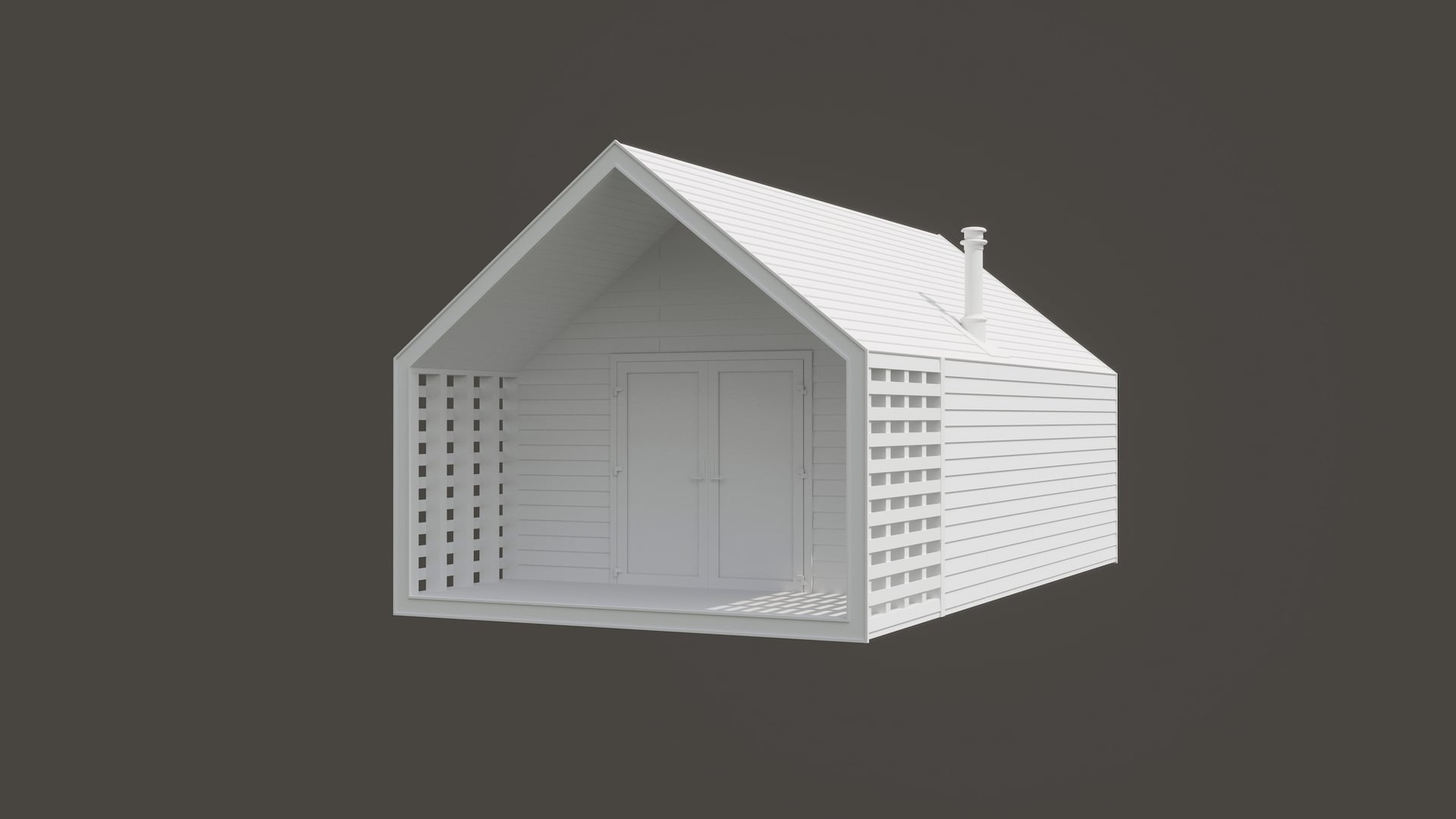
The process of 3D modeling is the first step in creating CGI. It’s where a professional 3D artist builds a three-dimensional representation of a certain object or character — a 3D model. Then, the CG expert adds colors and textures to make the model look complete. Depending on whether the 3D model will be used for rendering still images, real-time rendering, or animation, it needs to follow a number of specific criteria. For instance, it can be low-poly or high-poly. That makes 3D modeling a science in itself, so 3D artists who do it usually focus on this area of CGI-making exclusively.
3D Visualization
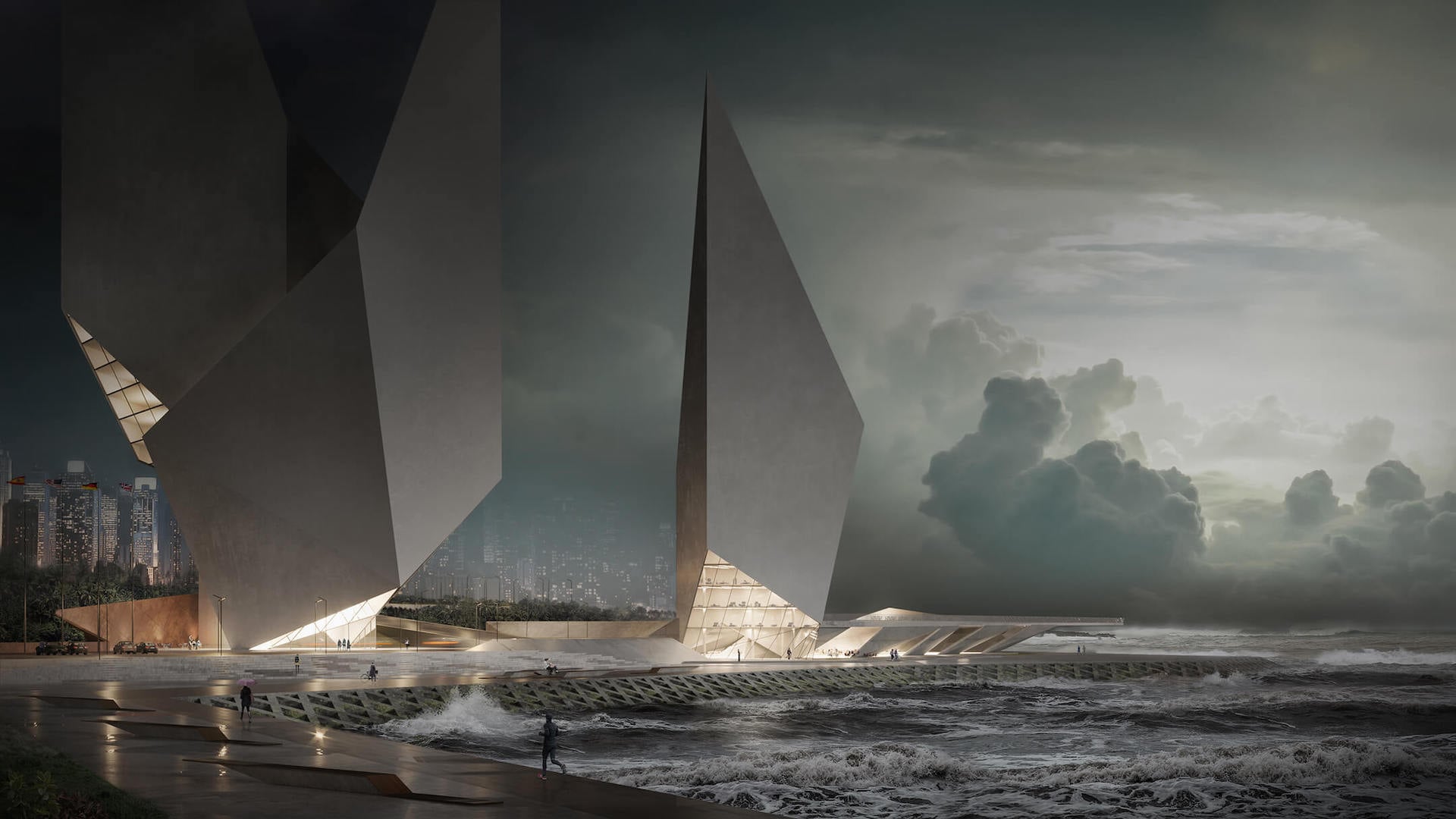
In a complex project, such as architectural exterior or interior rendering, one needs to put 3D models in a certain environment. This process is generally known as 3D visualization and comes after the 3D modeling stage. Here, a professional 3D artist works on creating the surroundings, designs a perfect composition, sets the lighting and view angles, and adds special visual effects, if necessary. Overall, this job requires more artistic skills, while 3D modeling requires technical ones, such as the ability to understand architectural drawings and use them as references.
3D Animation
Finally, we have 3D animation. A professional 3D artist can do it for architectural concept presentation videos, product commercials, music videos, movies, cartoons, video games, AR/VR experiences, and different simulations. The results of a 3D animation artist’s work can vary from simple building walkthroughs to fully animated CG characters in video games and movies.
What Is 3D Art?
With all these categories in mind, we can define 3D art as digital artwork created in three-dimensional space using specialized software. Unlike traditional 2D images, 3D art has depth — allowing objects to be viewed from any angle. It encompasses everything from static renders to animated sequences and is used across industries including architecture, gaming, film, and product design. In architectural visualization specifically, 3D art translates design concepts into photorealistic imagery that clients can immediately understand.
#4. CGI Artist Specializations

Architectural visualization is rarely handled by one generalist from start to finish. In studio production, tasks are split early. Most artists have the same basic technical background, but over time they move into a narrow role and stay there. This approach keeps production predictable and avoids quality gaps when projects scale. To see how this works in practice, meet our architectural rendering team.
-
Product 3D rendering specialists focus on furniture design and materials first. At the same time, they take into account where the visuals will appear, whether in advertising, e-commerce listings, or brand presentations.
-
Exterior CGI artists work on large scale environments and natural lighting to show how a building relates to its site and surroundings.
-
Interior visualization specialists work with artificial lighting, surface materials, textures, and interior design styles to create realistic and inviting spaces.
-
3D animation specialists focus on movement rather than static scenes. They set up camera paths, animate objects, and build sequences for 3D walkthroughs, flyovers, and product 3D videos. Timing and pacing matter here as much as technical control.
See the full range of CGI solutions for real estate and architecture.
And that’s all you need to know about the origin and work of a professional 3D artist. Now you understand more about your current or future business partners from the CGI field. Hopefully, the information from this article will help you make the right choices when selecting a contractor and get the most out of working with CGI experts.
Showcase your architectural project with photorealistic CGI powered by modern AI-assisted workflows
Looking for professional 3D visualization for architects? Explore our 3D rendering services portfolio to see the quality of our work. For tips on evaluating potential partners, check out our guide on how to choose a 3D visualization company.
Contact ArchiCGI to get photorealistic 3D stills and animations for your architectural and design projects — delivered on time and at consistent quality. Related reading: what to look for in a rendering partnership and an AECOM architect on choosing a CGI provider.

Ana Wayne
Content Writer, Copywriter
Ana is a content writer for ArchiCGI. She has a passion for design and architecture - and for talking about it. Outside of work, she is a fan of sci-fi movies and a street food connoisseur.