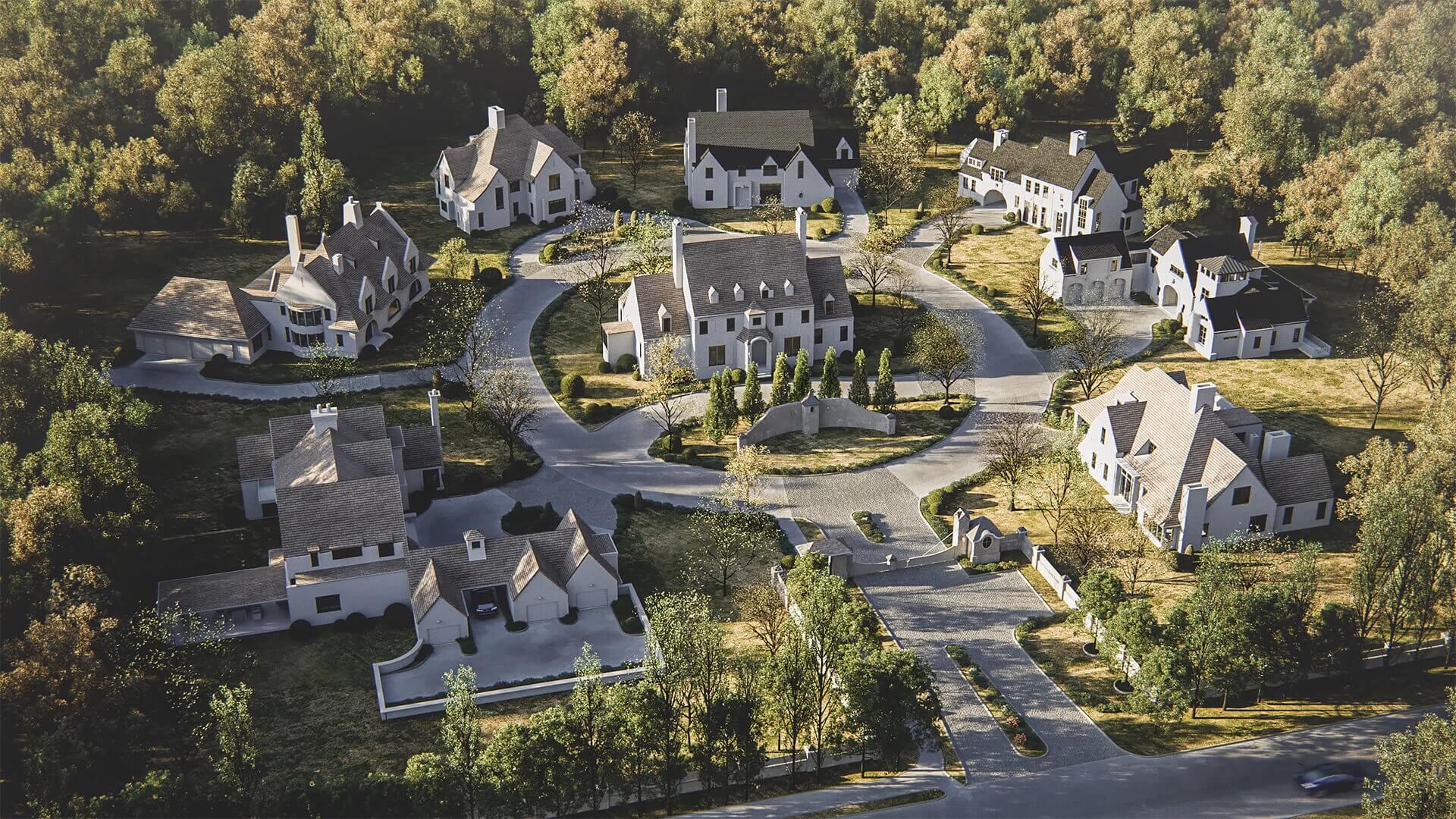
Short answer: outsourcing 3D rendering means hiring an outside studio or freelancer to make your architectural renders, animations and virtual tours instead of keeping 3D artists on staff. It pays off when you need visuals in bursts rather than every day, when a deadline is tight, or when one project needs more artists than you have. At ArchiCGI, still images start at $150 for a residential interior and $300 for a residential exterior, and a 60-second animation starts at $1,800; send us your project details to get a fixed quote within an hour.
3D rendering has quickly become an essential tool for architectural and real estate design, marketing, and presentations. According to Chaos and Architizer research, photorealistic CGI remains the most valued deliverable in architectural visualization, which is why more firms are turning to outsourced rendering. CGI enables professionals to communicate their ideas more effectively than ever. It’s a go-to tool for clearly showing ideas long before anything is built. With CGI, professionals can get approvals faster, win over clients, and market properties earlier. But a strong in-house CGI team needs a lot: hardware, software, and highly skilled artists. That’s why more and more firms are turning to 3D architectural rendering outsourcing.
Outsourcing CGI means getting professional 3D rendering for architects without building an internal team. It saves money, speeds up the work, and gives you the quality you need on your schedule.
This guide covers the basics for teams new to outsourcing and for those improving an existing workflow.
If you would rather hand the whole job to a studio, see our outsourcing architectural 3D rendering services page with prices, steps and terms.
#1. What is 3D Rendering Outsourcing, and Why is It Necessary?

Architects and designers now use 3D visuals at every stage, from first concepts to marketing. However, not every firm has the time or budget to establish a CGI department. This is where 3D architectural rendering outsourcing comes in.
#1.1 Definition of 3D Rendering Outsourcing
3D architectural rendering outsourcing means hiring outside pros or studios to create visuals for your projects. Instead of building and maintaining an in-house team, architecture firms can outsource 3D rendering tasks to external experts: freelancers, boutique studios, or large CGI firms.
This gives you access to top-level skills and tech without the overhead. It’s especially useful for businesses that don’t require architectural 3D rendering on a daily basis but want high-quality results when they do.
#1.2 Key Advantages of Outsourcing 3D Rendering
Outsourcing 3D architectural rendering has some significant advantages:
- Cost efficiency. No salaries, no office space, no equipment to purchase. Just pay for what you need, when you need it. For the full math, see our breakdown of in-house vs outsourced rendering costs.
- Faster turnaround. Big CGI studios can divide tasks among multiple artists, allowing projects to move faster.
- Services are diverse. Outsourcing 3D rendering provides you with access to still exterior and 3D interior visualization, aerial view rendering, 3D animation, VR/AR content, and more.
- Advanced technology. Outsourcing gives you access to powerful render farms, licensed software, and powerful hardware.
- Asset libraries. Many CGI studios have ready-made 3D models and materials to speed things up and reduce costs.
Schedule a free demo of 3D solutions for your business
#1.3 Challenges of Outsourcing 3D Rendering Services and How to Reduce Them
Outsourcing has real downsides, and it is better to plan for them than to discover them mid-project. Here are the common ones, what you can do about each, and how we handle them on our side.
- Time zones. Your office and the artists may be several hours apart, so a question sent late in your day can wait until the next morning. To reduce this, agree on a fixed time for daily check-ins and a cut-off time for comments, and send all comments on a draft in one batch. Our support works 24/7 through our CGI platform, and you message the artists on your project directly.
- Communication gaps. Details get lost between what you imagine and what the artist reads in an email. To reduce this, send a written brief with drawings, references and a materials list, mark comments directly on the images, and have one person on your side approve changes. We use clear brief templates, and you can comment on files right in our Archivizer platform.
- Less control over the process. You do not see the work in progress the way you would with an in-house artist. To reduce this, ask for draft stages (camera angles and grayscale views first, materials and light later) and check how the studio controls quality. At ArchiCGI, every render goes through a two-stage check by the project manager and the team’s mentor, and two review rounds covering changes of up to 60% of the agreed scope are included.
- Inconsistent style across projects. Different artists can read the same brief in different ways. To reduce this, keep a short style guide with approved images from past projects and work with the same team. We save your preferences and brand guidelines in our CGI CRM and keep a dedicated team on your projects.
- Rights and confidentiality. If ownership is not agreed in writing, you may find out later that you cannot get the files you expected, and unreleased projects need protection. Settle both before the start (see step 4.4 below). Our Privacy Policy includes an NDA, and we also sign NDAs with our artists.
- Deadlines and budget surprises. A missed date can cost you a presentation or a launch. To reduce this, agree on a fixed price and a delivery date in writing and send the complete brief at the start. We fix the price before work begins, and under our On-Time Guarantee you get a full refund if renders are late, provided the project is paid in full upfront, you stay in touch with the team daily, and you send final comments at least 12 hours before the deadline.
The result: if you outsource 3D rendering to us, you will get high-quality visuals, more time for core tasks, and no need to grow your in-house team.
#1.4 In-House Team vs Freelancer vs Studio
There are three ways to get renders: hire your own 3D artist, work with a freelancer, or outsource to a studio. Here is how they compare on the points that matter most.
| In-house 3D artist | Freelancer | CGI studio | |
|---|---|---|---|
| Cost | A fixed annual cost. The median US wage for special effects artists and animators is $102,030 a year (BLS, May 2025), and benefits make up about 30% of employer compensation costs in private industry (BLS). Software licenses and workstations come on top. | Per image or per hour. Often the lowest price per image, but rates and quality vary widely. | Per image or per second of animation. At ArchiCGI, from $150 per interior view and $300 per exterior view, with volume discounts of up to 40%. |
| Speed | Fast for small edits; one person’s working hours limit larger jobs. | Depends on one person’s workload; vacations and sick days stop the work. | Several artists work in parallel. Standard stills in 48 hours from prepayment and a complete brief, large projects up to 5 business days. |
| Capacity | Fixed by headcount; peaks mean overtime or delays. | One person; large batches are hard to handle. | Scales with the project; we have 600+ 3D artists. |
| Quality control | Under your direct control. | Depends on the person; usually no second check. | A set process; at ArchiCGI, two checks by the project manager and a mentor. |
| Risk | Paying a salary in slow months; losing skills when the artist leaves. | Missed deadlines, no backup, unclear rights to files. | Less day-to-day control and time zone gaps; a weak brief means more review rounds. |
| Management effort | High: hiring, training, software updates, workload planning. | Medium to high: you write the brief, set the schedule and check the work. | Low to medium: a project manager on the studio side runs the team, you approve drafts. |
| Best for | A steady daily flow of visualization work. | Small one-off tasks with a flexible deadline. | Tight deadlines, large batches, animation and tours, uneven workload. |
Many firms combine them: one in-house artist for quick concept views and an outside studio for marketing images and peak loads.
#2. How to Choose the Right Provider: Small Studio or Big One?

Choosing a CGI partner is determined by the type of work required, the speed with which it must be completed, and the budget you are willing to spend. Some projects benefit from a flexible, budget-friendly approach. Others call for increased capacity and a broader skill set. 3D architectural rendering outsourcing can handle both; simply select the right studio. To compare potential partners in detail, see our guide on how to choose a 3D visualization company.
#2.1 Small CGI Studios: Pros & Cons
Smaller 3D rendering studios can be ideal for independent architects or firms with limited budgets. Here’s what they offer:
- Lower costs. With fewer overheads, small teams can offer more affordable rates. This makes them an excellent choice for firms with tight budgets or those who need photorealistic 3D architectural visualization on a sporadic basis.
- Competence in a specific field. Many small CGI studios specialize in a specific niche, such as office space rendering or 3D exterior rendering, and do it exceptionally well. However, they may be inexperienced in other types of 3D rendering outsourcing services.
There are also some trade-offs:
- Limited services. If you need 3D architectural animation services, VR, virtual tours, or aerials, they may not provide them.
- Slower delivery. Fewer hands on deck can result in longer wait times for large projects.
- Low capacity. They may struggle with large batches that restrict deadlines.
#2.2. Pros and Cons of Large CGI Studios
Large 3D rendering studios, such as ArchiCGI with 600+ artists, can take projects of any size. They are a better fit if you need quick turnarounds, a large volume, or complex work. Here’s why:
- Big teams, extensive experience. These companies employ specialists in all areas, from 3D modeling to post-production.
- Built to scale. They can take one render or a hundred and add artists when the volume grows.
- Latest tech. They have render farms, asset libraries, and their own software.
Downsides?
- Costs can be higher. But you’re paying for speed, dependability, and serious polish
#3. What Outsourcing 3D Rendering Costs and What Affects the Price
Here are typical prices for outsourced 3D rendering at ArchiCGI. They come from our 2026 price list and are starting prices per item.
| Service | Starting price |
|---|---|
| Residential interior view | from $150 per image ($250 for big rooms) |
| Commercial interior view | from $300 per image ($600 for big spaces) |
| Residential exterior view | from $300 per image |
| Commercial exterior view | from $600 per image |
| Multifamily | exteriors from $600, amenities from $300 per image |
| Single-family exteriors, 10+ homes a month | $215 per home |
| Aerial or urban view | from $600 per image |
| 3D floor plan | from $99 per plan, volume discounts for 10+ units |
| Virtual tour | apartment from $800, house from $925 (3D model included, up to 12 viewpoints) |
| Camera flythrough animation | $30 per second in Full HD, a 60-second video from $1,800 |
| Animation blended with drone footage | $90 per second in Full HD, $120 in 4K |
| Extra review rounds | $40 per hour |
These prices assume you send a 3D model (RVT, SKP, FBX or OBJ) and a complete brief. Two review rounds are included, covering changes of up to 60% of the agreed scope. If you only have CAD drawings or PDFs, we build the model, and that work is quoted separately. Large and regular orders get volume discounts of up to 40%, and projects from $2,000 can be paid 50/50. For market prices and pricing models beyond our studio, see our full breakdown of 3D rendering prices.
Where your 3D architectural rendering outsourcing budget lands within these ranges depends on four main factors.
#3.1 Project Complexity
The more detailed your requirements (custom furniture or product rendering, complex facades, custom landscaping, moody lighting), the more time it takes. Time equals cost.
#3.2 Turnaround Time
Small tweaks? Usually free. Major changes, such as switching materials in the middle of a project, may extend the timeline and increase the cost. Check your provider’s revision policy upfront.
#3.3 Number of Views and Custom Textures
Each view adds rendering time. And if you request custom materials, that also adds to the cost. Using existing assets can help keep things efficient.
#3.4 Resolution and Post-Production
Need huge print-ready files or high-end post work (like adding people, cars, or atmosphere)? That requires extra rendering time and editing, which affects the final cost.
See how a 3D flythrough will make your vision impossible to forget
#4. Step-by-Step Guide to 3D Architectural Rendering Outsourcing

Here’s a simple roadmap to follow when you need 3D architectural rendering outsourcing.
#4.1 Decide What to Outsource
Start by picking the right tasks. Tight deadlines, big developments, and projects that need special skills are good cases for outsourcing 3D rendering services.
#4.2 Find the Right 3D Rendering Company
Compare portfolios. Read reviews. Choose a 3D rendering outsourcing service provider whose visuals match your style and whose workflow seems organized and transparent.
#4.3 Get a Quote
Some 3D architectural rendering companies offer online calculators, but for an accurate quote, speak with a client manager. They will also assist you in identifying cost-cutting measures or expediting the timeline if necessary.
#4.4 Talk About Rights, NDAs and Guarantees
Professional 3D architectural visualization studios offer NDAs to protect your work. Also, clarify turnaround guarantees and revision policies. It saves headaches later.
Agree on usage rights in writing as well. At ArchiCGI, the results you order belong to you: the final images and videos, and 3D models if they are part of the order. You can use them for presentations, marketing, listings and print. If you expect to need new views or changes later, ordering them from the same team keeps the style consistent. As for confidentiality, our Privacy Policy includes an NDA, so your project details do not become public.
#4.5 Ask About Quality Control
At ArchiCGI, 3D architectural renderings go through a two-stage check: first by the project manager, then by the team’s mentor. Make sure your 3D rendering company has some version of this.
#4.6 Fill Out the Brief
Send a detailed scope of work: CAD files, references, mood boards, materials, and so on. The more information you provide, the fewer delays you will experience down the road.
#4.7 Stay in Touch
Even when the rendering task is in capable hands, regular communication is essential. Most studios provide updates during key stages of the workflow. This could be via email, project management platforms, or CRM systems. Staying in touch allows you to track progress, clarify details, and catch potential issues early.
#4.8 Give Feedback on Drafts
You’ll get intermediate previews; now is your chance to speak up. Be specific. The clearer your feedback, the smoother the process.
#4.9 Approve and Download
Once you’re happy with the results, you’ll receive final renders in your requested formats. You get print-ready, web-optimized, or presentation files, as needed.
#4.10 Keep the Collaboration Going
If you are happy with the results, keep working with the same team: it saves time and cost on future projects.
#5. Applications of 3D Rendering Outsourcing in Various Sectors

Architects are not the only ones who benefit from outsourcing 3D rendering. This is where it also shines.
#5.1 Residential and Commercial Architecture
Outsourcing 3D rendering allows architects and developers to:
- Get permits and approvals faster
- Pitch designs to investors and clients
- Test materials, layouts, and lighting before building
Guide stakeholder decisions with impactful CGI
#5.2 Real Estate Marketing
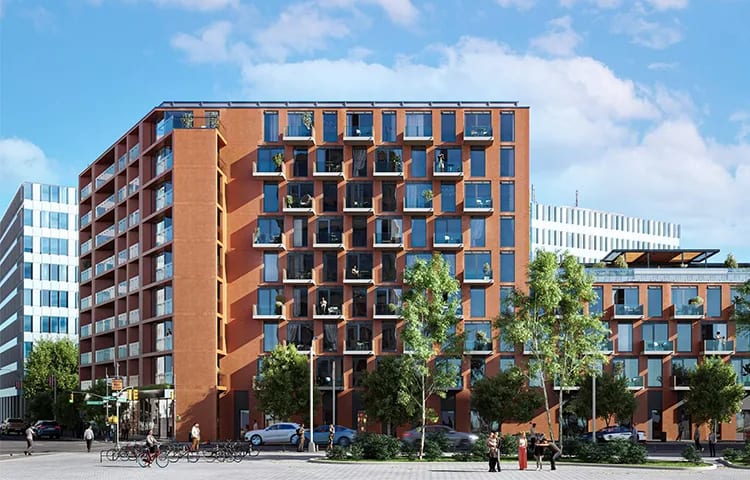
For real estate developers, home builders, and agencies, outsourced 3D rendering lets marketing campaigns start before ground is broken. Real estate rendering is used to:
- Create listing visuals before construction starts
- Build interactive tours to sell remotely
- Produce high-end content for websites and brochures
Overall, top-tier real estate visualization from a reliable 3D home builders rendering outsource studio can directly boost pre-sales and shorten the sales cycle.
#5.3 Interior Design and Home Staging
Outsourcing 3D rendering helps interior designers and realtors to:
- Show how a space could look without buying furniture
- Present multiple style options in one go
- Help clients commit to a design they can actually see
For remote clients, CG imagery often replaces traditional mood boards or swatches entirely.
Strengthen your design presentations with professional interior rendering
#5.4 Construction and Engineering
3D construction rendering outsource services help:
- Explain technical ideas to non-experts
- Visualize MEP and sequencing before the build
- Catch problems early with detailed visuals
#5.5 Hospitality and Retail
For hotels, restaurants, and stores, visual image is everything. Here, outsourced CGI is ideal for:
- Design mood and ambiance before opening day
- Create visuals for branding and marketing
- Optimize customer flow and zoning
#5.6 Urban Planning and Public Infrastructure
Architectural rendering outsourcing makes it possible to:
- Show the real impact of new developments
- Simulate traffic and pedestrian flow
- Engage communities and garner public support
#6. What ArchiCGI Offers for Your Rendering Needs
Here’s how we make outsourcing 3D architectural rendering services simple, scalable, and highly efficient.
#6.1 Visuals for Every Stage
- Grayscale drafts to demonstrate structure early
- Photoreal interiors with accurate lighting and decor
- Material and layout options for quick comparisons
- Final renders for marketing and presentations
Animations, immersive tours, and 3D virtual tours for higher client engagement
#6.2 Built to Scale
One image or a full campaign: our team handles both. With 600+ professional 3D artists, no project is too big (or too small).
#6.3 Always On Brand
We remember your preferences and brand guidelines so that every render matches your brand style. Our two-step quality check ensures that everything remains consistent.
#6.4 Cost-Efficient
Outsourcing 3D rendering to ArchiCGI cuts overhead. No software to buy. There are no render farms to manage. There are no salaries to pay. You pay for the results only.
#6.5 Fast Turnaround, Smooth 3D Rendering Workflow
Our custom CRM + dedicated PMs = no chaos. Even when deadlines are tight.
#6.6 Advanced Rendering Tech
Our render farms keep delivery fast, including large scenes and animations.
#6.7 Extensive Asset Library
Our extensive collection of ready-made models and materials results in faster renders and lower costs.
#7. Tips on Dealing with Urgent Outsourced Projects

Short on time? Outsourcing architectural visualizations can still work, if done correctly.
#7.1 Say It’s Urgent
Mark the task clearly from the beginning. Studios can then prioritize and assign additional artists.
#7.2 Set a Real Deadline
Be specific. “Next Thursday, 10AM CET” is better than “ASAP.”
#7.3 Provide a Solid Brief
Urgent projects need a complete brief upfront. The more you include (drawings, mood, materials), the faster the team can move.
#7.4 Stay Connected
Quick daily check-ins go a long way. They help to keep minor misunderstandings from causing major delays.
7 Benefits of Outsourcing Architectural CGI for Real Estate Marketing Agencies

Real estate marketing agencies offer a wide range of services. These include developing branding strategies, listing properties, managing transactions, consulting, and more. Also, agencies are often responsible for creating visual materials for real estate marketing.
Here, 3D rendering comes into play. It’s one of the best tools to visualize properties, including those under development or reconstruction. Of course, an agency might have its own in-house 3D artist or even a team for that. Yet, in some cases, their efforts are not enough to cover the needs for architectural CGI for marketing agencies.
- Expertise and Advanced Technology
- Efficiency and Speed
- Cost-effectiveness
- Scalability
- Wide Range of Services
- Consistency and High Quality
- Innovation and Creativity
Outsourcing architectural CGI gives marketing agencies skilled artists and the right technology. By partnering with professional 3D studios, agencies can ensure their real estate marketing materials are always visually impressive. They also get fast turnaround at a lower cost. And they don’t carry the cost of an in-house team. We can also work white-label, as your outsourced 3D team in the background: you manage the client, and we take briefs and feedback only from you (see how we work with marketing agencies).
Overall, 3D architectural rendering outsourcing is a smart way to:
- Save time and money
- Get top-tier visuals quickly
- Stay focused on design rather than software headaches
- Strengthen 3D rendering for marketing
Want to learn how much your project costs? See how we evaluate 3D rendering projects
With the right partner and process, it can become a powerful, integrated part of your workflow.
Send us a brief and get a fixed quote within an hour. Related reading: why outsource CGI for interior design.
Explore CGI solutions for every industry we serve.
Frequently Asked Questions

Ian Diev
Content Writer, Editor at ArchiCGI
Ian loves writing about innovative 3D technologies and their impact on architecture and design. In his spare time, he makes indie music, watches obscure movies, and cooks culinary masterpieces for friends.

Comments
Michael