


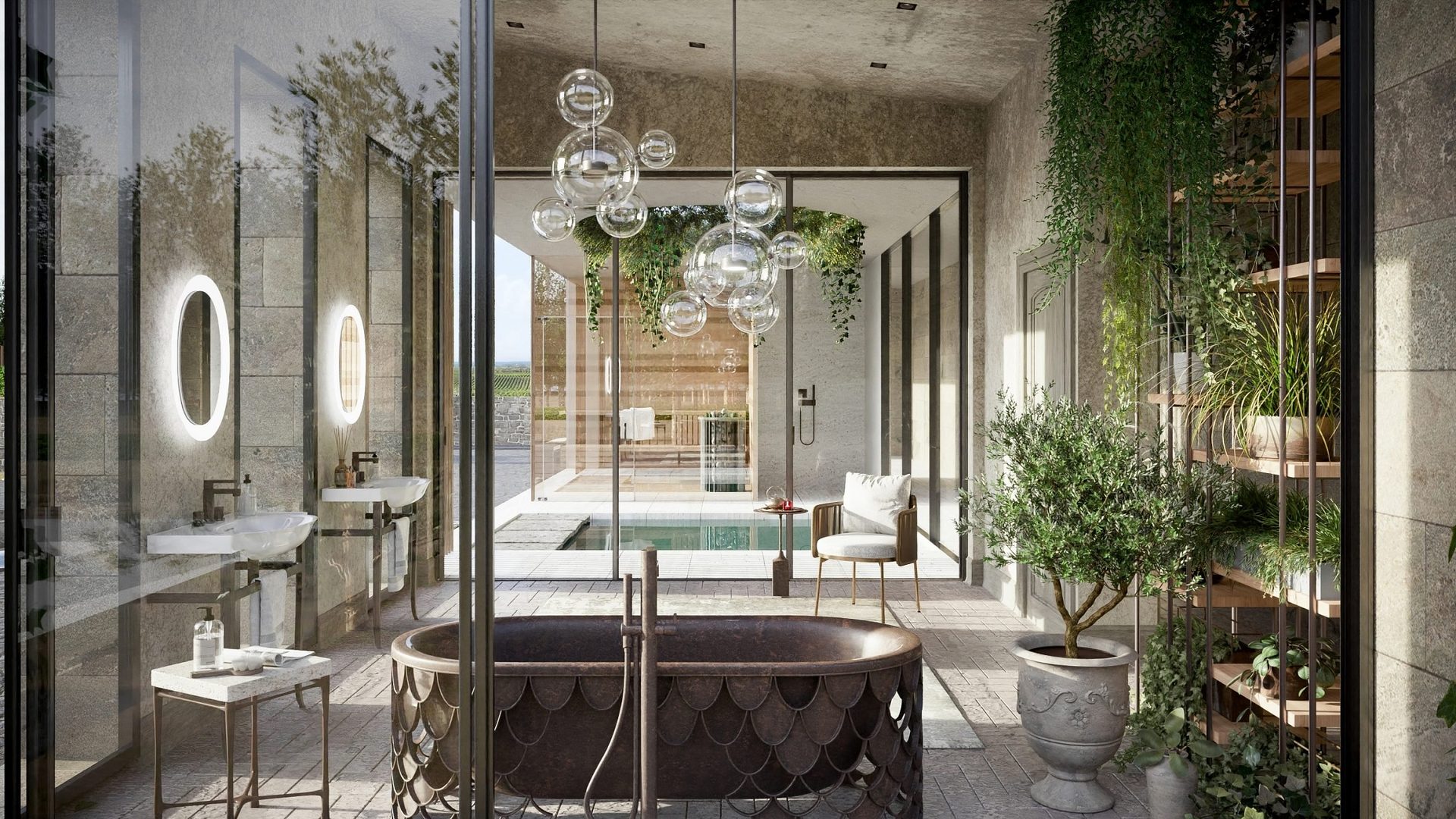
Many interior designers are already familiar with the benefits of CGI. This technology has truly taken the industry by storm. That’s because 3D rendering for interior design helps the professionals in the field at almost every stage of work. How so?
What is a rendering in interior design? It is the process of turning a design concept into a photoreal image of the future space: furniture, materials, and lighting are recreated in 3D, so the client sees the finished room long before any physical work starts.
For instance, 3D rendering can present an interior design project before it is brought to life. And unlike sketchy moodboards, CGI can do it in photoreal quality and great detail. Which means that designers can easily help their clients choose the best style for their house or apartment and get the project approval. Moreover, 3D visualization provides design experts with stunning CG imagery for marketing purposes and creating an impressive portfolio.
When choosing a provider of 3D rendering services, a designer needs to make sure that this firm can help showcase a project in full splendor. At ArchiCGI, we understand the importance of it. That is why our 3D artists have knowledge and skills to create stunning CG visuals in any style. What’s more, we have a custom-made CRM system with a large library of interior design 3D scenes and models. In this database, designers can look for references or even ready elements for their projects.
To help our clients browse this library and find items in an appropriate style, we divided 3D models and scenes into categories. Wondering which interior design rendering styles are there? Below, you will see 18 CG visuals: 12 core styles our clients pick most often, plus 6 more that have been gaining popularity lately. Each one comes with a brief description. All these CG images come from the work of our 3D artists at our architectural rendering services. Enjoy and get inspired for your next projects!
1. Art Deco
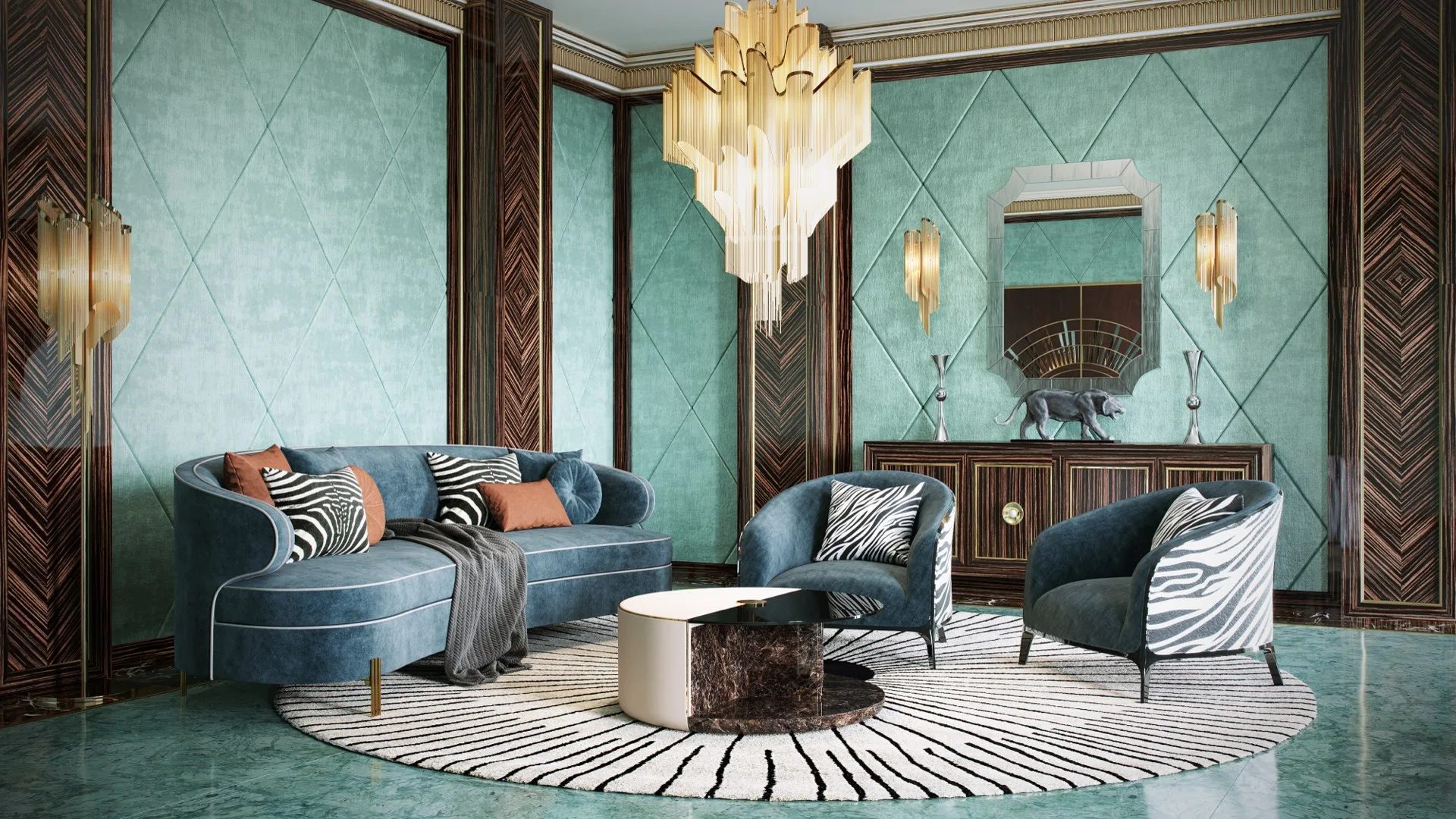
Art Deco is not just an interior style — it is an architectural movement. It originated in the 1920s in France and spread rapidly across the globe. The trend reached the peak of its popularity in the 1930s. One of the most distinctive features of a 3D rendering with Art Deco aesthetics is angular geometric forms, such as triangles, squares, and rhombuses. The colors in Art Deco interiors are bold and bright. The palette consists of deep blues, yellows, etc. Usually, those colors work well in combination with chrome or black. Creams and beiges are also used quite often.
Other key features of Art Deco interior design include the usage of exotic materials, woods, animal prints, vintage furniture, marquetry, and contemporary artworks. Additionaly, this style is the right choice for those who want their house to look elegant and appreciate unique accessories.
2. Classic
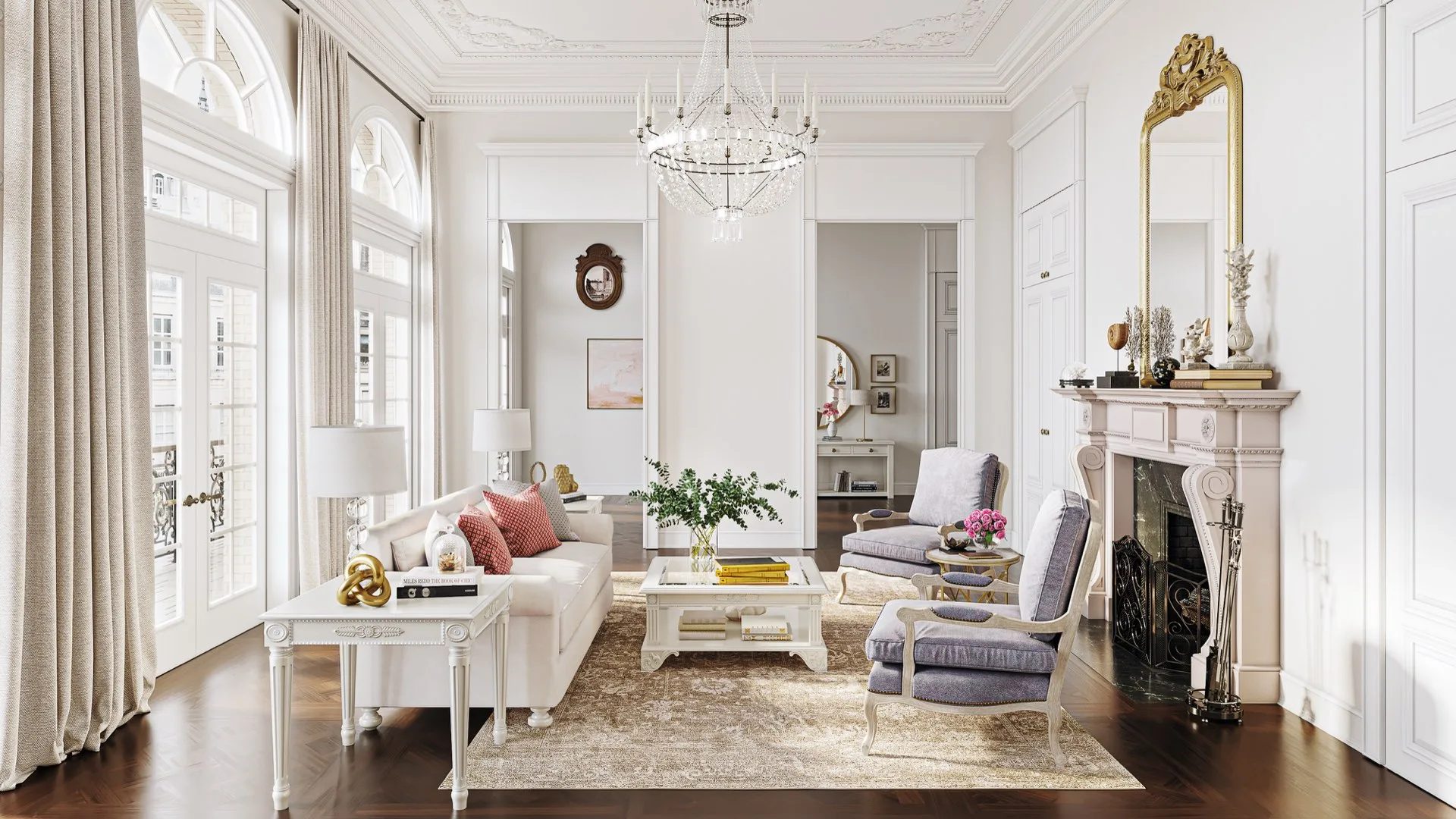
The Classic style originated in Europe in the 17th century. It drew inspiration from the Western classical tradition. As a result, the 3D rendering for interior design above perfectly demonstrates its refined aesthetic. In essence, Classic interiors feature symmetry, noble materials, and decorative elements inspired by Greek and Roman architecture. Furthermore, the color palette in this style is typically calm and balanced, including beige, cream, and delicate greenish shades.
In Classic design, lighting plays a crucial role. It helps establish a welcoming and harmonious atmosphere through large chandeliers, elegant lamps, and sometimes even a fireplace.Ultimately, this interior style appeals to confident and mature individuals who value tradition and appreciate timeless decor elements such as statues, vases, and fine ornaments.
3. Contemporary
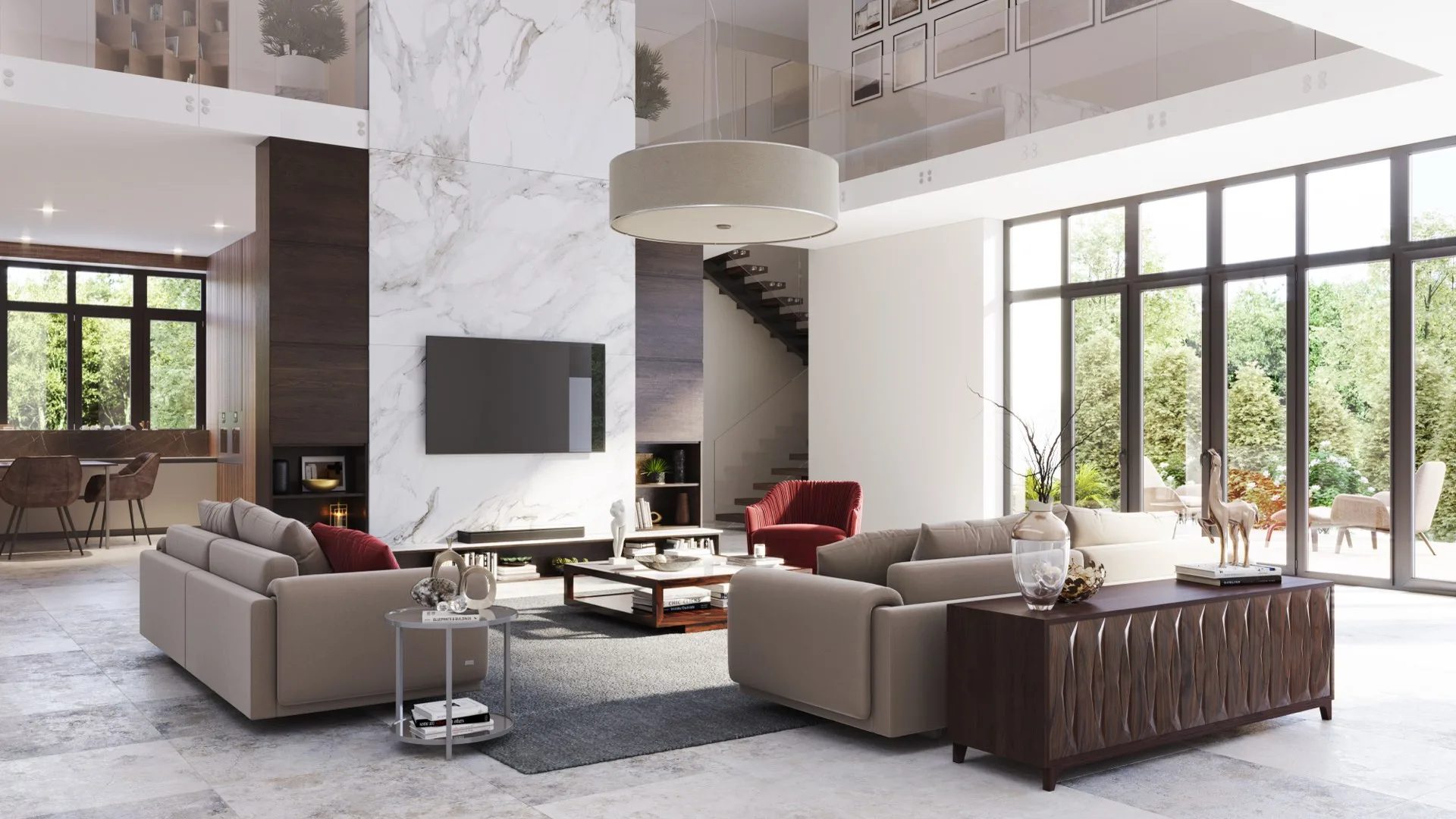
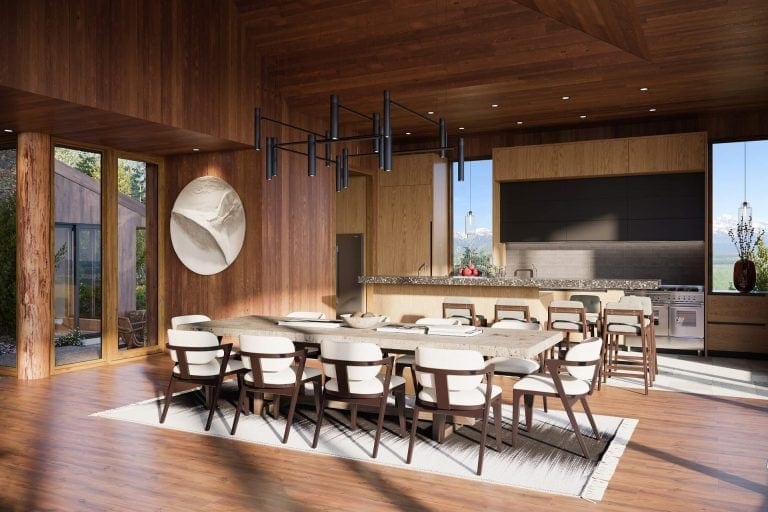
The Contemporary style was developed in the 20th century. It is highly influenced by constructivism and minimalism. One of its core principles is the usage of affordable and functional furniture items. Contemporary interiors are not defined by specific colors. Usually, walls and floors are of neutral shades while furnishings are bright and contrasting. An interior 3D rendering in this style usually makes the viewers focus on the spaciousness of the room more than on decor items. Contemporary interiors are characterized by simple but at the same time bold furniture pieces. This design is loved by people that prefer simplicity, comfort, and functionality for their homes.
4. French Country
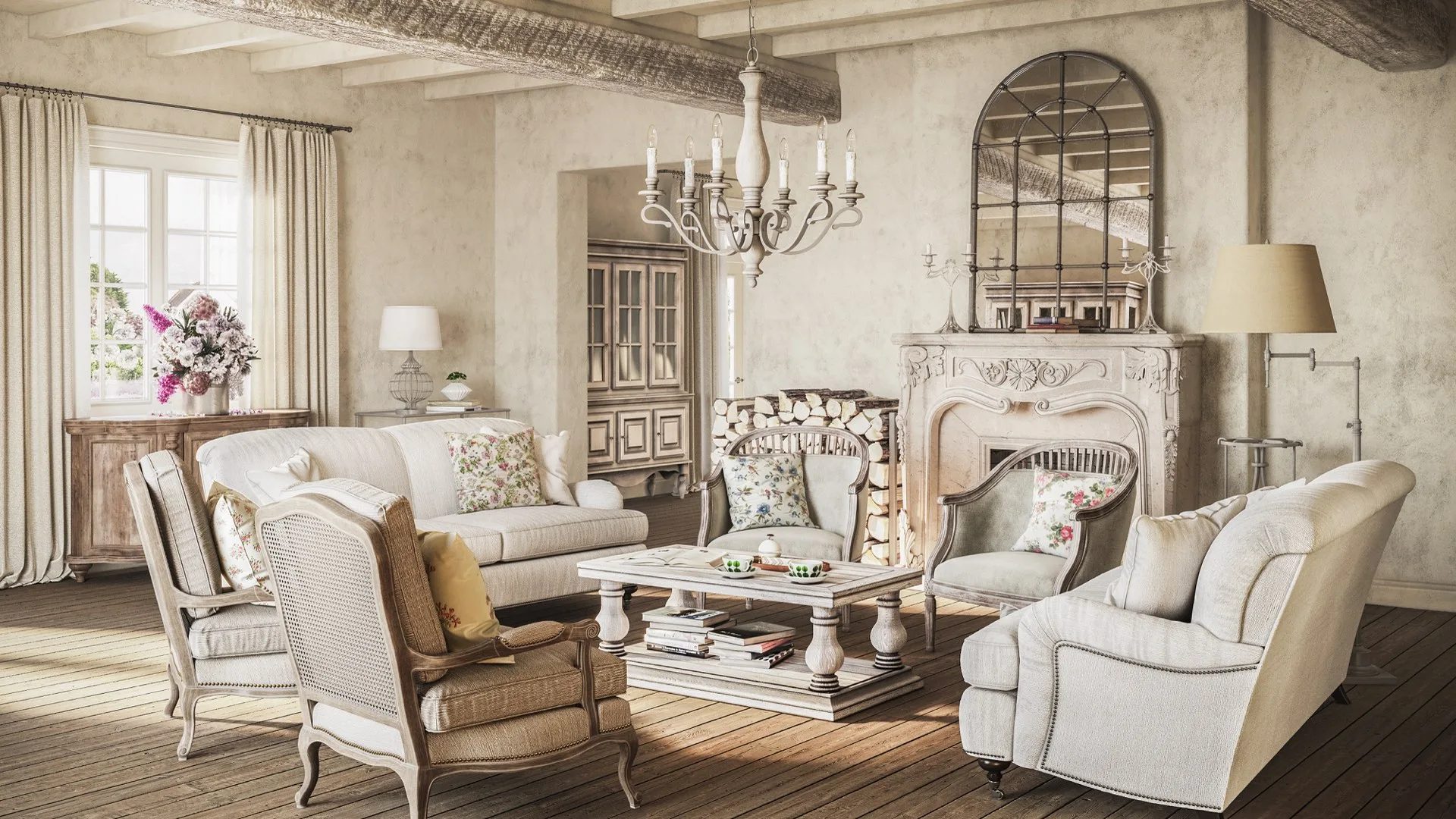
French Country emerged back in the 1600s. This sophisticated style was inspired by country homes and farmhouses of France. As obvious from the 3D interior design rendering above, it is very elegant and sets a friendly and welcoming atmosphere. The palette is warm, with colors such as creams and tans. The furnishings and accessories are usually made of natural materials, preferably of wood. Dried flowers and grasses are essential elements of almost every 3D rendering for interior design created in this style. French Country is a popular choice among people who wish to bring a touch of rustic charm to their house interior.
5. Industrial
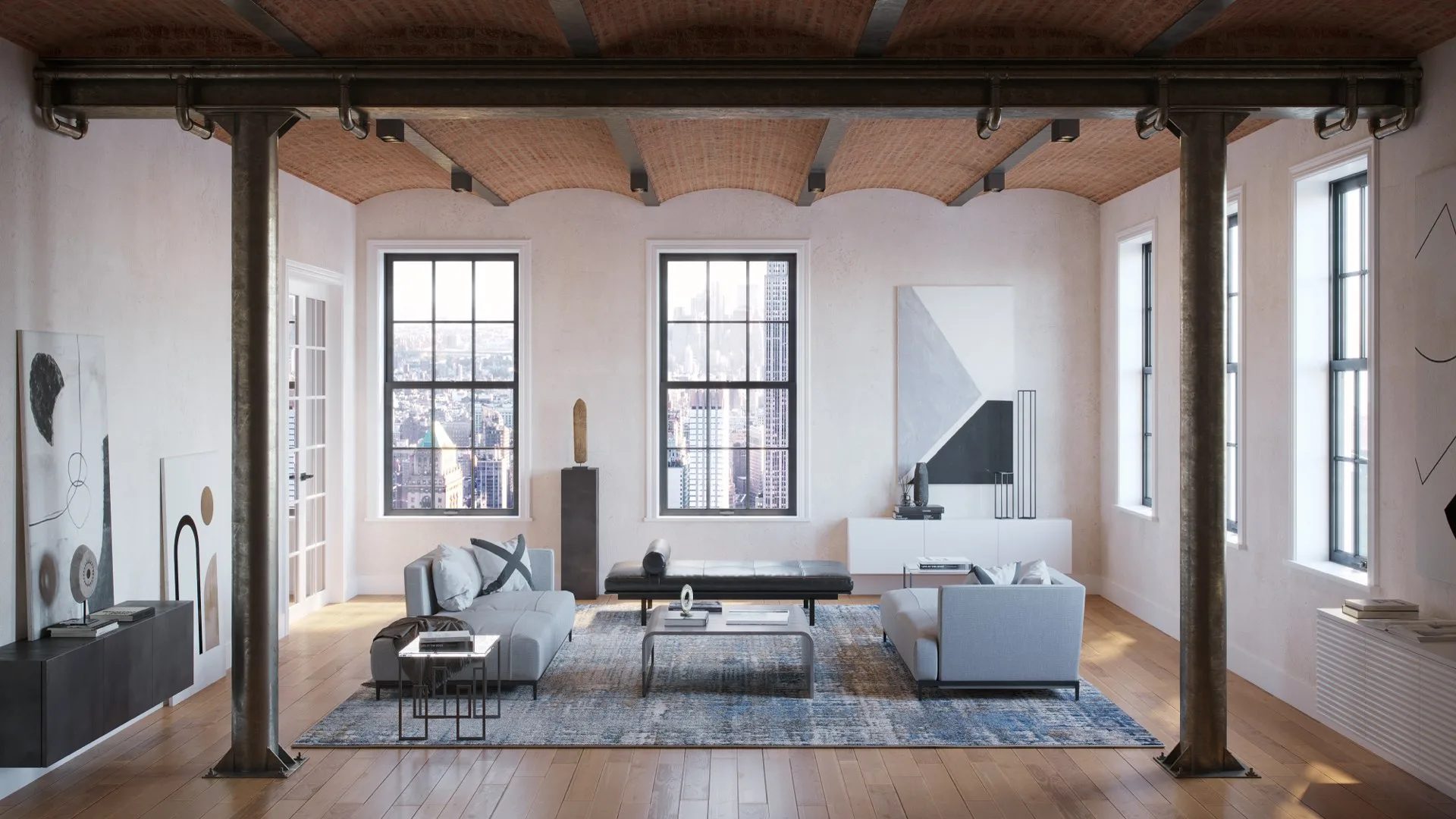
The Industrial style originated in the late 19th century. It took inspiration from the interior spaces of factories and warehouses built in that period. The 3D rendering above is a perfect example of this aesthetics. In industrial interiors, it is acceptable to showcase elements that are usually hidden, such as pipes, beams, pulleys, ducts, and bricks. As a rule, this design presupposes the usage of brown, gray, white, and beige colors. Industrial aesthetics is not for any room. There has to be a lot of space and big windows. Industrial interior design is typically chosen by people that value originality and are not afraid to experiment.
6. Luxury
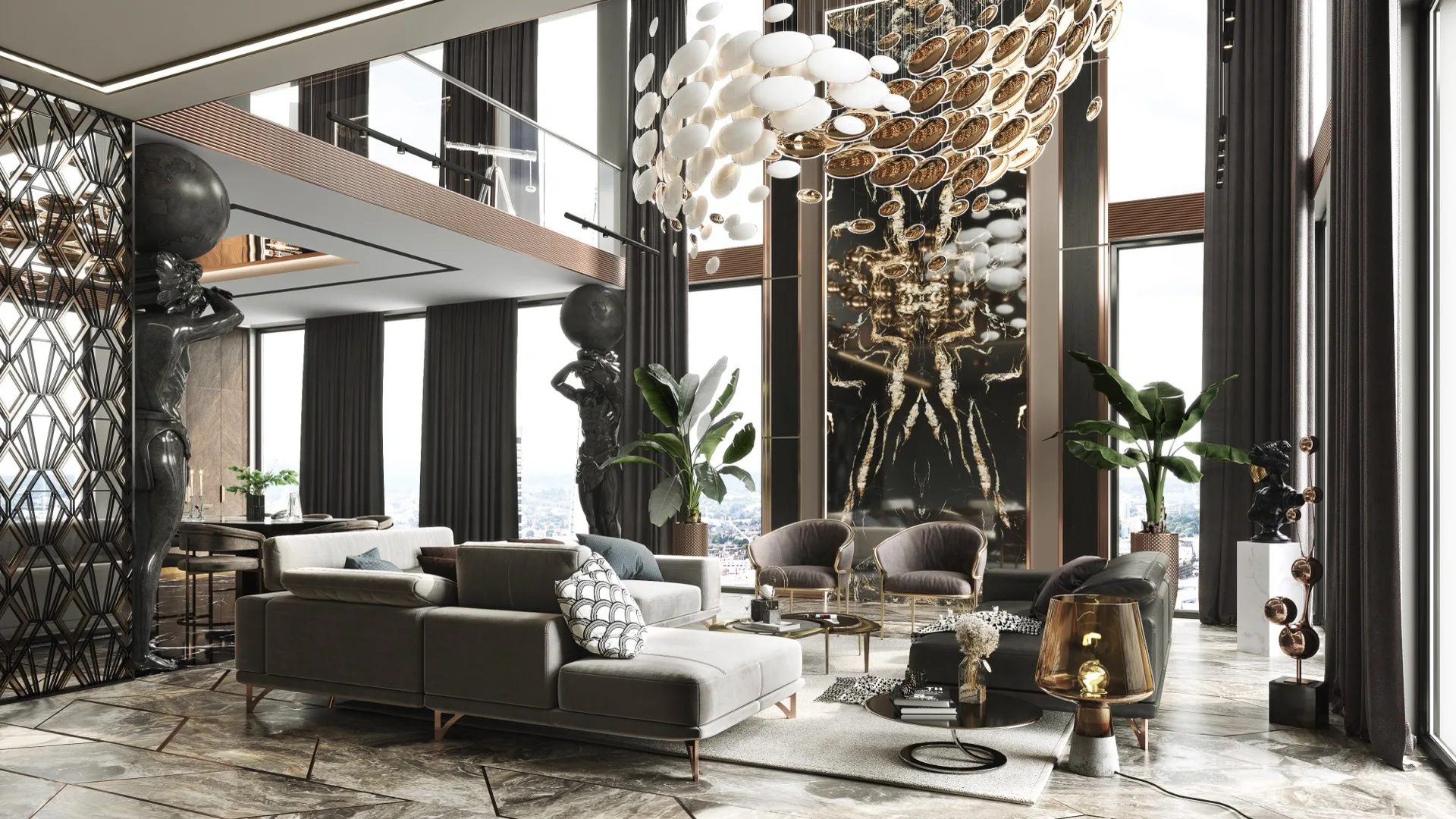
A luxury interior is usually a mix of different styles. But whether a client chooses a design with a hint of classics or modern trends, it should shine with grandness and opulence. A 3D interior rendering that showcases a Luxury design should perfectly depict its color palette. As a rule, it is a combination of neutrals and deep colors. Chic lighting fixtures are a vital element of any 3D rendering for interior designers in this style. Also, emphasizing one large central piece is a great way to convey a luxurious vibe. It can be anything from a stunning artwork to a sophisticated staircase. Luxury interior design is usually chosen by people with exquisite taste who appreciate high-class aesthetics.
7. Minimalism
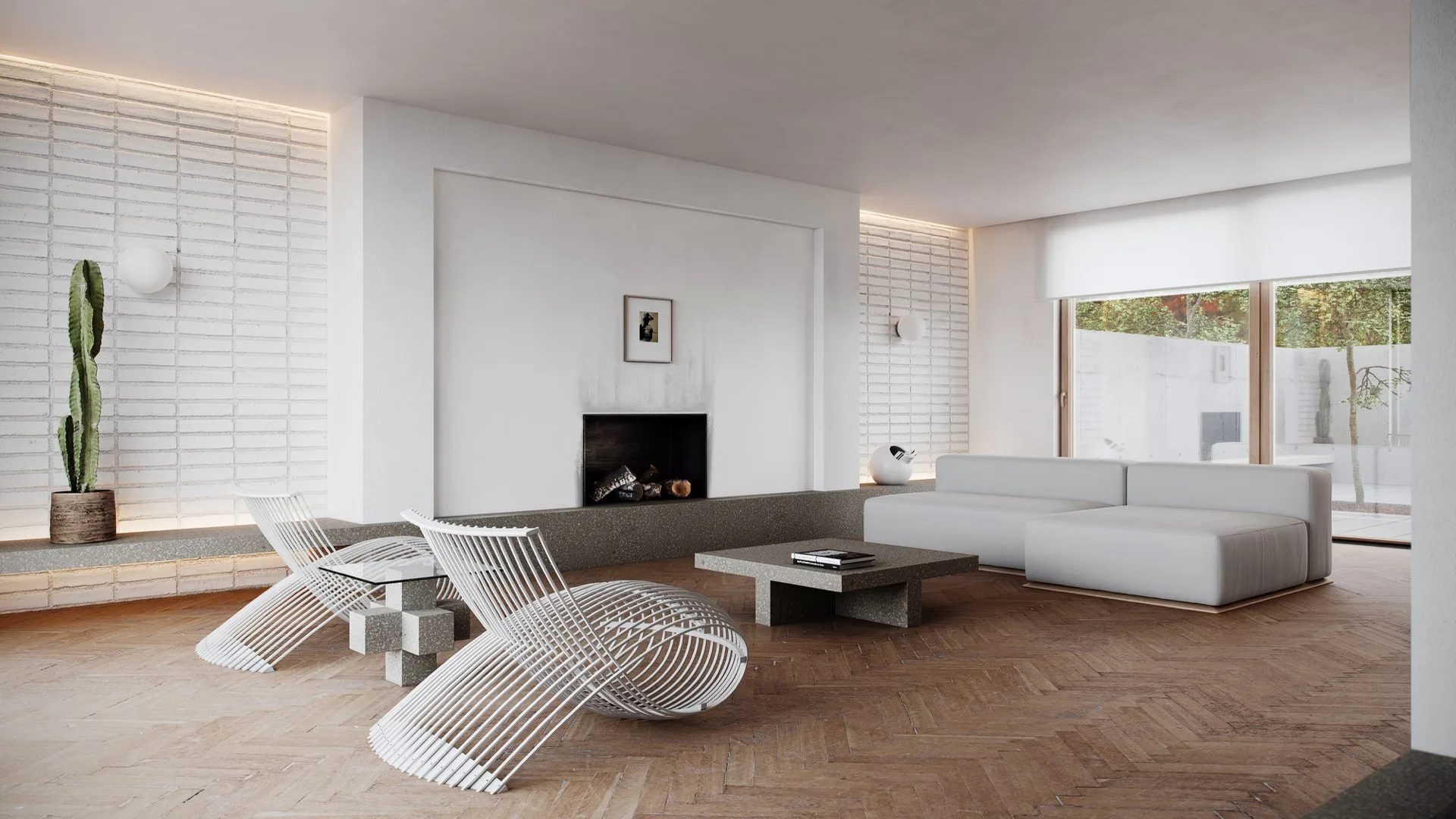
The minimalist style developed from an art movement in New York in the 1960s. Its two main characteristics are laconism and austerity. To express this vibe in a 3D render for interior design, 3D artists use no more than two basic colors. All of the elements in a CG rendering, such as tables, sofas, or chandeliers, should be of simple geometric shapes. This interior design is all about simplicity, so the fewer furnishings and decor items, the better. This style is ideal for people who live in relatively small apartments since minimalistic solutions make them look larger.
8. Modern
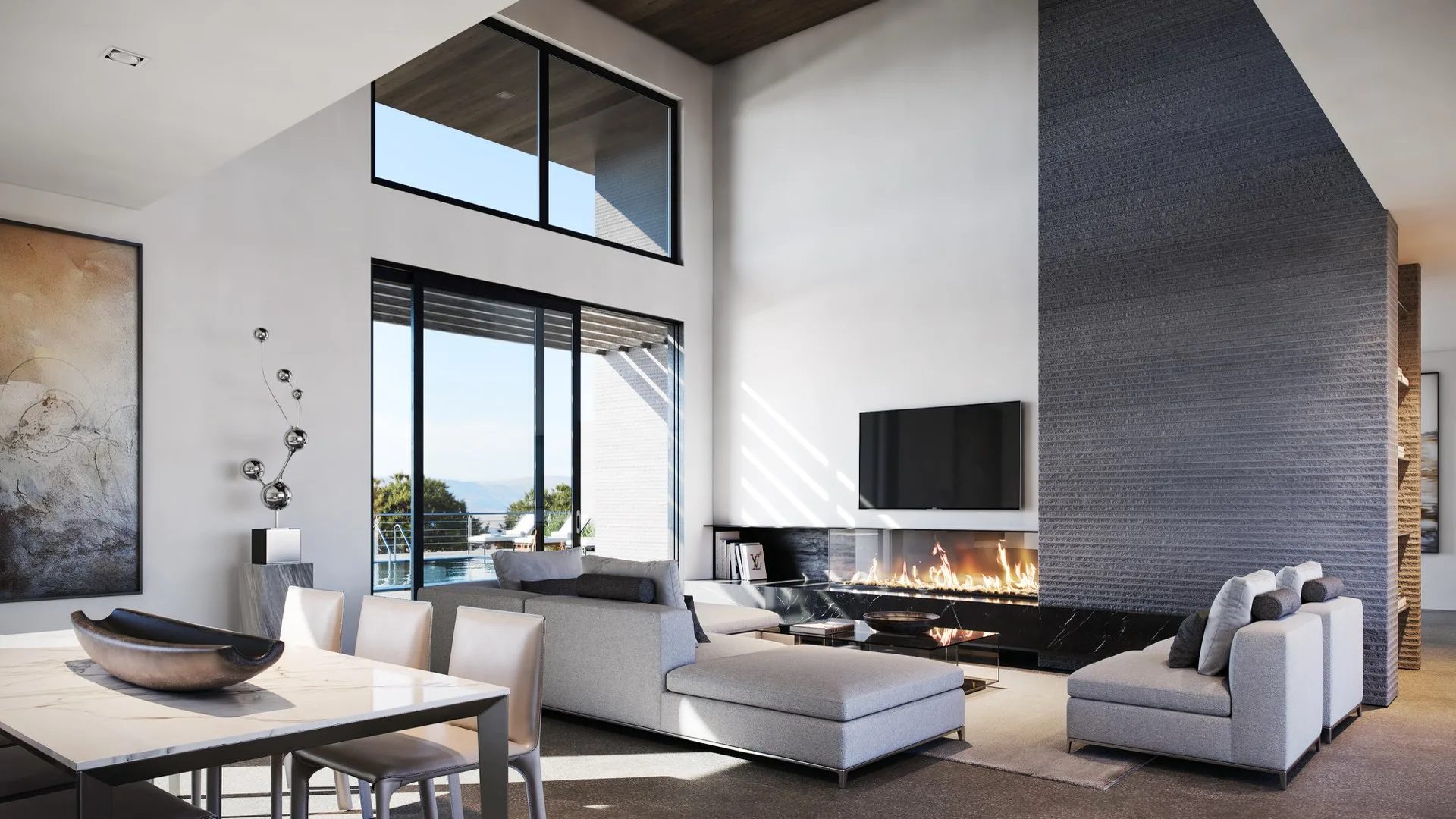
The Modern style was born after the Second World War as a reaction to the technological advancements brought by the Industrial Revolution. A typical 3D rendering for interior design in this style is characterized by monochromatic colors and uncluttered space. It also features modern furnishings with smooth surfaces and clean lines. Natural lighting is essential in Modern interiors, so a 3D rendering for such a project typically depicts large windows. This interior design is most often chosen by people that value simplicity and functionality.
9. Modern Country
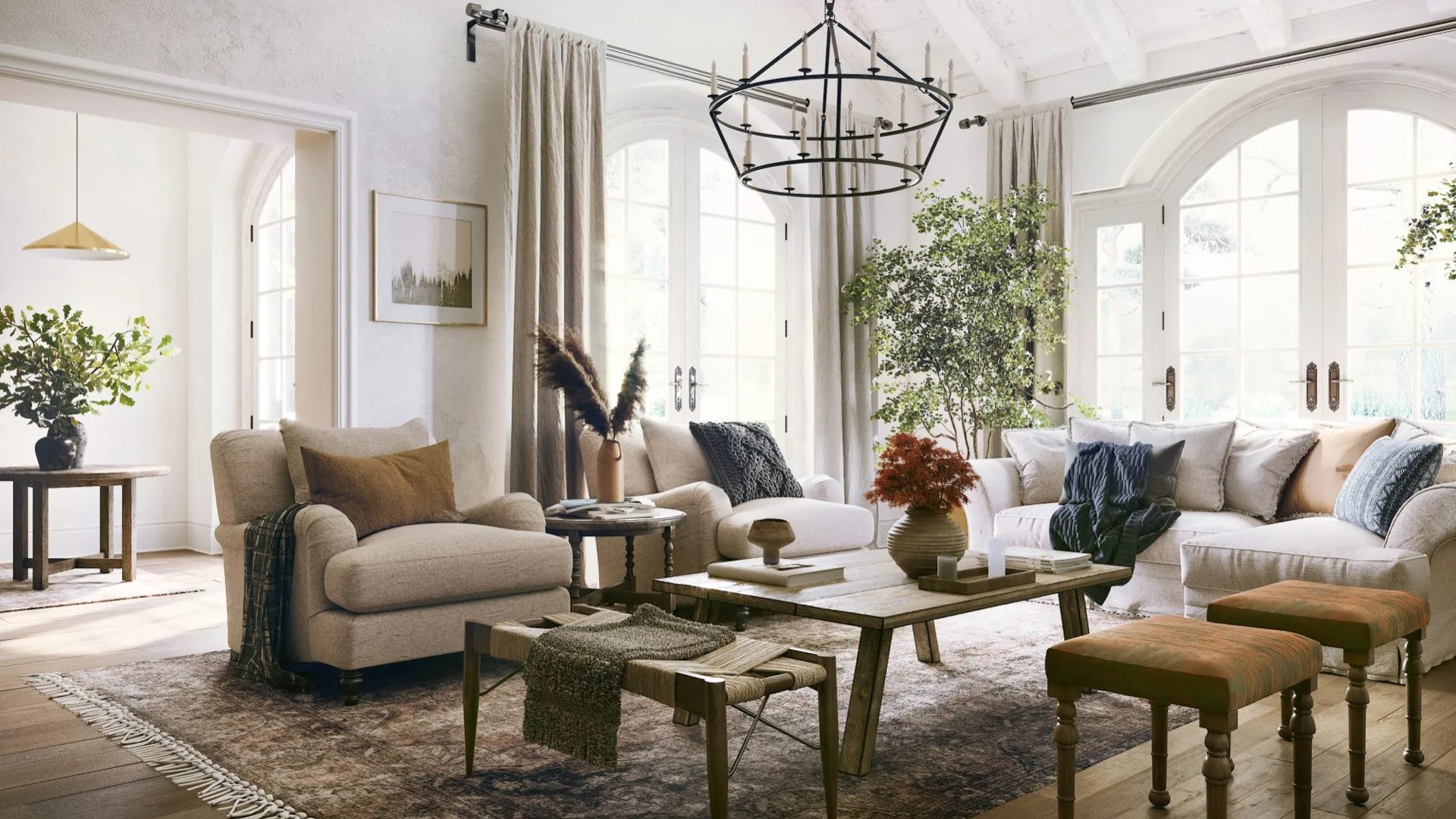
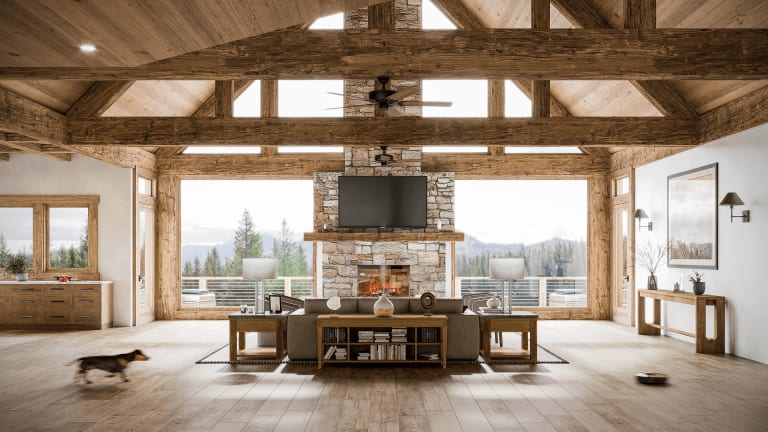
Modern Country interior design can be described as a rural farmhouse with a touch of modernity. The 3D rendering above proves that. The material that typically prevails in a Modern Country interior is wood. Architecture elements such as exposed beams, barn doors, paneling, and decor details like wicker baskets convey a truly rustic look. A 3D rendering designed in this style will always give a warm and welcoming vibe thanks to the neutral colors, such as creams and beiges. Slight imperfection is the heart of such a design. Scratches and dents in wooden surfaces create a feeling as if the furnishings have been used for ages. Modern Country is perfect for people that want the room to be simple, cozy, and also practical.
10. Rustic
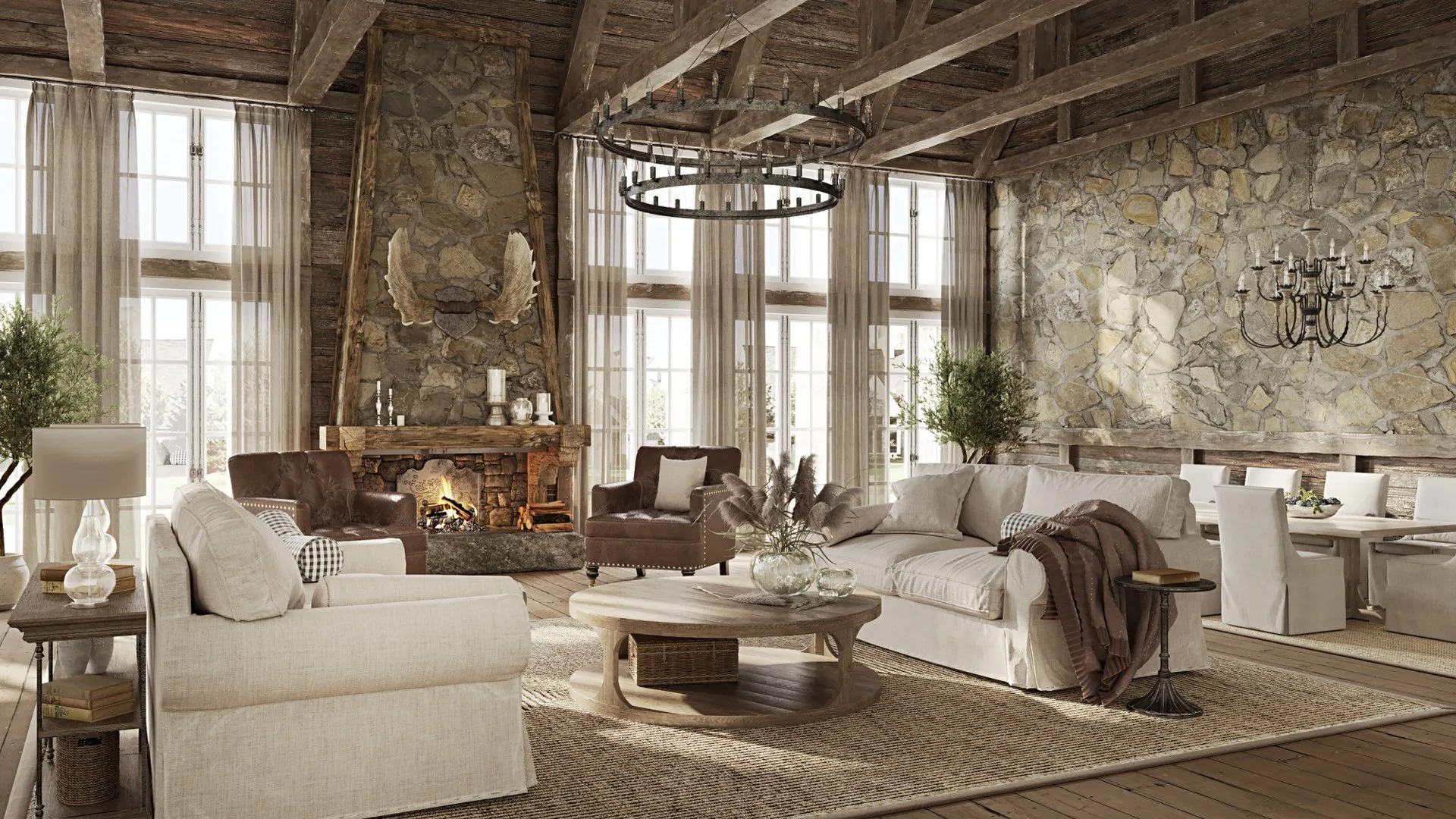
What is old is new again. When it comes to Rustic design, this phrase describes it best. This style has its roots in the 19th century, namely in the design of homes of early settlers in the US who lived far from big cities. This design is all about presenting the beauty of natural materials in furniture items and showcasing their comfort and versatility. The color palette that one would expect to see in a 3D rendering for interior design in the Rustic style is also very natural. It includes earth tones, such as browns and grays. This interior design fits homes located in villages or small towns.
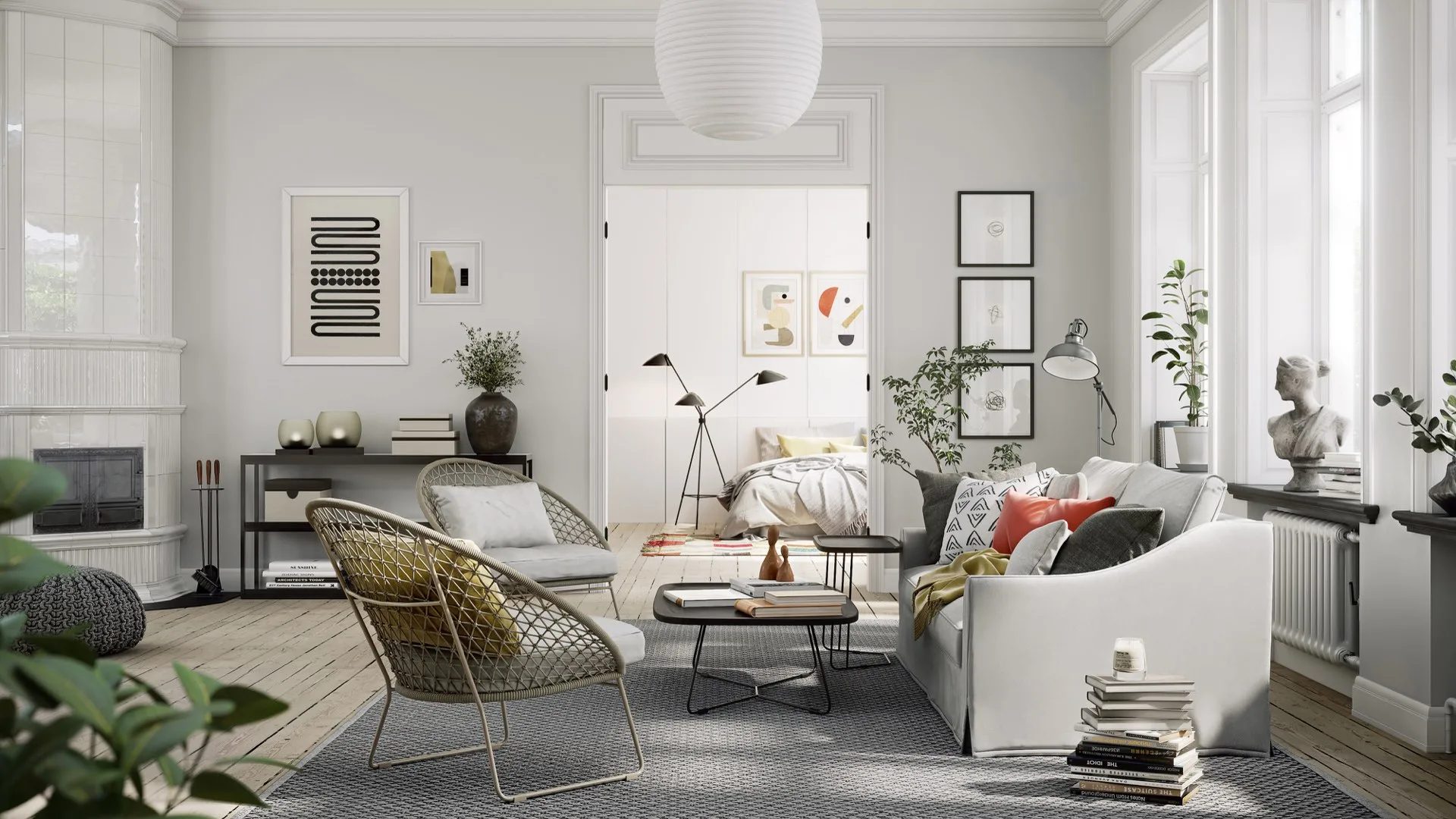
The Scandinavian interior design style appeared in the 1930s. Spaces created in this minimalistic style have much light and keep to a muted color palette. Every element in a 3D rendering that presents Scandinavian design has to be both simple and functional. Typically, the furnishings should be made of natural materials, such as wood and leather. An interior 3D rendering with Scandinavian aesthetics usually depicts a lot of wooden elements, often used in combination with metal finishes. To give some accents to the interior rendering, 3D artists add natural decor, such as plants and fresh flowers. This interior design can be applied to practically any house or apartment.
12. Traditional
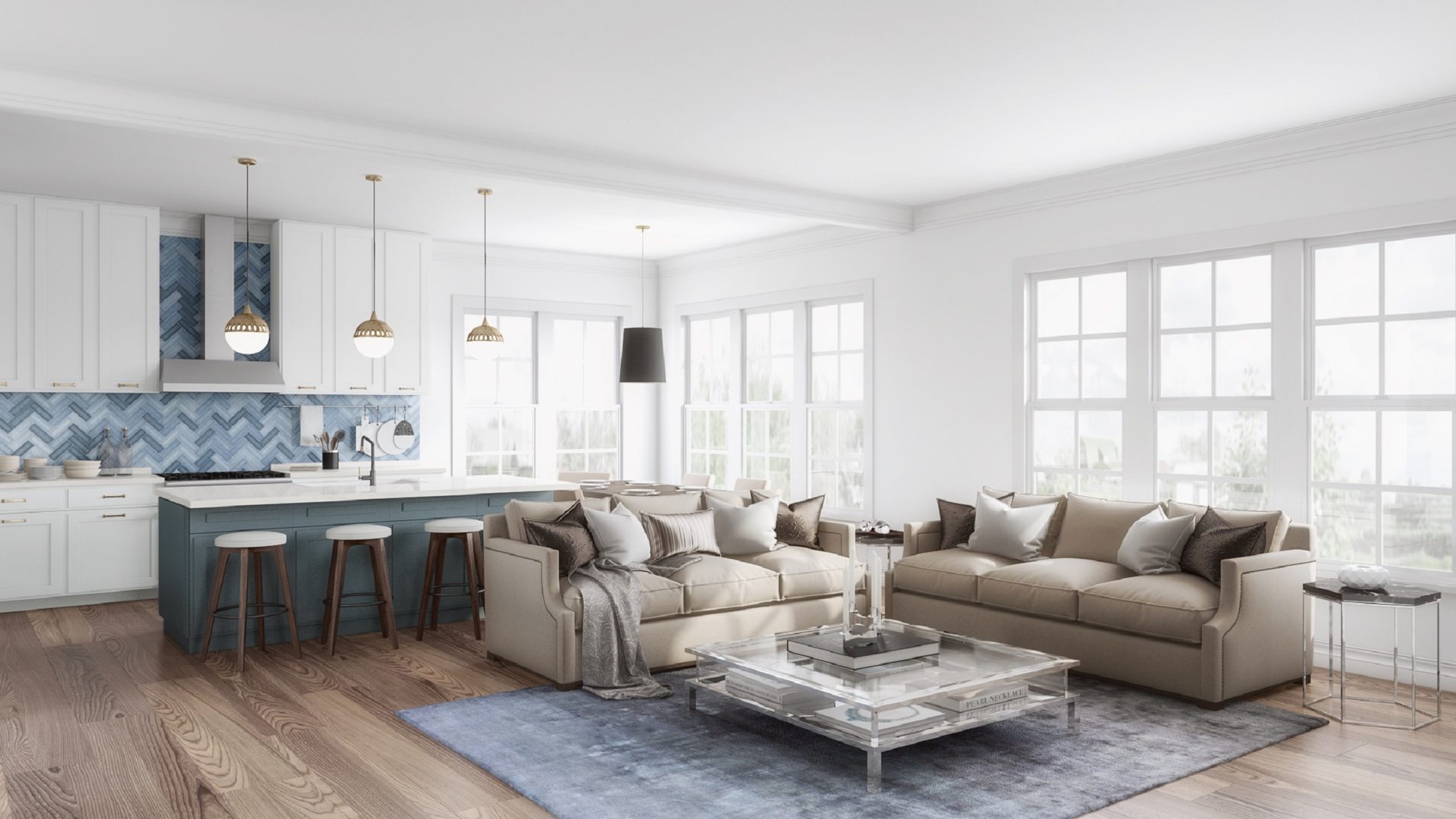
Traditional interior has to be calm and well-ordered. It usually includes European decor items typical for the 18th-19th century. The color palette is neutral, like in the CG rendering above. But in other cases, some design elements can be in red, green, or brown colors and to liven up a room. The Traditional design is an ideal option for people that have a thing for classic art, symmetry, and sumptuous furnishings.
Styles on the Rise: 6 More Looks Clients Ask For
The twelve classics above cover most briefs, but tastes keep shifting. Over the last couple of years, our 3D artists have been getting more and more requests for the six styles below. Here they are, each shown in a photoreal render from our recent projects.
13. Mid-Century Modern
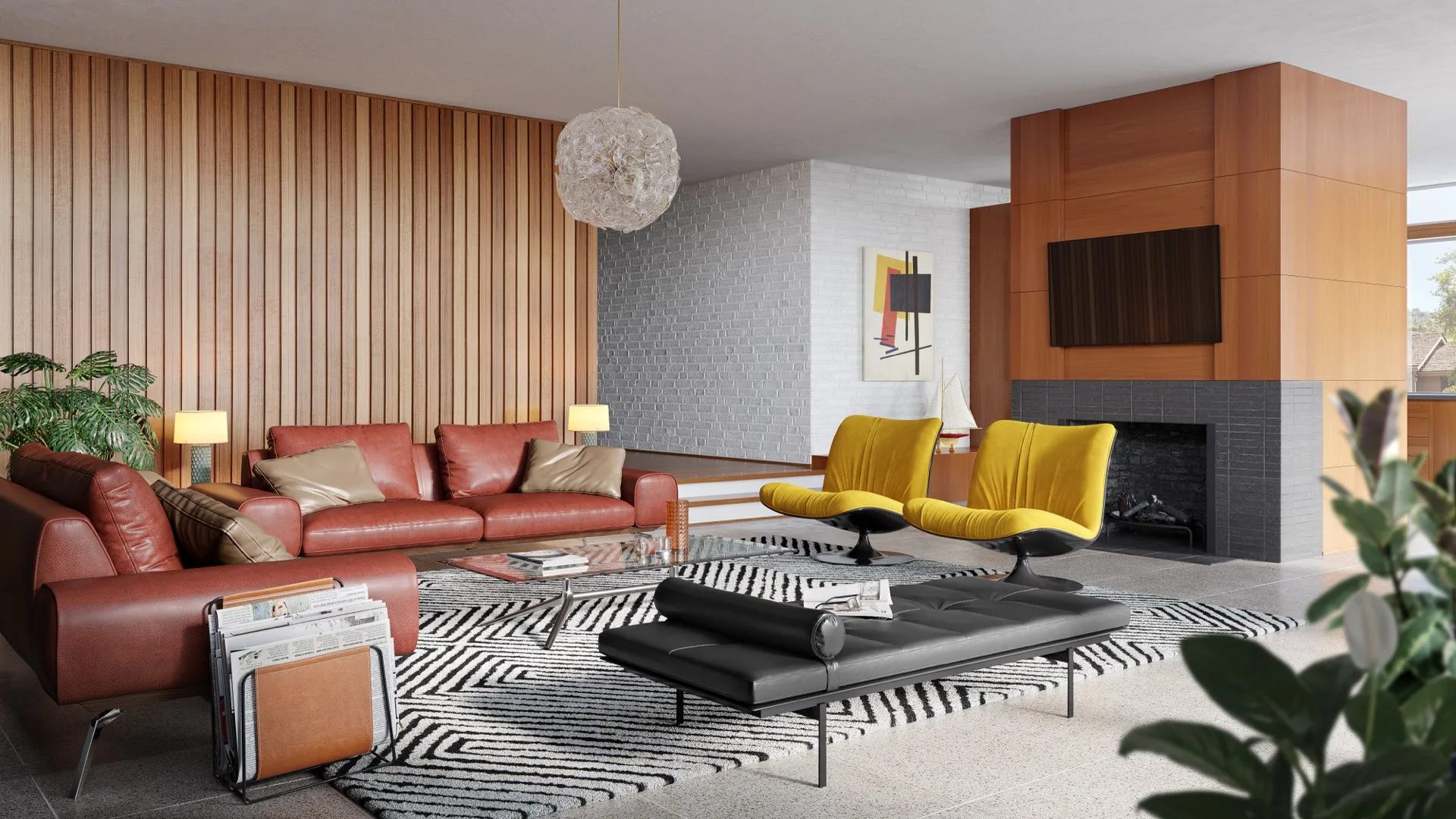
Mid-Century Modern goes back to the 1950s and 1960s and refuses to age. Its recipe is simple: clean lines, organic curves, and warm woods like teak and walnut. Furniture keeps iconic silhouettes with tapered legs, while the palette mixes muted greens, mustard, and burnt orange with plenty of natural light. In renders, this style rewards wide angles that show the open layout and a statement lamp or two. It is a frequent pick for house flippers and realtors, since buyers instantly recognize the look.
14. Boho
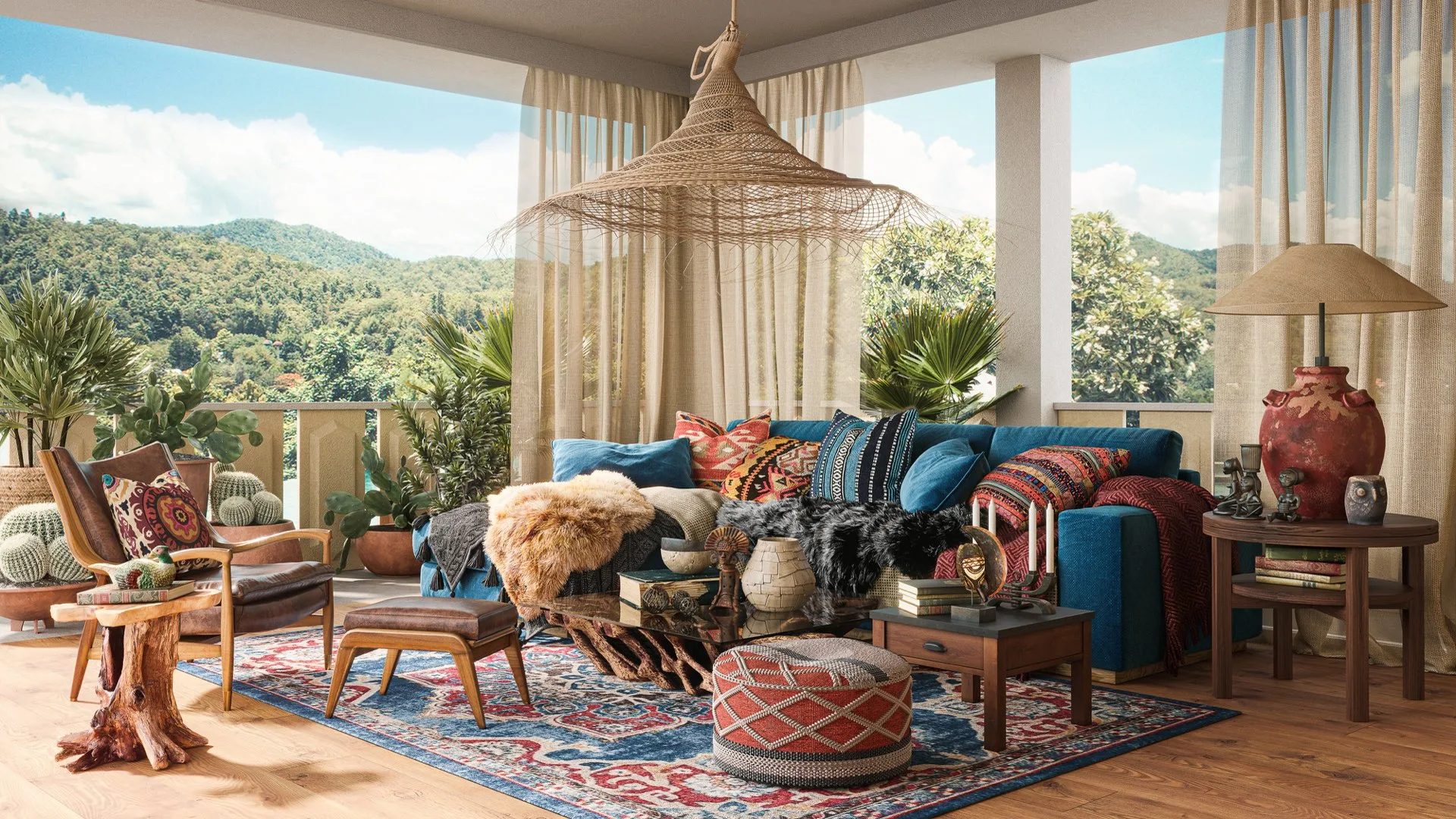
Boho is the style of collected things. Layered textiles, rattan and wicker, potted plants, and a warm earthy palette create a room that looks like it grew naturally over years of travel. Patterns mix freely, and no two chairs have to match. For CGI, Boho is one of the most demanding styles: the render has to convey stacked textures, from a woven rug to a linen throw, without turning into visual noise. When done right, it is also one of the most charming.
15. Wabi-Sabi
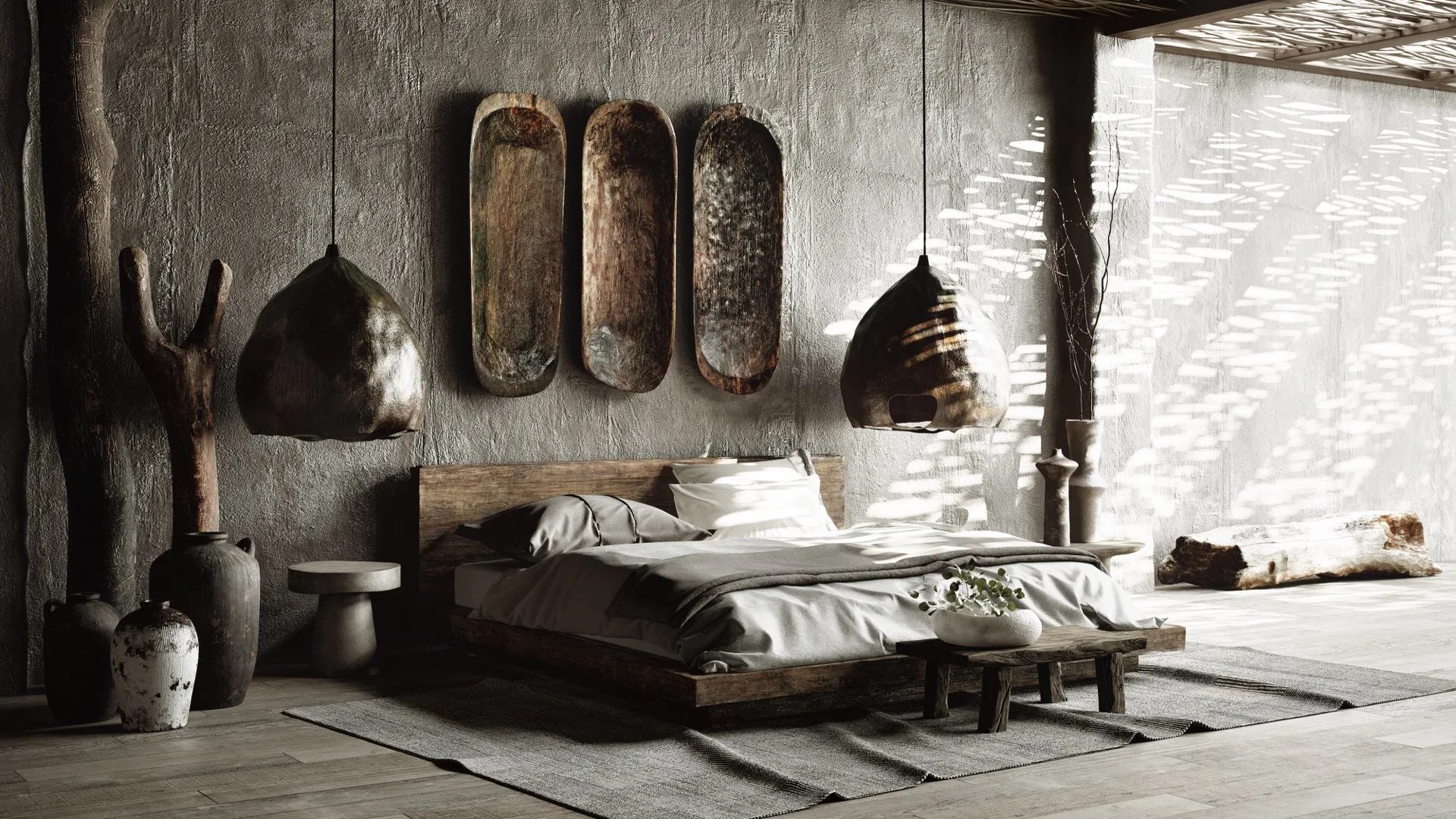
Wabi-Sabi brings the Japanese philosophy of imperfect beauty into the home. Raw plaster walls, aged wood, handmade ceramics, and linen in muted, dusty tones. Nothing is glossy, and empty space matters as much as the objects in it. This style has been climbing in popularity as a calmer alternative to minimalism. In a 3D rendering, the challenge is the surfaces: clay, stone, and rough timber must look touchable, which is exactly where photoreal texturing shows its worth.
16. Zen
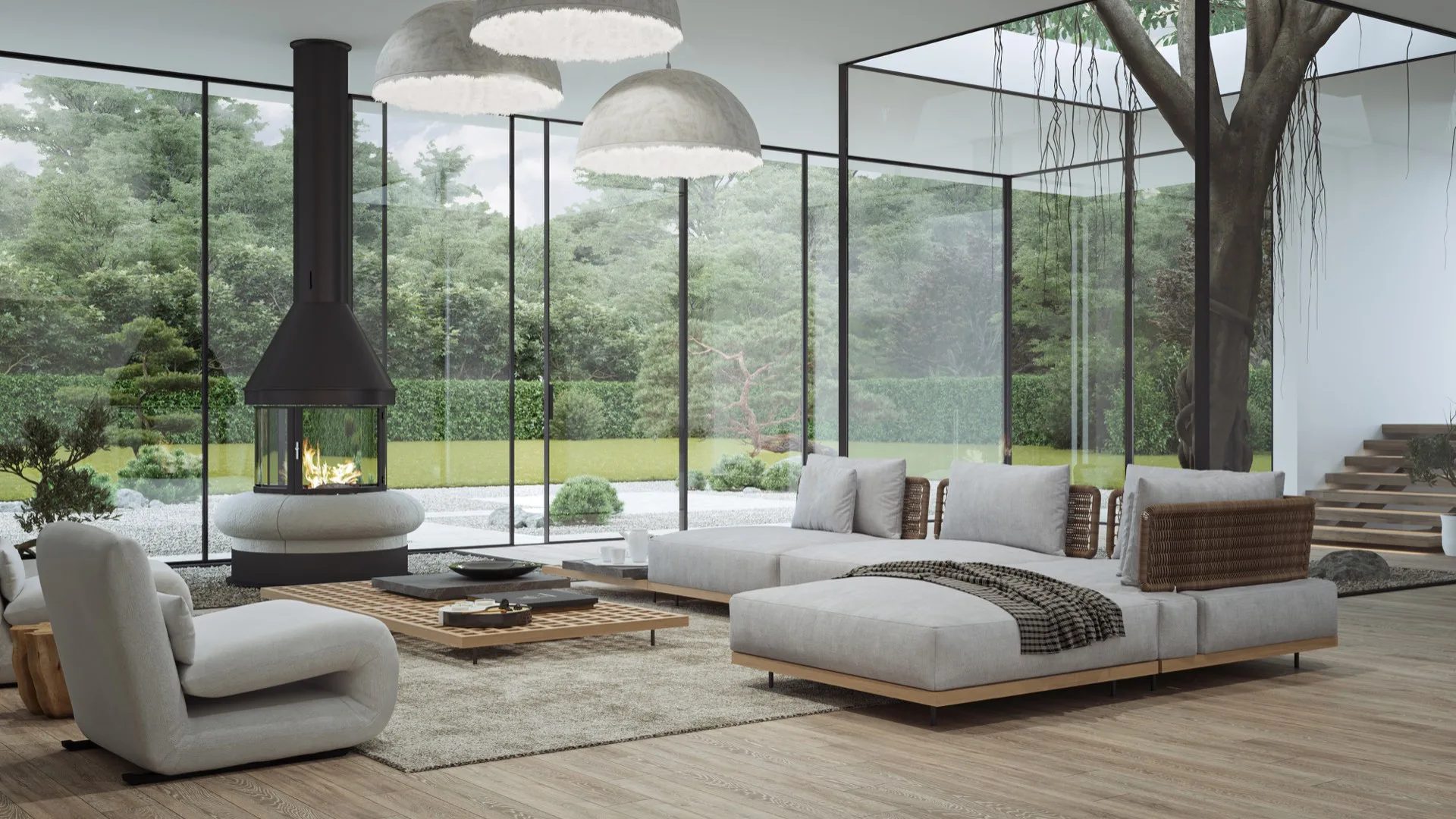
Zen interiors are built around stillness. Low furniture, natural light, clean floors, a neutral palette, and a few carefully placed elements such as a bonsai or a stone bowl. The style borrows from Japanese tradition but fits modern apartments surprisingly well, which is why wellness-minded clients keep asking for it. Renders in this style live or die by lighting: soft, diffused daylight is what makes a Zen space feel serene instead of empty.
17. Postmodern
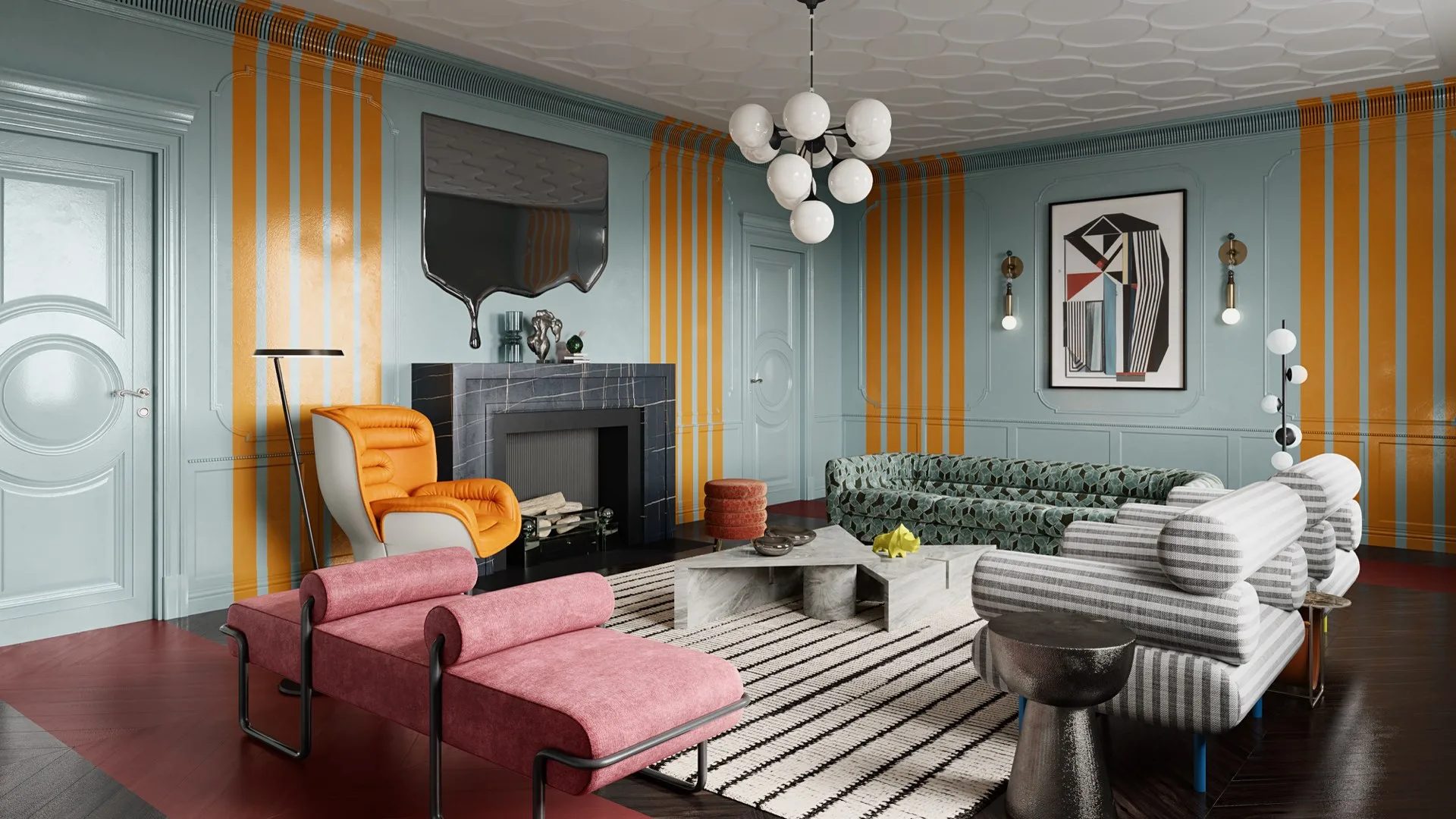
Postmodern design is a playful rebellion against strict modernist rules. Bold geometry, sculptural furniture, unexpected color pairings, and art pieces that would look at home in a gallery. It is a favorite for boutique hotels, showrooms, and clients who want a space nobody will forget. CGI suits this style perfectly: a render lets you test daring shapes and colors before committing a budget to them.
18. Modern Chinese
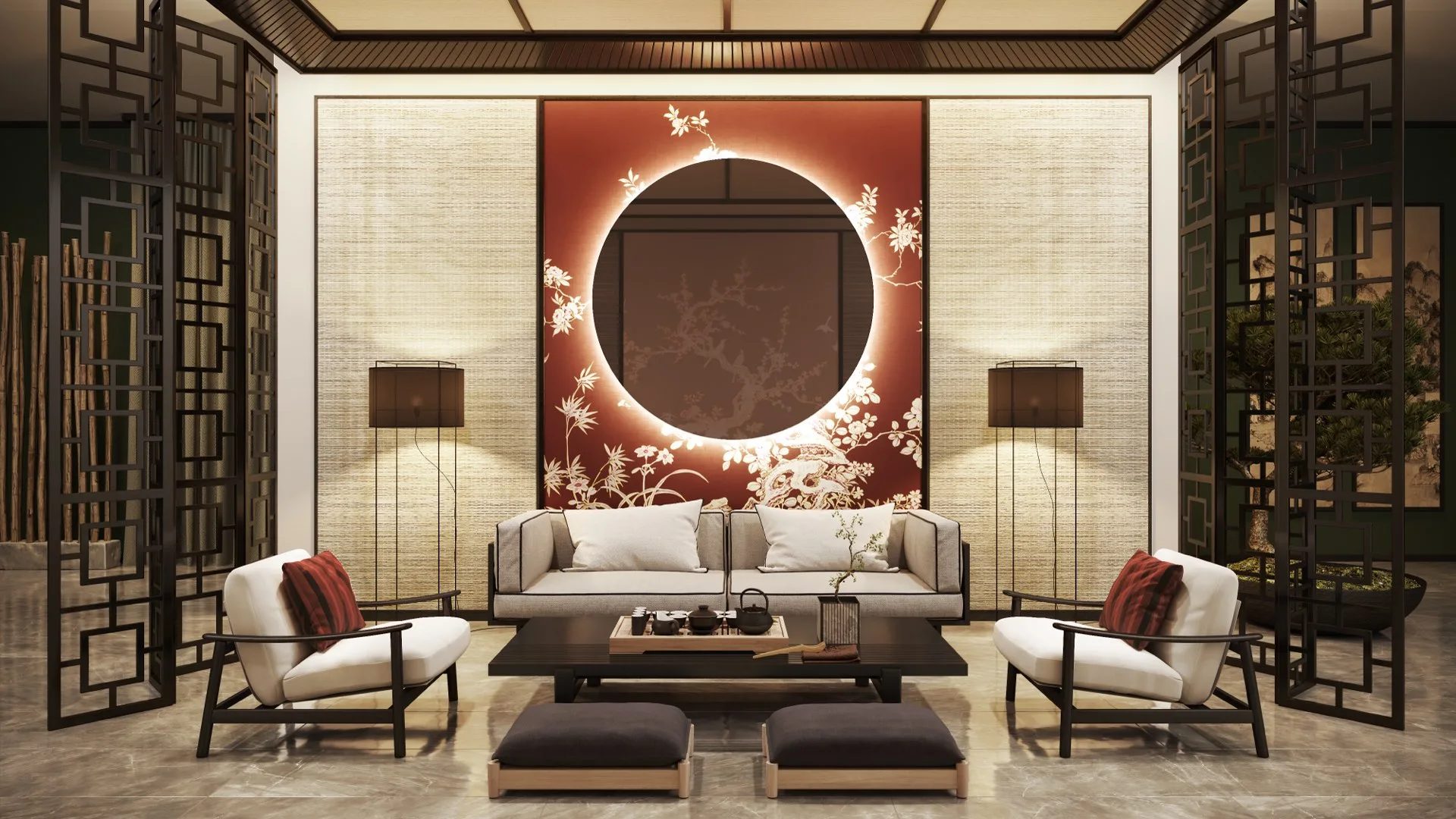
Modern Chinese style, sometimes called New Chinese, balances tradition with restraint. Dark wood, lattice screens, symmetry, and subtle references to classical motifs meet clean modern lines and generous negative space. The result feels both luxurious and calm. This style is gaining ground in high-end residential projects, and photoreal rendering helps clients see how traditional elements read in a contemporary layout.
Each of the eighteen interior design styles mentioned above has its own distinctive features. And 3D rendering can reflect them in all their glory. Whether a project is in the Modern, Rustic, French Country, or another style, our seasoned 3D artists can deliver high-class 3D rendering for interior design for it. If the option you need is not on the list, do not worry. ArchiCGI can professionally create CG renders in all interior styles, including the most exotic and rarest ones. You name it!
Showcase your architectural project with photorealistic CGI powered by modern AI-assisted workflows
Need stunning CG imagery for your design projects? Contact ArchiCGI for top-class interior visualization services and get quality CG visuals to showcase your ideas!
Related reading: seven interior design apps and content marketing for interior designers.
Frequently Asked Questions

Catherine Paul
Content Writer, Editor at ArchiCGI
Catherine is a content writer and editor. In her articles, she explains how CGI is transforming the world of architecture and design. Outside of office, she enjoys yoga, travelling, and watching horrors.

Comments
aaron
Catherine Paul