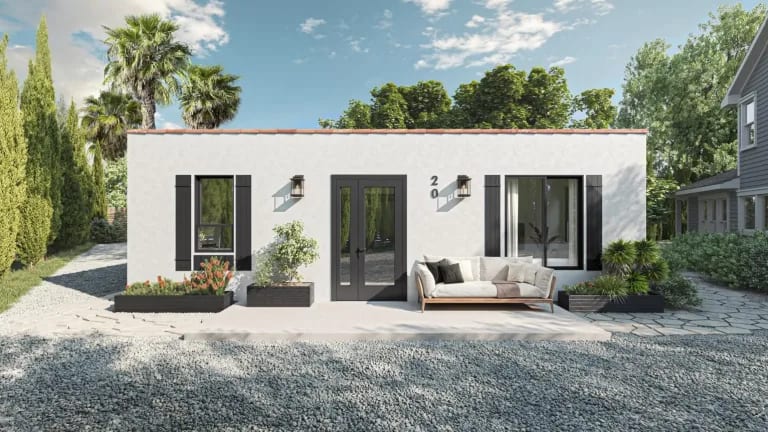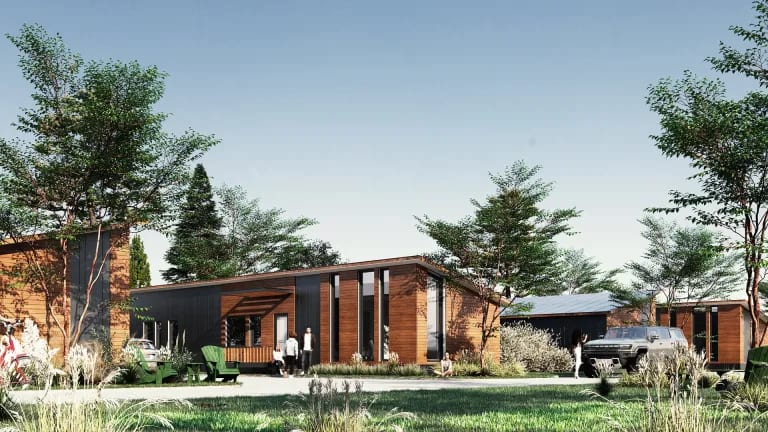


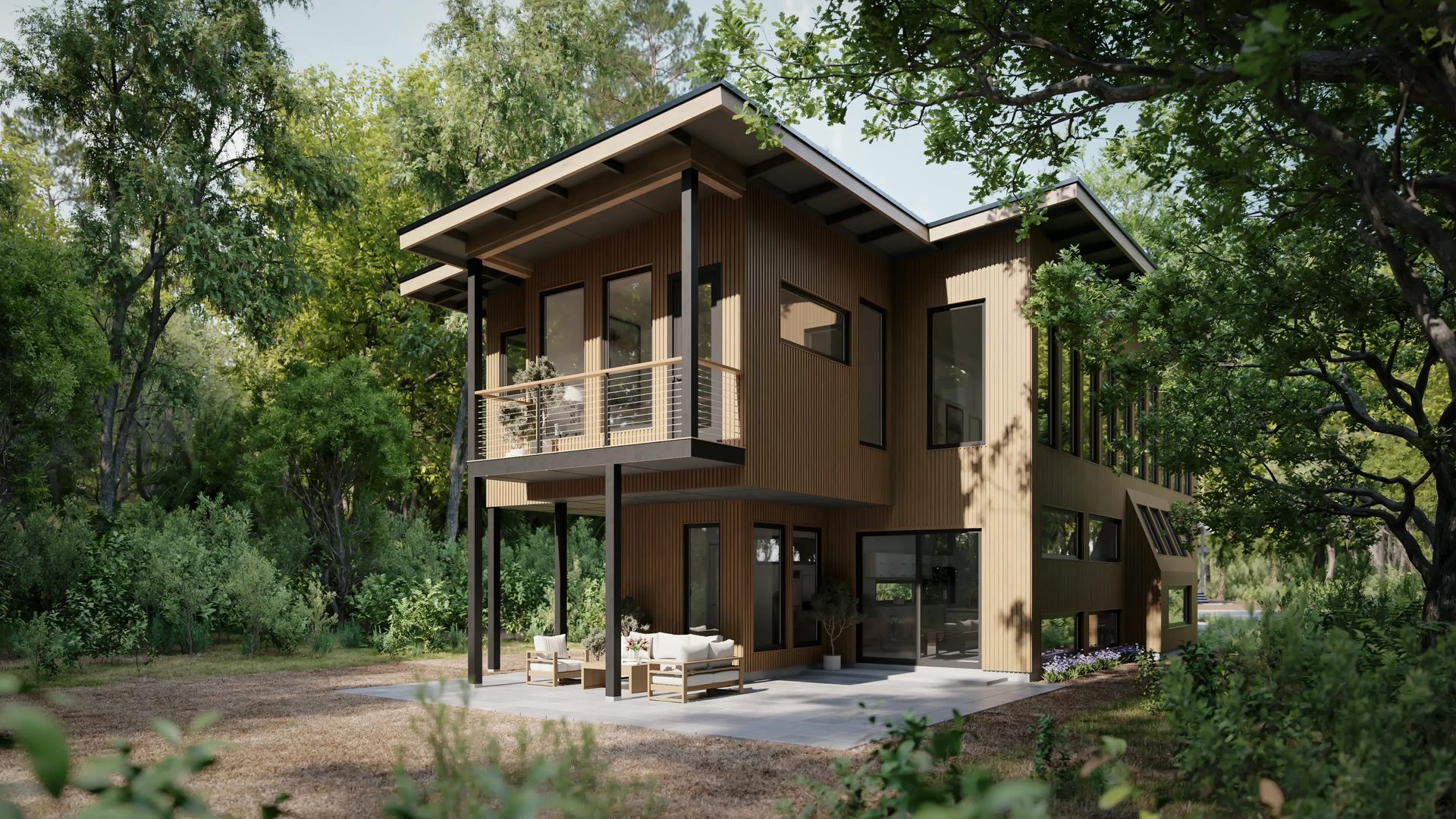
Prefab homes have a sales problem hiding inside their biggest advantage. The whole model is to manufacture efficiently, which means the home is a factory order before it’s a place — there’s no finished house on a lot for a buyer to walk through. You’re asking someone to commit to a home that currently exists as a spec sheet and a production slot. NAR research confirms what prefab builders feel firsthand: 83% of buyers’ agents say staging a home makes it easier for a buyer to envision the property as their future home. For prefab, where there’s no property to stage or walk through at all, prefab house 3D rendering is the only way to close that gap.
This is where 3D rendering quietly became essential to the effort to sell prefab homes before built. CGI is the virtual showroom — it lets a buyer explore the home, try the finishes, and feel the space before a single module is manufactured. But here’s the deeper advantage, and the one most builders underuse: because prefab is a fixed catalog of repeatable models, you render each one once and sell it for years, across every lot. One library of digital homes — render once, sell many — feeds your whole catalog instead of paying project by project. That flips the economics of visualization from a cost into a compounding asset. Here’s how to use it.
The prefab paradox: sell first, build later
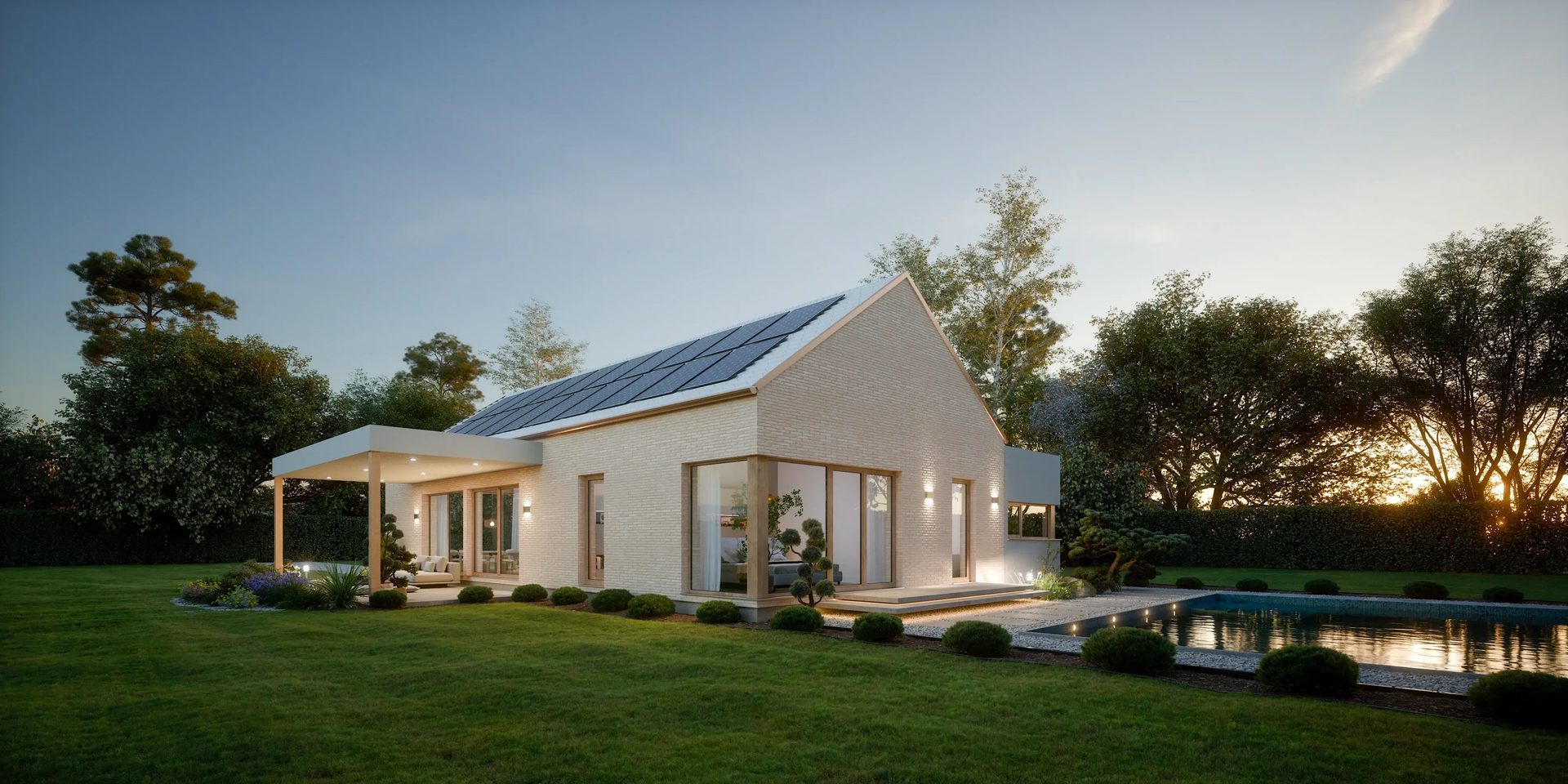
Prefab and modular housing is having a moment, pushed by speed, cost, and a housing shortage. But the efficiency that makes it attractive also removes the thing buyers rely on most — the ability to see and stand in the product. A traditional builder can point to a model home; a prefab company is often selling from a configurator and a catalog. Selling ahead of production isn’t a quirk here, it’s the business model — and pre-construction marketing makes it work. Zillow found that listings with a 3D home tour earned 81% more views and were saved by buyers 53% more often, and for a prefab model there is nothing else to show: the renders are the listing.
3D rendering as the virtual showroom for prefab homes
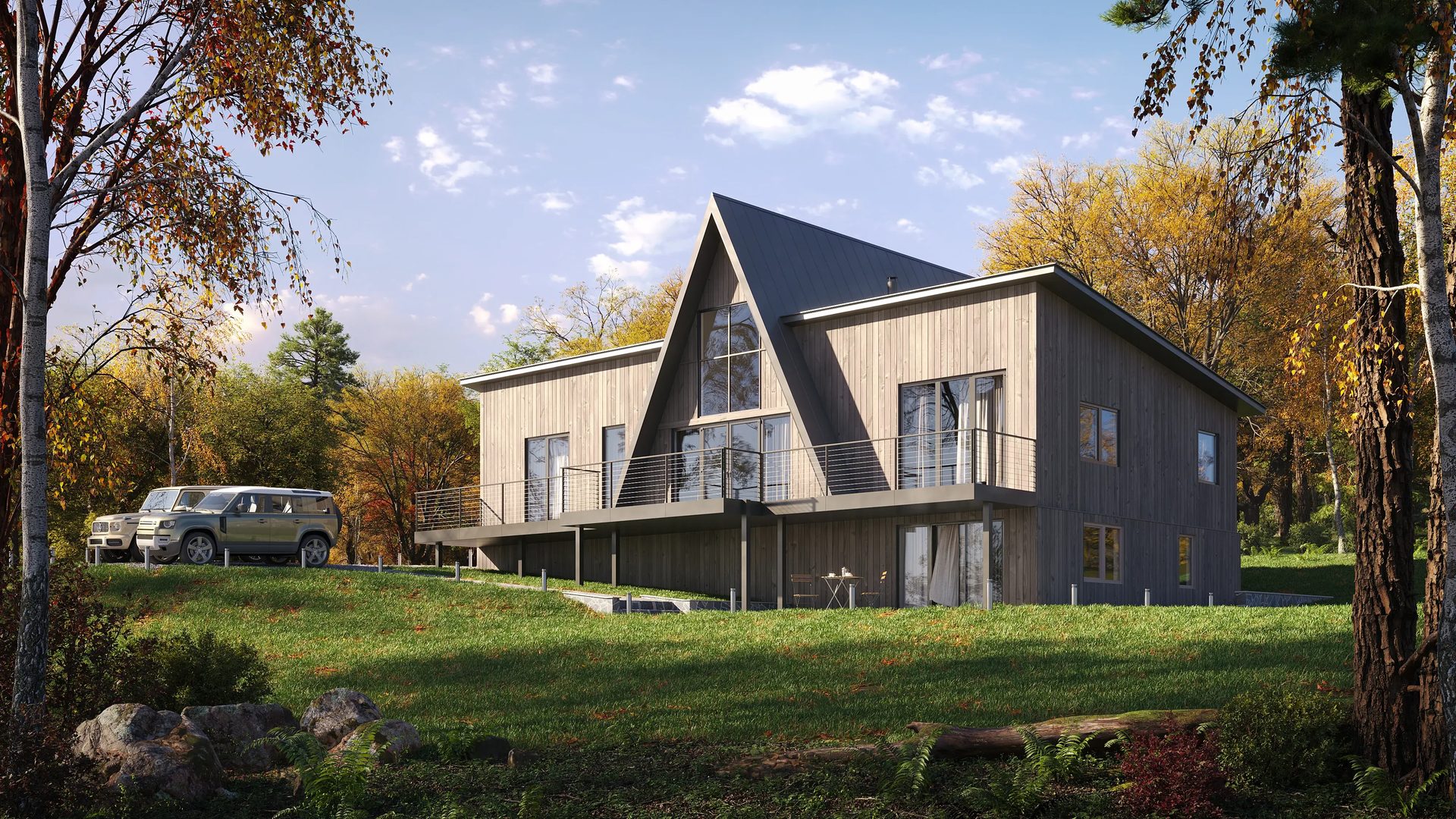
Done well, a rendering package becomes the prefab buyer’s showroom floor:
- Customization made visible. Buyers see how different finishes, materials, and layouts actually look on their home, instead of guessing from a list.
- Virtual tours and configurators. Interactive 3D lets a buyer move through the layout and try options, not just read square footage. A modular home configurator puts the full menu of options in the buyer’s hands.
- Emotional connection. A personalized, photoreal home is something a buyer can imagine living in — and emotional buy-in turns a browser into a deposit.
- A clearer, faster decision. Seeing the real home removes hesitation; listings with 3D virtual tours close up to 31% faster and sell for up to 9% more than comparable listings without them.
The prefab catalog as a reusable virtual showroom
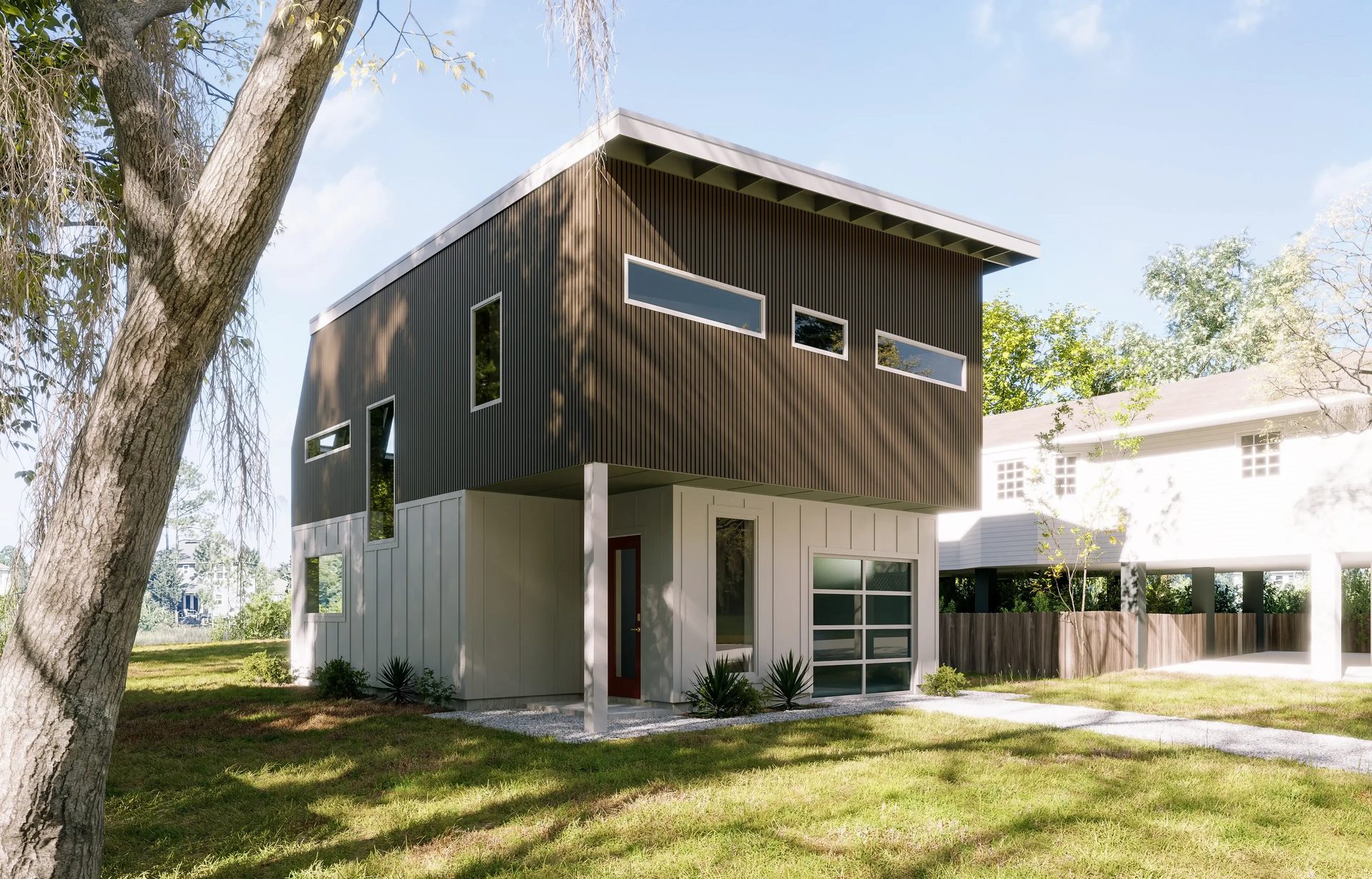
This is the angle most prefab marketing misses. A custom build renders a one-off; a prefab company sells the same models over and over. So the economics flip: render each model in your lineup once, and that asset markets units for years, on infinite sites, with no reshoot. One library of digital homes feeds the whole catalog instead of paying project by project. And because the same model is sited everywhere, you can show it on different lots, in different climates and seasons, so every prospect sees the home on something like their land. Our guide to 3D rendering for home builders covers that production approach.
This is exactly the approach ArchiCGI used with Kampa, a European prefab home builder. We produced 20+ visualizations for their prefab lineup under a tight deadline — a single production sprint that gave Kampa a library of prefab home visualization assets reusable across investor decks, marketing campaigns, and sales presentations for years.
Why this makes financial sense
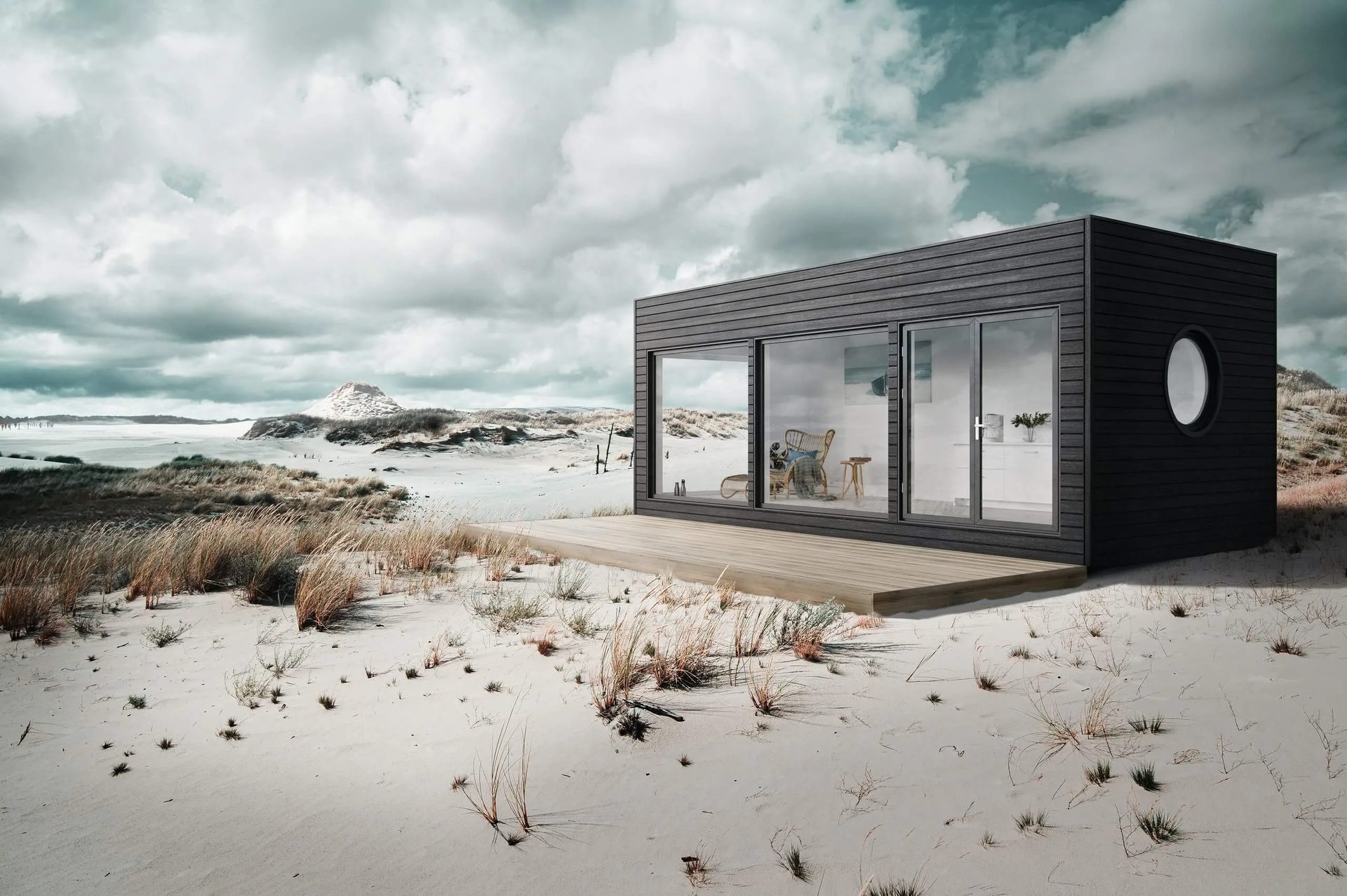
The render-once model isn’t just a production shortcut — it changes the cost structure of prefab marketing entirely. Traditional builders spend on model homes, staged open houses, and repeated photoshoots. A prefab company with a 3D catalog skips most of that:
- Fewer model homes needed. A photoreal virtual model home does the job of a physical showroom at a fraction of the cost — and without tying up a production unit.
- Render once, reuse for years. The same 3D assets sell the same model on dozens of lots, in every season, without reshooting. Modular home CGI pays for itself many times over across a catalog’s lifespan.
- Launch before production starts. Pre-construction visualization lets you take reservations and even secure financing before the factory line runs, so revenue begins before cost.
- One asset covers all channels. The same renders feed your website, paid ads, brochures, trade shows, and social media — no separate budgets for each.
Beating the “factory-built feels cheap” objection
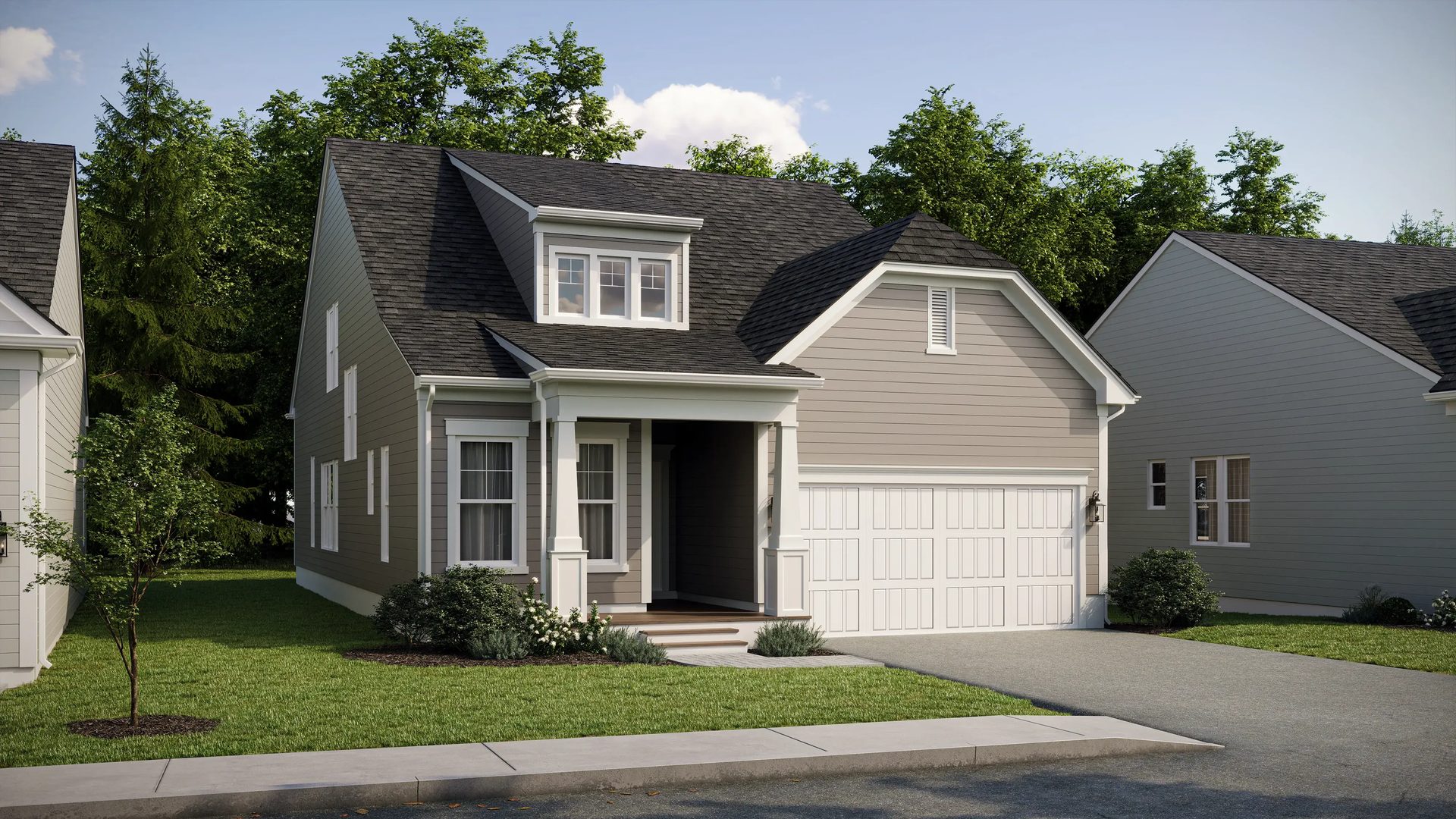
Prefab still fights a perception that a manufactured home will feel temporary or low-quality. Photoreal renders of the finished product — real materials, warm light, a lived-in interior — are how you replace that doubt with desire before the buyer ever sees a module. The image does the reassurance the missing model home would have done, which is exactly why building trust and credibility shows up in every serious prefab-sales discussion.
Design, sell, market — one pipeline
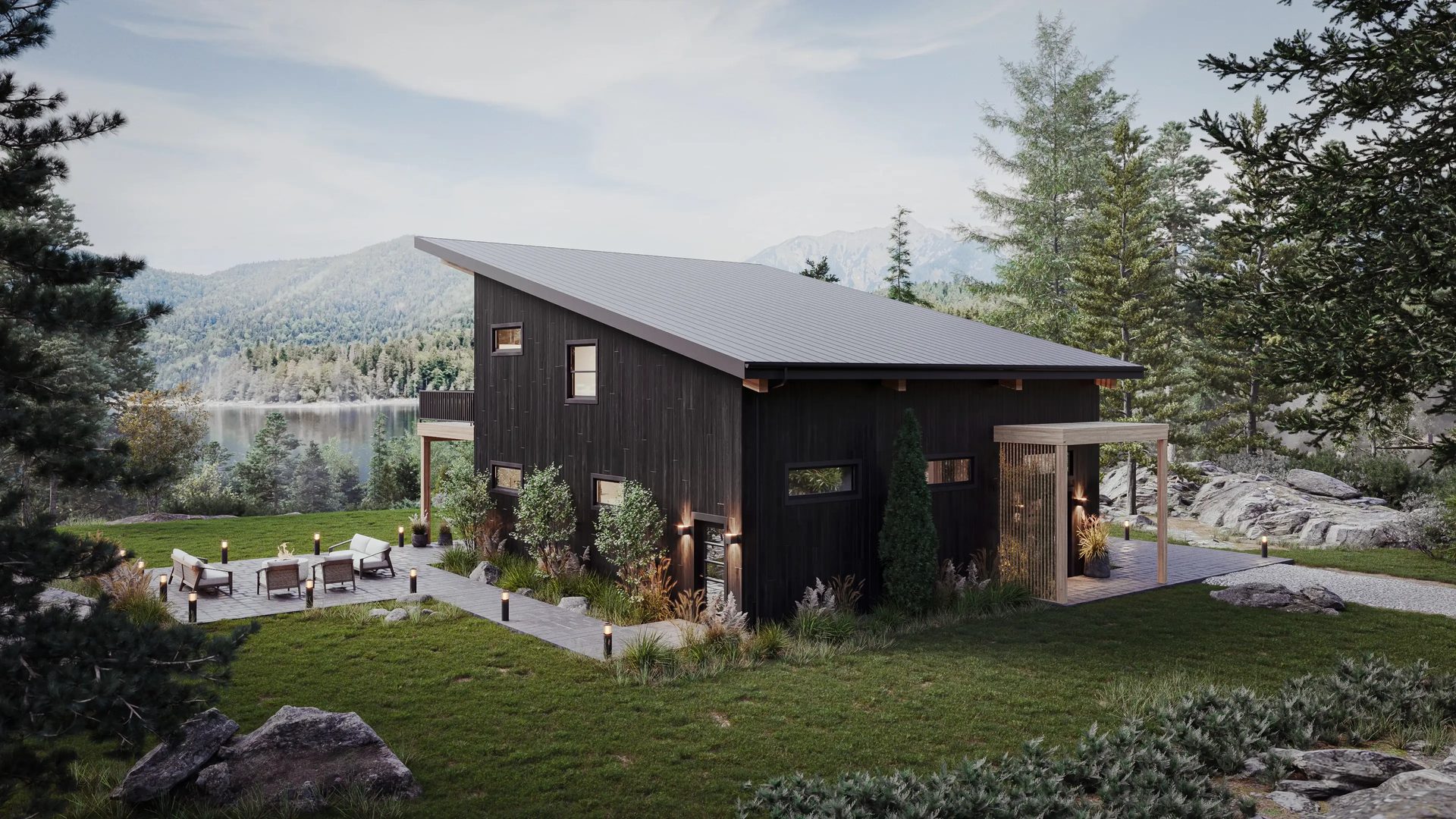
The renders that sell a prefab home are part of a chain. The same models underpin modular home design during the option-selection and sign-off phase, and the virtual model home that markets a finished example to every buyer. Build the 3D once, and it carries design, sales, and marketing together — across the website, configurator, ads, brochures, and trade fairs. For the wider view, see how developers use 3D visualization across a project.
How AI extends the value of prefab 3D models
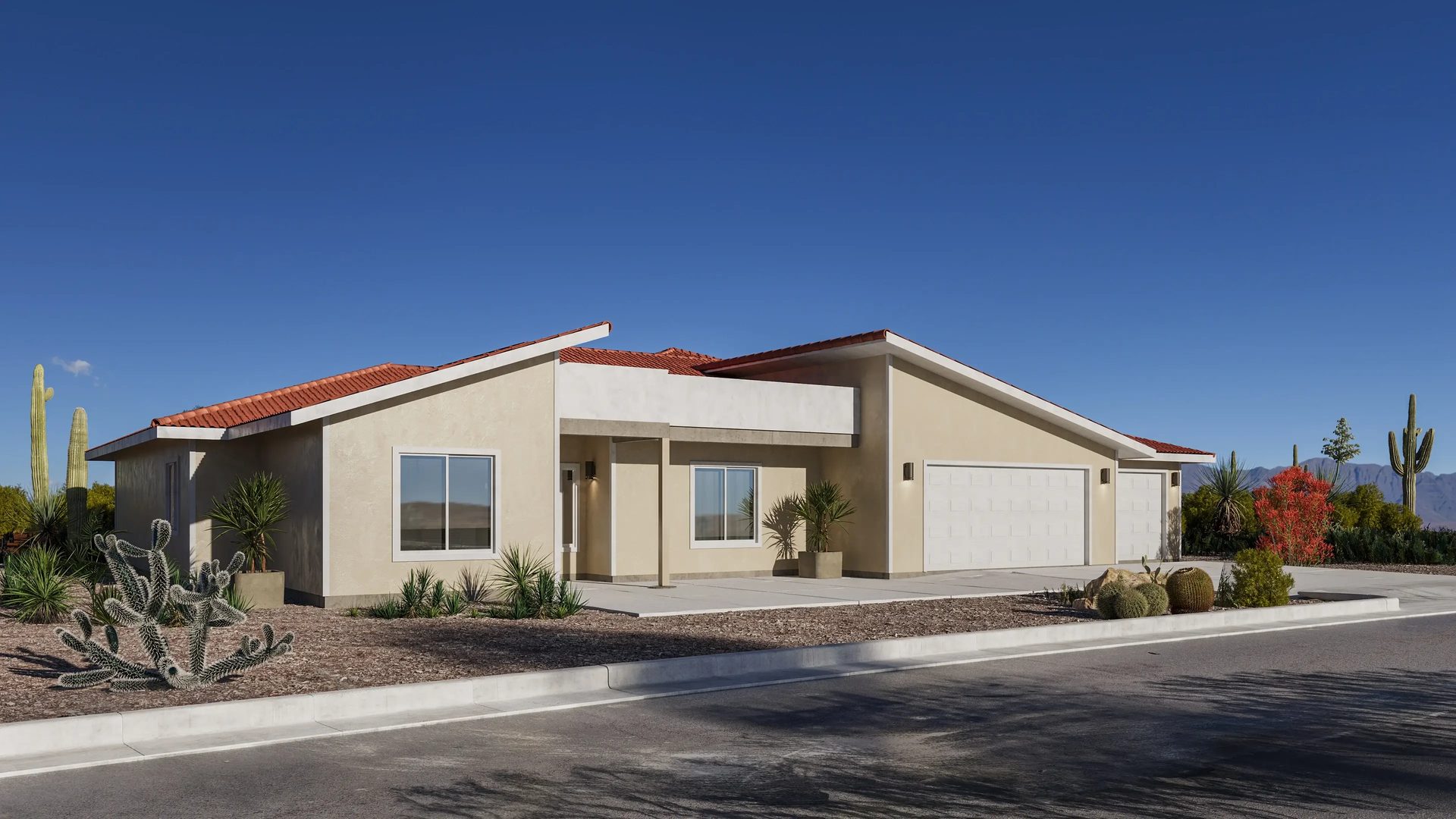
A finished 3D model of a prefab home is not just a rendering — it’s a source file for an entire marketing pipeline. AI-powered tools now take that single model and multiply its output: generating seasonal campaign imagery (the same home in spring light, autumn foliage, winter snow), localizing visuals for different regions and climates, producing ad variations for social media and email, and creating brochure layouts — all from the original 3D asset. What used to require a separate shoot or rendering session for every variation can now be generated in minutes. For a prefab builder with a catalog of models, this means one round of 3D production can feed not just the launch campaign, but the entire ongoing marketing operation across channels, seasons, and markets.
Make prefab homes real before they exist
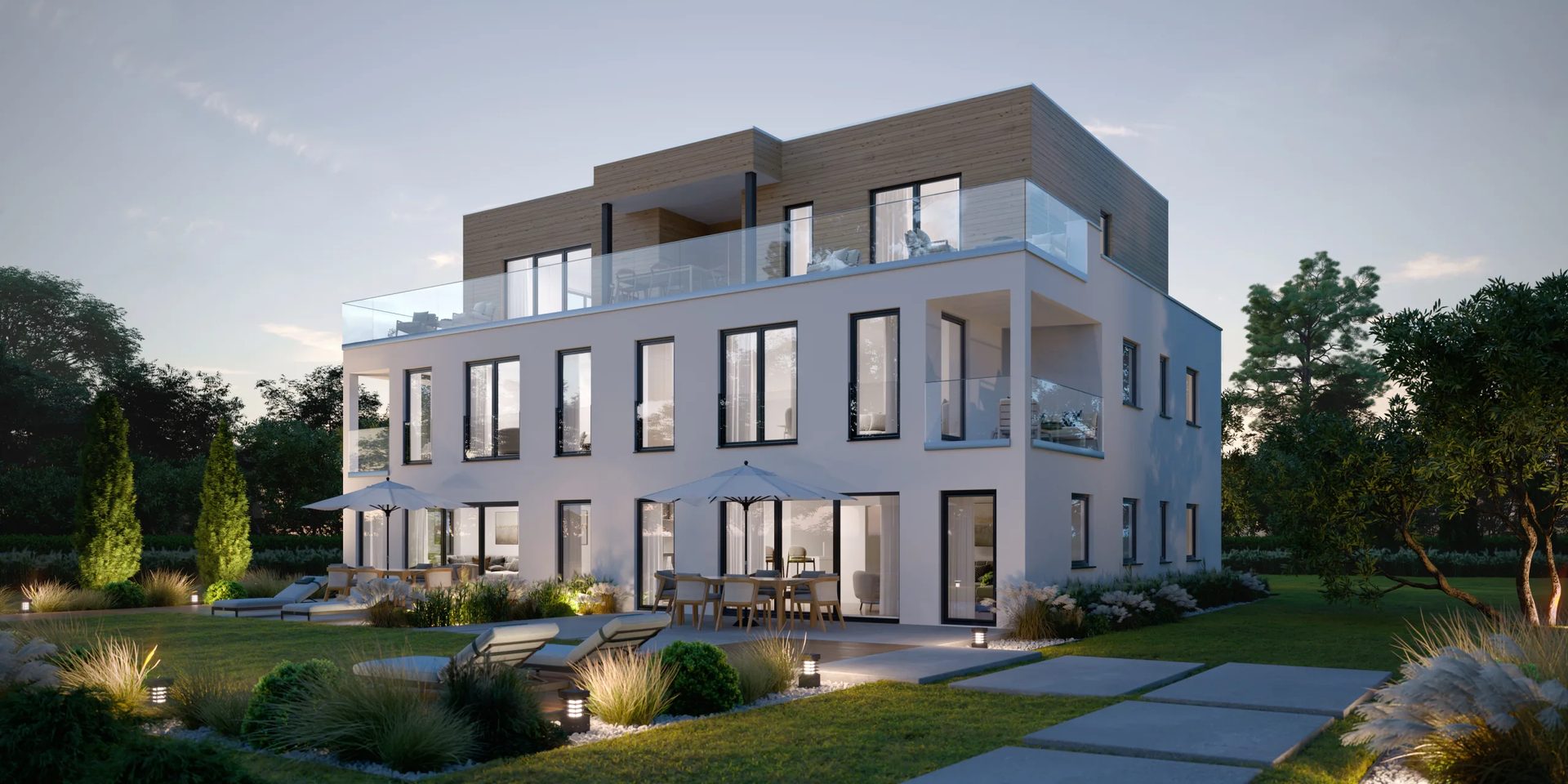
Prefab homes win on manufacturing efficiency and lose, if you let them, on the simple fact that a buyer can’t tour a factory order. 3D rendering closes that gap — it’s the showroom for a product that doesn’t physically exist yet, and a reusable one that sells your whole catalog, on any lot, before the line runs. Make the home convincing on a screen and the efficiency advantage finally turns into sales.
Schedule a free demo of 3D solutions for your business
When you’re ready to give your prefab lineup a virtual showroom that actually sells — from single family house rendering to full catalog visualization — get in touch with our 3D rendering company. We build buyer-ready prefab homes in 3D so your catalog sells before the factory runs.
Related reading: single-family home rendering explained. Catherine Paul Catherine is a content writer and editor. In her articles, she explains how CGI is transforming the world of architecture and design. Outside of office, she enjoys yoga, travelling, and watching horrors.

Content Writer, Editor at ArchiCGI