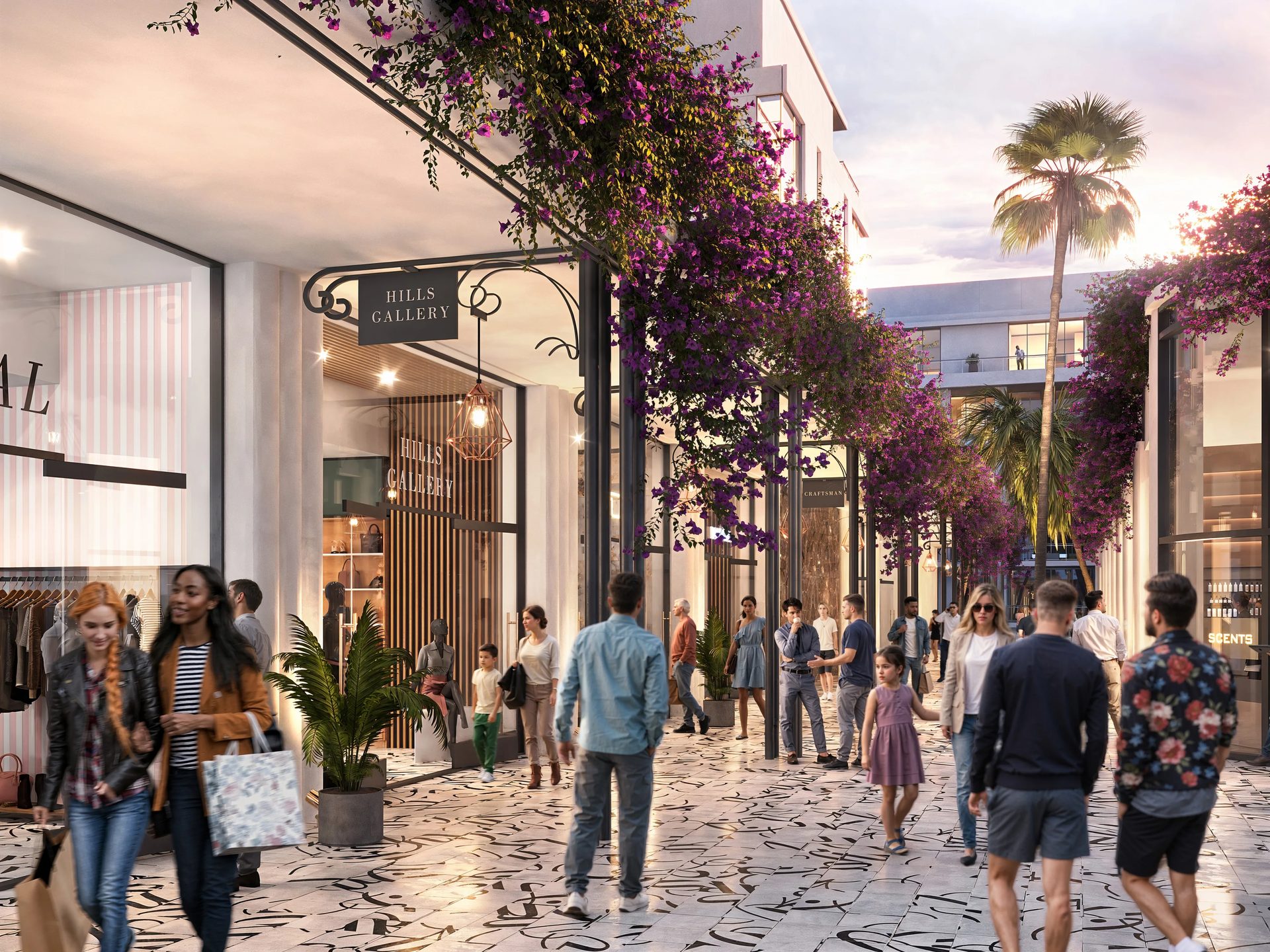
Retail rendering has become a key tool for securing faster project approval in modern store design. With high-quality retail renders, architects and designers can present ideas in a way that is clear, visual, and easy for stakeholders to evaluate from the very start.
Traditional drawings and sketches often fall short. They are too abstract and leave room for doubt, which leads to long discussions and repeated revisions. This slows down decisions and creates friction between designers, clients, and contractors.
This is where 3D rendering for architects changes the process. Instead of explaining concepts, architects can show the final result before construction begins. Industry research by Global Market Insights Inc. supports this shift, showing that 3D rendering can eliminate any form of uncertainty in construction plans. The role of a professional architectural rendering company is to produce photorealistic visuals that remove ambiguity and align everyone involved.
Below are five types of retail CGI that help designers move projects through approval with less friction and more confidence.
#1. Floor Plan Rendering Shows the Store Layout in Detail
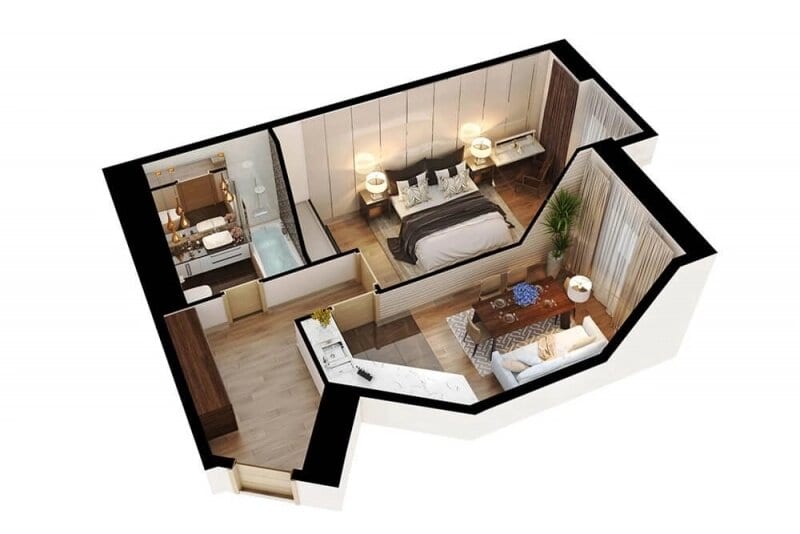
CG Floor plan is a type of 3D rendering that shows a whole property in section from birds’ eye view. This compact format allows the audience to clearly understand planning, heights, and proportions inside the building as well as to examine all the furniture and decor elements.
That’s why a floor plan 3D rendering can serve as a perfect presentation material of commercial retail design. With the help of 3D floor plans, the architect can show stakeholders a detailed layout of the project, so that they can make sure it’s practical and functional. Namely, they will be able to see the relative position of rooms, furniture placement, smart storage solutions, and all the other elements of a retail store.
2D vs 3D Floor Plans in Retail Design
Retail layouts are not judged by how they look on paper but by how they function in practice. Traffic flow, checkout zones, and storage define how customers move, how sales happen, and how staff operate day to day. These three elements directly affect revenue, efficiency, and customer experience. That is why they are the most practical criteria when comparing 2D floor plans and retail renders.
Traffic Flow
In 2D floor plans, traffic flow is indicated with arrows and circulation lines. This defines intended movement but does not account for visibility, spatial perception, or natural behavior.
In retail renders, traffic flow can be evaluated through sightlines, scale, and layout depth. Bottlenecks, dead zones, and attraction points become visible, which allows a more realistic assessment of movement patterns.
Checkout Zones
In 2D plans, checkout zones appear as fixed blocks with assigned positions. Their size and location are clear, but queue behavior and customer interaction are not.
In retail renderings, checkout zones are shown in context. Queue formation, spacing, visibility from entrances, and interaction with nearby displays can be assessed before implementation.
Storage Areas
In 2D layouts, storage areas are defined by boundaries and labels. This shows allocation but not usability.
In retail 3D visualizations, storage areas are visualized as part of operational flow. Access points, proximity to staff zones, and connection to the sales floor become clear.
#2. Exterior Retail Rendering Showcases the Storefront and Surroundings
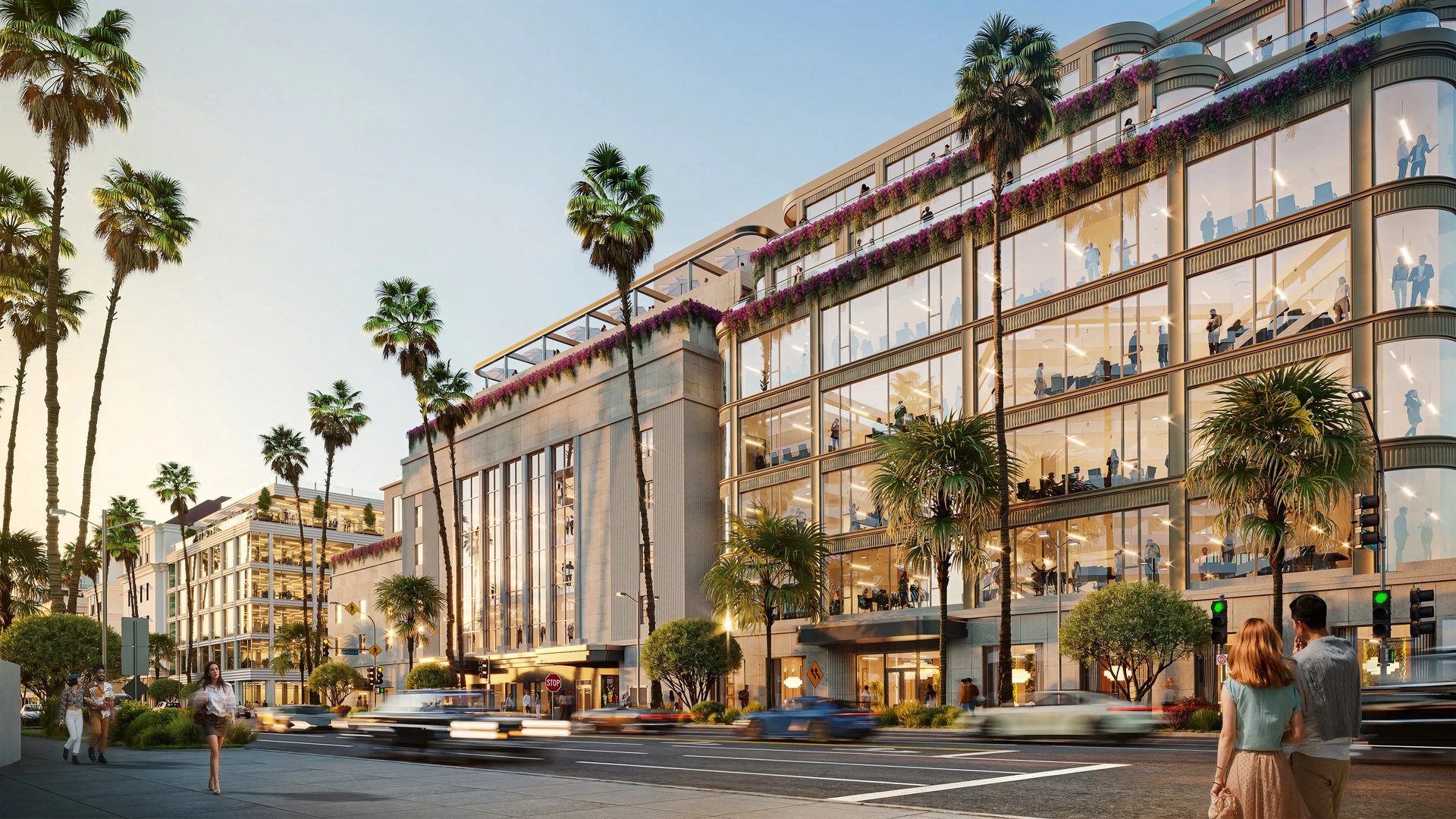
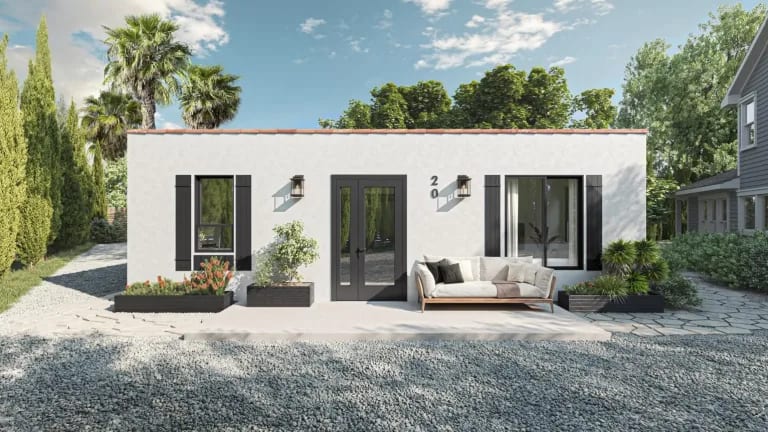
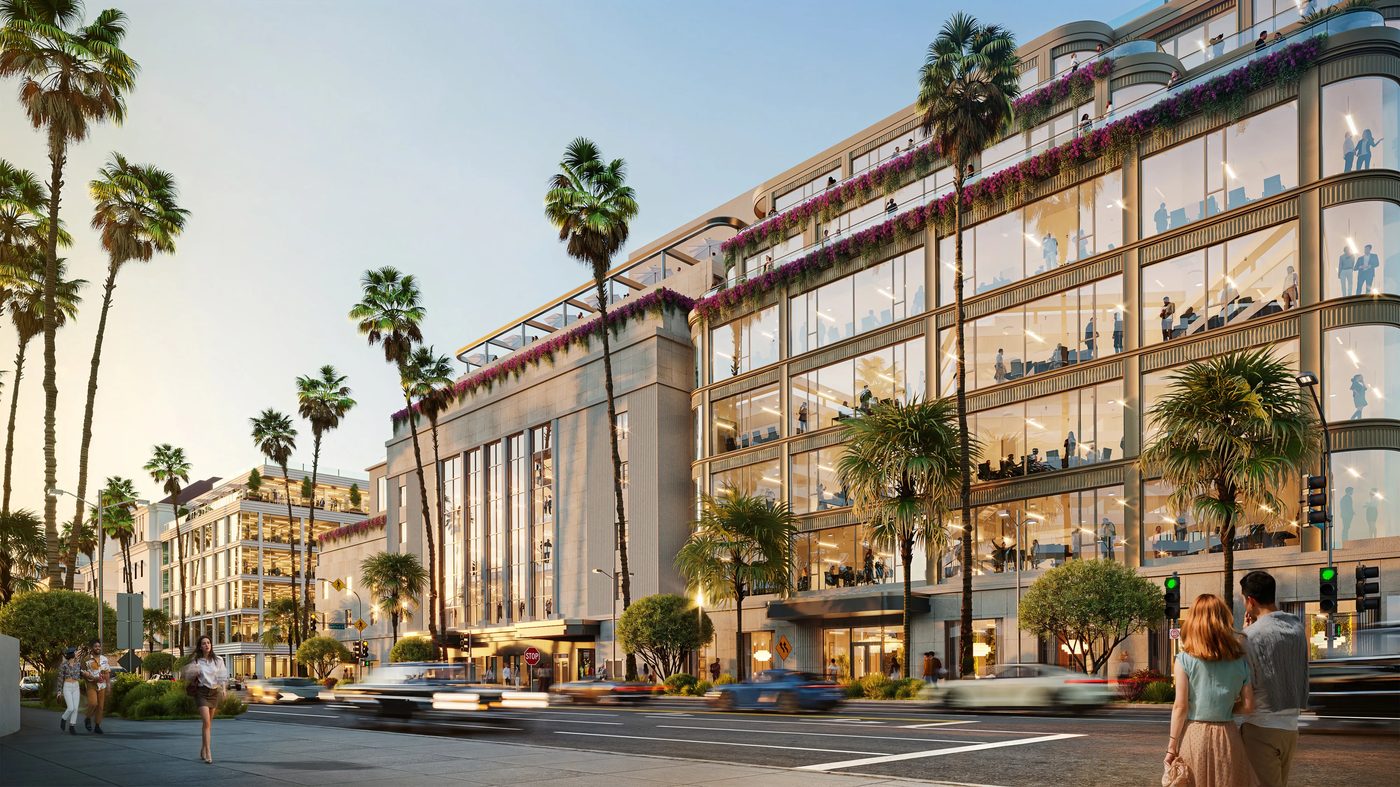
Exterior 3D rendering for retail design showcases the future shop’s external side in detail. Namely, the viewers will see the building’s roof and facade, window displays, entrance, and exterior lighting solutions in photorealistic quality. The effect of photorealism is ensured by the professional of 3D Artists who masterfully use 3D modeling and rendering software such as 3ds Max and V-ray for that.
With photoreal 3D renders, the audience can see the exceptionally appealing exterior of the future store that is bound to lure many shoppers. Also, CGI shows the retailers how the Designer managed to keep the brand’s unique style and do it in a completely new and unexpected way.
What is more, exterior 3D rendering for retail design showcases the building’s surroundings. This means that with photoreal CG visuals the stakeholders will instantly see if the future store harmonizes with other buildings and the landscape around. On top of that, CGI allows to see the exterior in both day and evening scenes, and even in different seasons, so the audience can understand how the retail shop will look in various light and weather conditions.
Key Exterior Views in Retail Renders
Exterior retail design is evaluated through a set of focused views that reflect how the store is perceived in real conditions. Storefront, signage, and window display define first impression and brand communication. Day, night, and seasonal views show how that impression holds under changing conditions. These views are selected because they directly influence visibility, customer attraction, and consistency of the retail concept.
Storefront Rendering
Storefront rendering focuses on the main customer-facing side of the store. It shows the composition of the facade, entrance placement, materials, and transparency of glazing. This view helps evaluate how clear and accessible the entry point is, and whether the design supports natural customer flow from the street.
Signage
Signage views isolate brand elements on the facade. They allow assessment of scale, placement, contrast, and readability from different distances and angles. This makes it possible to verify that branding remains visible and consistent within its surroundings.
Window Display
Window display views highlight how products are presented to passersby. They show arrangement, lighting, and depth behind the glass, making it possible to evaluate how effectively the display attracts attention and communicates the store’s offer.
Day, Night, and Seasonal Views
These views present the same exterior under different lighting and environmental conditions. Daytime scenes reveal materials and colors in natural light, while evening views emphasize artificial lighting and visibility after dark. Through carefully adjusted exterior render settings, the design can be tested across a range of weather and lighting scenarios, often referred to as atmospheric rendering.
Seasonal variations add another layer of evaluation. Fall 3D rendering highlights warmer tones and softer natural light, while winter 3D visualization introduces snow, reduced daylight, and stronger contrast between interior and exterior lighting. In addition, Christmas marketing renders allow stakeholders to assess how the store performs during peak retail periods, when decorative lighting and seasonal elements play a key role in attracting customers.
Get photorealistic exterior visuals that help clients approve your proposals with confidence.
#3.Interior Retail Rendering Presents the Store Design from Inside
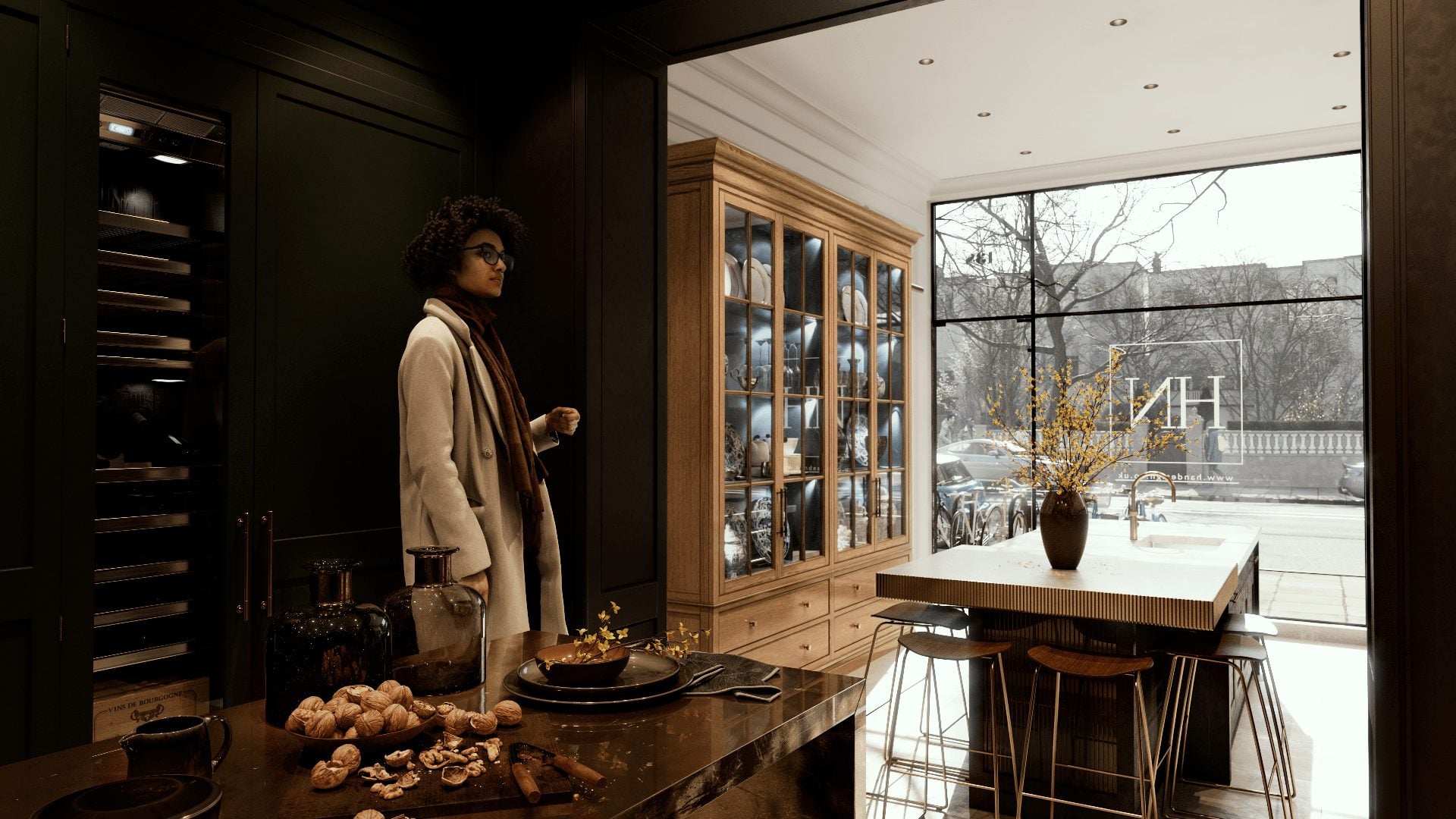
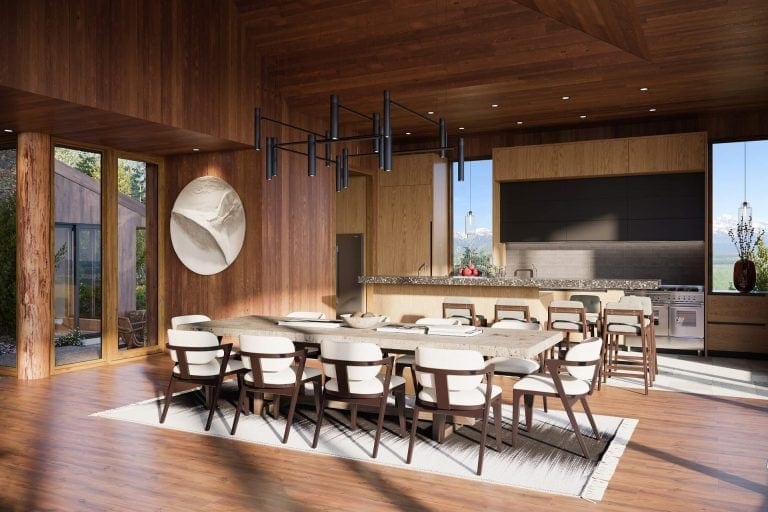
When planning a retail space, 3D interior design rendering services give teams a complete picture of the environment before a single element gets built or installed.
One of the clearest benefits is being able to review the full showroom layout in detail — checking how products are positioned, where zones begin and end, and whether circulation paths feel logical before anything is finalized.
Material choices become far easier to judge when they’re seen together. Floors, walls, ceilings, and display surfaces interact with each other in ways that individual samples simply can’t communicate, and retail renderings show those relationships honestly.
The same logic applies to lighting. General illumination and accent fixtures can be assessed as a combined system, making it straightforward to spot imbalances or areas where visibility falls short before any hardware is ordered.
Brand consistency is another area where retail renderings prove their value. Colors, signage, and decorative elements can be worked into the space and refined until the overall atmosphere feels like a genuine extension of the brand — not an afterthought. See a real example: franchise rollout case study showing how one ice cream brand scaled this across multiple U.S. locations.
Finally, populating the scene with figures brings an immediate sense of scale and life. Showing customers browsing, speaking with staff, or moving toward checkout grounds the design in real human behavior and makes it easier for stakeholders to respond to what they see.
#4. 3D Animation Takes Viewers Through the Retail Space
Architectural 3D animation is a digital video that allows viewers to feel like they are visitors to the future retail outlet. As everything in a photoreal 3D video is shown in motion, this kind of 3D rendering service gives stakeholders a life-like experience.
Animation brings movement to what static visuals show at a standstill. A planned camera path can follow the route a customer actually takes — from the entrance through different zones to the checkout — revealing how the layout connects, where the eye lands, and how featured products get noticed along the way.
3D architectural animation also captures things stills can’t easily convey: the shift in lighting between morning and evening, digital screens cycling through content, or the general atmosphere of a busy versus a quiet floor.
Soundtrack plays a real role too. The right audio sets the tempo of the sequence and carries the brand’s tone — whether the space is built around a premium, energetic, or understated feel. Paired with deliberate camera movement, it influences how clients and stakeholders emotionally read the space during a presentation.
As part of a 3D retail rendering project, animation helps translate design decisions for audiences who struggle to visualize a finished space from floor plans or isolated material samples — working alongside still images rather than standing in for them.
#5. Virtual Tour Lets Stakeholders Explore the Store Interactively
CG virtual tour is an interactive simulation of the future retail store. In 3D tours, the viewer can choose on his own where to “go” and what to see. So, using a mouse or a touchpad, the user can move through the virtual store, exploring every room. Also, in a 3D virtual tour rendering, it is possible to change the point of view and to zoom objects to see their textures in more detail.
For retail design projects, this level of control matters. A buyer reviewing a future showroom doesn’t have to take anyone’s word for how a wall finish looks up close, or whether a display unit reads well from across the floor. They can check both themselves, in the same session, at their own pace.
The zoom function is particularly useful when material specification is still being finalized. Clients can inspect surface textures — wood grain, fabric weave, stone pattern — directly within the space rather than cross-referencing separate sample boards. This tends to shorten feedback cycles and reduce the back-and-forth that comes with misread materials.
360-degree viewing adds another layer of confidence. Standing at any point in the virtual store, the viewer can rotate the perspective fully and assess how different walls, fixtures, and finishes relate to each other from that exact position. It’s the kind of spatial check that a series of still renders, however detailed, doesn’t quite replicate.
For stakeholders who are not designers — retail directors, investors, franchise partners — this interactivity removes a significant barrier. They don’t need to interpret technical drawings or mentally assemble isolated visuals. The space is simply there to explore.
Want to learn how much your project costs? See how we evaluate 3D rendering projects

Three More Ways Retail CGI Pays Off
Beyond the five formats above, retail rendering earns its budget in the process itself:
- Flaw detection before construction. A photoreal render exposes layout clashes, awkward sightlines, and lighting problems while they are still cheap to fix on the drawing board.
- Design variations from one scene. Materials, color schemes, and fixture layouts can be swapped in the same 3D model, so stakeholders compare options side by side instead of imagining them.
- Marketing before opening day. The same visuals go into leasing brochures, franchise decks, and social media, building anticipation while the space is still a construction site.
Retail 3D visualization gives designers and architects a complete toolkit for presenting store projects at every stage — from planning to final approval. Whether it is a floor plan to clarify the layout, exterior and interior CGI visuals to show the look and feel, 3D animation for a dynamic walkthrough, or a virtual tour for an interactive experience, each format serves a clear purpose. The same approach works across hospitality design 3D rendering and other commercial spaces, from hotels to retail. For hotel, restaurant, and venue projects, ArchiCGI offers hospitality rendering services. Contact ArchiCGI for commercial rendering services and get high-quality visuals that help win project approvals.
Retail Rendering: FAQ

Catherine Paul
Content Writer, Editor at ArchiCGI
Catherine is a content writer and editor. In her articles, she explains how CGI is changing the work of architects and designers. Outside of office, she enjoys yoga, travelling, and watching horrors.