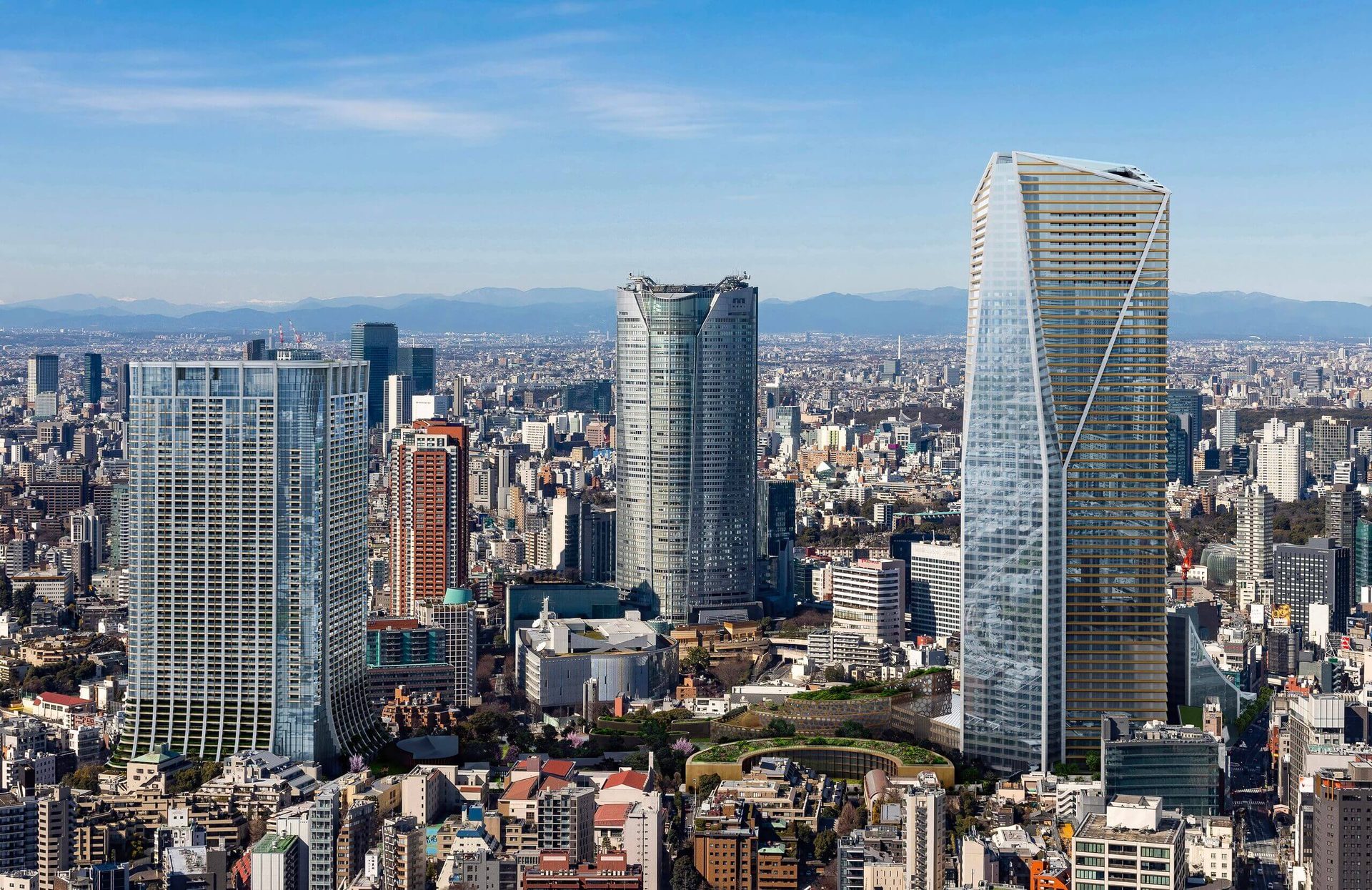
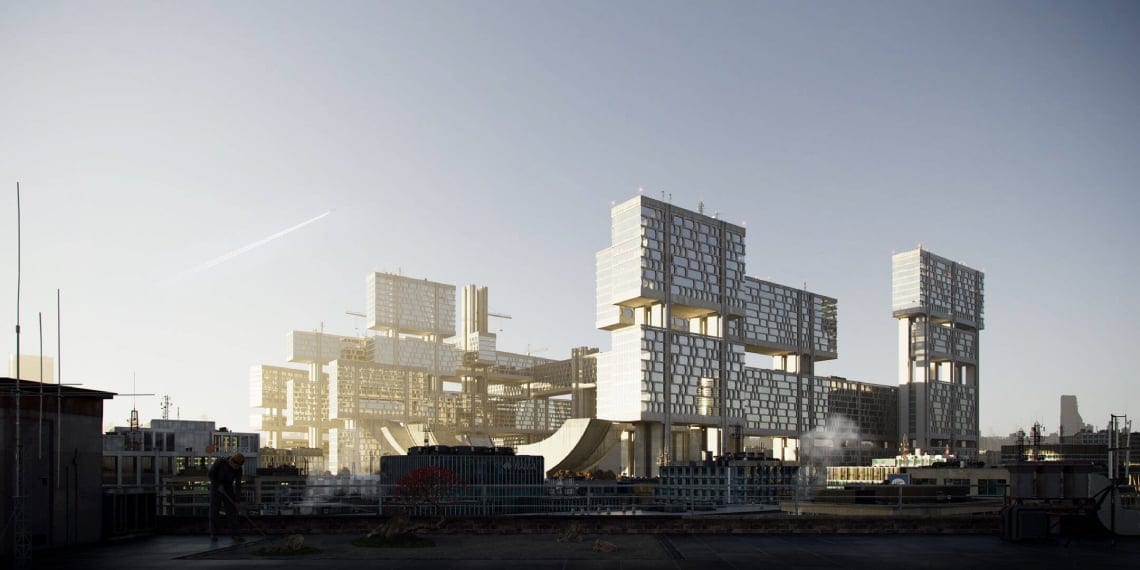
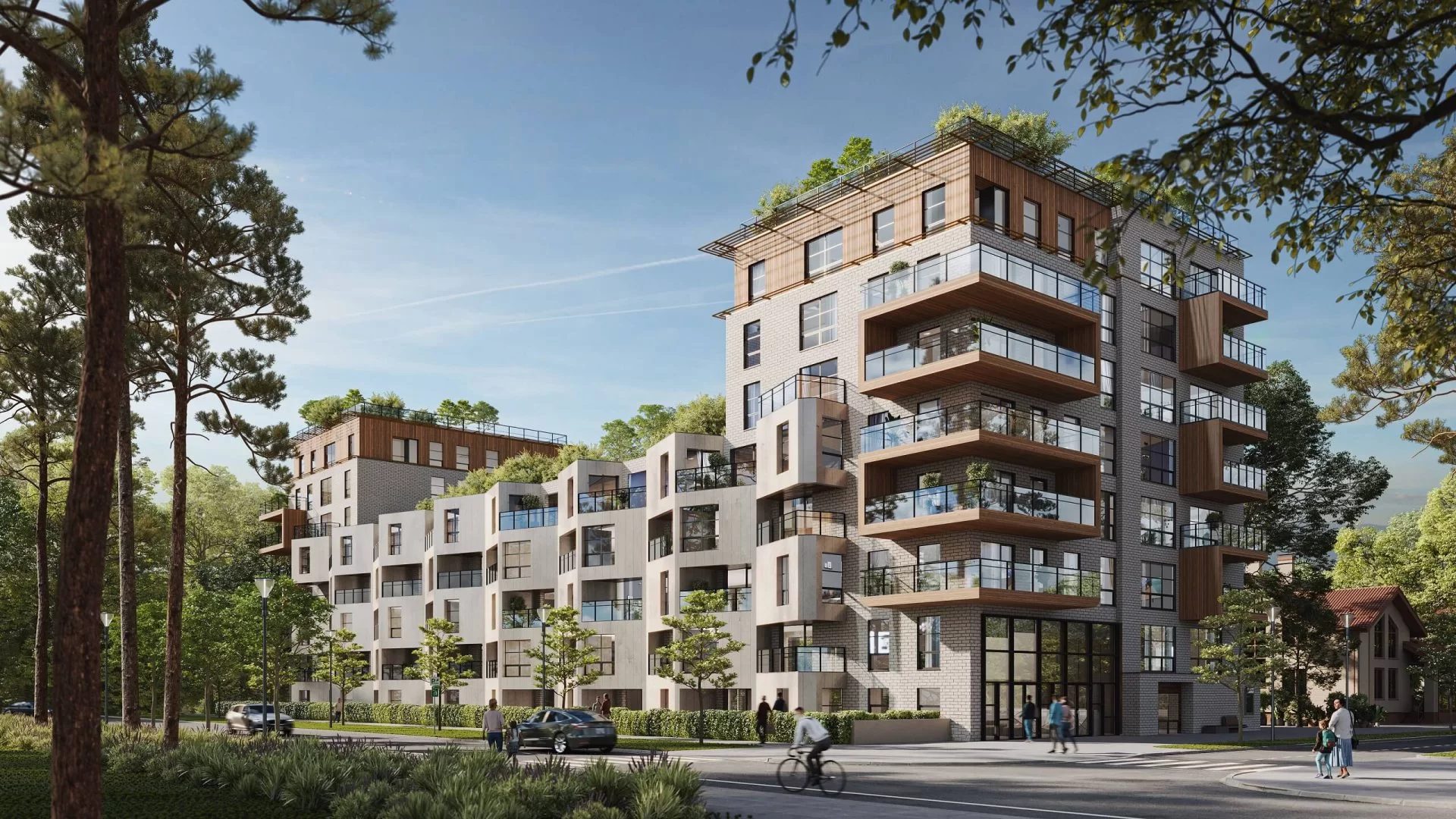
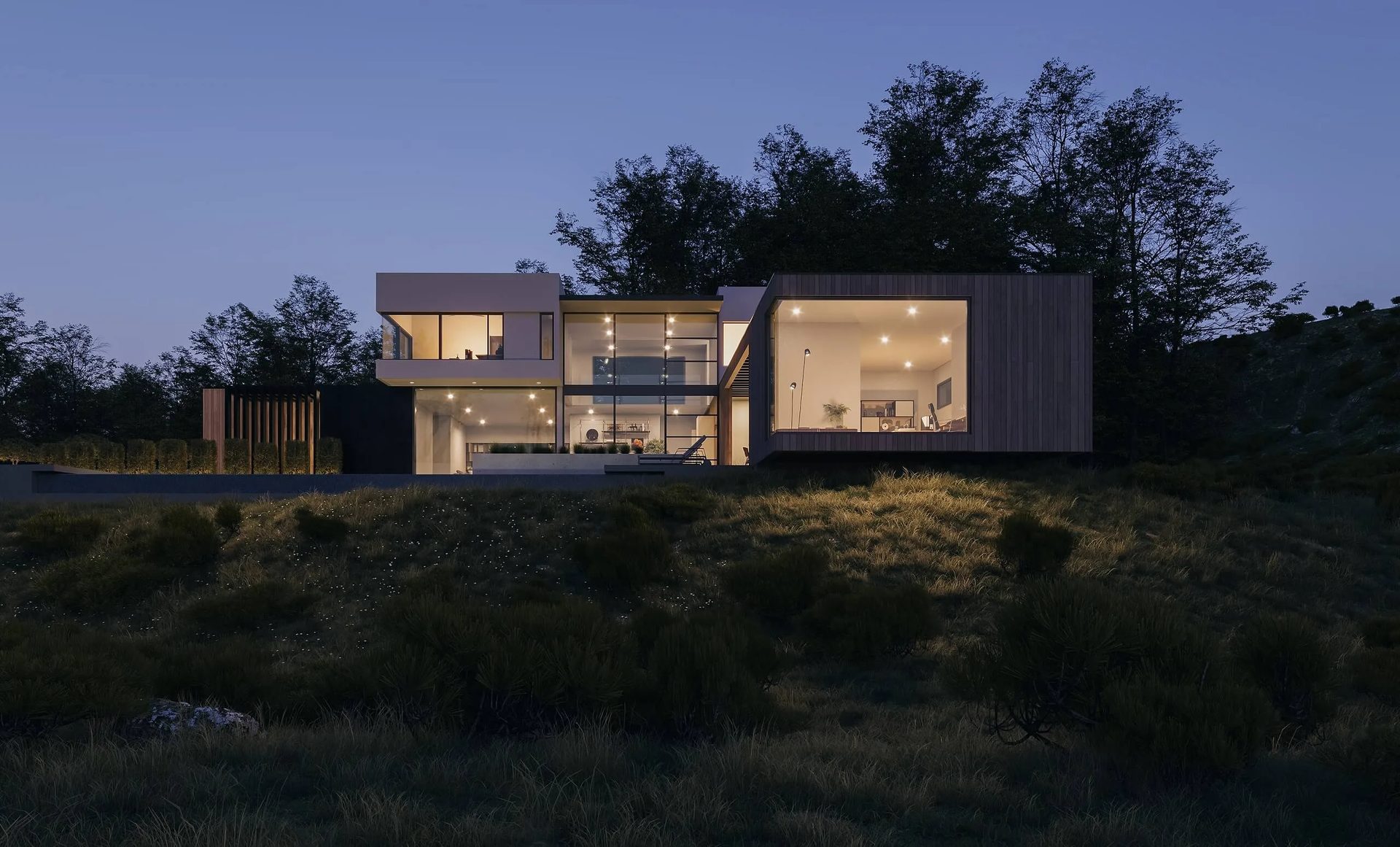
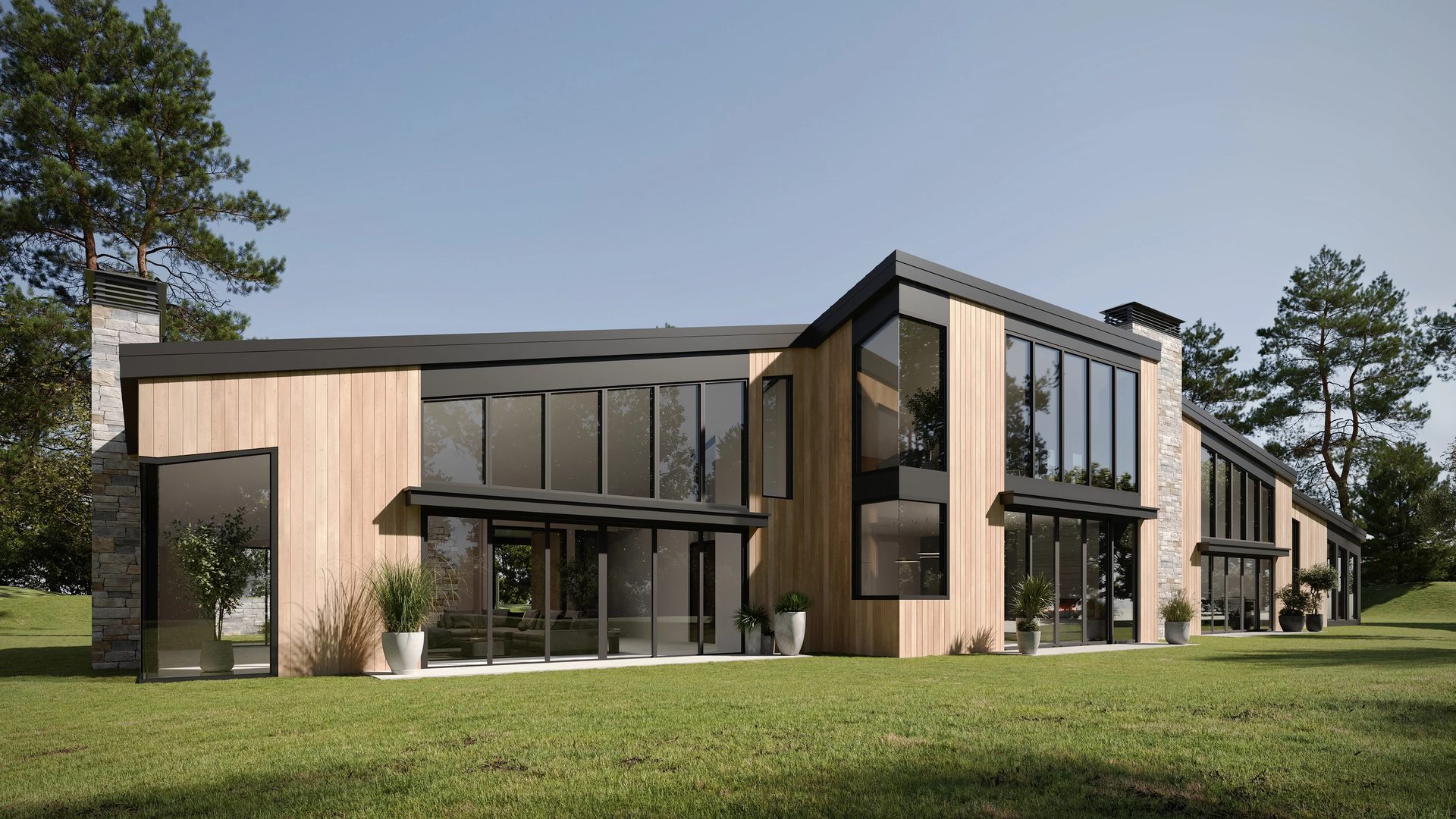
The simplest definition: 3D architectural rendering, also called architecture rendering, is the process of creating photorealistic images of objects and places using specialized computer graphics software. For instance, such images can feature architectural objects and their surroundings. The ability to render architecture before it is built is exactly what makes CGI so useful. Architects, developers, and designers use computer 3D rendering to present projects in a realistic and easy-to-understand way long before construction begins.
Professionally done 3D renders can be virtually indistinguishable from photos. This way, 3D architectural rendering services eliminate the necessity of waiting until a project is complete to photograph it. As a result, architects can get high-quality visuals for their designs way before the construction works begin. Moreover, it’s possible to order both exterior and interior 3D rendering services to showcase the inside and the outside of a future building.
3D Architectural Rendering at a Glance
Definition: 3D architectural rendering is the creation of realistic digital images based on architectural drawings and 3D models.
Used by: Architects, real estate developers, interior designers, construction companies, and marketing teams.
Common types: Interior rendering, exterior rendering, aerial visualization, virtual tours, and architectural animation.
Final output: Photorealistic images, videos, panoramas, or interactive walkthroughs are used for presentations and marketing.
How Does 3D Architectural Rendering Work?
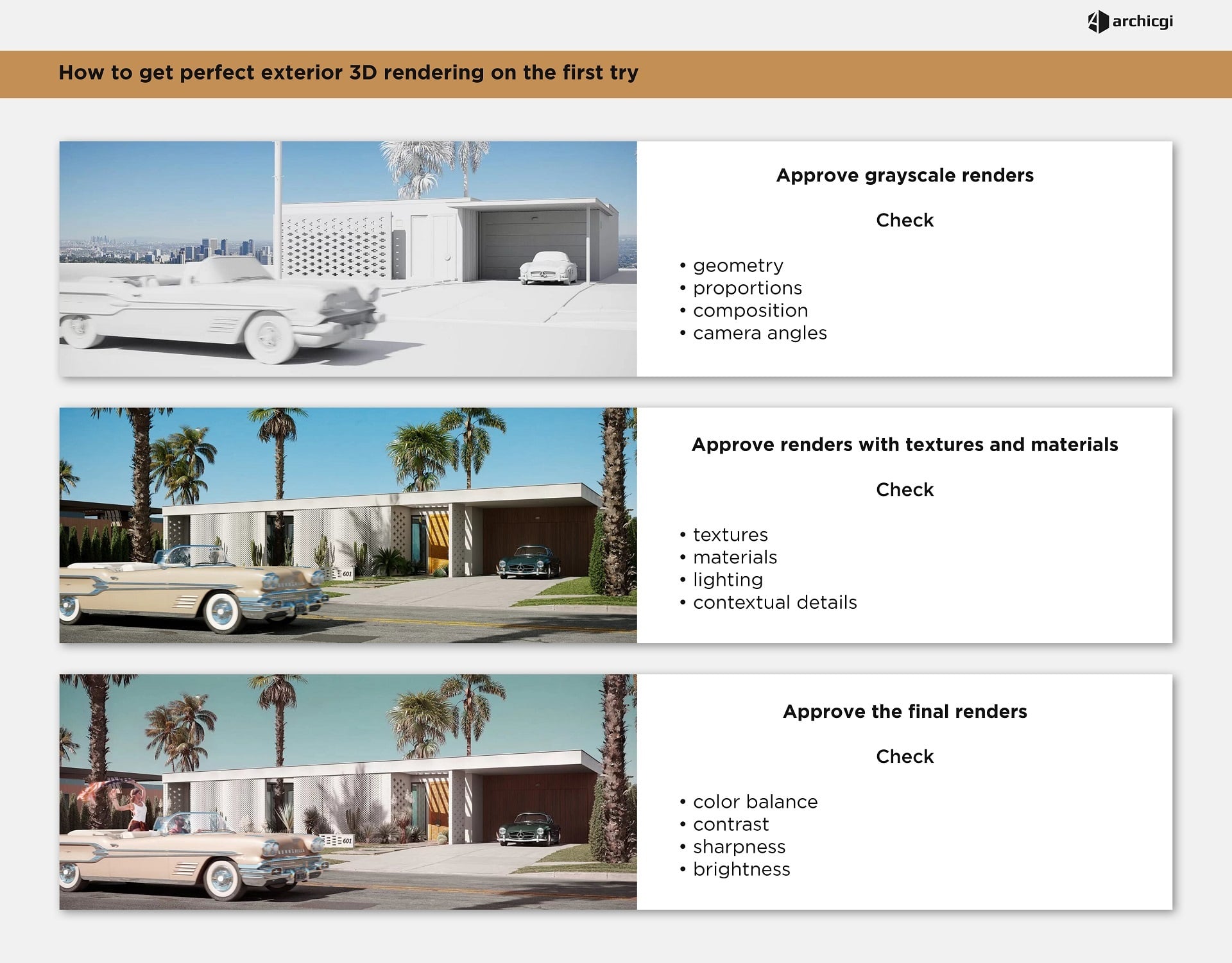
Even though final renders often look like real photographs, the process behind them is entirely digital. It usually begins with architectural drawings and gradually develops into a fully detailed visual scene.
1. 3D Modeling
Here’s where things really kick off. The artist takes floor plans or sketches and builds a digital 3D version of the building, paying close attention to measurements and the shape of everything.
2. Scene Creation
Once the model is ready, the artist adds materials, lighting, furniture, landscaping, and environmental details. This stage gives the project mood, realism, and atmosphere.
3. Rendering
The rendering stage is when specialized software generates the final image. Light, reflections, shadows, textures, and camera settings are processed to create a realistic result that resembles architectural photography.
If you want to see every step in detail, check out the architectural rendering process guide.
3D Modeling vs 3D Rendering: What’s the Difference?
People often use the terms “3D modeling” and “3D rendering” interchangeably, but they are not the same thing.
What Is 3D Modeling?
3D modeling is the process of building the digital structure itself. It focuses on geometry, proportions, technical accuracy, and object creation.
What Is 3D Rendering?
3D rendering is the process of turning that model into a finished visual image. This stage adds lighting, textures, atmosphere, reflections, and final realism.
In simple terms, the model is the structure, while the render is the final picture created from it.
3D Modeling
3D Rendering
Creates geometry
Creates final image
Technical stage
Visual presentation stage
Based on drawings
Based on lighting and materials
Produces a digital model
Produces a photorealistic render
In most architectural projects, both stages work together as part of the same visualization pipeline.
Main Types of 3D Architectural Rendering
Architectural rendering includes several different visualization formats depending on the project goals.
Exterior Rendering — shows the outside appearance of a building, including facade materials, landscaping, and surroundings.
Interior Rendering — focuses on indoor spaces, furniture, lighting, and atmosphere.
Aerial Rendering — presents projects from a bird’s-eye perspective, often used for developments and master plans.
Architectural Animation — creates cinematic walkthrough videos of a future project.
Virtual Tours — allow viewers to explore spaces interactively in 360 degrees.
Each type serves a slightly different purpose, from architectural approvals to real estate marketing campaigns.
Learn more about the different types of 3D architectural rendering in Chapter 7.
Who Uses 3D Architectural Rendering?
3D rendering is used across nearly every part of the architecture and real estate industry because it makes ideas easier to communicate visually.
Architects
Architects lean on renders to show their ideas, break down their design choices, and get the green light before anything gets built.
Real Estate Developers
Developers count on CGI visuals to drum up interest and bring in investors or buyers long before the project breaks ground.
Interior Designers
Interior designers use renderings to test out materials, furniture placement, lighting, and set the mood, so they know what works before making it real.
Real Estate Agents
Strong visuals give agents an edge when marketing properties that aren’t finished yet, or that just got renovated, whether online or in-person.
Construction Companies
Construction crews use renders to make sense of tricky builds and make sure everyone — owners, architects, contractors — shares the same vision.
What Does CGI Mean in Architecture?
When people hear “CGI,” they usually picture flashy movies or video games like big Hollywood blockbusters stuffed with wild visual effects. But architects use CGI for something much more down-to-earth. It’s not about fantasy worlds; it’s about bringing real buildings to life before a single brick is laid.
Architectural CGI is basically computer-made images that show off interiors, exteriors, landscapes, or entire neighborhoods. These are built with 3D software and designed to look so real that sometimes you can’t even tell the difference between a render and an actual photograph.
That’s why folks throw around terms like “architectural CGI” and “3D rendering” as if they mean the same thing. Both are all about turning a design idea into a lifelike image that makes sense to clients, investors, and pretty much anyone interested. The main difference comes down to context. In movies, CGI is for the make-believe. In architecture, it’s about crystal-clear communication and showing what a space could really look like.
Architecture’s all about visuals now. Sure, technical drawings and floor plans are still important, but honestly, they can be confusing for most clients. Photorealistic rendering solves that problem right away.
Instead of trying to imagine a space, people can simply see it. Materials, lighting, scale, and atmosphere become immediately clear, making decisions faster and more confident.
That’s why rendering is now a standard part of architectural workflows. Architects use it to explain concepts, developers rely on it for early marketing, and real estate teams use it to promote projects that haven’t been built yet.
Over time, CGI has moved far beyond large-scale developments. Today, it’s just as common in residential design, renovations, hospitality, and even product marketing — often becoming the first realistic version of a project people ever see.
What is 3D rendering?
3D rendering is the process of creating realistic digital images from a 3D model using specialized computer software. In architecture, it is used to visualize buildings and interiors before construction begins.
How does 3D rendering work?
The process usually involves three stages: creating a 3D model, building a realistic scene with materials and lighting, and generating the final image through rendering software.
What is the difference between 3D modeling and rendering?
3D modeling creates the digital structure, while rendering transforms that structure into a realistic visual image with textures, lighting, and atmosphere.
What is 3D rendering used for?
Architectural rendering is used for design presentations, real estate marketing, client approvals, investor pitches, and construction planning.
What is 3D rendering in interior design?
Interior rendering focuses on visualizing indoor spaces, including furniture, lighting, materials, and decor before the actual space is built or renovated.
What is 3D exterior rendering?
Exterior rendering creates realistic images of a building’s facade, landscaping, surroundings, and outdoor atmosphere before construction starts.