

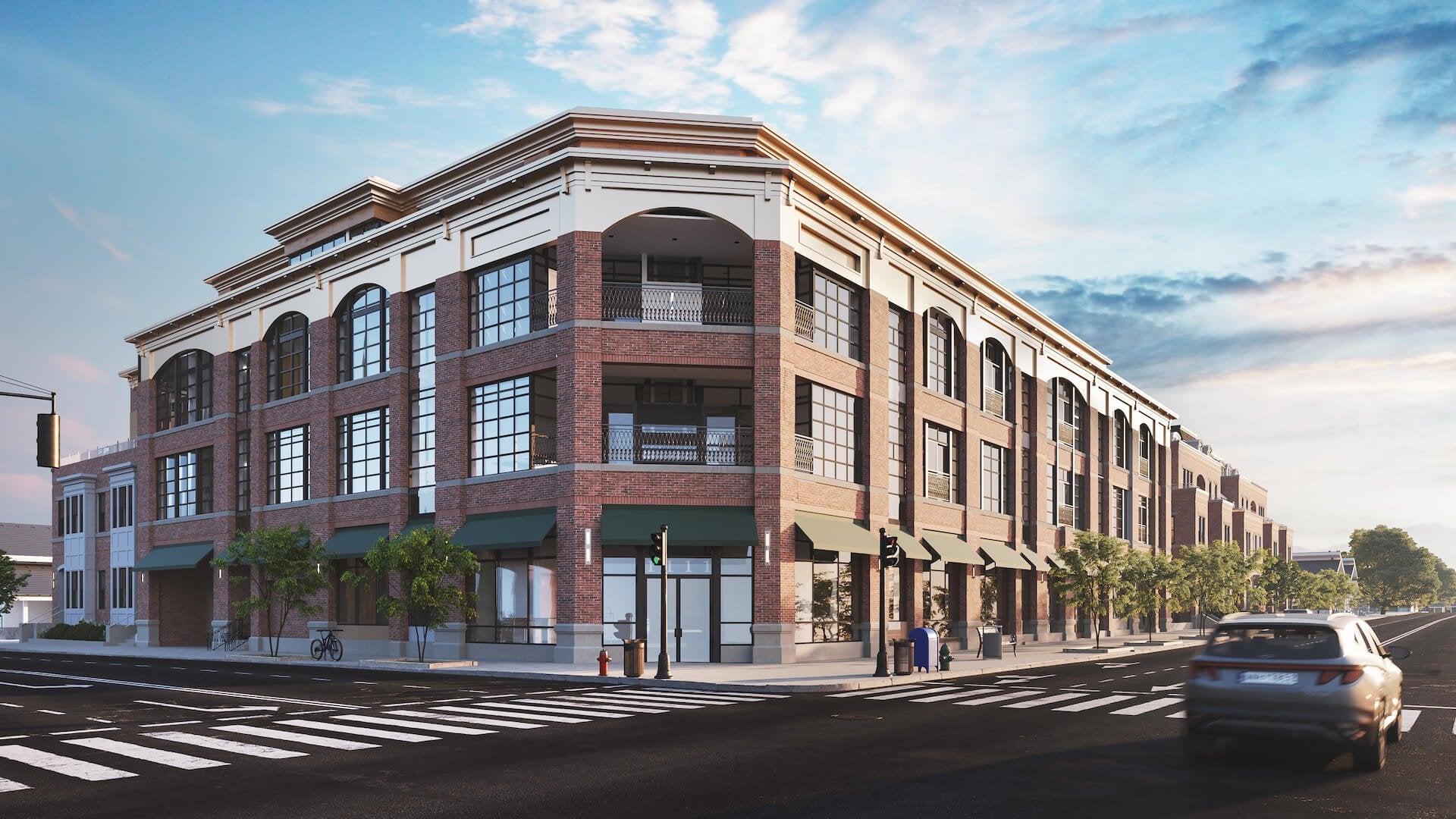
9 Featured 3D Rendering Projects Across New York
This gallery brings together nine projects from our New York portfolio — spanning Manhattan restaurants, Buffalo condominiums, Hudson Valley townhouses, and a Catskills hotel extension. Each example shows what photorealistic CGI looks like in a specific NY context: how facades sit on real streets, how interiors handle real light, how scale and material reads on a real city block.
If you’re looking for ongoing rendering services for a New York development, see our 3D rendering services for New York page for the full service breakdown, pricing approach, and client reviews. Below — the projects themselves.
#1. Lavitta’s Restaurant
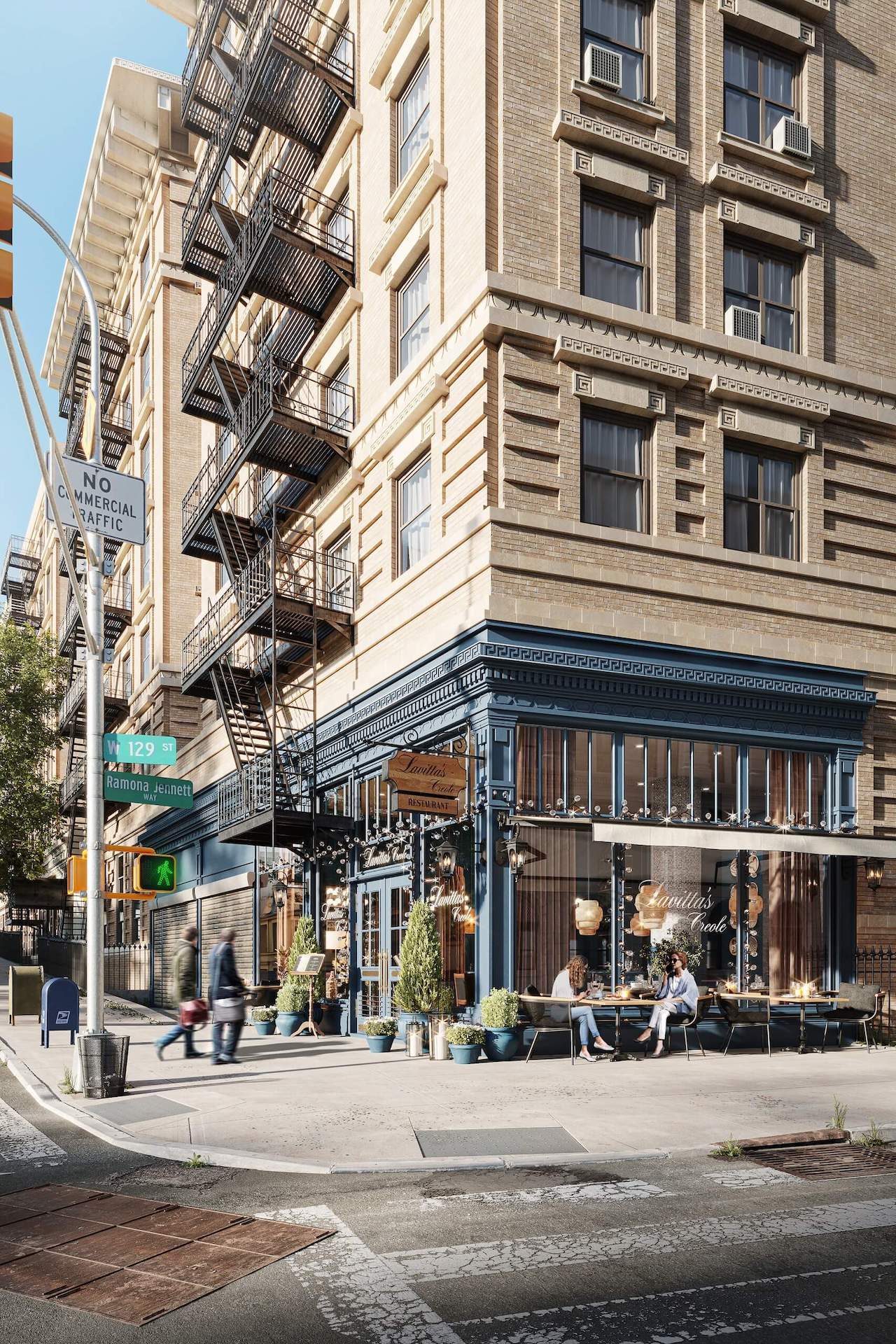
This exterior rendering places Lavitta’s Creole squarely on an Upper Manhattan street corner, showing how the restaurant’s classic, elegant design sits within the fabric of the existing building and neighborhood. The composition conveys the character of the place — refined yet approachable — without overstating it.
The exceptional photorealism in this render comes from meticulous attention to the surrounding urban context. Achieving this level of detail is what makes streetscape and cityscape rendering so technically demanding: the 3D artist built out the environment with the kind of specificity New York actually has — fire escapes, traffic signage, and weeds pushing through pavement cracks. Lighting was calibrated to match natural daylight conditions on that specific type of city block, while surface textures — brick, glass, painted metal — were matched to reference materials to ensure nothing reads as generic. Together, these elements produce the layered, lived-in quality that makes a New York street scene feel convincing rather than staged.
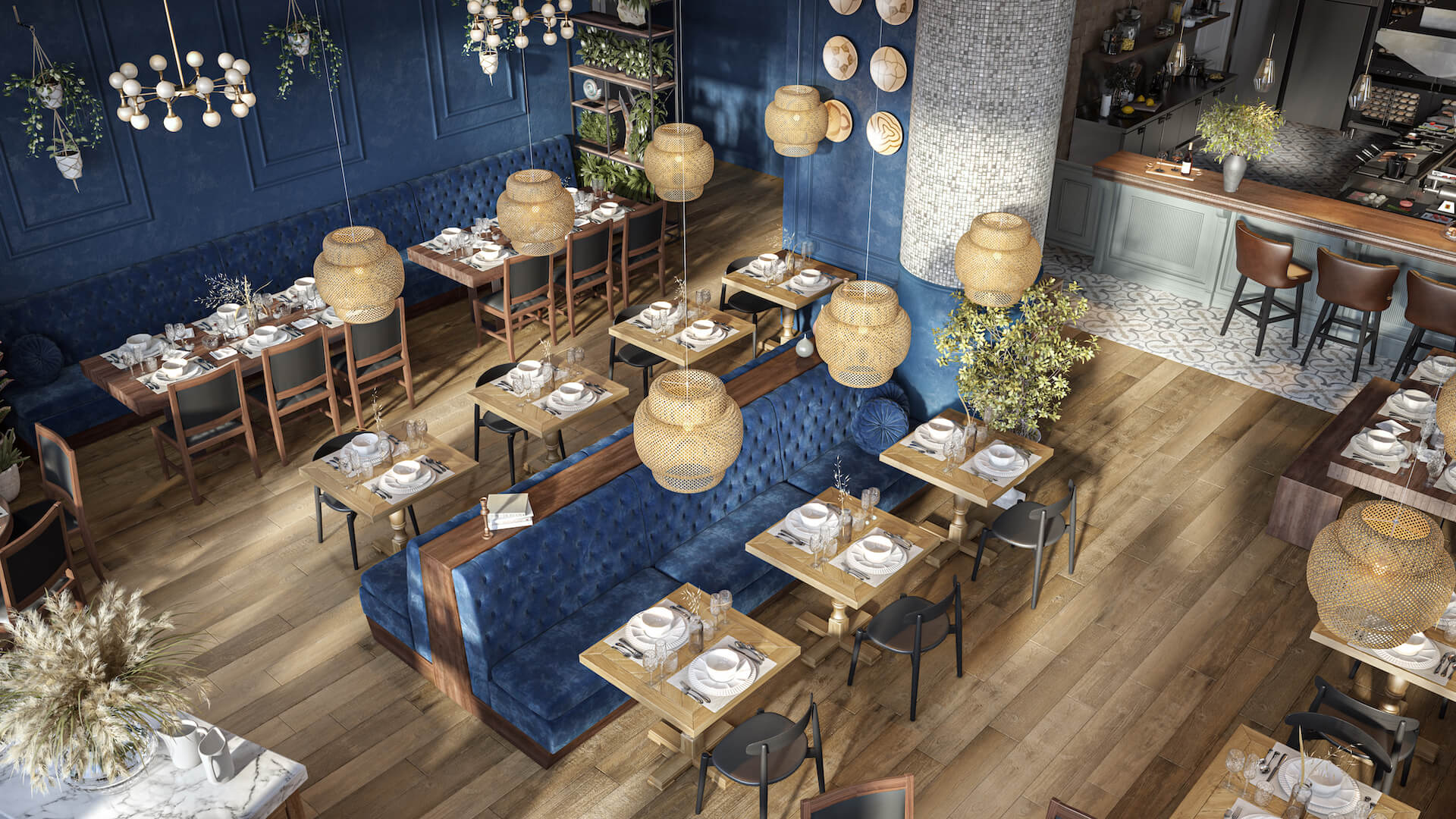
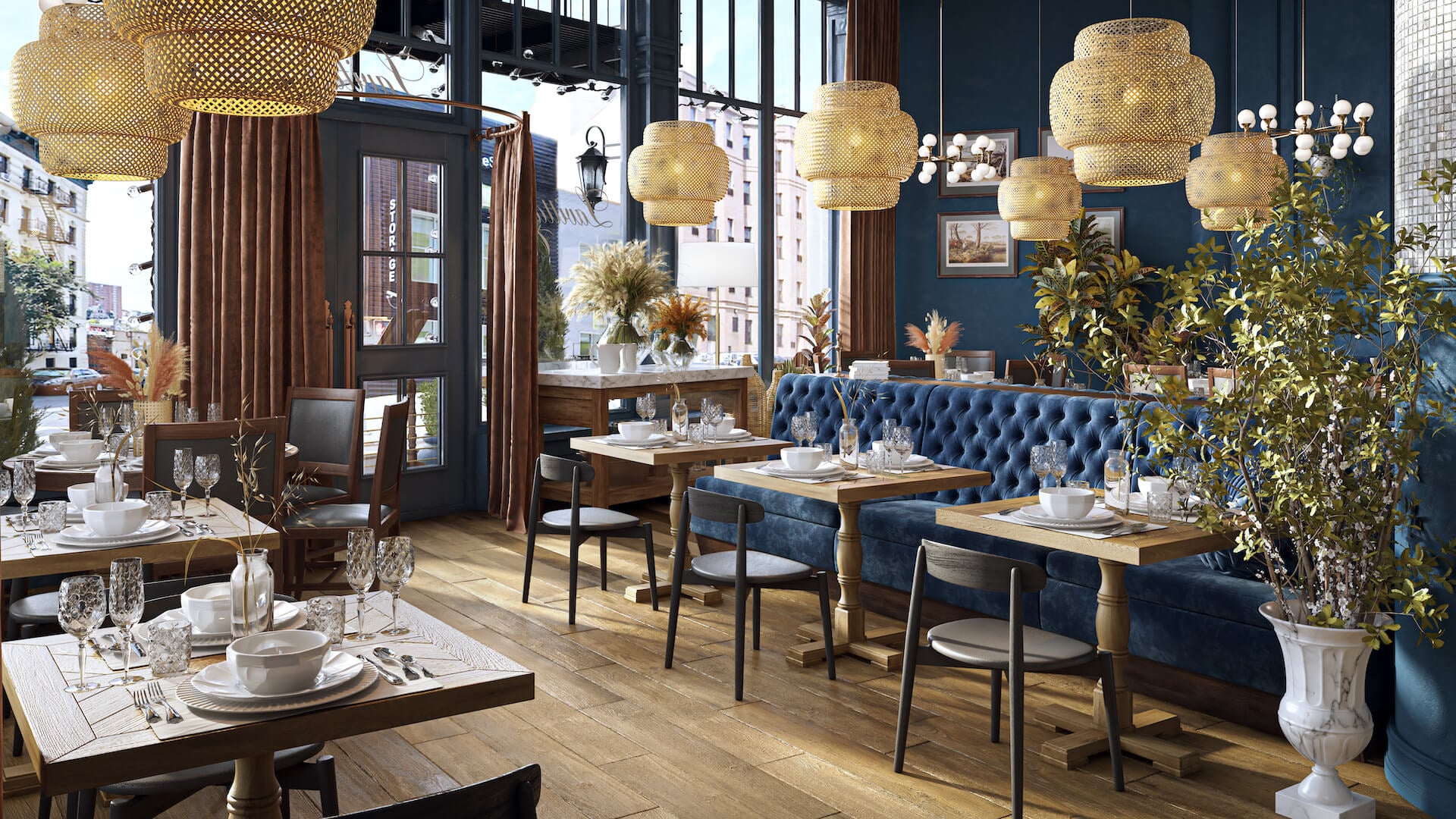
Beyond the exterior, the client also commissioned a restaurant interior rendering. for several views of the dining space. The interior is defined by a contrast between rich blue plush seating and warm wood finishes on the furniture and walls. Large windows were rendered with particular care to capture how natural daylight interacts with glass and reflective surfaces — a technically demanding element that significantly affects how the whole space reads. Live plants are distributed through the room, and their presence was rendered to add organic texture against the harder materials. The overall result communicates a space that is both comfortable and lively, which aligned with what the client needed to secure the necessary construction permits.
You can view the full breakdown of the project in this case study of Lavitta’s Creole restaurant renders.
#2. Apartment Building in Manhattan
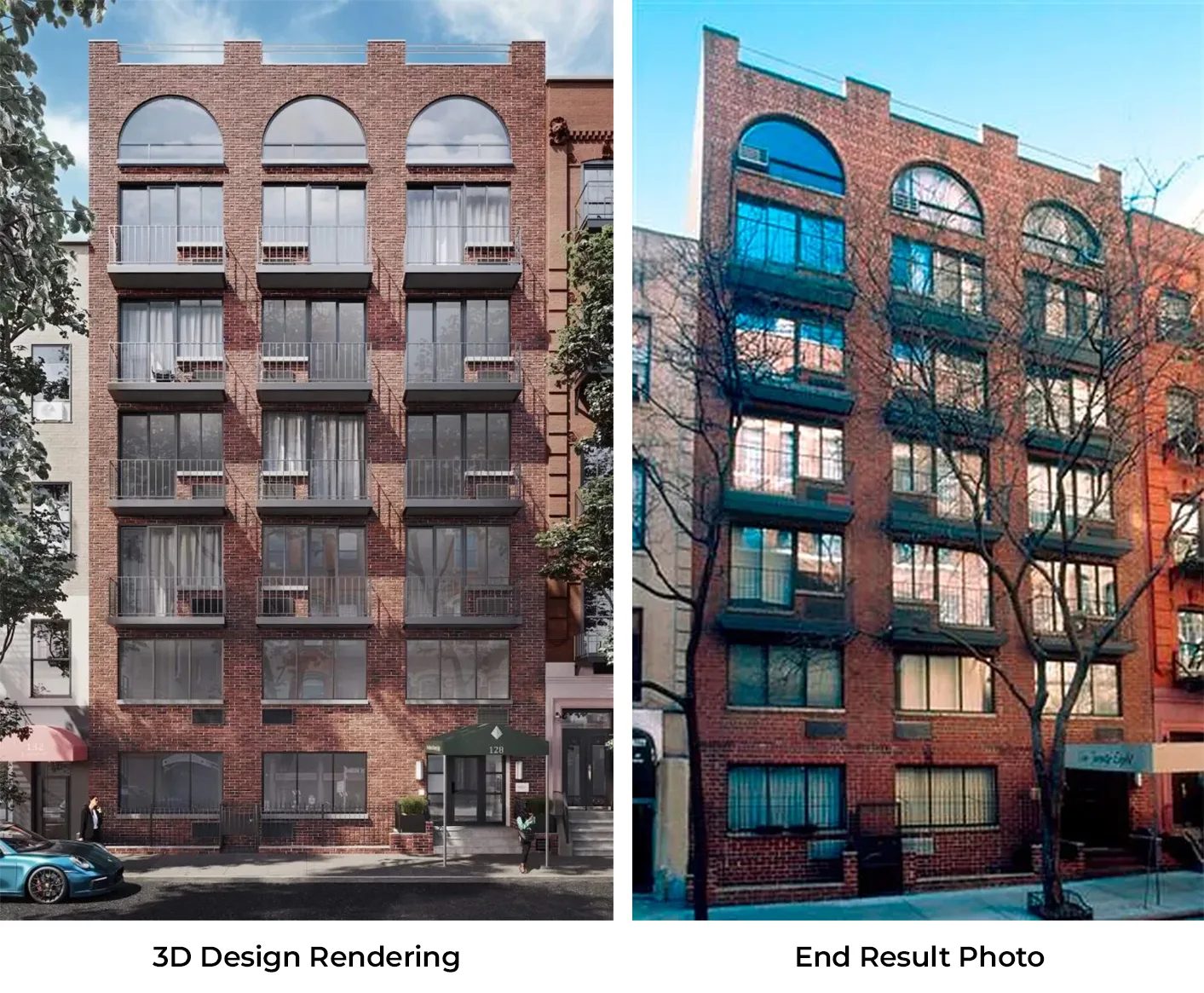
Our CG artists produced this 3D exterior rendering of a mid-rise residential building on the Upper West Side of New York for a real estate firm that needed presentation-ready visuals before construction began. The building’s design blends traditional red brick with arched upper-floor windows and a rhythm of Juliette balconies — details that needed to read clearly and accurately at the pre-construction stage to support leasing and investor materials. The building is now complete, and the apartments are rented out.
This is precisely where our 3D rendering for New York real estate projects proves its value. In a market this saturated, buyers and renters are comparing dozens of listings at once. A photorealistic render gives the client a credible, detailed visual for leasing campaigns, marketing materials, and investor presentations — long before construction begins.
The surrounding context is modeled and controlled as well. In 3D rendering for multi-family housing, this matters: neighboring buildings are present for realism, the street includes a parked car and a pedestrian to establish scale, and the tree framing on the left adds depth — but none of it competes with the subject.
On the technical side, achieving photorealism for a brick facade of this complexity requires building accurate surface variation into the texture maps so the material doesn’t tile visibly, and calibrating how the facade responds to the overcast daylight typical of New York street-level conditions. The arched windows at the top floor, with their glass reflections and interior curtain details, add another layer of rendering complexity.
The result is an image the client can use across listings, marketing materials, and investor documents — before a single brick has been laid.
See how exterior CGI wins client confidence at the idea stage
#3. Eleven Eleven Condominiums
Elmwood Village is one of the few Buffalo neighborhoods where the street itself is the selling point. Independent businesses, tree-lined blocks, walkable distance to the Albright-Knox-Gundlach Art Museum — buyers here are paying for the address as much as the unit. That’s what made the pre-selling campaign for Eleven Eleven Condominiums a specific kind of brief: the renders had to sell a place, not just a building.
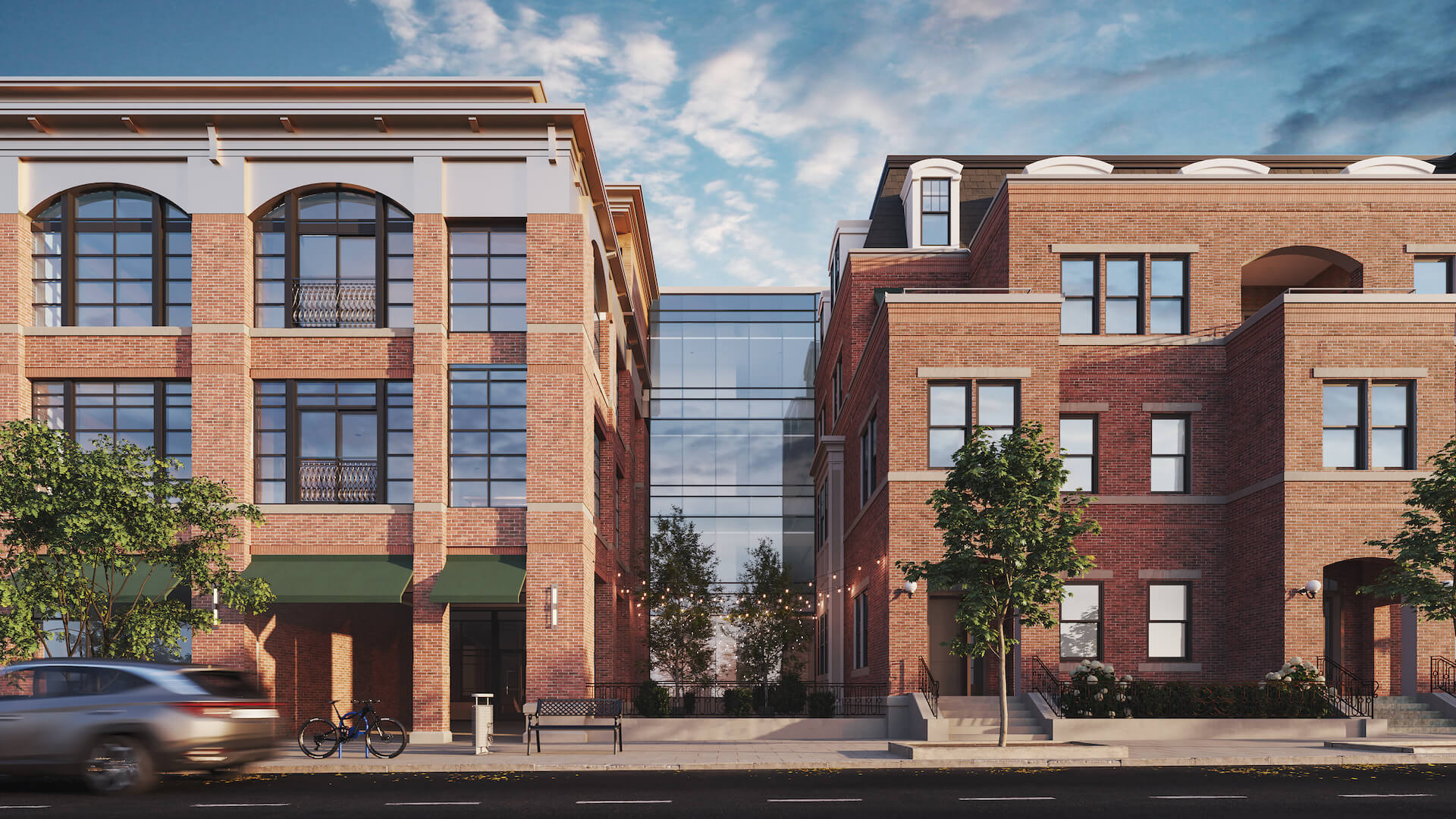
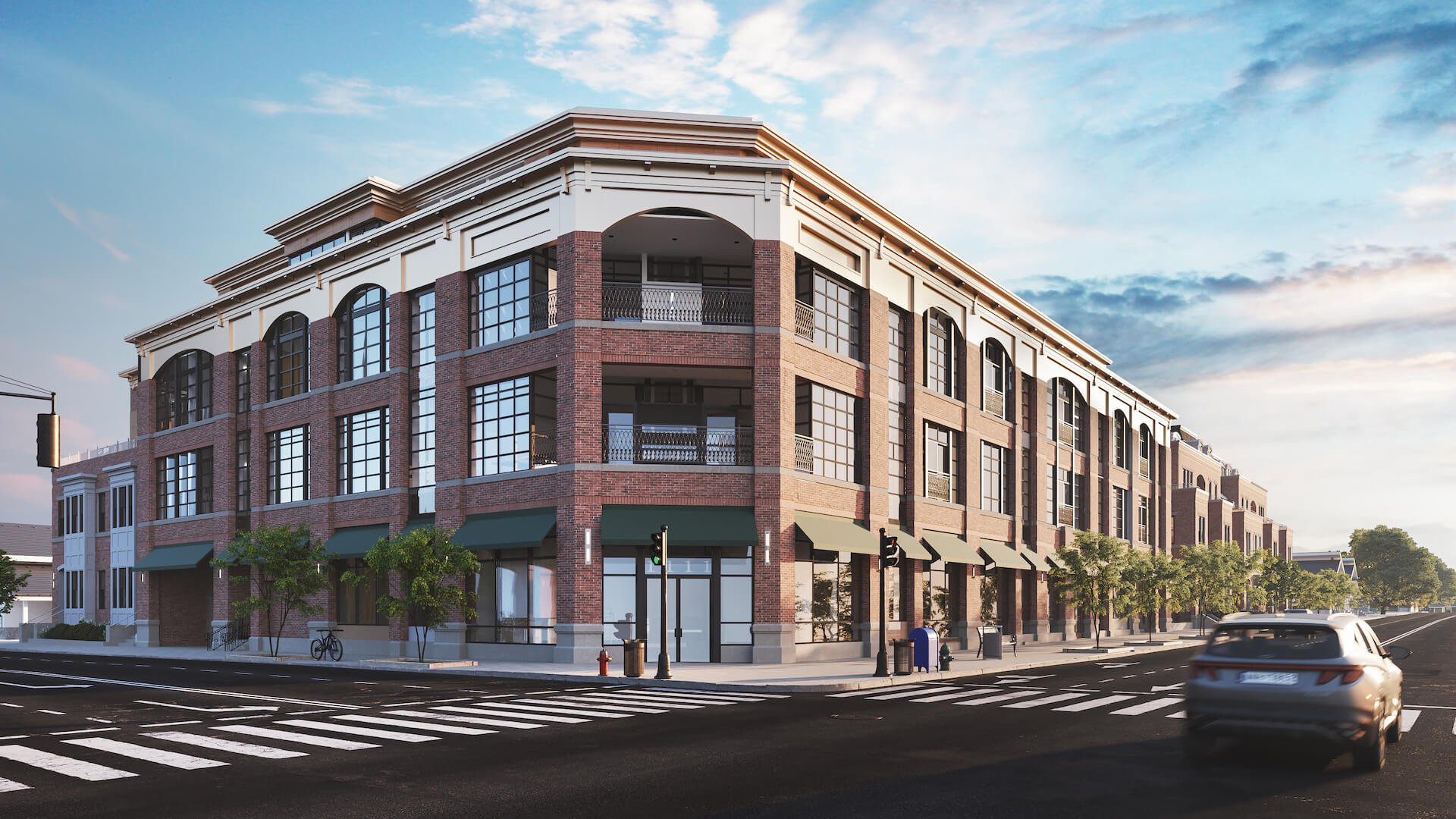
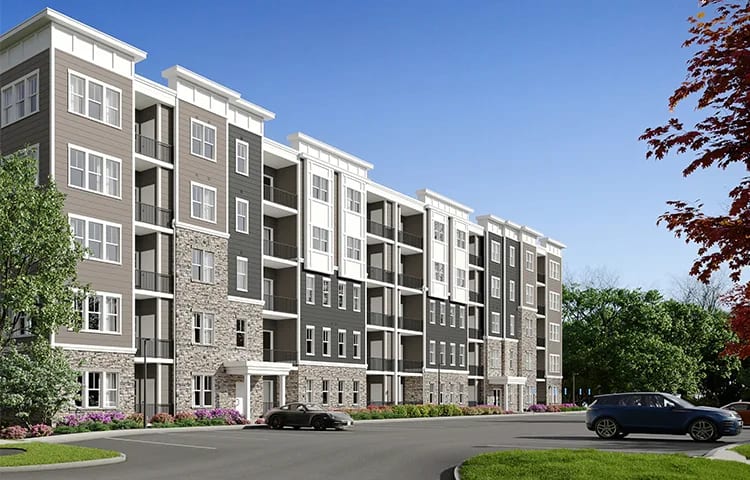
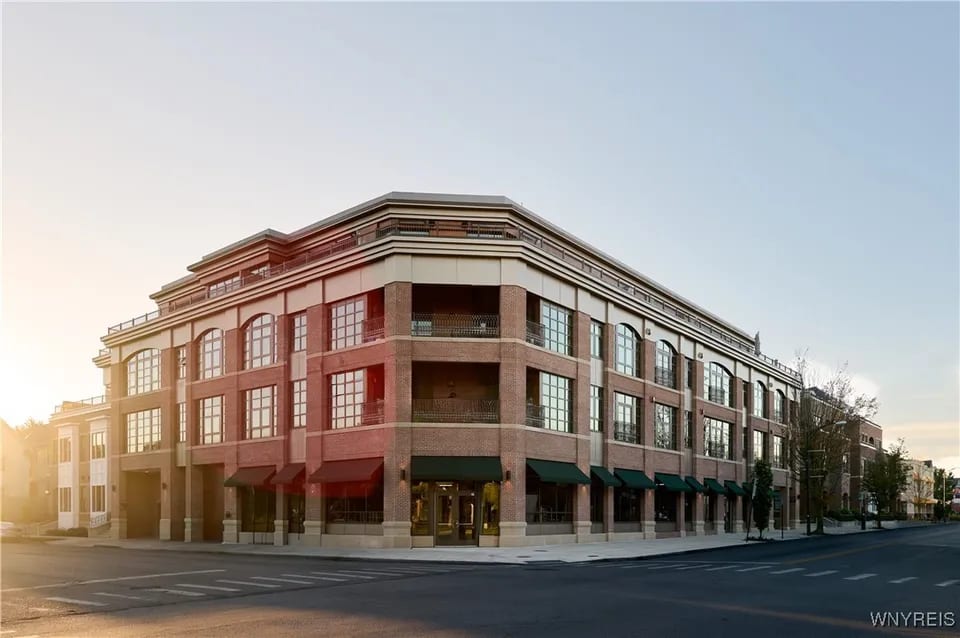
The design references Buffalo’s late 19th-century commercial brick architecture — arched windows, white cornice detailing, green-awninged ground-floor frontage — without cosplaying it. The close-up view leads with the entrance at street level, string lights, daylight on brick, the kind of detail that reads as neighborhood rather than development. The wider corner shot shows the full footprint meeting the street on both sides, with pedestrians and parked cars keeping it grounded.
One thing worth noting: Buffalo’s Green Code mandates construction up to the sidewalk line, no setback, no buffer. The facade comes straight to the pavement edge, the commercial frontage activates it, and people walk past at arm’s length. Getting that right in the render — the brick rising from the sidewalk, the arched entries at pedestrian scale, the street trees within that tight envelope — was what made the street presence read as intentional rather than compressed.
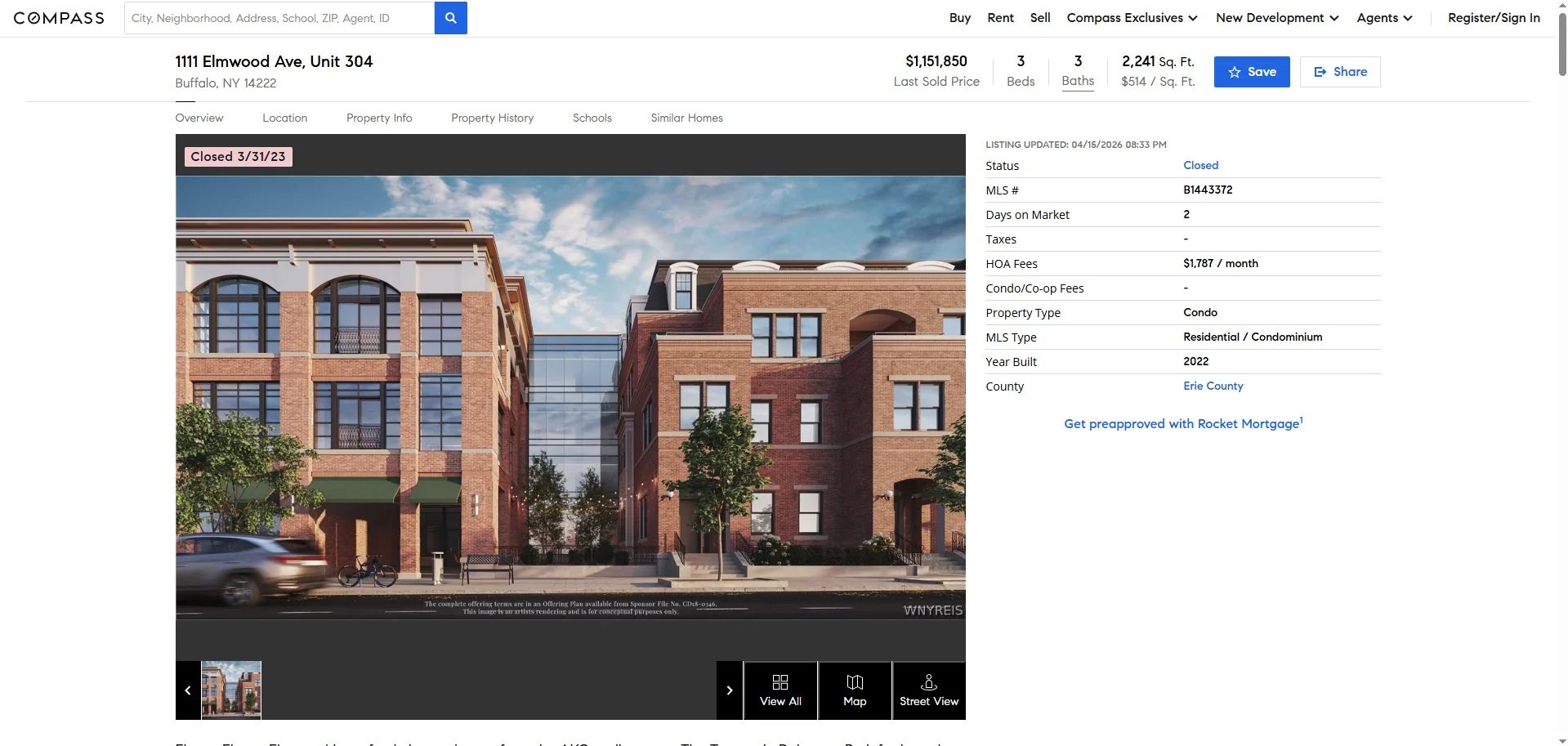
The project shows what 3D rendering for real estate developers can do in a market like this: the visuals carried the campaign through presale, across platforms, and into a completed development. Eleven Eleven was launching into a Buffalo luxury market with several competing developments active at the same time, and the renders were doing real sales work.
The first building sold out, with listings running on Zillow, Redfin, and Compass. The second followed — all units sold, penthouses first. You can see a photo of it below and judge for yourself how close the real estate rendering got.
#4. House Interior Renovation
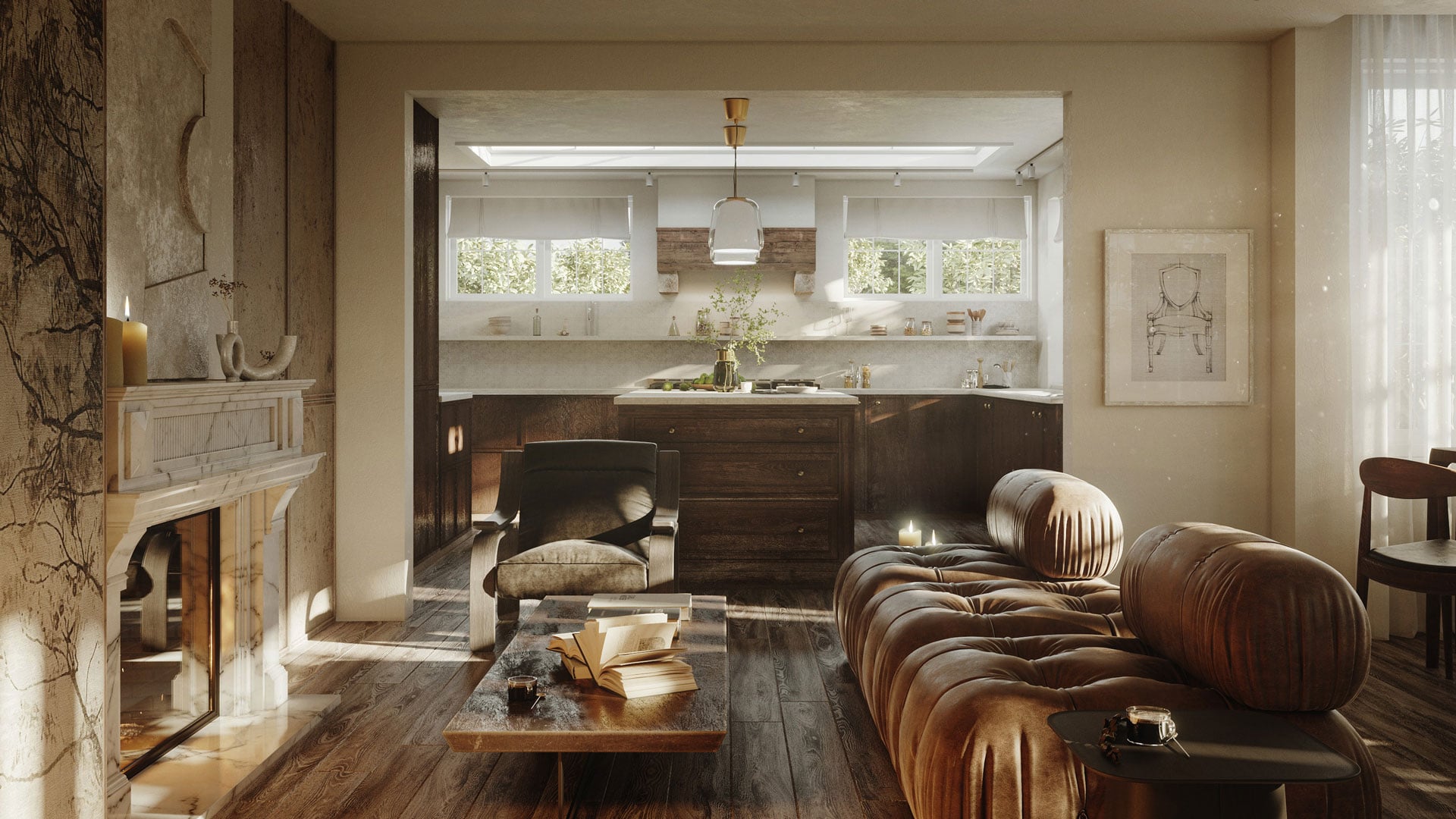
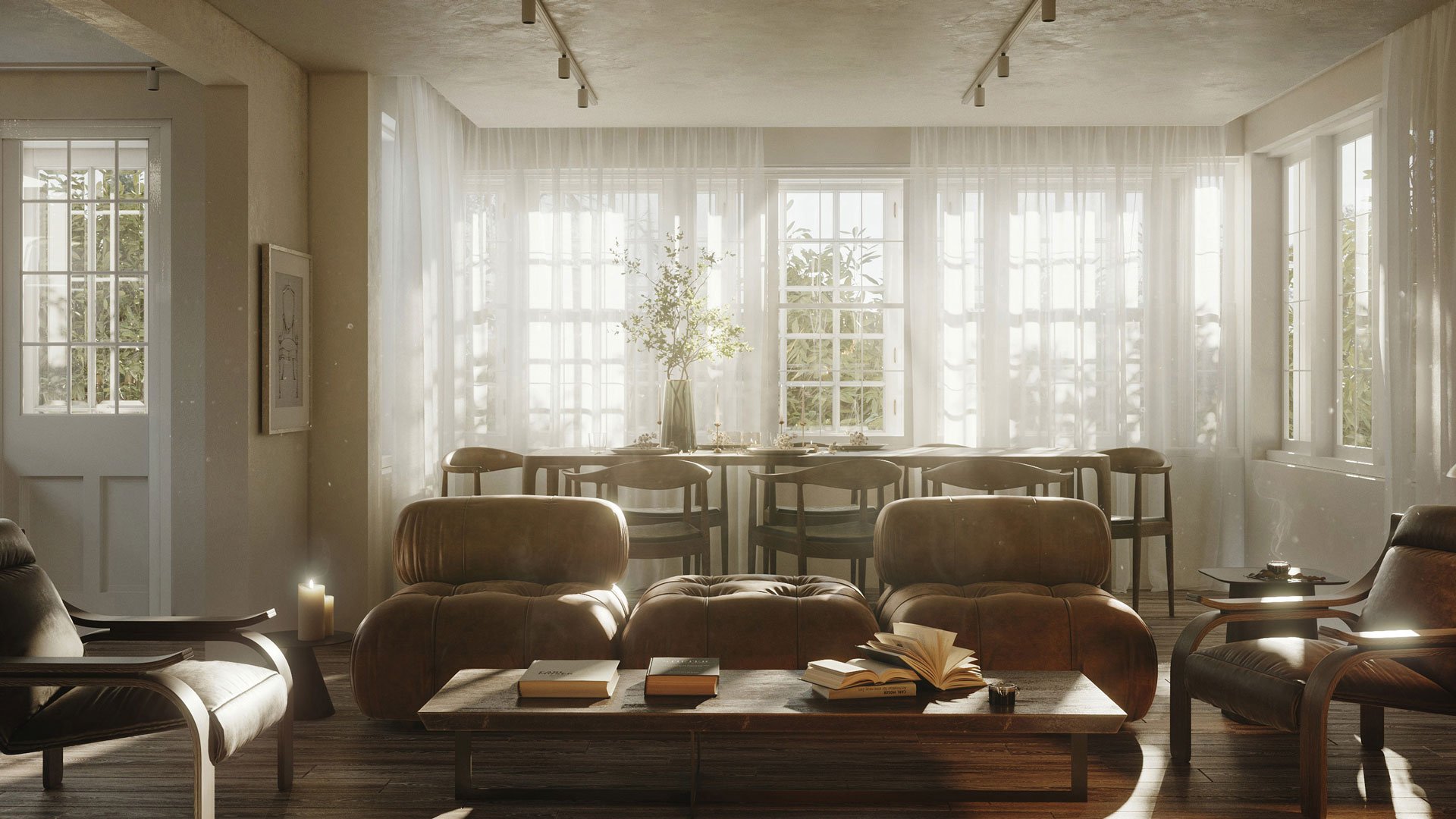
This project came from an interior designer working on a New York home renovation — specifically, a design proposal that needed to communicate not just layout and zoning, but atmosphere. The project included several renders of the space — wide shots and close-ups. The two main views show the living area from different angles: one anchored by the fireplace with the open kitchen visible beyond, the other looking toward the dining area through floor-length sheer curtains. Together they give the client a complete read of how the space flows and feels across different times of day.
The style is eclectic in the precise sense — not a mood board grab bag, but a considered layering of references that somehow holds together. The starting point is the Mario Bellini Camaleonda sofa in cognac leather, a 1970s Italian design that’s become a reliable anchor for interiors that want warmth without period cosplay. Around it: a carved stone fireplace that reads almost medieval, dark-stained wide-plank oak floors, plastered walls in warm off-white, and a kitchen with flat-fronted dark cabinetry and brass hardware. Postmodern, rustic, and classical in the same room — the render had to make that feel intentional rather than accidental.
Interior 3D rendering brings all of it together — the materials, the light, the props. The left view uses raking natural light from the kitchen windows to pick out the texture of the plaster walls and the grain of the wood floors, while candles on the coffee table add a secondary warm source that softens the foreground. The right view is more diffused — light floods in through the sheers, bleaching the background slightly and making the dining area recede, which keeps focus on the living space in the foreground. Neither view uses artificial overhead lighting, which is what gives both images their residential rather than staged quality.
The props do specific work too: an open book on the coffee table, a ceramic vase with dried stems, a cup left on the side table. These aren’t decorative afterthoughts — they’re what make the space read as inhabited rather than dressed.
For 3D rendering for interior designers, this kind of project is a strong use case. A client looking at a renovation proposal needs to feel confident about committing to an unconventional material combination before anything is purchased or built. A photorealistic render of the Bellini sofa against that fireplace wall closes that gap faster than any mood board.
Empower off-plan sales with detailed 3D visualizations
#5. Townhouse Development Project in New York State
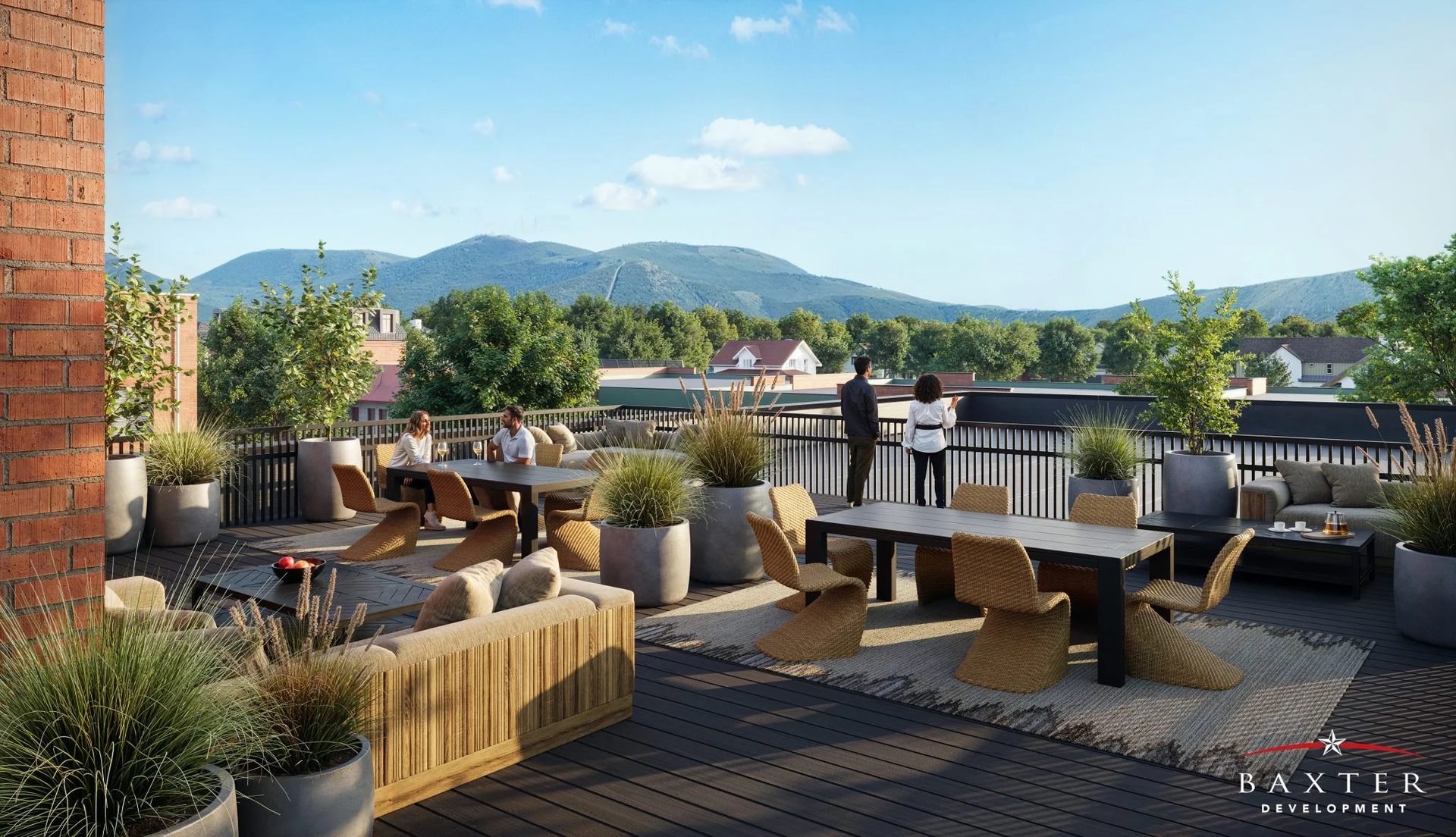
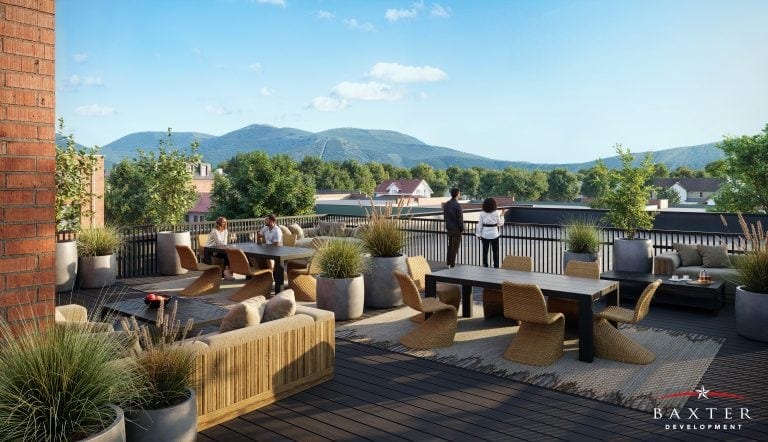
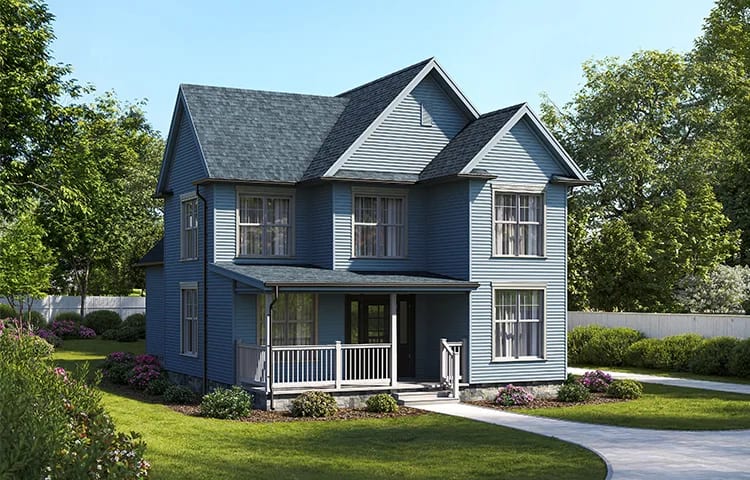
Baxter Built, a construction and development firm based in the Hudson Valley, commissioned ArchiCGI to produce visualization for a series of townhouse projects in Beacon, New York State. The scope covered both exterior and interior renderings, created to support sales and marketing ahead of construction.
On the exterior side, the main deliverable was a terrace render showing the townhouse within its actual urban context — surrounding buildings and street-level detail included. People and greenery were added in post-production to give the scene presence.
The interior work covered a living room, kitchen, and bedroom — each rendered with full material accuracy to reflect what the finished space would look like. Achieving that required detailed input on every project: floor plans for spatial accuracy, Google Maps data and site photography to correctly place the building in its real surroundings, material and finish samples for every surface, and furniture references specifying the exact pieces planned for each room.
For the full set of project imagery, visit the complete case study on townhouse rendering for New York real estate.
#6. Glamping Lodges CGI for Hyatt Unbound Collection
The Chatwal Lodge sits at the foot of the Catskill Mountains in New York State — an upper-upscale property within the Unbound Collection by Hyatt. In 2023, the hotel commissioned ArchiCGI to produce exterior and interior renders for a planned extension of the existing complex: three new glamping lodges and a poolhouse, all designed by architect Andreas Wenning of Baumraum.
The purpose of the imagery was straightforward — to let future guests see and book the lodges before they opened. The renders needed to communicate not just the architecture but the experience: the warmth of the interiors, the integration with the surrounding forest, the quality of materials. All eight images were delivered in 4K resolution.
The scope covered three exterior renders — an aerial rendering of the lodges, a close-up view, and a front view of the poolhouse — alongside five interior renders showing the main bedroom, living room, and poolhouse interior. To set the right atmosphere, all renders were produced in fall lighting, with the warm tones of the season reinforcing the secluded, nature-immersed character of the lodges.
The brief was detailed. The Hyatt team provided architectural drawings and a site plan, a building model in IFC format, aerial and eye-level photographs of the existing Chatwal Lodge grounds, photos of the hotel’s current buildings, a flooring and materials guide, a moodboard covering furniture and accessories, and reference images of similar lodges already built in Germany. That combination of technical documentation and visual references gave the artists a precise foundation — both for geometry and for the intended mood of each space.
The lodges opened in January 2024, and photographs of the finished build are available alongside the CGI — allowing a direct comparison between what was rendered before construction and what was actually built. See full project imagery, including renders and completion photos, in this glamping lodges rendering case study.
Upgrade your hospitality marketing with standout CGI
#7. Classical Townhouse in New York City


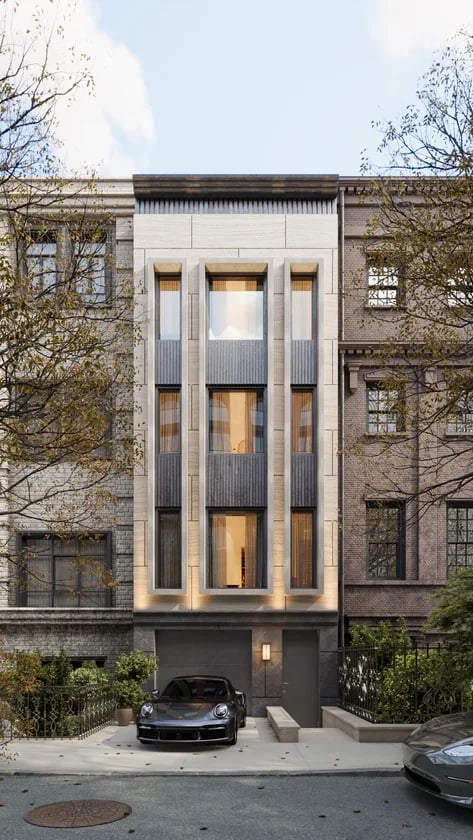
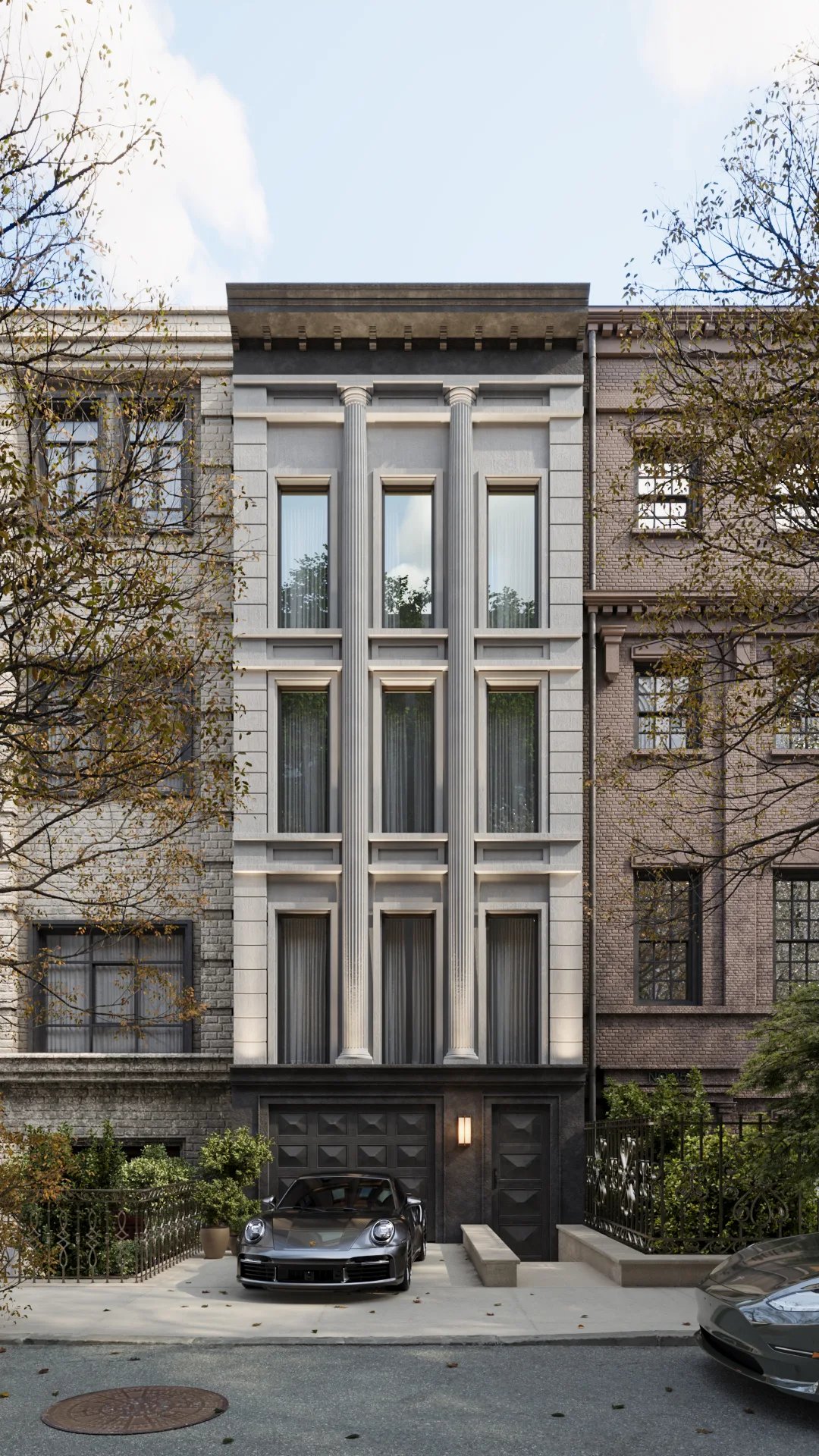
This project came to ArchiCGI at the design development stage. The townhouse rendering was delivered to support the approval process between the architect and their client, giving them a photorealistic read of the facade before committing to it. The input included CAD drawings, mood references, and the actual site location, which the team used to accurately recreate the surrounding streetscape. The team built the exterior scene and delivered a first version, both of which are available to view above. The client reviewed it, requested revisions, and the second version was produced and approved.
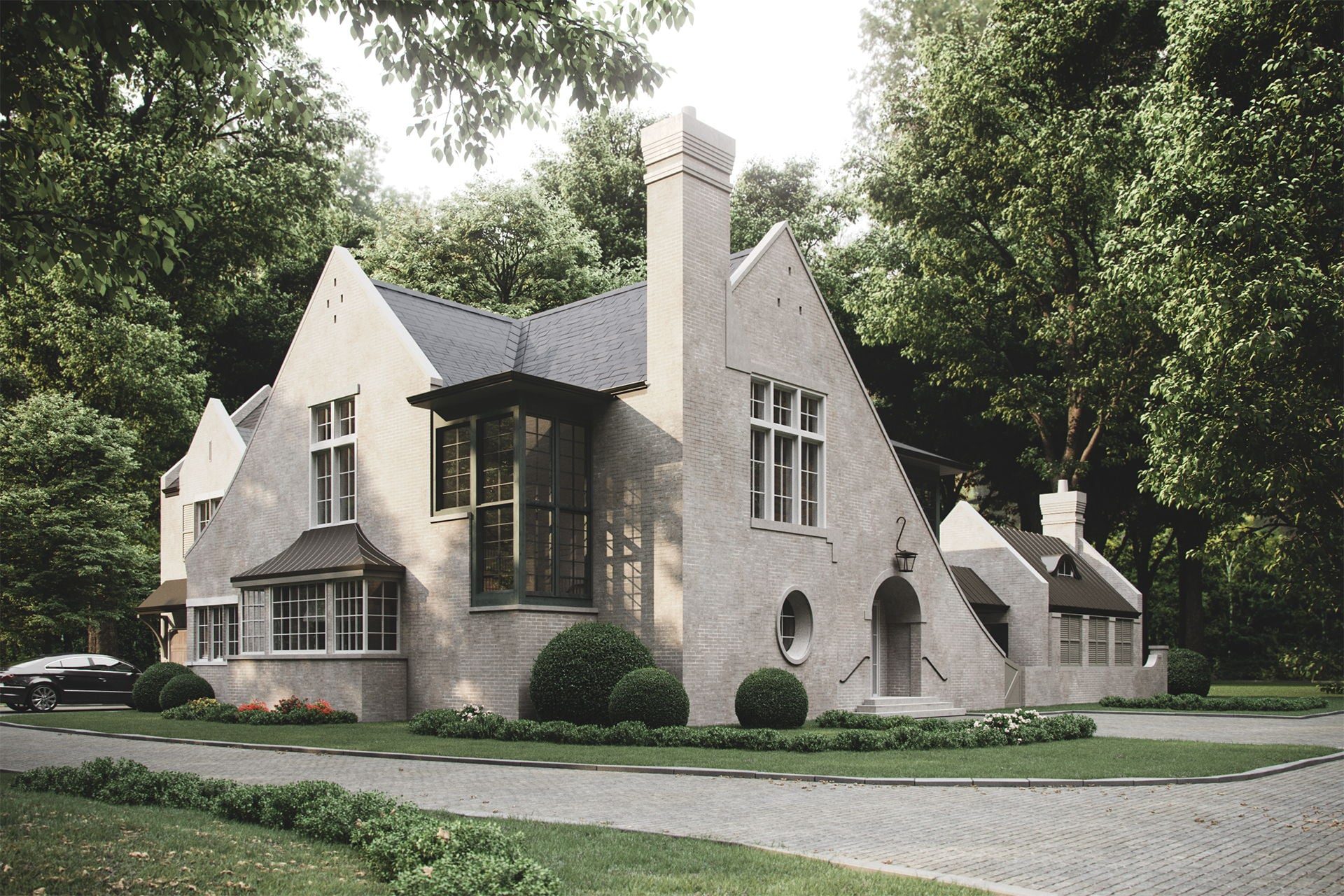
The building is a narrow multi-storey townhouse on a residential street in New York City, flanked by period neighbours on both sides. The design takes a classical direction — fluted pilasters running the full height of the facade, deep cornice detailing at the roofline, recessed panelled windows, and a rusticated base with garage access at street level. The material palette is restrained: light stone finish on the facade against dark metal for the garage doors and entrance. A Porsche parked at the kerb and street trees round out the scene, grounding the building in its urban context.
The surrounding streetscape was incorporated into the render to show how the new facade sits within an existing row of older buildings — a relevant consideration for a design approval render, where the question is not just whether the building looks good in isolation but whether it holds its own on the block. It’s a strong example of what 3D rendering in New York can achieve when the goal is design approval.
#8. Mixed-use Development in Lower Manhattan
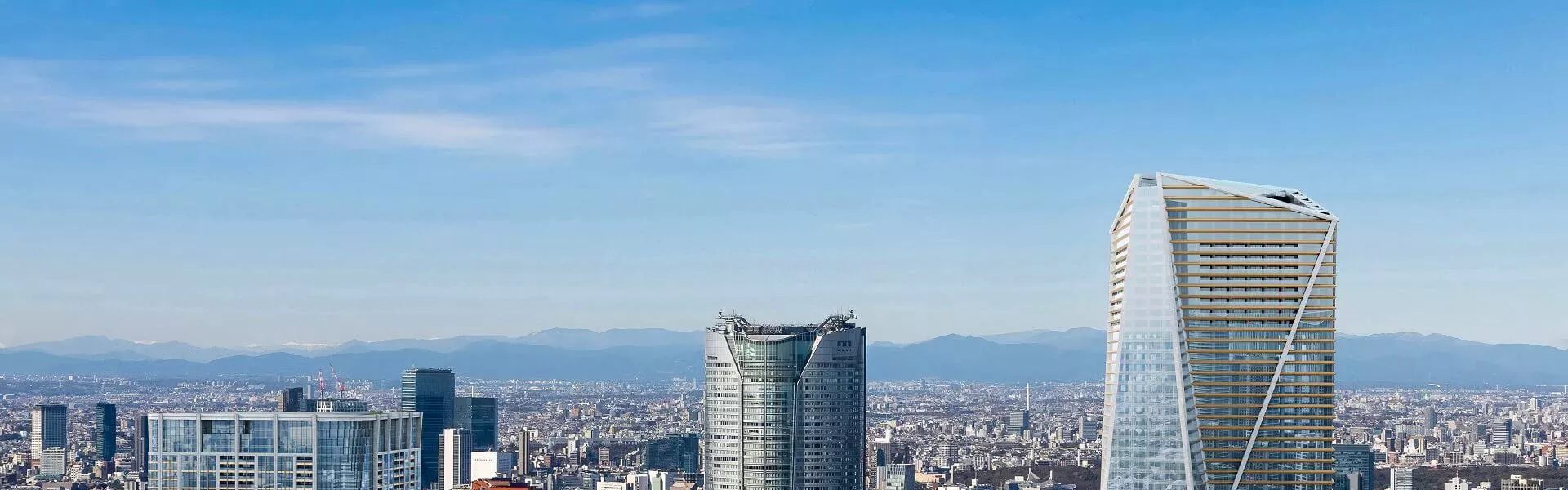
This project came to ArchiCGI from Studio SC, a Brooklyn-based architecture and design studio working across residential and commercial development. The client commissioned the architectural renderings for its 17-story mixed-use tower rising above a restored four-story brick base at the corner of Broome and Essex Streets in Lower Manhattan, New York, USA.
The streetscape renderings were then used on Studio SC’s homepage and the dedicated 232 Broome Street project page. They also support pre-construction marketing, appear in press coverage of the development, and illustrate listings for the nine condominium units and commercial space still available for purchase. Published across LinkedIn and Instagram as well, the architectural renderings kept the project visually consistent from first announcement through sale, giving stakeholders a clear read on how a new residential tower can rise from a preserved shell without breaking the street’s character.
#9. The Preserve at Indian Hills, Huntington, Long Island
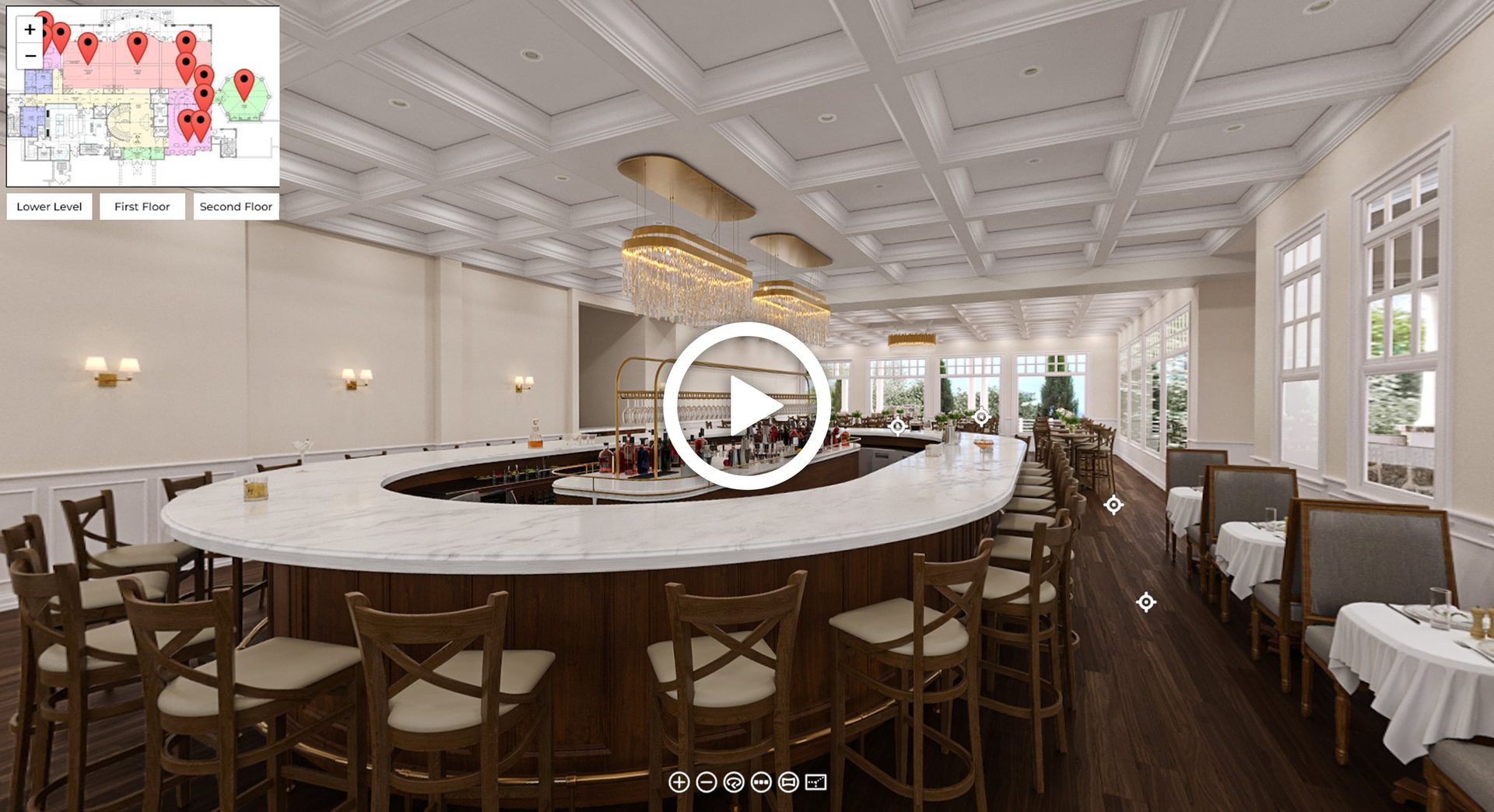
Virtual tour rendering of an elegant country club restaurant with a curved bar and dining area
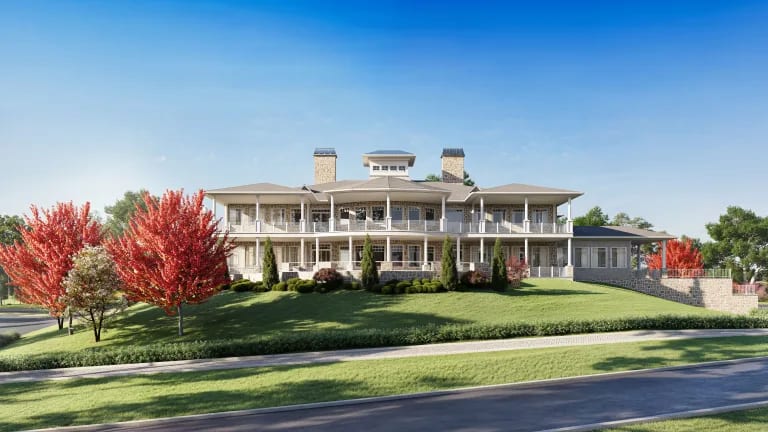
ArchiCGI produced a full visualization package for The Preserve at Indian Hills, a 55+ residential community in New York State. The project was developed by Northwind Group, a developer of high-end active-adult communities. The design follows a Hamptons-style direction and is located within a setting connected to the Indian Hills Country Club. The client used the visuals for pre-sale marketing, publishing them on the official project website and in online brochures ahead of construction completion.
The scope of work covered:
- 8 renderings of condominium interiors
- 8 exterior views of the clubhouse, the fitness facility, and residential buildings
- 2 CG floor plans of the clubhouse’s two levels
- 1 virtual 3D tour of the clubhouse, also delivered as a VR walkthrough
Above this passage, you can see the virtual 3D tour. You can find the entire project output, including 3D floor plans and interior and exterior renderings, in the dedicated case study on 3D visualization for luxury New York real estate.
The virtual 3D tour allowed stakeholders to navigate all three clubhouse floors and the terrace before construction was complete. Sales managers used the tour to move past layout questions and into finish selections. Overall, the CGI solutions delivered gave Northwind Group’s sales team one consistent set of visuals for the full pre-sale process, from first listing to final walkthrough.
Want to learn how much your project costs? See how we evaluate 3D rendering projects
Those were our examples of 3D architectural rendering for New York projects. Hopefully, you found them inspiring and, perhaps, got a couple of ideas for your own next concept presentation. Soon, we will share more case studies about projects in New York and other states. So, stay tuned!
Looking for 3D rendering services in New York to visualize your projects? Contact ArchiCGI and get visuals that will dazzle your clients at your next presentation!

Ana Wayne
Content Writer, Copywriter
Ana is a content writer for ArchiCGI. She has a passion for design and architecture - and for talking about it. Outside of work, she is a fan of sci-fi movies and a street food connoisseur.
Like this project? We’ve got plenty more! Check out these CGI beauties.