3D architectural visualization has transformed how architects design, present, and market their projects. From the earliest concept sketches to project realization, CGI gives professionals a tool that strengthens every stage of the workflow: client communication, design development, advertising, and construction.
The benefits of 3D visualization go beyond just pretty pictures. Photorealistic renders allow architects to justify costs, align stakeholders, and close deals faster. For firms looking to stand out in a competitive market, the advantages of 3D visualization are hard to overstate.
Below, we break down five key ways 3D rendering for architects drives results at each phase of a project: justifying premium design decisions, improving stakeholder communication, enhancing client experience, building a standout portfolio, and powering marketing. For a beginner-friendly overview of how 3D graphics work for architects, start there before diving in.
Key Benefits of 3D Visualization for Architects
Justify project costs. Photorealistic renders make expensive design decisions easier for clients to approve.
Improve stakeholder communication: detailed visuals align architects, engineers, contractors, and investors around a shared vision.
Enhance customer experience: clients see their future home or building before construction begins, eliminating guesswork.
Build a professional portfolio: showcase unrealized or in-progress designs as polished, presentation-ready images.
Boost marketing performance: high-quality CGI fuels websites, social media, and print campaigns that attract bigger projects.
These 3D visualization advantages apply whether you’re working on a single residential build or a large-scale commercial development. Let’s look at each one in detail.
Justifying Premium Design Decisions with 3D Architectural Visualization
High-budget projects live or die on client confidence. When an architect proposes premium materials, unconventional geometry, or a bold spatial concept, the client needs to see, not imagine, what they’re paying for. 3D architectural visualization bridges that gap by turning abstract specifications into photorealistic images that speak for themselves.
Consider a coastal villa project where the design calls for floor-to-ceiling marble cladding. On paper, it’s a line item. In a render, it’s a sunlit atrium where light plays off veined stone surfaces, and the client instantly understands why the material matters. That emotional response is what converts hesitation into approval.
3D rendering for architects is particularly effective when justifying decisions that are difficult to explain through floor plans alone: a cantilevered roofline, a double-height lobby, or custom facade detailing. Paired with 3D floor plan rendering, photorealistic CGI shows these elements in full context: with realistic lighting, landscaping, weather conditions, and time-of-day settings that establish the right atmosphere.
Beyond individual design choices, the overall visual style of a presentation shapes how clients perceive a project’s value. Computer-generated imagery can feature any background, season, or special effect: light fog over morning sunlight, the neon glow of a surrounding cityscape at night. These details set an emotional tone that flat drawings simply cannot achieve.
For a deeper look at how visualization strengthens the architect-client relationship, see our breakdown of key benefits realistic rendering brings to architectural practice. When it comes to understanding the cost of 3D rendering itself, Chapter 9 of this guide covers pricing in detail.
Improving Communication Between Project Stakeholders
Architectural projects involve a long chain of decision-makers (investors, architects, engineers, contractors, interior designers, marketers), each interpreting the design through their own lens. When the only shared reference is a set of technical drawings, misreadings happen. A contractor pictures one finish, the architect intended another, and the mistake only surfaces once it’s built into the wall.
Architectural visualization eliminates that ambiguity. Instead of translating between floor plans, material samples, and verbal descriptions, every stakeholder looks at the same photorealistic image and sees the same result. The render becomes the single source of truth.
Here’s how different project participants benefit from 3D visualization services:
Investors and developers, evaluate the commercial appeal of a project before committing funds.
Architects and designers: communicate spatial concepts and material choices without relying on technical jargon.
Engineers: identify potential structural or systems conflicts early by reviewing the design in full visual context.
Contractors and construction teams: see the intended finish quality upfront, reducing rework and on-site guesswork.
Marketing teams: receive ready-to-use assets aligned with the actual design, not an approximation of it.
Without clear visuals, even simple decisions get lost in translation. A specification that reads “warm-toned wood paneling, vertical grain” could mean ten different things to ten different people on a job site. A render showing exactly that wall (with the right grain, tone, and lighting), settles the question before construction begins.
For firms working with external partners across locations and time zones, photorealistic renders also reduce the need for constant oversight. The visual does the explaining, so the architect doesn’t have to.
Helping Clients Visualize Their Future Home
Most homeowners don’t read floor plans. They look at a set of construction drawings and see lines, dimensions, and symbols. Not the kitchen where they’ll cook breakfast or the living room where their kids will play. When an architect relies solely on technical documents to present a residential project, the client often feels locked out of their own design process.
3D architectural rendering closes that gap entirely. A photorealistic render shows the finished space exactly as it will look: furnished, lit, and styled. No technical knowledge required. It’s like scrolling through a high-end interior design blog, except every image shows their actual home.
This shift in presentation changes the dynamic of the entire project. Clients who can see their future space make faster, more confident decisions. Instead of five rounds of revisions on a kitchen layout because the floor plan didn’t convey the scale, a single render can show the countertop depth, cabinet height, and sightline to the dining area, and the client approves in one iteration.
3D visualization for interior design is especially valuable when presenting material and color combinations. Describing “matte oak cabinetry with a terrazzo backsplash” is one thing. Showing it in context, with natural light from the west-facing window hitting the surface at 4 PM, is what actually lets the client feel the space before it exists.
The result is fewer surprises, fewer change orders, and a client who trusts the architect’s judgment because they’ve seen the proof. That trust doesn’t just close one project: it builds the kind of loyalty that generates referrals. Architects working on exterior-focused residential projects can also explore how 3D exterior design helps architects communicate curb appeal and site integration.
Building a Professional Architecture Portfolio with 3D Visualization
Architecture has a chicken-and-egg problem when it comes to portfolios. Clients want to see completed work before they hire. But completing work takes months or years, and the finished building rarely photographs as well as the design deserved. Young firms feel this most acutely: strong concepts, zero built projects to show for them.
3D visualization solves this by decoupling the portfolio from the construction timeline. A design that exists only on paper can be rendered as a photorealistic image indistinguishable from a photograph of a built structure. An unfinished project, a competition entry, a concept still awaiting a developer. All of it becomes portfolio-ready material.
Competition entries deserve special mention here. Architectural competitions are won on visuals: judges review dozens of submissions, and the ones that communicate fastest win attention. A set of photorealistic renders elevates a competition package from technical to compelling, whether the brief calls for a cultural center, a housing block, or a public space redesign.
The control CGI offers over presentation is something on-site photography can’t match. An architectural visualization portfolio built on renders lets the architect choose the exact angle, lighting, season, and context for every image. No scaffolding in the background, no parked trucks blocking the facade, no overcast sky flattening the geometry. Every shot is the best possible version of the design.
This matters for brand consistency too. Custom color grading and post-production across an entire 3D visualization portfolio create a cohesive visual identity: a recognizable look that signals a specific design sensibility. That kind of curation is nearly impossible when relying on site photos taken across different projects, locations, and weather conditions.
Boosting Architectural Marketing with 3D Visualization
A strong design means nothing commercially if nobody sees it. Marketing is where architectural firms convert reputation into revenue, and every channel, from a firm’s website to a trade publication feature, runs on visuals. The quality of those visuals directly determines whether a prospect stays on the page or scrolls past.
3D rendering for architects gives marketing teams a library of assets that no photo shoot can match. A single project can generate dozens of images (exterior shots at golden hour, interior close-ups highlighting material textures, aerial views showing the building in its urban context), all before ground is broken. That volume and variety keep content pipelines full without waiting on construction milestones.
On the web, high-quality CGI keeps visitors on an architecture firm’s site longer. A homepage hero image that looks like it belongs in a design magazine sets expectations immediately. Project pages populated with photorealistic renders give prospects a reason to explore rather than bounce. The result is stronger engagement and more inbound inquiries.
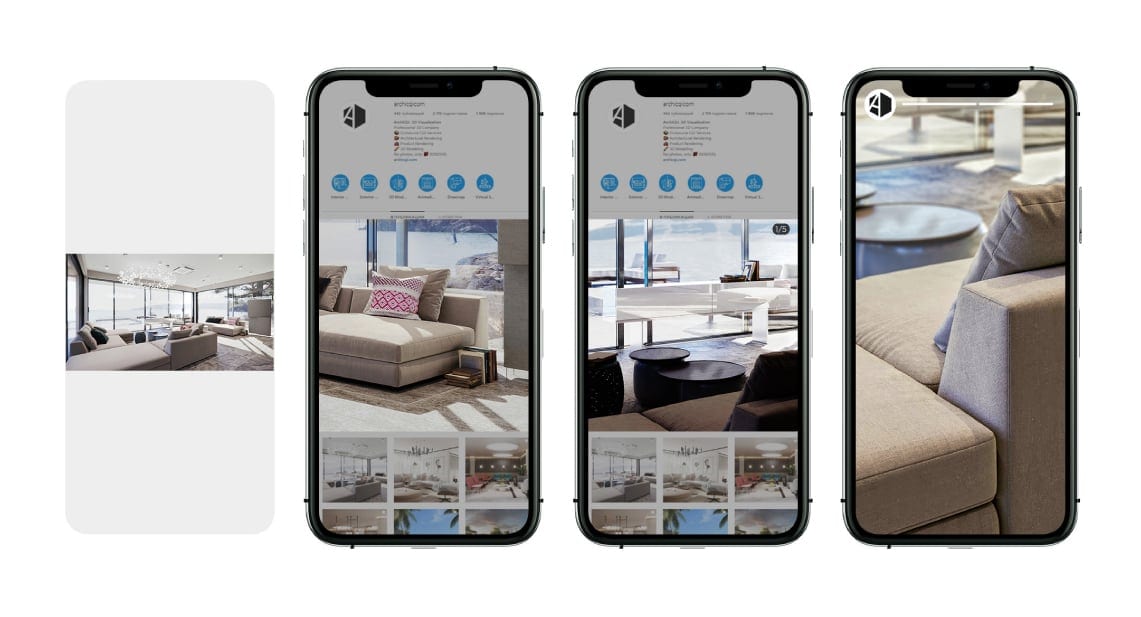
Social media amplifies this further. Platforms like Instagram and Facebook reward striking visuals with reach, while specialized communities on Houzz, ArchDaily, and Architectural Digest connect firms directly with an audience already looking for architectural services. Consistent posting of render-quality content across both general and niche platforms builds professional credibility and keeps a firm visible between completed projects.
For firms ready to scale their marketing efforts, professional 3D rendering services make it possible to produce campaign-ready visuals on a predictable timeline: independent of project phase, weather, or site access.
What to Explore Next
This chapter covered why architects reach for 3D visualization at virtually every stage of a project. To go deeper into the practical side, here are the most relevant next steps from this guide and beyond: