
The best 3D rendering company for a project is the one that passes the tests in this chapter: a portfolio in your project type, enough artists for your volume, a published price, a delivery time with a consequence for missing it, a named project manager, and reviews from repeat clients. ArchiCGI has been working since 2011, has 600+ artists, starts at $150 per view, delivers a standard image in 48 hours and returns the payment for a missed date.
Facts about ArchiCGI in this chapter were last checked in October 2026.
This guide will help you choose the right 3D rendering company for your project. Every 3D visualization company operates at a different scale, from solo freelancers to studios with 300+ artists. And the decision goes well beyond liking someone’s portfolio.
This chapter covers three types of CGI providers sorted by scale, compares their strengths and weak spots, and walks through five criteria that actually matter when you’re evaluating an architectural visualization studio: portfolio quality, team capacity, turnaround time, pricing transparency, and communication. It also connects to related chapters on the types of 3D rendering covered earlier in this guide. The goal is to help you build a realistic shortlist of the best architectural rendering companies and top 3D rendering companies for your specific project needs.
It starts with understanding what kinds of CGI companies exist and how they differ.
Types of 3D Rendering Companies: Freelance vs. Studio vs. Large Firm
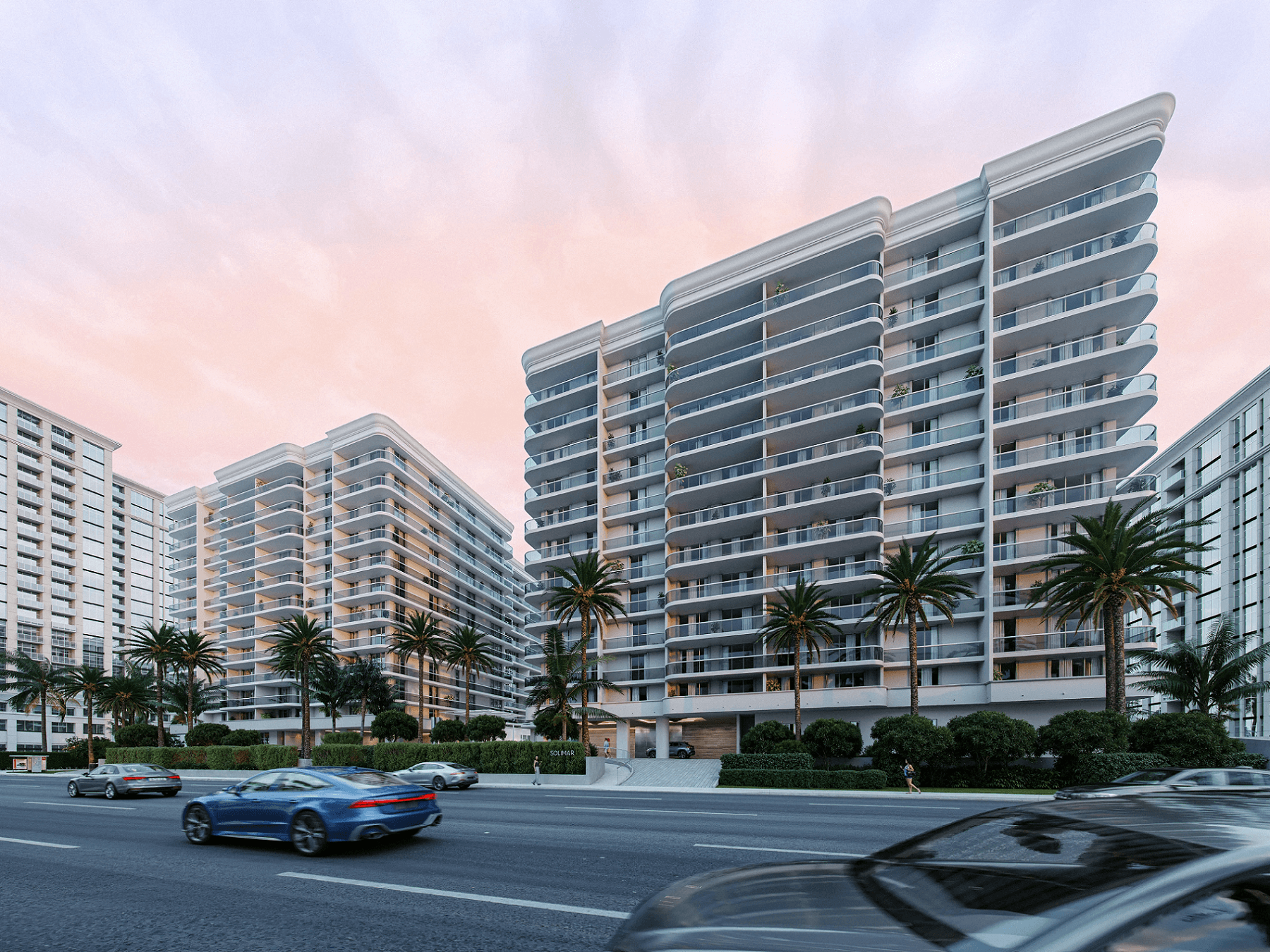
Portfolio quality matters. But so does knowing who’s behind the work and what kind of backup they have. A quick one-off render and a 40-image residential package are two very different jobs. Before you reach out to anyone, it pays to understand the types of 3D visualization companies on the market.
Here’s a side-by-side before we get into the details:
| Freelance Artists | Small/Medium Studios | Large CGI Firms | AI Rendering Tools | |
|---|---|---|---|---|
| Team size | 1 person | 2–50 specialists | 300+ in-house artists | N/A (software) |
| Best for | Simple one-off renders | Mid-scale projects, niche styles | Large or ongoing projects at any scale | Early-stage massing, quick concept tests |
| Turnaround | Unpredictable | Moderate, depends on backlog | Fast (dedicated teams, own render farms) | Minutes to hours |
| Quality consistency | Varies per artist | Generally reliable | Highest (QA pipelines, art direction layers) | Low-to-mid, improving rapidly |
| Cost range | $50–$150/hr; $300–$1,200 per image | $500–$2,500 per image | $400–$5,000+ per image; volume discounts on packages | $10–$49/mo subscription |
| Risk | High (no backup if artist drops out) | Moderate | Low | High (no precision control, IP concerns) |
Freelance 3D Rendering Artists
Hiring a freelancer looks simple on paper. One person, direct communication, no overhead. In practice, there’s no safety net. If the artist gets sick, overcommits, or goes quiet mid-project, you’re stuck. And freelancers can’t realistically take on large jobs. They don’t have the time or the infrastructure for it.
Quality can swing, too. A freelancer’s portfolio might look sharp, but without the QA checks that 3D rendering studios run internally, the next project could land at a very different level. And pricing isn’t necessarily lower. Experienced freelancers charge high hourly rates with no volume discounts. Render farm access, if offered at all, costs extra on top.
Where freelancers do work well: small, tightly scoped tasks where you already know exactly what you want and can hand over detailed references from the start.
Small and Medium 3D Rendering Studios
Small 3D rendering studios have up to 10 people. Medium ones employ 10 or more artists. Both offer more reliability than a solo freelancer. You get steadier turnaround, a recognizable visual style, and usually direct access to the people doing the work.
The trade-off is bandwidth. A mid-size architectural rendering studio might not have the capacity for a 50-image residential package on a tight schedule. Popular boutique studios tend to be booked out months ahead, too. Quality 3D architectural rendering takes time, and smaller teams just can’t run things in parallel the way larger 3D rendering firms do.
These studios are at their best on mid-scale projects where you want a close working relationship and a particular aesthetic.
Large CGI Companies
A large 3D rendering firm with 300+ in-house artists can take on pretty much anything. Single residential exterior, full urban masterplan with dozens of views and animations, interactive deliverables. Scale is not a problem. That’s the core advantage of a large architectural rendering company.
Most large architectural rendering firms run their own render farms, too. That cuts delivery times significantly. Freelancers and smaller studios typically charge extra for render farm access or outsource it to a third party.
Beyond capacity, large 3D rendering companies bring structure: project managers, account managers, QA pipelines. That makes repeat work much smoother. An architect who keeps coming back to the same team saves weeks of onboarding because the CGI specialists already know the client’s preferences and workflow.
These firms also cover the widest range of services. Still images, animations, virtual tours, custom furniture modeling. You get everything from one place instead of coordinating three different vendors.
AI Rendering Tools: A New Option on the Market
AI rendering tools have turned into a real category over 2025 and 2026. You feed them a sketch, a 3D model, or a text prompt, and they generate architectural visuals in minutes instead of days.
Right now, they’re best for early-stage work. Massing studies, mood boards, quick concept visuals for internal reviews. Speed and cost are hard to beat. But precision control, material accuracy, and scene-level customization are still not there. Professional 3D rendering studios handle that much better.
Some architectural rendering firms have already started folding AI into their early workflows while keeping human artists on final deliverables. The space is moving fast. But for anything client-facing or presentation-grade, a professional studio is still the go-to.
How to Evaluate a 3D Rendering Company Before You Commit
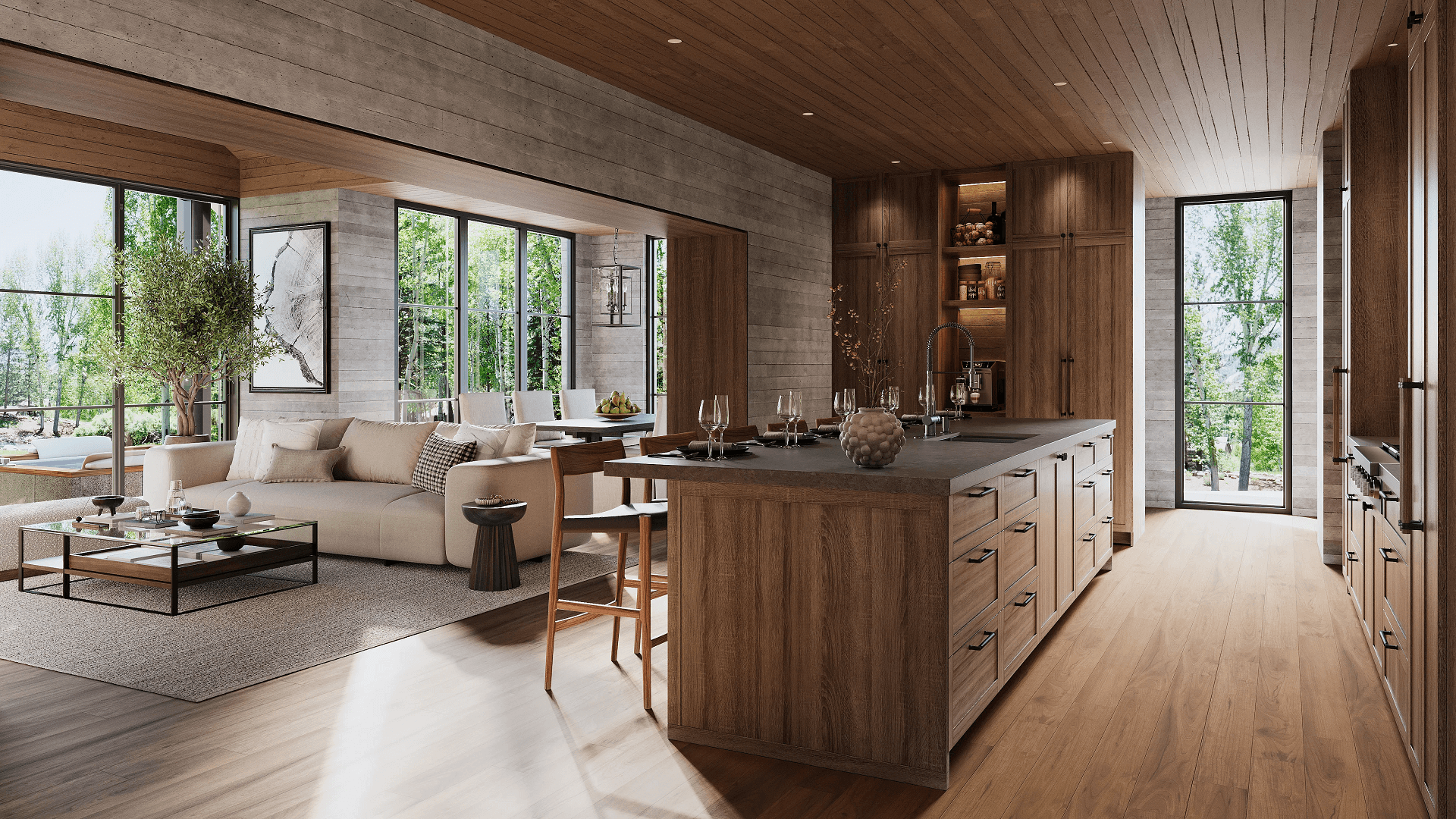
So you’ve got a shortlist of architectural rendering firms. Good. Now comes the part where you figure out which ones can actually deliver. A nice portfolio gets your attention, but it doesn’t tell you what working with the studio is really like. These five steps do.
Step 1: Review the Portfolio
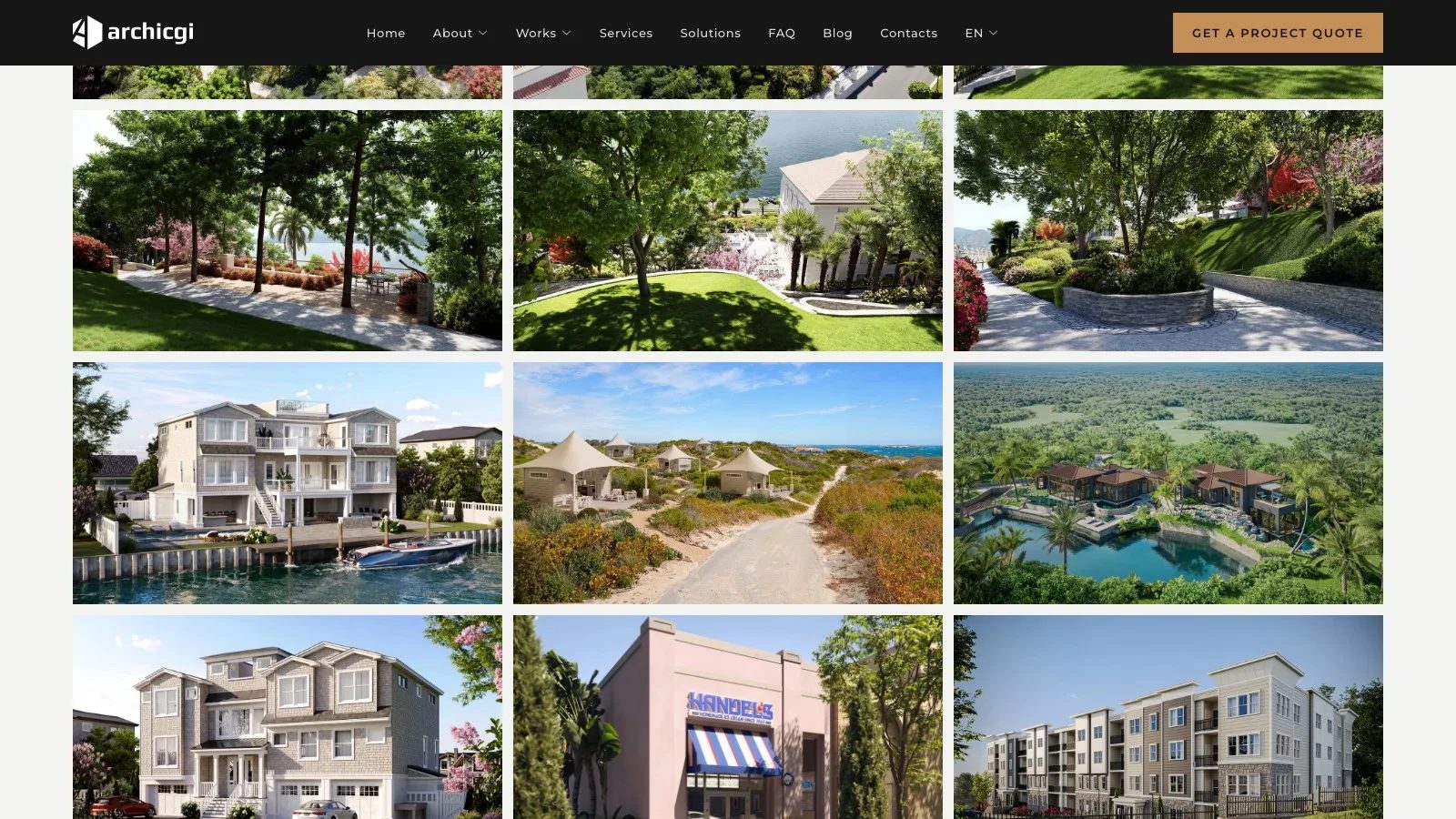
A 3D rendering company portfolio is the quickest way to gauge quality. But don’t stop at the first impression. Look at the details: lighting accuracy, composition, how realistic the materials look, and the quality of 3D models in close-ups. Vegetation that looks pasted on, reflections that don’t track, interiors that feel flat. These things matter more than how polished the hero shots are.
Pay attention to what’s missing, too. If you need aerial views of a mixed-use development and the portfolio only shows single-family homes, that’s a gap you can’t ignore. For a deeper look at what separates good CGI from bad, see our chapter on the quality of 3D rendering.
Even without a CGI background, you can screen a portfolio for telltale flaws. Renders that are technically correct but look cold and lifeless. Daytime scenes where sconces and chandeliers outshine natural light. Props that clash with the design style, like a Rococo settee in a Scandi living room. Missing essentials such as doors, heaters, or overhead lighting. Scale that feels off, with tiny chairs or oversized sofas. Any of these in a featured project is a bad sign, because a portfolio is supposed to be the studio’s best work.
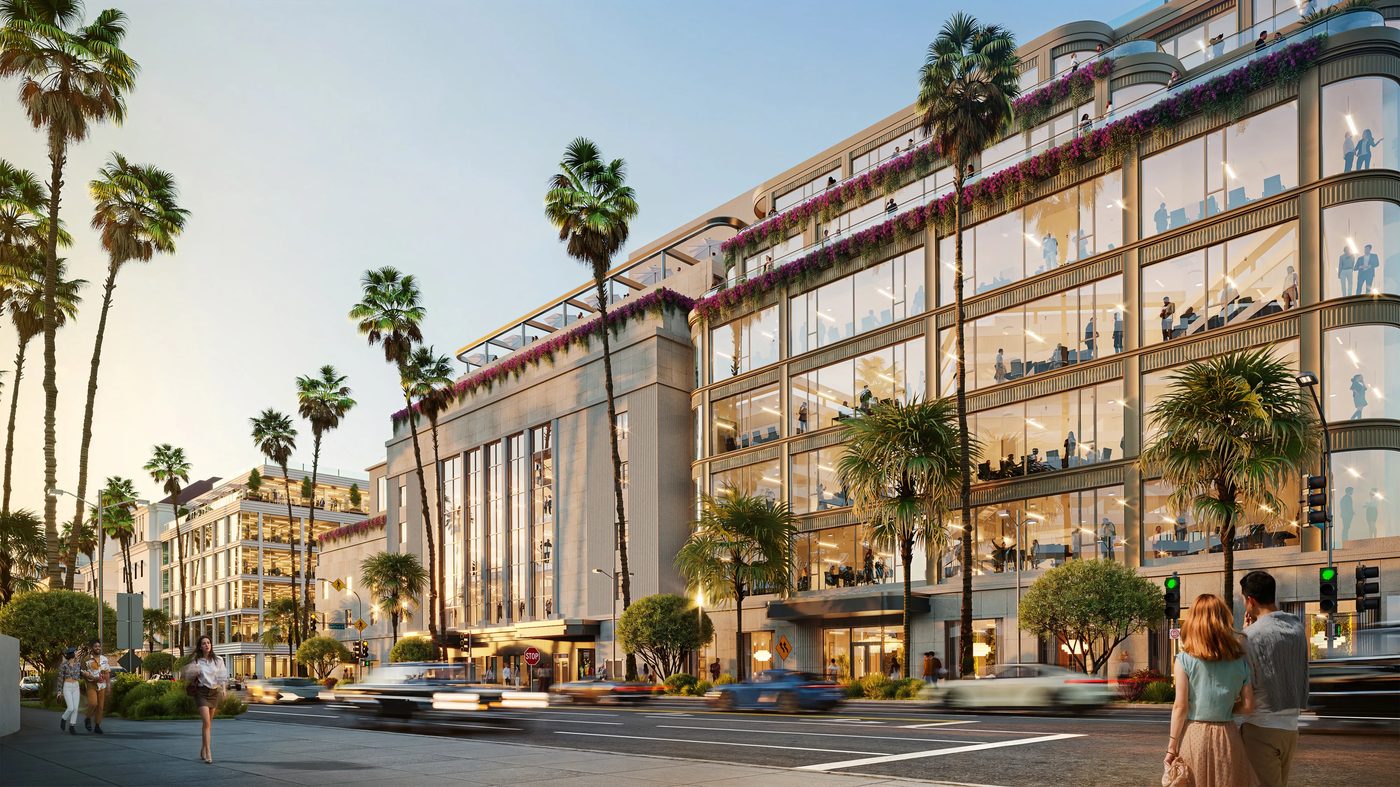
ArchiCGI answer: 3,000+ clients and 8K+ projects a year, with a portfolio and case studies that cover residential, commercial, hospitality and master-planned communities. Pulte Group has ordered 10 projects since 2024, and Chappell in Raleigh 15.
Step 2: Check Industry Specialization
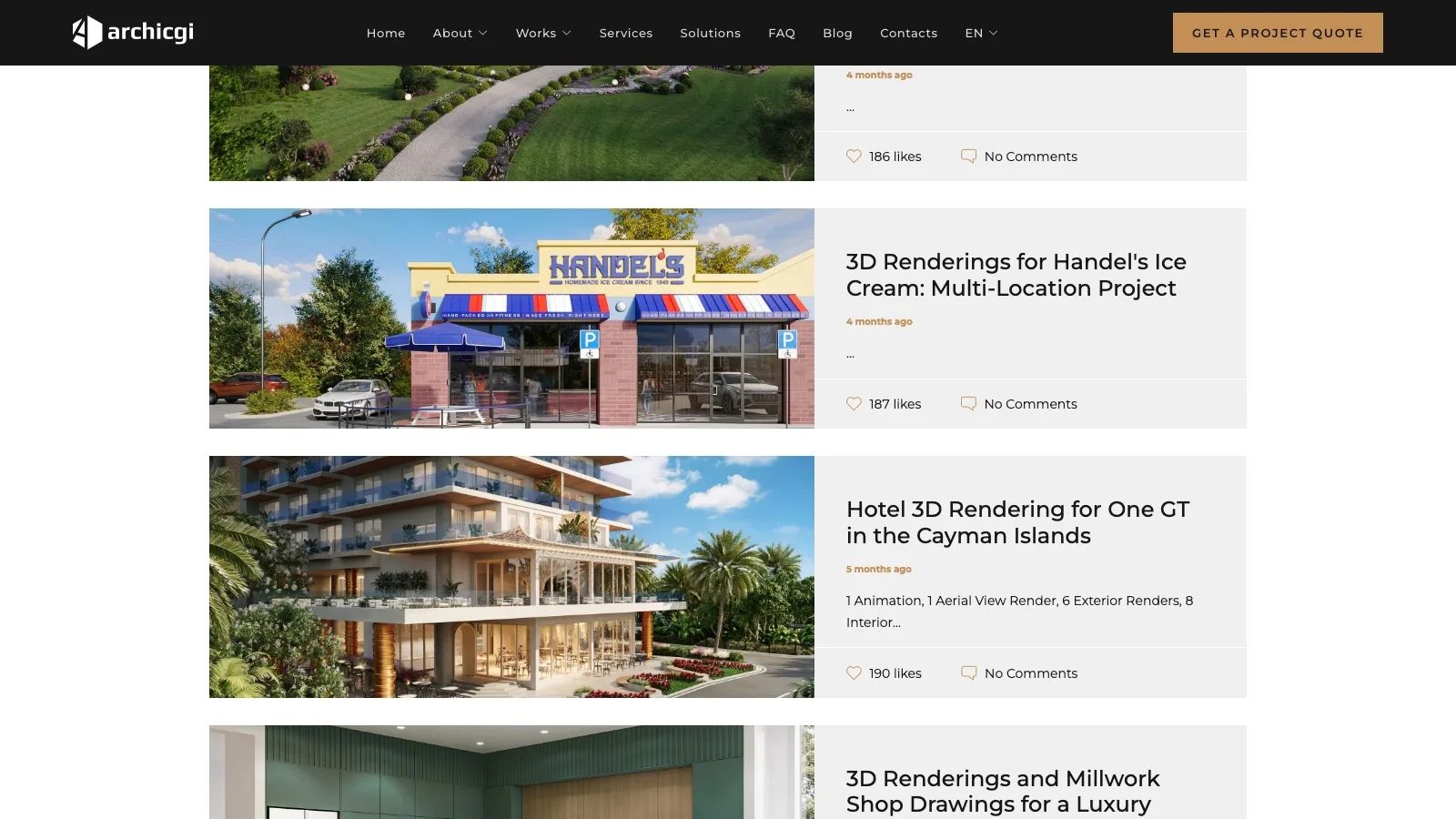
Not every studio is strong at every project type. Some do residential interiors. Others focus on commercial towers or hospitality. If you’re specifically looking for 3D rendering for architects, check whether the studio understands architectural workflows and file formats. A studio that already has good work in your category will know the specifics (camera angles, scale, context, landscaping) without needing detailed direction from you.
Ask them straight: have you done projects like mine? A good studio will point you to case studies on the spot. Pay attention to whether they cover a range of formats, from architectural animation services to 3D virtual tour services. You can also look into what kind of guarantees a 3D rendering studio offers before you commit.
Step 3: Get a Quote and Timeline
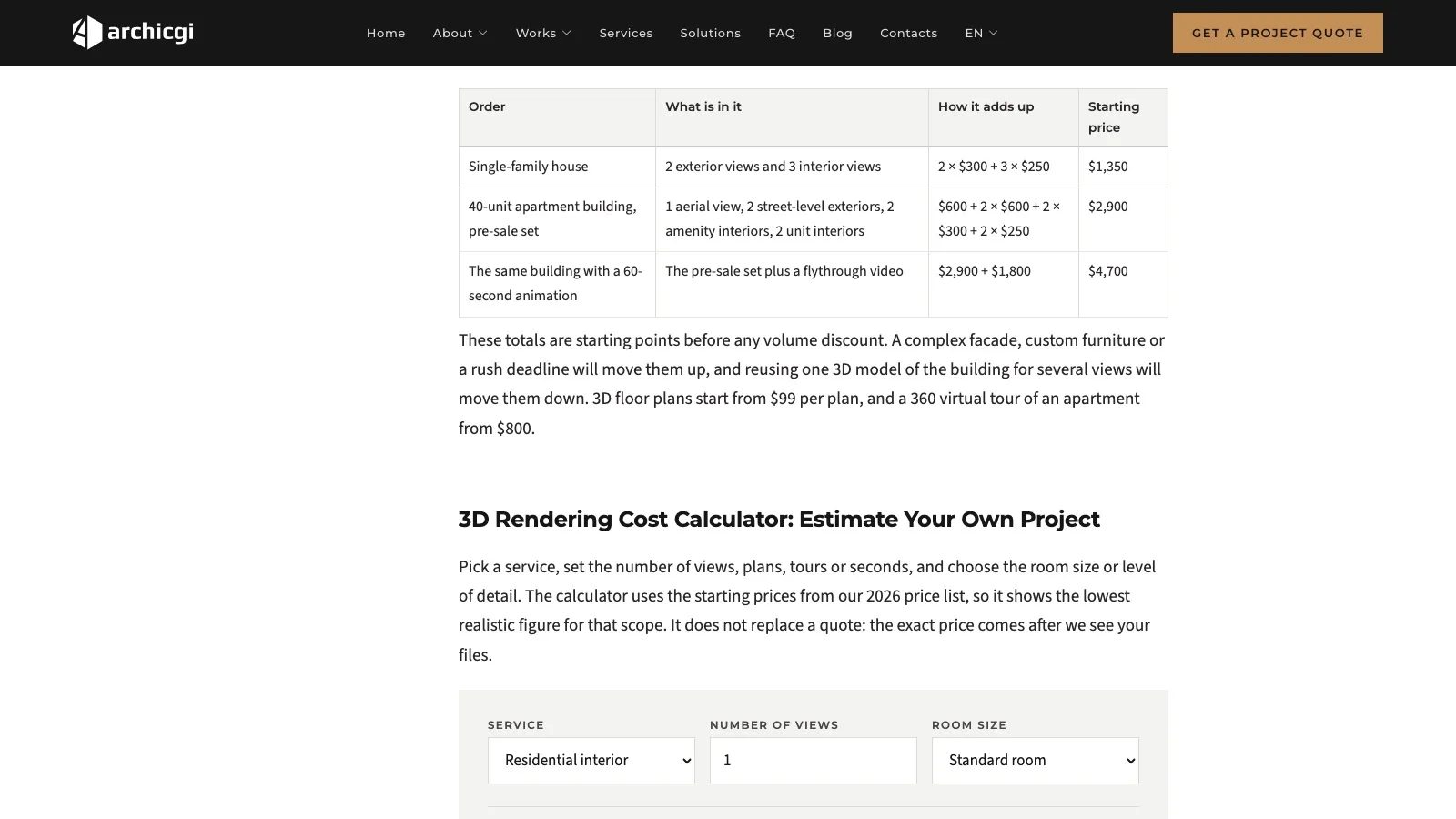
Ask how the studio prices work. What drives the number up: more views, higher complexity, extra revision rounds, animation added to the scope? Costs can vary a lot depending on whether you need interior 3D rendering services or exterior 3D rendering services, since the scene complexity differs. Professional studios give clear preliminary quotes. They’ll also be upfront about what could cause delays or increase the cost mid-project.
Ask about repeat pricing, too. Additional views of a scene the studio has already built usually cost two to three times less than the first render, and bulk packages often come with volume discounts because models, textures, and scenes get reused. If you plan ongoing work, these terms matter more than the sticker price of a single image.
Timeline matters just as much as price. Ask for a realistic schedule, not the fastest one they can promise. And find out what happens if you send feedback late. Does the deadline shift, or does the studio move on and you lose your slot? For reference points, check our chapters on architectural rendering costs and the 3D rendering project timeline.
A published price. A studio that shows a starting price per image lets you budget before the first call. Ask what the price includes: revision rounds, resolution, modeling and library assets.
ArchiCGI answer: interiors from $150, exteriors from $300, floor plans from $99, animation from $30 per second. Two review rounds, 4K resolution and library assets are in the price.
A delivery date and what happens when it is missed. Ask for a delivery date in writing and for the terms if it slips. A date with a consequence is worth more than a quoted speed.
ArchiCGI answer: a standard image arrives 48 hours after prepayment and a complete brief, and a large project within 5 business days. A quote comes within an hour. If the agreed date is missed, the money is returned and the renders stay with the client.
Step 4: Ask About the Team and Workflow

The studio’s total headcount is less important than who actually works on your project. Ask how many people will be assigned, what each person does (modeling, lighting, post-production), and whether you’ll have one project manager as your main contact. Good communication with a 3D rendering studio starts before the project does.
Ask about the software stack, too. Not because one tool is better than another, but because compatibility with your files (Revit, SketchUp, ArchiCAD, Rhino) cuts onboarding time and reduces back-and-forth when choosing 3D rendering services.
It also helps to know what a typical project looks like from the inside. In an established studio the flow is standard: you submit the brief and references through a CRM, a project manager clarifies the goals and sets the deadline, 3D artists model and render the scenes, then you review previews and request corrections before final delivery. Ask any candidate to walk you through their version of this pipeline. If they cannot describe clear stages with a single point of contact, expect chaos mid-project.
Capacity for your volume. Ask how many artists will work on your project and what happens when the volume doubles. A studio that shares a project between modelers, lighting artists and post-production can run views in parallel.
ArchiCGI answer: 600+ artists, with 144 modelers, 42 lead CG artists and 36 mentors who check images before delivery. Permanent client teams have been available since 2016.
A named project manager and a workflow. Ask who your contact is and where files and comments live. A shared workspace keeps the brief, references and revisions in one place, so a project can restart after a pause without repeating the brief.
ArchiCGI answer: every client has a project manager and a workspace in the Archivizer CRM, where files, comments and drafts are stored. Each image passes a two-stage check, first by the project manager and then by the team mentor.
Step 5: Read Client Reviews and Testimonials
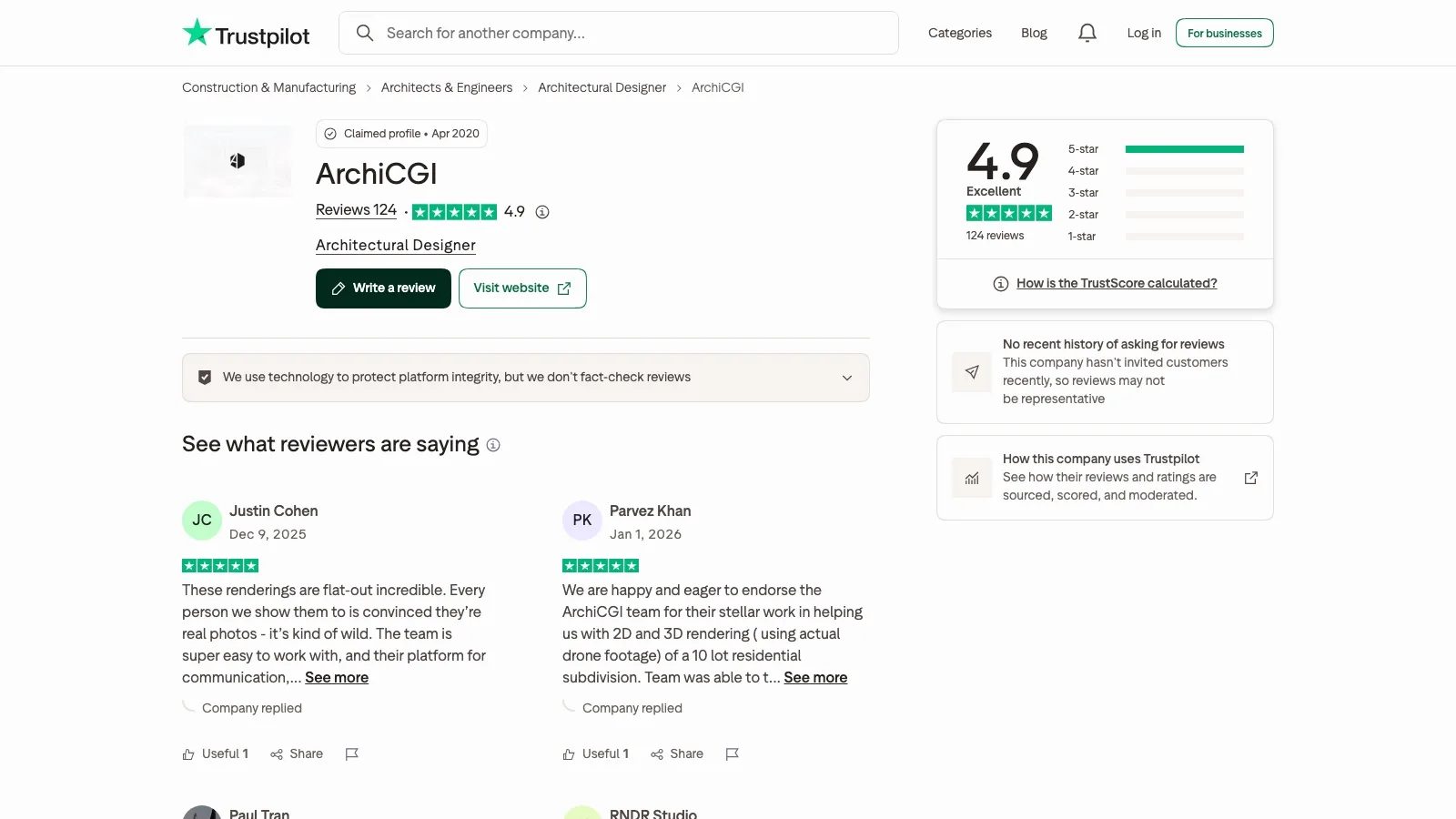
The portfolio tells you what a studio can make. Reviews tell you what it’s like to actually work with them. Look for mentions of response times, how revisions went, and whether deadlines held up. Skip the vague compliments about “great images.”
Check Google Reviews, Clutch, or Trustpilot instead of relying on the testimonials the studio picked for its own site. And if a company has repeat clients who keep coming back, that’s worth more than any five-star rating.
Reviews from repeat clients. Look for reviews on third-party sites and for clients who return. Comments about response time, revisions and deadlines say more than comments about image quality.
ArchiCGI answer: 4.9 out of 5 on Trustpilot from 124 reviews. Developers such as Pulte Group and Chappell have come back project after project.
Key Factors When Selecting a 3D Rendering Services Provider
Knowing the provider types and reviewing portfolios gets you halfway. The rest is about spotting problems early and doing a few practical things before you sign anything.
Red Flags to Watch
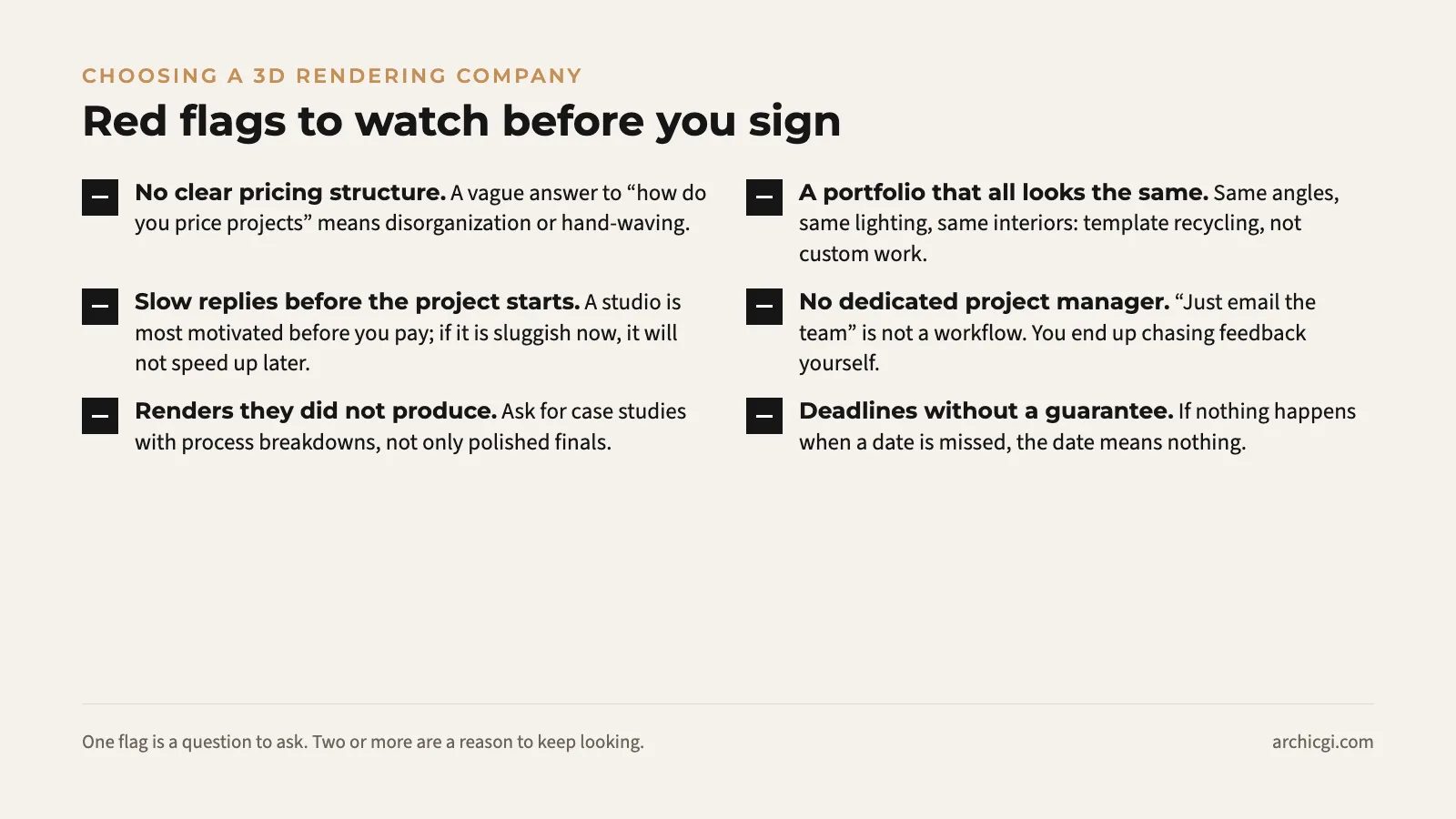
No clear pricing structure. You ask a 3D rendering company how they price projects and get a vague answer. That’s either disorganization or deliberate hand-waving. Good studios have a pricing framework ready, even if the final number changes based on specifics.
A portfolio that all looks the same. Same angles, same lighting, same residential interiors across every project. That can mean template recycling instead of custom work. Worse, some studios show renders they didn’t actually produce. Ask for case studies with process breakdowns. Not just polished final images.
Slow replies before the project even starts. If your initial inquiry sits unanswered for days, or the response is clearly copy-pasted, that’s what production will look like too. Maybe slower. A studio is at its most motivated to impress you before you’ve paid anything. If it’s already sluggish at that point, it won’t improve once they have your deposit.
No dedicated project manager. “Just email the team” is not a workflow. Without a single point of contact, you end up managing revisions, chasing feedback, and tracking accountability yourself. For anything beyond a one-off render, a dedicated PM is a minimum.
They won’t show revision history. A studio that only shares final polished images but can’t walk you through how a project went from draft to delivery might be hiding a messy process. Ask for a before-and-after sequence from a real project. Reputable 3D rendering firms are usually glad to show how their process works.
Turnaround promises that sound too good. A deadline named before anyone has read the brief is the warning sign. Timelines depend on scope: a typical project takes 2 to 5 business days, and urgent ones are handled by adding teams, not by skipping steps. A studio that agrees a schedule with you before the start and then keeps it is showing competence. Vague promises usually turn into “unexpected delays” right after the deposit clears.
Steps to Take Before Committing
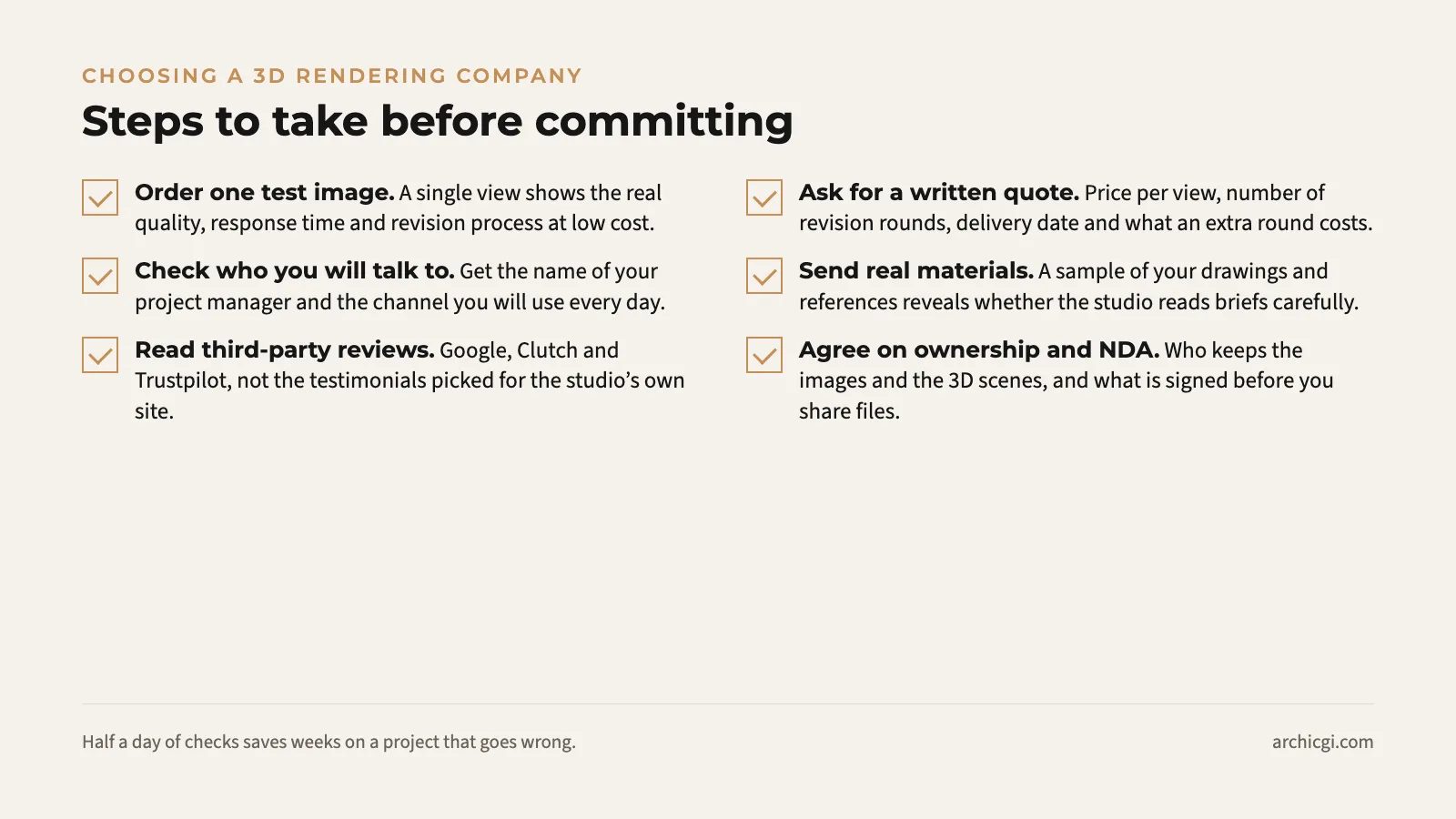
Start with a paid test. Before you hand over a big project, commission one test render. Pick something that reflects your actual workload, not the easiest possible task. One test tells you more about quality, communication, and reliability than a dozen portfolio reviews.
Get the revision policy in writing. How many rounds are included? What counts as minor vs. major? What does an extra round cost? Nail this down before work starts. Vague revision terms are the single most common reason budgets blow up when choosing 3D rendering services.
Ask what guarantees are on the table. Beyond an NDA, serious studios back their deadlines and quality with real terms. Some, ArchiCGI included, waive the payment entirely if a delivery misses the agreed deadline. A company that offers nothing but promises is asking you to carry all the risk.
Spell out file formats in the brief. Resolution, format (TIFF, PNG, PSD with layers), color profile, whether you need source 3D files. Sorting this out after the project is done leads to rework, delays, and surprise charges for what the studio calls “non-standard” deliverables.
Agree on a communication setup. Pick the tools (email, Slack, a CRM platform), set expected response times, and clarify who owns what on each side. The best architectural rendering firms will suggest their own process. Just make sure it works for your team, not only theirs.
Read the fine print on IP and confidentiality. Who owns the final renders? Can the studio use your project in their portfolio? What NDA protections are in place? This matters most on unreleased developments. If you’re outsourcing architectural 3D rendering services, check data handling and file storage policies too.
Questions to Ask Any 3D Rendering Company
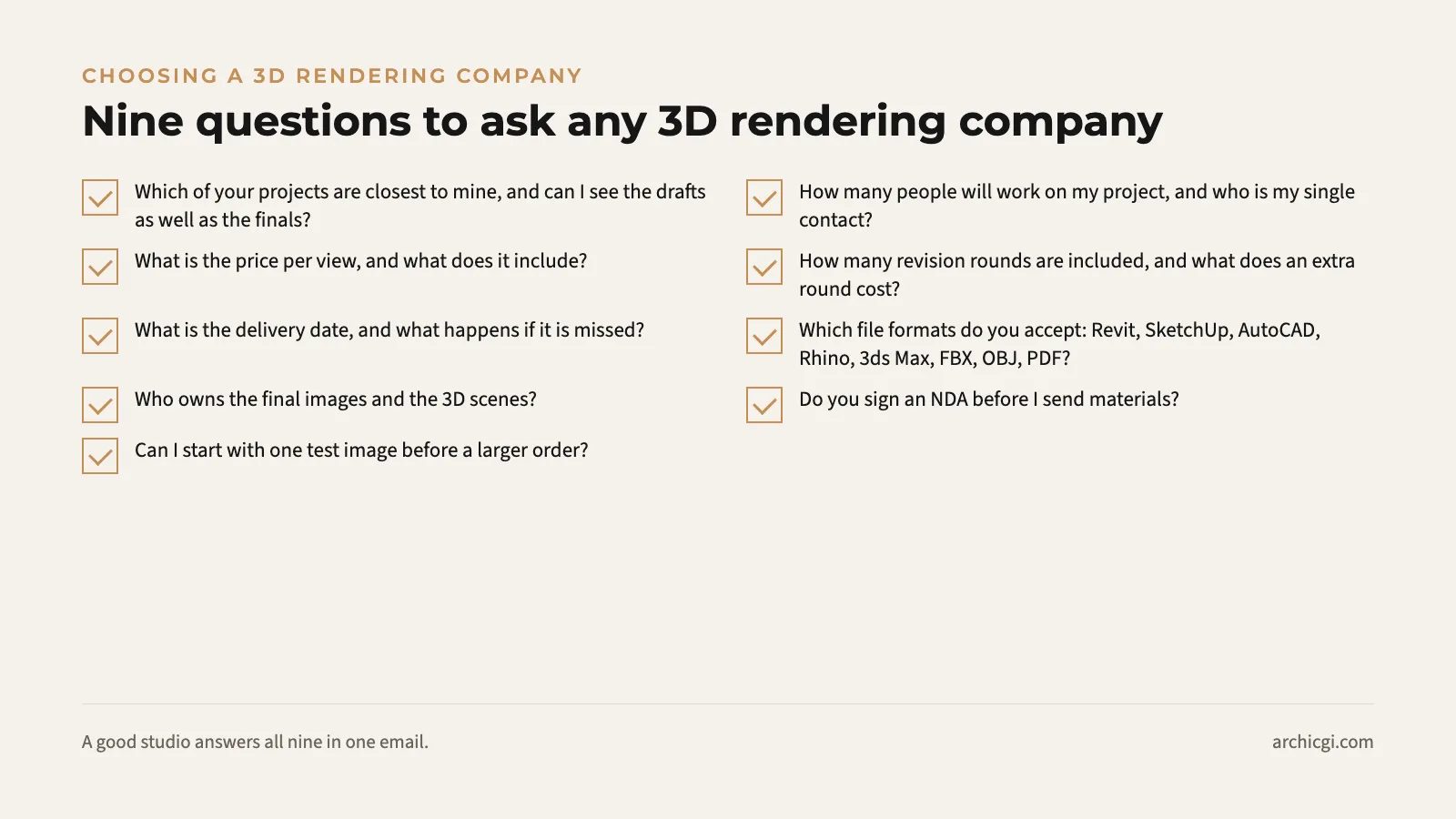
- Which of your projects are closest to mine, and can I see the drafts as well as the finals?
- How many people will work on my project, and who is my single contact?
- What is the price per view, and what does it include?
- How many revision rounds are included, and what does an extra round cost?
- What is the delivery date, and what happens if it is missed?
- Which file formats do you accept (Revit, SketchUp, AutoCAD, Rhino, 3ds Max, FBX, OBJ, PDF)?
- Who owns the final images and the 3D scenes?
- Do you sign an NDA before I send materials?
- Can I start with one test image before a larger order?
Answers to these nine questions at ArchiCGI: price list at the price page, two review rounds included with extra rounds at $40 per hour, 48 hours delivery with a refund for a missed date, inputs in all the formats above, full rights to final images with source files and 3D scenes staying with ArchiCGI, an NDA on request before any materials are sent, and a single image as a valid first order.
ArchiCGI at a Glance
| Fact | ArchiCGI |
|---|---|
| Founded | 2011 |
| Artists | 600+ (144 modelers) |
| Clients | 3,000+ |
| Projects a year | 8K+ |
| Rating | 4.9 on Trustpilot, 124 reviews |
| Starting prices | Interior $150, exterior $300, floor plan $99, animation $30 per second |
| Delivery | 48 hours for a standard image, quote within an hour |
| Phone | +1 607 383 2001 (New York), +44 203 617 1683 (London) |
Choosing a CGI partner takes some homework, but it pays off fast once you find the right fit. If you’ve worked through the criteria in this chapter and have a studio in mind, the next step is putting together a clear brief. Our guide on filling out a brief covers exactly what to include so the project kicks off smoothly.
And if you’re looking for professional 3D rendering services with a team that can handle projects at any scale, we’re always happy to talk.
Further Reading: Choosing and Working With a Rendering Studio
The chapter above is the checklist. The articles below take single questions from it and answer them in depth.
Studio, freelancer, or in-house, and how to compare them. DIY versus professional rendering, an AECOM architect on choosing a CGI provider, what 3D rendering outsourcing is, what to look for in a rendering partnership, freelancer versus studio, seven questions your CGI contractor must ask, do’s and don’ts when choosing an archviz studio, local versus overseas rendering studio, why outsource CGI for interior design, rendering services versus an in-house 3D artist, and 3D renders versus hand-drawn sketches.
What quality looks like. how to get top-quality architectural rendering, how high-quality interior visuals help designers sell, high-quality rendering for architecture ads, six examples of creative architectural rendering, a high-quality rendering of a university building, photorealistic renders for Studer Studio, five tools of artistic expression in rendering, seven marketing ideas that need high-quality renders, how ArchiCGI ensures consistent quality, five secrets of photorealism, and our best 3D visuals of 2023.
The people behind the images. seven situations when a CGI artist is an architect’s best friend, who works on your project at a studio, who professional 3D artists are, what skills to look for in an architectural visualizer, Dawn F. Landry on what sets a company apart, and an interview with a senior 3D artist.
When outsourcing pays off. how a rendering service saves your time, ten keys to effective delegation, an architect’s experience with a 3D visualization company, five reasons to take a design business online, how a rendering company saves designers time, how 3D artists make an exterior look lifelike, and website design tips for a real estate company.